Table of Contents >> Show >> Hide
- Why face masks throw facial recognition off balance
- The pandemic became a stress test for the entire industry
- Humans struggle with masked faces too
- Where masked facial recognition works best
- Bias did not disappear when masks appeared
- Privacy concerns got louder, not quieter
- How the technology is adapting
- What organizations should do before deploying it
- The real-world experience of face masks and facial recognition
- Conclusion
For a few strange years, the world became a giant real-time experiment in computer vision. People were masked at airports, hospitals, stores, schools, office lobbies, and basically anywhere life still had a “please sanitize your hands” sign taped to the wall. Meanwhile, facial recognition systems kept trying to do what they were built to do: identify people quickly, quietly, and with an air of smug technological confidence. The result? A collision between public health and machine certainty.
The phrase face masks facial recognition sounds simple, but the topic is anything but. It sits at the intersection of biometrics, privacy, security, public health, bias, and a little bit of human awkwardness. Masks reduce visible facial information. Facial recognition systems depend on visible facial information. That is not exactly a recipe for smooth teamwork.
The good news is that the conversation around masked facial recognition is far more mature now than it was at the start of the pandemic. Researchers, regulators, and developers have learned a lot. The less cheerful news is that the lessons are complicated. Masks made recognition harder, but they also exposed older weaknesses that had been hanging around the technology all along: overconfidence, uneven accuracy, bias across groups, and a tendency to be deployed before the guardrails are finished baking.
Why face masks throw facial recognition off balance
Facial recognition systems work by extracting features from a face image and comparing them against a stored photo or a database. In plain English, the software is trying to answer one of two questions: “Is this person who they claim to be?” or “Who in this gallery looks like this person?” That sounds neat until you cover the nose, mouth, cheeks, and part of the jawline. Suddenly, a system designed for faces gets only half a face and is expected to behave like nothing happened.
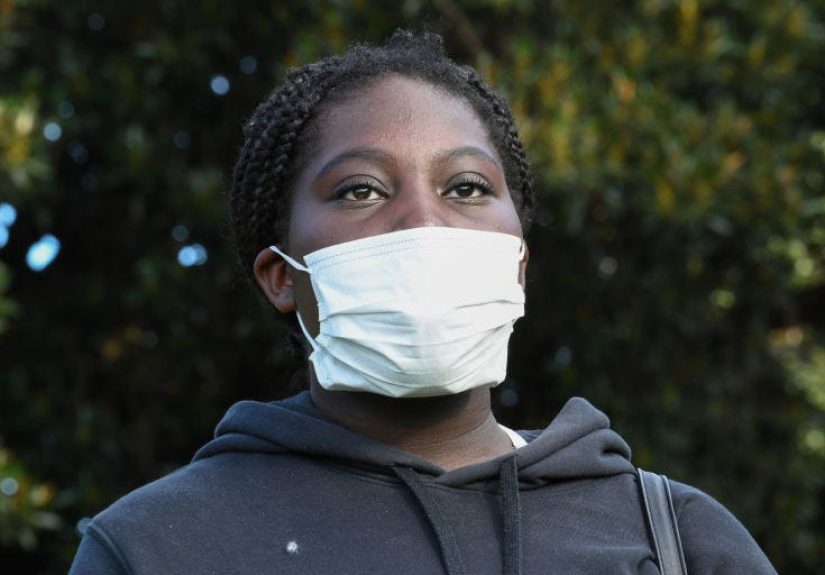
Masks matter because they hide some of the most useful landmarks in the face. The lower half carries shape cues, symmetry clues, mouth structure, and other details that help both humans and machines decide identity. When those cues vanish, the system leans more heavily on the upper face, especially the eyes and surrounding area. That can work better than people assume, but it is also more fragile. Eyeglasses, bad lighting, poor camera angles, low image quality, hats, motion blur, and crowded backgrounds can all pile on at once.
In early mask-era testing, the performance hit was hard to ignore. That was not shocking. A lot of commercial systems had been trained and tuned mainly on unmasked faces. Asking those models to suddenly perform on masked faces was like asking a piano teacher to judge a drumming competition. Related, yes. Same thing, no.
The pandemic became a stress test for the entire industry
One of the most important things the pandemic did was force the facial recognition industry into an honest technical audit. Independent testing showed that masks could sharply raise error rates, even for strong systems. That mattered because facial recognition had long been marketed with words like “frictionless,” “fast,” and “accurate.” Masks reminded everyone that “accurate” depends heavily on conditions, and conditions in the real world rarely behave.
Developers responded quickly. Some retrained algorithms on masked faces. Others improved how systems handle partial occlusion. Some shifted attention toward the periocular region, the area around the eyes, because that was the facial real estate still open for business. Newer algorithms generally became better at dealing with masked faces than the systems tested at the beginning of the pandemic. Still, improvement did not magically erase the core limitation: less visible face usually means less reliable matching.
This is an important distinction for businesses and public agencies. Better does not mean foolproof. A modern masked-face system may be useful in controlled verification settings, such as one traveler matching one passport photo or one employee checking into one secure door. That is very different from using the same technology for broad surveillance in messy public spaces. A camera at a gate has a clearer job than a camera in the wild trying to sort thousands of moving faces with partial occlusion. One is a spelling quiz. The other is a thunderstorm with a spreadsheet.
Humans struggle with masked faces too
It is tempting to treat this as a purely technical problem, but people have their own version of it. Human face perception also takes a hit when masks enter the picture. Research during the pandemic found that emotion recognition became less accurate with masked faces, and some studies reported notable drops in the ability to read expressions correctly. In other words, it was not just software having a rough time. Humans were also walking around thinking, “Are you smiling, upset, exhausted, or just trying not to sneeze?”
That matters because facial recognition is never just about identity. In daily life, faces carry trust signals, emotional cues, threat perception, social warmth, and the ordinary tiny moments that make public interaction smoother. Masks changed those interactions. People started relying more on eyes, voice, posture, and context. Machines did something similar by focusing harder on the visible upper face. The overlap is interesting: both humans and machines became more dependent on partial information, and partial information is where mistakes breed.
There is also a social lesson here. Some of the frustration around masked recognition came from unrealistic expectations. A face recognition system is not a magical “person scanner.” It is pattern matching under constraints. Humans are not magical either. We just disguise our uncertainty with small talk and polite nodding.
Where masked facial recognition works best
Facial recognition with masks performs best in controlled, cooperative settings. Think airport identity verification, workplace access control, smartphone unlock alternatives, or healthcare environments where the subject is standing still, looking at a camera, and participating in the process. In these scenarios, the system often has a high-quality enrolled image to compare against, the lighting is better, and the user is expected to present themselves properly.
That is why agencies and vendors have kept testing masked recognition in travel and identity verification workflows. In structured environments, newer systems can be good enough to support convenience and security at the same time. But even there, the right design matters. Systems need fallback methods, human review for uncertainty, clear signage, strong data handling rules, and performance testing under realistic conditions.
The worst use case is broad, low-friction deployment in uncontrolled public settings where masks, hats, crowds, and bad image quality all collide. This is where the risk of false matches, missed matches, and unjustified confidence grows. A system that works impressively at a controlled checkpoint can behave very differently in a busy retail store, a public demonstration, or a transit hub full of half-turned faces and winter scarves.
Bias did not disappear when masks appeared
If masks made facial recognition harder in general, they made fairness questions even more important. Long before the pandemic, researchers raised concerns that facial recognition performance could vary across demographic groups. That conversation did not vanish when people put on masks. If anything, the mask era put more pressure on systems already dealing with uneven training data, inconsistent image quality, and demographic performance gaps.
Bias in facial recognition is not just a technical footnote. It is a deployment issue. When a system performs unevenly, the harm is not distributed evenly either. A missed match might lock someone out of an app or a building. A false match in a surveillance context can be far more serious, pulling innocent people into investigations, detentions, or humiliating encounters. Add masks, and the margin for error tightens further.
This is one reason transparency matters so much. Claims about accuracy should be specific about the environment, the task, the data, and the population. “Works great” is not a metric. Neither is “AI-powered,” which is a phrase that too often means “please stop asking follow-up questions.” A trustworthy system should be tested on masked and unmasked faces, across lighting conditions, across demographics, and with clear reporting on failure rates.
Privacy concerns got louder, not quieter
Masks changed more than accuracy. They changed public expectations. During the pandemic, masks were often worn for health protection, not secrecy. But the overlap between masks and surveillance sparked a broader debate: if people cover their faces for safety, what happens when institutions treat visible faces as the price of access, convenience, or legitimacy?
That debate is not hypothetical. Regulators and civil liberties groups have warned that facial recognition can create serious privacy and fairness risks when deployed without strong safeguards. Public trust drops fast when a system is used for watchlists, retail surveillance, or persistent tracking without clear accountability. A technology that cannot explain its mistakes is already on thin ice. A technology that makes mistakes about people while collecting sensitive biometric data is skating on very expensive legal ground.
That is why enforcement actions and policy debates matter here. The real question is not only whether a system can identify a masked face. It is whether it should, in what context, under what rules, with what consent, and with what backup options when it fails. Technical capability and legitimate use are not the same thing. A wrench can build a bookshelf or damage a wall. The wrench is not the decision-maker.
How the technology is adapting
The future of face masks facial recognition will likely be less about pretending masks are irrelevant and more about designing around partial visibility. That includes better training on occluded faces, smarter quality checks before a match is accepted, and stronger “liveness” or presentation attack detection tools to reduce spoofing with printed photos, screens, or manipulated imagery.
Another likely direction is multimodal identity verification. Instead of leaning entirely on the face, systems can combine face with documents, device signals, iris data, or active user steps. This reduces pressure on any single biometric. It also makes practical sense. If a person is masked, maybe the system should ask for a second factor rather than forcing a flimsy yes-or-no from incomplete facial data.
Designers are also getting more realistic about confidence thresholds. A smart system should know when it does not know. That sounds obvious, but many digital products are built around the fantasy that uncertainty is bad branding. In biometric systems, uncertainty is honest. It is healthier for a system to say “I’m not confident, please try another method” than to guess wrong with robotic swagger.
What organizations should do before deploying it
1. Test under real conditions
If masks are common in your environment, test with masks. Not one nice clean blue mask in perfect lighting, either. Test different fits, glasses, angles, motion, skin tones, and cameras. Real life is rude. Your test plan should be too.
2. Use it for verification before surveillance
One-to-one matching in cooperative settings is far easier to justify and validate than one-to-many surveillance in public spaces. Start with narrow use cases and prove reliability before expanding.
3. Build in fallback methods
No one should be stuck outside a secure area, locked out of a service, or misidentified because a mask or scarf confused a model. Passwords, tokens, human review, document checks, or other backup methods should be standard.
4. Audit bias and error handling
Accuracy averages can hide unequal outcomes. Review performance across demographics and set procedures for handling disputed matches. A system that cannot be challenged is a system asking for trouble.
5. Treat biometric data like the sensitive material it is
Faces are not just usernames with cheekbones. Biometric data deserves strong retention limits, security controls, vendor oversight, and clear notice to users.
The real-world experience of face masks and facial recognition
For many people, the story of face masks and facial recognition is not a technical paper. It is a collection of oddly specific memories. A traveler stands at an airport kiosk, stares into a camera, and gets the universal machine response of mild disappointment. They adjust the mask, remove glasses, try again, then do the little half-laugh people do when a machine seems to be judging their existence. Behind them, the line grows. The camera finally accepts the face, and the traveler walks away with the emotional energy of someone who just negotiated with a moody toaster.
In hospitals and clinics, the experience can feel different. Staff members may spend hours masked, moving fast, speaking through layers, and interacting with systems built for unmasked convenience. A badge plus facial scan workflow that seemed modern in the sales demo can become clumsy when everyone’s lower face is covered and the shift starts at 6 a.m. sharp. In those moments, speed matters more than futuristic branding. Nobody wants to be late to patient care because a door reader is having a philosophical dispute with a KN95.
Retail workers and customers had their own version of the tension. Stores experimenting with surveillance-heavy security tools were operating in an era when face coverings were common for health, comfort, or personal preference. That made every camera feel a little more political. Was the system there to prevent loss, identify repeat offenders, check watchlists, or simply watch too much? When people do not know how their biometric data is being used, uncertainty fills the gap, and uncertainty is very good at making technology feel creepy.
Students and office workers experienced something subtler. They learned to read people differently. Eye contact got more important. Voices mattered more. Body language became a backup channel. Some people got surprisingly good at recognizing others from eyebrows alone, which is both impressive and slightly absurd. Computers were pushed in the same direction, trying to do more with less, but people had one advantage: context. Humans know that the person with the bright green backpack, rushed voice, and coffee stain is probably the same coworker as yesterday, even if half the face is hidden. Machines still struggle with that kind of ordinary common sense.
There is also the emotional side. Masks gave many people privacy in public, even if only a little. Some felt safer. Some felt less visible. Some appreciated the buffer, especially in crowded places. Others felt disconnected, tired of repeating themselves, tired of being unreadable, tired of not reading others well. Facial recognition sits awkwardly in that emotional space because it is built to restore legibility, to make faces machine-readable again. But people are not barcodes, and not every kind of legibility feels welcome.
That is why the strongest lesson from this topic is not simply that masks make facial recognition harder. It is that the mask era revealed what good biometric systems must become: more humble, more transparent, more optional, and more respectful of context. Technology should adapt to people, not the other way around.
Conclusion
The story of face masks facial recognition is really the story of what happens when a technology built for visibility meets a world full of partial information. Masks exposed the limits of facial recognition, accelerated technical improvements, and forced a broader public conversation about privacy, fairness, consent, and reliability. In controlled settings, masked facial recognition can be useful. In uncontrolled or surveillance-heavy settings, the risks rise fast.
The smartest takeaway is not that facial recognition failed, nor that it triumphed. It is that the technology became easier to evaluate honestly. That is progress. A serious system should be tested rigorously, deployed narrowly, audited regularly, and backed by human-centered safeguards. And whenever a vendor promises flawless identification from half a face in the middle of chaos, it is perfectly reasonable to respond with the ancient scientific phrase: “Show me the data.”