Table of Contents >> Show >> Hide
- Who Is Nate Cotterman?
- The LA Chapter: A City Built for Reinvention
- Why His Glass Feels Different
- The Cube Glass: A Small Object With a Big Idea
- Barware, Lighting, and Home Décor
- Antonia Campanella and the Business of Craft
- LA’s Influence on Cotterman’s Design Identity
- Why “Glass Act” Still Works as a Story
- How to Appreciate Nate Cotterman Glass
- Experiences Inspired by “Glass Act: Nate Cotterman in LA”
- Conclusion
Some artists arrive in Los Angeles with a suitcase, a sketchbook, and a romantic belief that creativity will politely pay rent. Glass artist Nate Cotterman arrived with something even more dramatic: a commitment to shaping molten glass into clean, functional objects that feel both ancient and freshly modern. In a city famous for reinvention, Cotterman’s time in LA became a turning point, blending studio discipline, design ambition, and the practical hustle required to turn handmade glass into a living, breathing business.
“Glass Act: Nate Cotterman in LA” is not just a catchy title; it captures a real chapter in the story of an American glassblower who helped make handblown barware, lighting, and home objects feel relevant to contemporary interiors. His work sits comfortably between art and utility. A Cotterman glass can chill a drink, anchor a table setting, glow as a sconce, or simply sit on a shelf looking unfairly elegant. It is the kind of object that whispers, “Yes, I was made by hand,” without shouting from across the room in a tiny beret.
Who Is Nate Cotterman?
Nate Cotterman is an American glass artist and designer known for modern interpretations of traditional glass objects. His practice is rooted in Venetian glassblowing techniques, but his finished pieces avoid fussiness. Instead, they favor clarity, balance, soft silhouettes, and thoughtful function. Cotterman’s portfolio includes handblown glass barware, lighting, vases, bottles, bowls, design accents, and custom fabrication.
He studied glass at the Cleveland Institute of Art, earning a Bachelor of Fine Arts in Glass. That formal training matters because glass is not a casual material. It is hot, expensive, temperamental, and wonderfully unforgiving. Unlike paint, it does not let you pause for coffee and return later with fresh opinions. A glassblower has to move with timing, muscle memory, and confidence. Cotterman’s work reflects that discipline: the forms feel simple, but the simplicity is earned.
The LA Chapter: A City Built for Reinvention
Los Angeles played an important role in Cotterman’s development. After college, he moved west and worked as a gaffer, or professional glassblower, with Joe Cariati Glass and other designers while also building his own studio practice. That LA period gave Cotterman something every maker needs but cannot purchase in a tidy starter kit: exposure to a working design economy.
LA is a strange and useful place for craft. It is both glamorous and grind-heavy. A handmade object may end up in a boutique, a restaurant, a film-set-worthy home, or a designer showroom, but before that happens, somebody has to make the thing, pack the thing, price the thing, explain the thing, and probably answer three emails with “just circling back” in the subject line. Cotterman’s Los Angeles years helped bridge the space between fine craft and product design.
In 2015, Craft in America included Cotterman in programming tied to “Crafting the Cocktail,” an exhibition centered on handmade barware and accessories. The discussion focused on LA’s glass community and the support among artists such as Joe Cariati, Uri Davillier, and Cotterman. That context is important: Cotterman’s work was not emerging in isolation. It was part of a broader Los Angeles conversation about craft, hospitality, design, and the beauty of objects made by skilled hands.
Why His Glass Feels Different
The phrase “handblown glass” can sound decorative, but Cotterman’s work shows how technical knowledge can produce useful objects with personality. His forms often look calm, but they are made through a fast, physically demanding process. Molten glass must be gathered, shaped, reheated, blown, turned, cut, and finished in careful sequence. One wrong move and the piece can wobble from “elegant decanter” to “interesting science experiment.”
Traditional Technique, Modern Restraint
Cotterman’s use of Venetian glassblowing techniques gives his work a link to centuries of craft knowledge. Yet his visual language is contemporary. Instead of overly ornate decoration, his objects highlight proportion, transparency, color, and the natural qualities of glass itself. This is why his barware and lighting appeal to interior designers and collectors who want craftsmanship without visual clutter.
The Beauty of Simple Forms
Simple design is often the hardest to execute. A plain glass reveals everything: the curve, the thickness, the polish, the balance, the way it feels in the hand. Cotterman’s pieces lean into that honesty. A Flow Decanter depends on its silhouette. A Cube Glass depends on both its clarity and its clever internal idea. A sconce depends on glow, shadow, proportion, and finish. There is nowhere for weak design to hide, which is rude of glass but excellent for the viewer.
The Cube Glass: A Small Object With a Big Idea
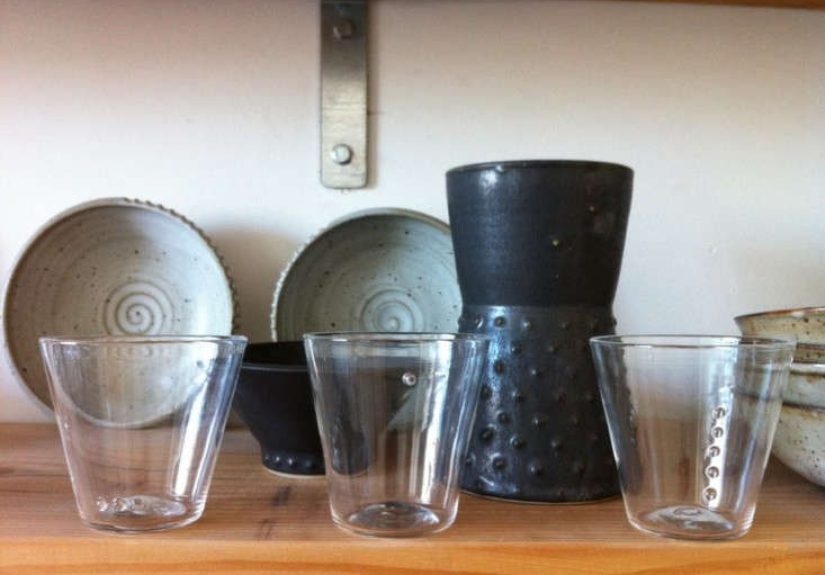
Among Nate Cotterman’s most recognizable designs is the Cube Glass, a patented barware concept that fuses a solid glass cube to the bottom of a handblown glass. The idea is practical and memorable: store the glass in the freezer, pour a beverage, and the cube helps chill the drink without melting ice. For people who like whiskey, bourbon, cocktails, or any drink they do not want diluted, this is not merely design; it is civilization in a tumbler.
The Cube Glass shows Cotterman’s product-design instincts. It is beautiful, but it is not beauty wandering around without a job. The piece solves a small problem elegantly. Ice melts. Drinks dilute. Nobody wants to spend money on a good bottle only to let it drown slowly in a tiny indoor glacier. Cotterman’s design uses glass’s thermal qualities as part of the experience, turning the base of the object into the functional feature.
That kind of thinking helps explain why the Cube Glass became a signature piece. It is easy to understand, satisfying to use, and distinctive enough to remember. In SEO terms, it is a “handblown glass rocks glass” with a real story. In human terms, it is simply fun to pull a beautiful glass from the freezer and feel like your home bar has suddenly developed opinions.
Barware, Lighting, and Home Décor
While the Cube Glass receives plenty of attention, Cotterman’s body of work is broader. His studio creates barware, lighting, home décor, bottles, bowls, vases, and custom projects. The recurring thread is a balance of handmade quality and contemporary design. His work can appear minimal, but it is not cold. The hand is visible in the softness of the form, the small variations, and the quiet liveliness that mass production usually sands away.
Barware for People Who Notice Details
Cotterman’s barware fits the current interest in elevated home entertaining. A decanter, tumbler, or highball glass is not just a container; it shapes the ritual. Pouring a drink into a thoughtfully made glass changes the pace of the moment. Suddenly, the couch feels more like a lounge, the snack bowl seems less chaotic, and even a Tuesday night can pretend it has a reservation.
Lighting With a Handmade Glow
His lighting work extends the same design philosophy into interiors. Glass lighting is powerful because it transforms material into atmosphere. A sconce or chandelier is not only seen; it changes how a room feels. Cotterman’s lighting pieces, including collaborative and custom works, connect craft with architecture. They are especially appealing in spaces that want warmth, restraint, and a point of focus without turning the ceiling into a circus.
Decorative Objects That Still Feel Useful
Vases, bowls, bottles, and design accents round out the studio’s language. These pieces show Cotterman’s ability to create objects that can function in daily life while still holding sculptural presence. A handblown vase does not need flowers to justify itself, though flowers certainly do not hurt. A well-made bottle can sit alone and still carry the room’s attention with color, curve, and proportion.
Antonia Campanella and the Business of Craft
Nate Cotterman Glass is also a family and studio partnership. Cotterman’s wife, Antonia Campanella, is involved in marketing, design, sales, client communication, and custom projects. This matters because modern craft businesses require more than making. They require storytelling, relationships, wholesale systems, retail strategy, trade shows, photography, shipping, and the delicate art of explaining why handmade work costs more than something produced by the container ship.
The brand’s growth reflects that combination of studio skill and business clarity. Cotterman can focus on making, while the studio communicates with designers, retailers, collectors, and individuals who want custom glass. This partnership helps the work reach people who may not visit a hot shop but do care deeply about objects with soul.
LA’s Influence on Cotterman’s Design Identity
Los Angeles sharpened Cotterman’s identity because the city rewards objects that can move between art, lifestyle, and design. LA interiors often combine vintage pieces, contemporary architecture, warm minimalism, handmade ceramics, custom lighting, and statement barware. Cotterman’s glass belongs in that ecosystem. It is polished enough for a design showroom and tactile enough for daily use.
His LA experience also placed him near other makers who understood the value of collaboration. Working as a gaffer for established designers and joining conversations around handmade cocktail culture gave Cotterman a practical view of how glass could function in hospitality, residential interiors, and the luxury craft market. The result is work that feels refined but never sterile.
Why “Glass Act” Still Works as a Story
The appeal of “Glass Act: Nate Cotterman in LA” is that it captures an artist at the intersection of place, process, and product. Cotterman’s story is not the myth of overnight success. It is a story of training, labor, problem-solving, partnership, and carefully built momentum. The LA chapter shows the maker learning how to exist inside a real creative economy, where talent must meet deadlines, invoices, galleries, retailers, and customers who want their chandelier to arrive before the dinner party.
That mix of romance and realism is what makes the work compelling. Glassblowing is dazzling to watch, but the finished object has to survive ordinary life. A glass must feel good in the hand. A decanter must pour well. A sconce must make a wall better. A custom object must satisfy the client without losing the artist’s voice. Cotterman’s strongest pieces succeed because they understand both the poetry and the paperwork.
How to Appreciate Nate Cotterman Glass
To appreciate Cotterman’s work, start with the form. Notice whether the object feels balanced. Look at the thickness of the glass, the clarity of the curve, the way color is used, and how the piece catches light. With the Cube Glass, consider the idea as much as the appearance: the fused solid cube is not decoration alone; it is a functional design solution.
Next, think about context. A handmade glass object changes depending on where it lives. On a bar cart, it becomes part of hospitality. On a dining table, it becomes part of ritual. In lighting, it becomes part of mood. In a gallery or shop, it becomes an example of contemporary American craft. Cotterman’s work is flexible because it does not insist on one narrow identity.
Experiences Inspired by “Glass Act: Nate Cotterman in LA”
Experiencing Nate Cotterman’s glass is different from simply looking at a pretty object online. The first thing you notice is the tension between delicacy and confidence. A handblown glass has presence, but it does not feel machine-perfect. That is the charm. The slight evidence of process makes the piece feel alive, as if the object remembers heat, breath, and motion.
Imagine walking into a small design shop in Los Angeles and seeing a row of Cotterman glasses catching afternoon light. LA has a special talent for making light theatrical, even when it is just bouncing off a shelf near a fiddle-leaf fig. A clear tumbler becomes a lens. A colored bottle becomes a tiny sunset. A decanter turns into sculpture before it ever touches a drink. That is where Cotterman’s work shines: it rewards slow attention.
The Cube Glass offers a more hands-on experience. You place it in the freezer, wait, pour, and watch the drink settle over the fused cube. The ritual feels clever but not gimmicky. There is pleasure in using an object that solves a problem without looking like a gadget. It does not beep, blink, sync, update, or ask for your email address. It just chills the drink. Frankly, more objects should be this emotionally mature.
Lighting creates another kind of experience. A handmade glass sconce changes a room gradually. During the day, it may read as an object: shape, finish, material. At night, it becomes atmosphere. The glass softens the light, and the wall around it becomes part of the composition. In a Los Angeles home, where indoor and outdoor living often blur, that glow can feel especially natural. It complements wood, stone, plaster, tile, plants, and all the other textures that make modern interiors feel human.
There is also an educational experience in Cotterman’s story. His path reminds young artists that craft is not only inspiration. It is repetition, apprenticeship, collaboration, and endurance. The LA years were not just glamorous studio days; they included long commutes, expensive production realities, and the challenge of building a business while continuing to make original work. That is a useful lesson for anyone romanticizing creative life from a suspiciously comfortable chair.
For collectors, the experience is partly about ownership and partly about relationship. Handmade work carries the maker’s decisions into everyday life. Each time you pour from a decanter or switch on a glass light, you interact with choices made in the studio: how thick, how tall, how clear, how curved, how heavy, how warm. Those choices become part of your own routine. The object stops being “art over there” and becomes “the glass I reach for,” “the light by the doorway,” or “the vase that somehow makes grocery-store flowers look like they have a publicist.”
That is the lasting appeal of “Glass Act: Nate Cotterman in LA.” It is about more than one artist’s biography. It is about how handmade objects enter modern life without losing their soul. Cotterman’s LA chapter shows a maker refining his craft in a city that understands image, atmosphere, and ambition. His glass proves that function can be elegant, design can be warm, and a well-made object can make even an ordinary evening feel considered.
Conclusion
Nate Cotterman’s work stands out because it respects both the old intelligence of Venetian glassblowing and the modern need for objects that are beautiful, functional, and livable. His Los Angeles years helped shape a design identity connected to craft communities, cocktail culture, interiors, and the practical business of making. From the patented Cube Glass to handblown lighting and sculptural home accents, Cotterman’s glass offers a clear lesson: great design does not have to shout. Sometimes it simply catches the light, chills the drink, and makes the room behave better.