Table of Contents >> Show >> Hide
- Why This “Hey Pandas” Prompt Works So Well
- Before You Draw: Set Up for a Smooth Session
- How to Design a Bunny That Looks “In Love”
- Color Palette Ideas for Romantic Bunny Art
- Step-by-Step Digital Workflow
- Common Mistakes (And How to Fix Them Fast)
- How to Make Your Submission Stand Out in a Community Challenge
- Conclusion
- Experiences Related to “Hey Pandas, Draw A Bunny In Love Digitally” (Extended Section)
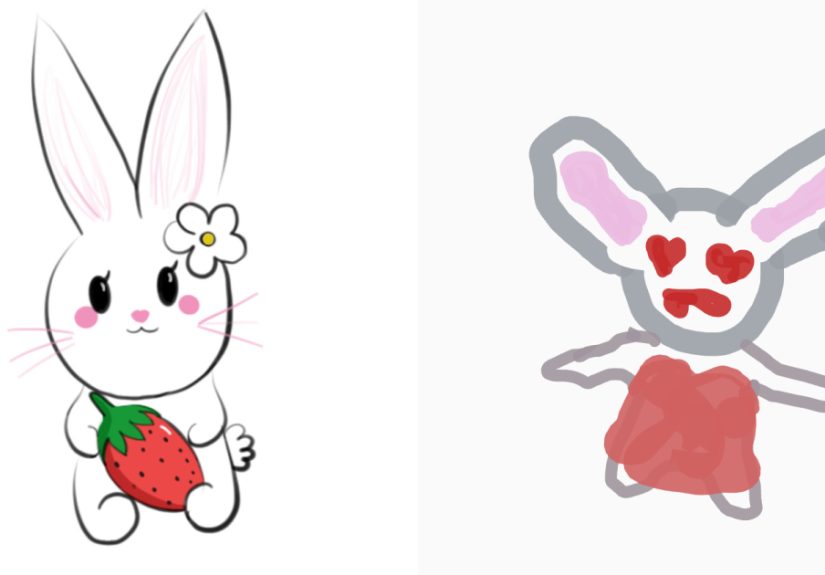
If your art app is open, your stylus is charged (or at least pretending to be), and your brain is yelling “I want to draw something cute but not too cute,” this challenge is your moment. “Hey Pandas” style prompts are perfect for low-pressure creativity: fun, shareable, and just specific enough to get you started without trapping you in a perfection spiral. And honestly, a bunny in love is basically a ready-made recipe for charm: soft shapes, expressive ears, heart-themed details, and enough emotional drama to make even your color palette blush.
In this guide, we’ll build a digital illustration concept for a love-struck bunny from scratchidea, sketch, line art, color, lighting, and final polishwhile keeping it beginner-friendly and genuinely fun. Whether you use Photoshop, Fresco, Sketchbook, Procreate, or another drawing app, the principles are the same: strong shapes, clear emotion, readable composition, and a little personality. (Okay, and maybe a sparkly blush layer. We’re artists, not robots.)
Why This “Hey Pandas” Prompt Works So Well
Great art prompts give you a direction without hijacking your style. “Draw a bunny in love digitally” does exactly that. It gives you:
- A character: bunny (instantly cute, easy to stylize)
- An emotion: in love (clear storytelling built in)
- A medium: digital (layers, effects, color flexibility)
That combination is SEO gold for art content and creative gold for actual humans. It invites beginners because bunnies can be built from circles and ovals, and it excites more advanced artists because emotion, rendering, and lighting can get deliciously complex. You can go cartoon, anime, watercolor-style, painterly, pixel art, or storybook illustration. A single prompt can produce a whole zoo of adorable outcomesand that’s exactly what makes community-style art challenges so addictive.
Before You Draw: Set Up for a Smooth Session
1) Pick your app and stop overthinking it
Use what you already have. The best drawing app is the one you can open in under ten seconds. If you spend forty minutes comparing brush engines before drawing one ear, the bunny wins and you lose. Most major apps support the core features you need: layers, brush customization, color picking, and selection tools.
A good beginner setup:
- One sketch brush (soft pencil or textured pencil)
- One line brush (clean inking brush with stabilization if available)
- One paint brush (opaque or semi-opaque)
- One soft brush (for blush, glow, and gentle shading)
- One eraser (hard edge for cleanup, soft edge for blending)
2) Create a simple layer stack
If you’ve ever accidentally colored your sketch lines and then whispered “cool cool cool” while internally collapsing, layers are your best friend. A clean layer setup makes editing painless and helps you work faster.
- Layer 1: Rough thumbnail sketches
- Layer 2: Refined sketch
- Layer 3: Final line art
- Layer 4: Base colors (flats)
- Layer 5: Shadows (clipped to base colors)
- Layer 6: Highlights/blush/glow
- Layer 7: Background/hearts/effects
This isn’t mandatory, but it’s a proven workflow because it keeps your edits flexible. Want bigger eyes? Move them. Want pinker cheeks? Adjust one layer. Want to erase the cringe sparkles from version one? Congratulations, you’re growing as an artist.
3) Calibrate your pen pressure (if your device supports it)
Stylus pressure and tilt can make a huge difference in line quality and shading control. If your lines feel stiff, too thick, or wildly dramatic in all the wrong ways, check your pen settings. A quick adjustment can make your strokes feel more natural, especially for line weight and soft shading.
How to Design a Bunny That Looks “In Love”
“In love” is not just hearts floating around a rabbit like a romantic weather event. The emotion should show in the pose, facial expression, and body language. This is where your drawing starts to feel alive.
Start with soft, readable shapes
Bunnies are naturally shape-friendly. Use a circle for the head, an oval for the body, smaller circles for cheeks or paws, and long rounded shapes for ears. Rounded shapes read as friendly and gentle, which fits the romantic vibe. Sharper angles can still work, but save them for style accents (lashes, tufted fur, dramatic heart-arrow accessories, etc.).
Try these silhouette ideas:
- The shy crush bunny: head tilted down, eyes looking up, paws tucked in
- The confident love-bomb bunny: chest forward, one paw extended with a flower
- The dreamy bunny: eyes half-closed, floating pose, tiny hearts orbiting like satellites
- The chaotic Valentine bunny: holding too many envelopes, tripping, still adorable
Use expression cues that feel believable
Real rabbits communicate a lot through ear position, posture, and subtle facial/body cues, and that’s useful even when you’re drawing a stylized character. You don’t need biological realism, but borrowing recognizable signals helps the illustration feel grounded.
For a “bunny in love” look, combine:
- Relaxed or gently forward ears (curious, engaged)
- Soft eyes or heart-shaped highlights
- A slight lean toward the “love interest” (even if it’s off-screen)
- Looser, less defensive posture (not tense or crouched)
- Small smile, tiny blush, or content “daydream” face
Avoid cues that accidentally read as fear or stressflattened ears pinned tight, tense crouch, or overly wide alarmed eyesunless your concept is “bunny saw crush and forgot how gravity works,” which, to be fair, is a valid comedic direction.
Color Palette Ideas for Romantic Bunny Art
A strong color palette can carry the mood before anyone notices your perfect whiskers. For this prompt, you want cohesion, not a candy-store explosion (unless that’s your style, in which case explode responsibly).
Palette formulas that work
- Pastel Romance: blush pink, cream, warm gray, lavender, soft peach
- Storybook Valentine: dusty rose, burgundy, gold, cocoa brown, ivory
- Kawaii Pop: bubblegum pink, sky blue, mint, white, cherry red accents
- Moonlit Crush: periwinkle, cool gray, silver, pale pink glow, deep navy background
Keep your palette cohesive by limiting the number of dominant hues, then adding variety through value and saturation. In plain English: fewer main colors, more light/dark versions of them. That gives your art depth without making it look like a marker set exploded during an emotional event.
Use contrast for focus
If the bunny is the star, make sure the focal point has the strongest contrast. A light bunny against a darker background, or a warm pink blush against a neutral fur color, helps the eye know where to look first. Visual hierarchy matterseven in art featuring a rabbit with a love letter and a dramatic soul.
Step-by-Step Digital Workflow
Step 1: Thumbnail three ideas
Before committing, make three tiny sketches (seriously tiny). Spend 2–4 minutes on each. Focus only on pose and composition. No eyelashes. No fur texture. No “just one little highlight.” Thumbnails help you avoid spending an hour rendering a pose that reads like “bunny waiting for a bus” instead of “bunny in love.”
Step 2: Build the refined sketch
Choose your strongest thumbnail and enlarge it. Refine the proportions, face angle, ear direction, and paw placement. Add story props: a flower, a heart balloon, a note, a bow, or a tiny cupid arrow (safely cartooned, please). Make sure the silhouette reads clearly even if you zoom out.
Step 3: Ink with line-weight variation
Use slightly thicker lines on the outer contour and thinner lines for interior details like fur tufts, nose, or eye highlights. This adds depth and polish fast. If your app has stabilization or predictive stroke tools, use thembut don’t crank them so high that your line feels like it was drawn by a polite train.
Step 4: Lay down flats
Add base colors under the line art. Keep this stage clean and simple. Separate major elements (fur, inner ears, clothing/accessories, background, hearts) so later edits are painless. This is where digital art shines: you can test palette variations in minutes.
Step 5: Add shadows and light
Decide on one light source. For romantic art, soft directional lighting works beautifully. Use gentle shadows under the chin, ears, paws, and around overlapping forms. Add blush to cheeks and inner ears for warmth. Then place highlights on the eyes, nose, and any glossy props (envelope seal, ribbon, balloon, etc.).
Want instant “aww” energy? Add a subtle rim light and a low-opacity glow around floating hearts. Not too much. We’re going for magical, not “the bunny has unlocked a legendary skin.”
Step 6: Background and effects
A simple background often works best. Try:
- Soft gradient with scattered hearts
- Clouds + sparkles + pastel stars
- A window frame with moonlight
- A plain color field with patterned dots for retro charm
Keep the background supporting the character, not fighting for attention. If your bunny disappears, reduce detail or lower contrast behind it.
Common Mistakes (And How to Fix Them Fast)
1) “It’s cute, but I can’t tell what the emotion is”
Fix the pose first, not the accessories. Emotion reads through body language more than props. Hearts help, but posture sells the story.
2) “My line art looks shaky”
Lower canvas zoom, draw from the arm when possible, use stabilization lightly, and make faster confident strokes. Also, rotate the canvas. Digital artists forget this and then suffer unnecessarily.
3) “The colors look muddy”
Reduce the number of saturated colors competing at once. Rebuild the palette with one dominant hue family and a contrasting accent. Check values in grayscale if needed.
4) “The bunny looks stiff”
Add a curve to the spine, tilt the head a little more, and offset the ears so they aren’t mirror-perfect. Symmetry can look formal; love-struck bunnies are not known for formal behavior.
How to Make Your Submission Stand Out in a Community Challenge
If this is for a “Hey Pandas” style post, remember: people respond to personality. Technical skill helps, but charm wins hearts. (Pun absolutely intended.)
- Give your bunny a mini-story: first crush, long-distance love, Valentine panic, secret admirer, etc.
- Add one memorable prop: oversized bouquet, tiny flip phone, heart-shaped glasses, awkward love poem
- Use a title/caption: “He practiced saying hi for three days” is stronger than “Bunny art”
- Show your style: don’t copy trending aesthetics line-for-lineinterpret the prompt your way
- Export cleanly: crisp resolution, good contrast, no accidental UI screenshots unless that’s the joke
And yes, finger drawing counts. Mouse drawing counts. Tablet drawing counts. “I made this at 1:17 a.m. while eating cereal” absolutely counts. Community art prompts are for participation, not gatekeeping.
Conclusion
“Hey Pandas, Draw A Bunny In Love Digitally” is one of those prompts that looks simple but gives you a ton of room to play. You can practice composition, color harmony, layers, stylus control, and character emotion all in one illustrationwhile making something undeniably adorable. Start with soft shapes, build a readable pose, use a limited palette, and let the bunny’s body language carry the feeling.
Most importantly, make it fun. The best digital art in community challenges often feels alive because the artist clearly enjoyed the process. So draw the lovestruck bunny. Give it sparkles. Give it a flower. Give it a dramatic stare into the middle distance. Art history deserves this.
Experiences Related to “Hey Pandas, Draw A Bunny In Love Digitally” (Extended Section)
One of the most useful things I’ve seen with prompts like this is how differently artists interpret the same emotional idea. A beginner might draw a round bunny with a heart floating overhead and feel proud because they finally finished something. A more experienced illustrator might build a full scene with cinematic lighting, petals in the air, and a tiny narrative about the bunny waiting to deliver a letter. Both are successful. That’s the beauty of community prompt culture: the goal is expression first, polish second.
In practice, many artists discover that the hardest part is not rendering fur or choosing brushesit’s communicating emotion clearly. A bunny can look cute by default, but “in love” requires intent. I’ve seen artists fix an entire piece by changing only three things: tilting the head slightly, softening the eyes, and rotating one ear forward. Suddenly the character looks engaged, curious, and emotionally readable. It’s a great reminder that strong art decisions are often small decisions made on purpose.
Another common experience is the “too many effects” phase. You start with a clean sketch, then add glow, sparkles, more glow, texture overlays, lens blur, heart stamps, glitter brushes, and something that can only be described as romantic fog. Twenty minutes later, your bunny looks like a pop concert. This happens to everyone. The fix is simple: turn off effect layers one by one and keep only the ones that actually improve focus or mood. Digital art gives you endless options, which is wonderfulright up until it becomes a trap.
Artists working on tablets often report a noticeable improvement after adjusting pen pressure settings and brush stabilization instead of switching apps. That’s a valuable lesson for beginners who think the software is the problem. Sometimes it is. But often, the real problem is a line brush set to “fire hose” mode or a pressure curve that turns every touch into a dramatic statement. Spend five minutes tuning tools and your workflow can feel completely different.
I’ve also noticed that adding a tiny story prop dramatically increases engagement when sharing artwork. A bunny holding a plain heart is cute. A bunny holding a crumpled note that says “hi” with visible panic? Memorable. A bunny wearing a bow tie and rehearsing in front of flowers? Even better. Viewers connect to narrative details because they imply personality. In community spaces, personality often matters more than flawless rendering.
Finally, there’s the biggest shared experience of all: people underestimate how much they can create from a simple prompt. “Draw a bunny in love” sounds small, but it can teach shape language, composition, color restraint, emotional storytelling, and finishing discipline in one session. That’s why prompts like this are worth repeating. Your first version might be simple. Your tenth version might be stunning. And somewhere in between, you’ll probably make a bunny so charming that you consider giving it a name and a sequel. That, honestly, is a great outcome.