Table of Contents >> Show >> Hide
- Birthmarks 101: What they are (and why they show up)
- Health first: When a birthmark deserves a closer look
- Why celebrating birthmarks matters (yes, even if you “don’t care”)
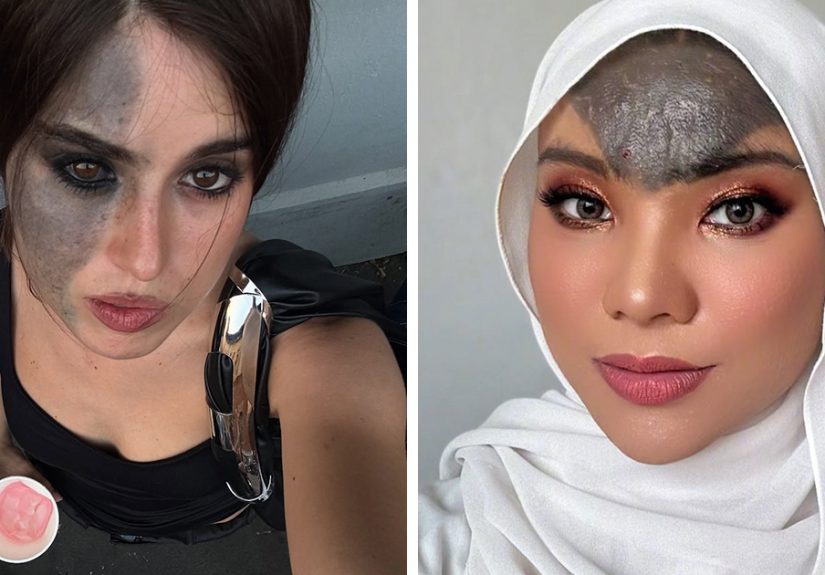
- The gallery: 67 mini-celebrations of beautiful, unique birthmarks
- How to celebrate your own birthmark (without turning it into a “project”)
- Treatment options: embracing, minimizing, or mixing both
- FAQ: Quick answers people actually want
- Experiences: What it feels like to celebrate a birthmark in real life (extra reflections)
- Closing thoughts
Birthmarks are the original “limited edition” featureno app update required, no two alike, and absolutely impossible to duplicate.
Some are bold and colorful, some are subtle, and some show up like a surprise guest a few weeks after birth. But across families, schools,
workplaces, and social media feeds, a growing number of people are doing something refreshingly simple: they’re treating birthmarks like what they are
a normal part of human skin and a legitimate part of personal style.
This article is part celebration, part reality check. We’ll cover what birthmarks are (and what they aren’t), when a doctor’s opinion is smart,
why “visible difference” confidence is having a moment, and then we’ll end with a gallery of 67 mini-stories inspired by common themes people share
when they stop hiding and start owning what makes them them.
Birthmarks 101: What they are (and why they show up)
“Birthmark” is an umbrella term for skin differences that are present at birth or appear soon after. Clinicians generally group them into
vascular birthmarks (involving blood vessels) and pigmented birthmarks (involving pigment-producing cells).
Most are harmless, and many don’t need treatment. Still, understanding the basics can help you celebrate confidentlywithout ignoring your health.
Vascular birthmarks (the “blood vessel” family)
-
Infantile hemangiomas (“strawberry” birthmarks): Often appear in the first weeks of life, may grow for a period, and many shrink over time.
They can be raised or flat, bright red or deeper. Some need monitoring or treatment depending on size and location. -
Port-wine stains (capillary malformations): Flat pink-to-purple patches present at birth that tend not to fade on their own and may darken or thicken over time.
Some people pursue laser treatment; others embrace them as part of their look. -
Salmon patches / “angel kisses” / “stork bites”: Common, usually light pink patches that often fade as a child grows.
They can pop more when someone is crying, hot, or exercisingyour skin’s version of mood lighting.
Pigmented birthmarks (the “melanin” family)
- Congenital melanocytic nevi: Moles present at birth or early infancy. They vary widely in size, color, and texture.
- Café-au-lait spots: Flat light-brown patches. Having one or two is common; having many is worth discussing with a clinician.
-
Dermal melanocytosis (previously called “Mongolian spots”): Blue-gray patches, often on the lower back or buttocks,
that commonly fade over time.
Health first: When a birthmark deserves a closer look
Celebrating your skin and paying attention to your skin can coexist beautifully. It’s smart to get a clinician’s opinion if a mark is
rapidly changing, bleeding, painful, ulcerating, or interfering with vision, breathing,
feeding, or movementespecially in infants and children. Some locations (like near the eye) may need extra attention.
Port-wine stains on the face, for example, can be purely cosmetic for many people, but in rare situations they may be associated with certain syndromes,
so evaluation can be reassuring. Infantile hemangiomas are often harmless and self-resolving, but some benefit from treatmentparticularly when they’re large,
in sensitive areas, or causing complications. In short: if something feels “off,” it’s not overreacting to ask.
The goal isn’t to turn everyone into a skin detective with a magnifying glass and a suspense soundtrack. It’s simply to keep confidence and care
on the same team.
Why celebrating birthmarks matters (yes, even if you “don’t care”)
Visible differences can attract curiosity, compliments, awkward comments, and sometimes uninvited opinions from strangers who missed the day
in kindergarten when we learned, “We don’t comment on people’s bodies.” For some, that attention is minor. For others, it can shape confidence,
mental well-being, and social experiencesespecially when the birthmark is on the face or a highly visible area.
That’s why representation matters. When people share unfiltered photos, wear the sleeveless top, skip the heavy makeup, or post a selfie that isn’t
a “before-and-after,” they’re quietly changing the cultural default setting. It becomes easier for the next kid, the next teen, the next adult walking into a job interview,
date, classroom, or swimming pool.
The gallery: 67 mini-celebrations of beautiful, unique birthmarks
Note: The 67 people below are written as short, illustrative snapshots based on common, real-world themes people share about birthmarks.
They’re not intended to represent specific identifiable individualsbecause your story deserves to be yours.
Face & neck: The “front-and-center” confidence club (1–20)
- She wears a bold red lipstick that plays up her port-wine stain instead of “correcting” itcolor harmony, not camouflage.
- He keeps his hair cropped short so the mark at his temple shows clearly, like a signature he didn’t have to practice.
- They stopped editing selfies and discovered something shocking: their face still looks like their face.
- Her “angel kiss” faded with time, but she remembers it like a childhood nicknamesweet, brief, and totally hers.
- He wears glasses with bright frames because if people are going to look anyway, they might as well enjoy the styling choices.
- She calls her cheek birthmark “the comet” and refuses to accept any less interesting label.
- He learned the perfect response to rude questions: “Thanks for noticingmy skin came with custom artwork.”
- She took a family photo without makeup for the first time and realized the only person judging was… past her.
- He stopped angling his face away in group pics. Now the group gets the real group picture.
- She used glitter for a festival lookthen laughed at how strangers assumed it was “temporary.” (Nope. Just fabulous.)
- He grew a beard partly for fun, partly for balanceproof you can style around a birthmark without hiding it.
- She joined a support group and discovered a weird miracle: other people have the exact same awkward stories.
- He asked a dermatologist questions, got reassurance, and felt the anxiety unclench like a fist opening.
- She wears her hair up at weddings now. Not as a statementjust because she likes it that way.
- He posted a selfie with zero explanation. The comment section did the celebrating for him.
- She refused the “cover it for interviews” advice and got hired anywaybecause talent is louder than pigment.
- He’s a teacher who answers kids’ questions simply: “It’s a birthmark. Bodies are all different. Back to math.”
- She learned that confidence doesn’t always feel confident. Sometimes it feels like showing up anyway.
- He wears sunscreen like it’s part of his outfit. Skin pride includes skin care.
- She stopped calling it a “flaw” and started calling it “a feature.” Language matters more than people admit.
Arms & hands: The everyday-storytellers (21–38)
- She has a café-au-lait patch on her forearm and jokes it looks like a coffee spillexcept it never stains the laundry.
- He wears short sleeves at the gym because he’s there to lift weights, not carry insecurity.
- They got a tattoo that frames the birthmark like a pictureturning “covering” into “highlighting.”
- She paints her nails bright colors so her hands look like a celebration, not something to tuck away.
- He stopped saying “Sorry, it’s just a birthmark” and started saying “Yep, that’s me.” No apology needed.
- She learned the difference between curiosity and entitlementand she sets boundaries like a pro.
- He takes product photos for his small business and doesn’t retouch the mark on his wrist. Authentic sells.
- She stopped wearing long sleeves in summer and gained a new hobby: enjoying summer.
- He has an old nickname from childhood teasing and reclaimed it, turning it into an inside joke with friends.
- She learned the quickest conversation redirect: “Anywaywhat were you saying about your trip?”
- He’s a musician whose stage lights make his birthmark glow; fans think it’s part of the show. It isjust not on purpose.
- She took maternity photos and didn’t edit a thing. The pictures look like life, not a catalog.
- He got asked “Does it hurt?” so often he finally made a one-line FAQ: “Nope. Just decorative.”
- She wears bangles that clink when she gesturesbecause she talks with her hands and she’s done shrinking.
- He learned that some people stare because they’re amazed, not judging. He lets amazement be harmless.
- She took a “before-and-after” photoexcept it was “before self-acceptance” and “after self-acceptance.” Same skin. Better peace.
- He coaches kids’ sports and models neutral language: “Different isn’t bad. Different is normal.”
- She stopped hiding for photos and started being the person who takes them.
Legs & feet: Swim seasons, shorts, and “I’m doing it anyway” energy (39–54)
- She bought the shorts. The world did not end. The shorts are now her favorite shorts.
- He has a vascular patch on his calf and stopped treating it like a secret message he must decode.
- They wear bright sneakers that pull attention where they want itstyle is a steering wheel.
- She goes to the beach and focuses on the ocean, not on strangers’ eyeballs doing gymnastics.
- He’s a runner whose birthmark shows more when he’s warm; he calls it his “effort meter.”
- She wore a dress to a formal event and realized most people are too busy worrying about themselves to judge her.
- He’s a dancer who stopped using makeup on his legs because sweat + makeup = a bad relationship.
- She learned a powerful truth: you don’t have to “love” a birthmark 24/7 to stop hiding it.
- He got laser treatment as a kid, not because he was “wrong,” but because the family wanted options. Now he chooses his own path.
- She posts “real skin” photos after workoutsstretch marks, birthmarks, all of itbecause bodies look like bodies when they move.
- He has a small mole-like mark on his ankle and calls it his “punctuation.” A tiny dot that ends no story.
- She wears patterned tights sometimes, bare legs other timesbecause celebration can be loud or quiet.
- He stopped dodging pool invitations and discovered friends cared more about laughing than looking.
- She turned her birthmark into a conversation starter on her terms: “Want to hear the funniest comment I ever got?”
- He got comfortable saying “I don’t want to talk about it.” That sentence is also self-respect.
- She realized confidence is contagious, and she’s happy to be the one who spreads it.
Back, belly & beyond: The private-to-public spectrum (55–67)
- She has dermal melanocytosis that faded over time, and her parents kept early photos like treasured chapters.
- He has a large pigmented patch on his shoulder blade and treats it like artwork: not “perfect,” just real.
- They stopped “warning” partners about their birthmark and started trusting that kind people can handle skin.
- She wore a backless dress and felt nervous for ten minutesthen felt unstoppable for the rest of the night.
- He has a birthmark on his chest that looks like a brushstroke. He says, “My skin has personality.”
- She’s a new parent who practices neutral language so her child grows up hearing confidence, not concern.
- He asked his doctor the hard questions and felt proud of himself for choosing clarity over internet spirals.
- She keeps old comments in perspective: people can be loud and wrong at the same time.
- He has multiple café-au-lait spots and knows that “common” doesn’t mean “invisible.” He’s allowed to feel things about it.
- She reframed compliments: “You’re so brave” became “Thank youI’m just being myself.”
- He’s an artist who paints bodies with real marks because the human form has never been one-size-fits-all.
- She chose treatment for personal reasons and still considers her birthmark part of her story. Both can be true.
- He celebrates in the simplest way: he gets dressed, goes outside, and lives his life without negotiating with a mirror.
How to celebrate your own birthmark (without turning it into a “project”)
1) Choose the story you tellif you tell one at all
You don’t owe anyone an explanation. If you want a script, try something simple:
“It’s a birthmark.” (Pause.) “So, how’ve you been?” If someone is rude, you can keep your calm and your boundaries:
“I’m not discussing my body today.”
2) Style around it, not against it
Celebration doesn’t have to mean spotlighting. It can be as subtle as wearing what you like, choosing colors that make you feel good,
or letting your skin exist without constant “fixing.” Some people frame birthmarks with tattoos or makeup artistry; others keep it natural.
The common thread is choice.
3) For parents: model neutral, confident language
Kids absorb tone like sponges. “It’s just part of your skin” lands differently than “We need to cover that.” If your child’s birthmark needs monitoring,
you can still separate health from shame: “We’re checking it to keep you healthy,” not “We’re fixing you.”
Treatment options: embracing, minimizing, or mixing both
Some people celebrate by embracing their birthmark exactly as it is. Others celebrate by choosing treatmentbecause comfort matters, function matters,
and personal preference matters. For example, clinicians may use beta-blocker medications (like propranolol) for certain infantile hemangiomas,
and pulsed dye laser treatment is commonly used to lighten port-wine stains. The “right” choice is the one made with good medical guidance and personal agency.
If you’re considering treatment, a dermatologist (or a pediatric dermatologist for kids) can discuss what’s typical for your specific type of birthmark,
what to watch for, realistic outcomes, and risks. If you’re not considering treatment, that’s also a complete sentence.
FAQ: Quick answers people actually want
Do most birthmarks need treatment?
No. Many are harmless and don’t require treatment. Treatment is usually considered for medical reasons (like function or complications) or cosmetic preference.
Do “strawberry” hemangiomas go away?
Many infantile hemangiomas shrink significantly over time, often leaving minimal changes by later childhood. Some require treatment depending on size and location.
Can a port-wine stain fade on its own?
Port-wine stains are typically present at birth and tend not to fade spontaneously; they may darken or thicken over time. Some people choose laser treatment to lighten them.
Are café-au-lait spots always harmless?
One or a few can be common and harmless. If there are many or they’re accompanied by other symptoms, it’s worth discussing with a clinician for appropriate evaluation.
What’s the best way to handle staring?
The best way is the one that protects your peace. Some people use humor. Some ignore it. Some say, “Can I help you?”
Some wear headphones and pretend the world is a silent film. All valid.
Experiences: What it feels like to celebrate a birthmark in real life (extra reflections)
Celebrating a birthmark isn’t always confetti and confidence speeches. Sometimes it’s quiet and messy and surprisingly ordinarylike the first time you wear a sleeveless shirt
and your brain acts like you’re about to walk onto a stage. People describe an early phase of “hyper-awareness,” where every glance feels like a headline.
Then, with time, it often shifts into something softer: the realization that most strangers are simply curious, distracted, or thinking about what they’re having for lunch.
The birthmark doesn’t changeyour relationship to attention does.
Many people talk about childhood as the hardest chapter. Kids can be blunt, and not always kind. Some remember playground nicknames that stuck like gum on a sneaker.
Others remember the opposite: a friend who defended them, a teacher who normalized differences, or a parent who used calm, factual language that refused to turn skin into drama.
In adulthood, the “comments” don’t always stop, but the power dynamic changes. You get to decide how much access people have to your body and your story.
You also get to rewrite the internal script from “Please don’t notice” to “It’s okay if you notice.”
Dating and relationships come up a lot in personal stories. Some people used to “warn” partners ahead of time, like they were disclosing a scandal.
Over time, many realize something freeing: kind partners don’t need a warning about skin. If a birthmark sparks a question, it can be answered simply and moved on from.
Others say their birthmark became a surprisingly effective filteranyone who fixated on it or treated it as a flaw revealed themselves early, which saved time and emotional energy.
Workplaces are another milestone. People describe choosing headshots that show their birthmark, speaking on camera without heavy concealer,
or showing up to meetings without performing “polished” in a way that means “erased.” That choice can feel risky at first. Then it feels like relief.
A common theme is that competence lands louder than appearance, and confidence tends to reduce the weirdness in the room. When you act like your birthmark is normal,
many people follow your lead.
And then there’s social mediathe place where celebration can be loud, supportive, and sometimes complicated. Some people post photos and receive unexpected warmth:
“My kid has one too,” “Thank you for sharing,” “I needed to see this.” Others notice the occasional awkward compliment (“You’re so brave”),
and learn to accept the good intention while still preferring something simpler, like: “You look great.” The most powerful experience people describe isn’t viral fame.
It’s the small, everyday shift: looking in the mirror and feeling less like they’re negotiating with their reflection, and more like they’re just… getting ready for the day.
That’s what celebration often becomesless performance, more peace.
Closing thoughts
Birthmarks can be medical topics, aesthetic features, conversation starters, or background detailssometimes all in the same life. Celebrating them doesn’t mean pretending
you never struggled. It means your skin doesn’t have to earn permission to exist. Whether you embrace, treat, or simply stop thinking about it so much,
the win is the same: you get to be the author of your own story.