Table of Contents >> Show >> Hide
- What This Prompt Really Means (And Why People Love It)
- Safety First: Enjoy the Show, Not the ER
- How to Take Better Firework Photos (Without Becoming a Camera Wizard)
- Firework Photography With a DSLR or Mirrorless Camera
- Firework Photos With a Smartphone (Yes, You Can)
- Editing Firework Photos: Keep the Magic, Lose the Murk
- How to Post Your Firework Picture (So People Actually Engage)
- Fireworks Aren’t Always Allowed (And Sometimes That’s a Good Thing)
- Community Inspiration: Firework Photo Ideas That Feel Fresh
- 500+ Words of Real-World Firework Photo Experiences (The Fun Part)
- Conclusion
If you’ve ever tried to photograph fireworks, you already know the truth: your eyes see a dazzling sky ballet,
but your camera sometimes captures… a sad glowing dot that looks like a UFO sneezed.
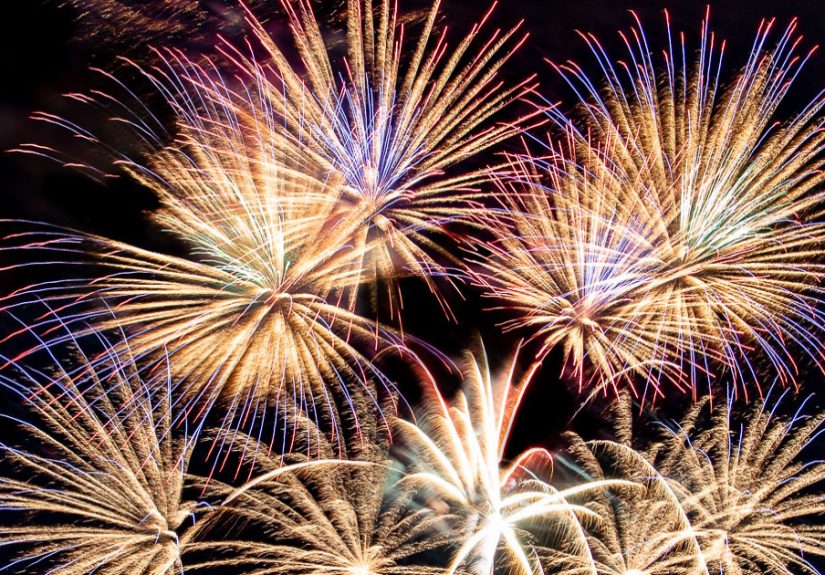
That’s why “Hey Pandas, Post A Firework Picture” is such a fun prompt. It’s not just about showing off the
perfect burst (though we absolutely accept bragging). It’s about sharing a momentwhere you were, who you were
with, what you heard, what you felt, and how that boom-boom sparkle made the night feel bigger than your everyday life.
This post is your all-in-one guide for collecting, posting, and enjoying firework photosplus practical tips for
getting shots you’ll actually want to keep. And because we love our fingers, eyebrows, and emergency-room-free evenings,
we’ll focus on photographing professional/public displays and watching from safe, legal viewing areas. Fireworks injuries
are no joke, and recent U.S. estimates show thousands of people end up hurt each year.
What This Prompt Really Means (And Why People Love It)
“Hey Pandas” style prompts (popular on community-driven sites) are basically a digital campfire: everyone gathers,
tells a story, and shares something visual. A firework photo is perfect for that because it’s instantly recognizable
and wildly personal at the same time. Two people can shoot the same show from two blocks apart and end up with completely
different “memories” in pixelsone with a skyline silhouette, another with reflections on water, another with a kid’s
face glowing like it just saw magic.
What makes a great firework post
- A clear image (or at least an image that’s charmingly chaotic on purpose).
- A tiny story: Where was this? What was the vibe? Was someone yelling “OOOH!” every three seconds?
- A detail that helps the viewer feel presentmusic, crowd energy, a landmark, the smell of popcorn.
- Respect: Don’t post identifying images of strangers (especially kids) without permission.
Safety First: Enjoy the Show, Not the ER
Let’s get the important part out of the way: fireworks can cause serious injuries, and U.S. safety agencies regularly
warn that the safest option is attending professional displays rather than using fireworks yourself.
In fact, national reporting has highlighted big year-to-year swings and recent increases in injuries, including a large
number of emergency-room visits.
If you’re taking photos, choose a safe, designated viewing spot. Stay aware of your surroundings
(tripods + crowds = a dramatic meet-cute nobody asked for). Keep pathways clear, watch for tripping hazards, and don’t
wander into restricted areasespecially in parks and public lands where fireworks can be illegal and dangerous due to fire risk.
Quick safety checklist for firework photography
- Watch professional shows whenever possible.
- Keep pets safe: many pets are stressed by loud boomsconsider staying home with them or creating a calm indoor space.
- Skip drones near fireworks or crowdsairspace restrictions can apply and safety risks are real.
- Bring ear protection if you’re close to loud displays (especially for kids).
How to Take Better Firework Photos (Without Becoming a Camera Wizard)
Fireworks are bright, fast, and unpredictable. Cameras love predictability. So the secret is to make everything else
predictable: your stability, your framing, your exposure approach, and your timing.
Step 1: Stabilize the camera
Whether you use a DSLR, mirrorless, point-and-shoot, or smartphone, stability is your best friend. Many photography
guides recommend a tripod and a remote/cable release or self-timer to reduce shake during long exposures.
If you don’t have a tripod, brace your phone/camera against a railing, a backpack, or a stable surface.
Step 2: Frame like a storyteller (not a telescope)
A sky full of fireworks is cool. A sky full of fireworks plus something groundinglike a skyline, a bridge,
a tree line, or shimmering reflections on a lakeis often more memorable. Scouting your spot early helps you choose a
foreground element and avoid last-minute “why is there a streetlight photobombing my masterpiece?” surprises.
Step 3: Use the right approach for your device
Firework Photography With a DSLR or Mirrorless Camera
Many reputable camera brands and photography educators suggest starting in Manual mode and adjusting based on your
results rather than trusting the camera’s meterbecause fireworks happen in a very dark scene, and the “average” exposure
is not what you want.
A practical starting point (then adjust)
- ISO: Low (often around 100–200) to reduce noise and keep highlights from blowing out.
- Aperture: Moderately stopped down (many guides suggest starting around f/8–f/11).
- Shutter: Use longer exposures to capture trails and multiple burststhen shorten if the image looks too bright.
- Focus: Set focus before the show and avoid hunting in the dark.
The key is to take a few test shots and check your screen. If the fireworks look like a white blob, reduce exposure
(smaller aperture, shorter shutter, or lower ISO). If the scene is too dim or the trails are too thin, give it a bit more
time or open up slightly. That “shoot, review, adjust” workflow is recommended by major camera educators.
Pro-ish tips that don’t require a pro attitude
- Don’t zoom too tight at firstyou’ll miss bursts that happen just outside your frame.
- Try a wider lens if you want a sense of place (skyline + fireworks = instant postcard energy).
- Shoot the highest quality file you can if your camera supports RAW for better editing flexibility.
Firework Photos With a Smartphone (Yes, You Can)
Smartphones can do surprisingly wellespecially if you help them out. Turn off flash (it won’t reach the sky, but it will
absolutely illuminate the back of a stranger’s head). For iPhone users, Live Photos can help you pick a sharper “key photo”
after the moment, and iOS also offers a Long Exposure effect that can create a light-trail look.
If you’re on a Pixel phone, Google’s Night Sight guidance emphasizes holding still while the phone captures the image,
which matters a lot in low light.
Some smartphone photography guidance (including tips discussed by Pixel experts in media coverage) also notes that manual
controls and RAW options can expand what you can do with bright bursts against a dark sky.
Smartphone mini-checklist
- Stabilize: prop your phone or use a small tripod.
- Flash off: always.
- Tap to focus/expose on the sky area (varies by phone), then adjust if it over-brightens.
- Use Live Photos / night modes if they help you capture timing and sharpness.
Editing Firework Photos: Keep the Magic, Lose the Murk
Editing shouldn’t turn your fireworks into neon spaghetti (unless that’s your brandgo off). The goal is usually:
darker sky, crisp trails, and color that feels vivid but believable.
Simple edits that make a big difference
- Lower highlights if bursts look blown out.
- Increase contrast slightly to separate trails from sky.
- Reduce noise if you shot at higher ISO or your phone smoothed the scene.
- Crop for composition: remove empty sky and emphasize the best bursts + any landmark.
How to Post Your Firework Picture (So People Actually Engage)
The best “Hey Pandas” posts feel like a friendly show-and-tell, not a stock photo dump. If you want comments beyond
“pretty!”, give people something to respond to.
Caption formulas that work
- The moment: “Final burst of the nighteveryone cheered like we won the Olympics.”
- The location vibe: “Downtown lights + fireworks reflections = chef’s kiss.”
- The funny mishap: “I tried to time the shot and accidentally photographed my own excitement.”
- The question: “Do you prefer glittering ‘willow’ fireworks or the big loud peonies?”
Posting etiquette (aka “Don’t be That Person”)
- Privacy: Avoid posting close-ups of strangers without permission.
- Accessibility: Add a short description (alt-text style) so more people can enjoy your image.
- Copyright: Post your own shots, or clearly credit if you’re sharing someone else’s work (and confirm you’re allowed).
Fireworks Aren’t Always Allowed (And Sometimes That’s a Good Thing)
Depending on where you are, fireworks can be restrictedespecially on public lands where wildfire risk is high. Some U.S.
agencies explicitly prohibit fireworks on lands they manage and encourage visitors to leave fireworks at home.
So if you’re traveling, check local rules and follow posted guidance.
The fun twist: restrictions can lead to creative alternatives. More communities are exploring “quiet” celebrations or
light-based shows, which can still produce amazing photosespecially if you focus on atmosphere, crowd reactions, and
the environment around the event.
Community Inspiration: Firework Photo Ideas That Feel Fresh
1) Reflections
Water turns fireworks into a two-for-one: the burst and its shimmering twin. Lakes, rivers, harborseven a puddle after
rain can become a dramatic mirror.
2) Silhouettes
A dark outline (trees, a skyline, a Ferris wheel, a bridge) can add scale and mood. It’s the difference between “fireworks”
and “a memory I want to frame.”
3) The “after” shot
Don’t stop when the last burst fades. Smoke patterns, crowd glow, and city lights can make a gorgeous final image that
feels cinematic.
500+ Words of Real-World Firework Photo Experiences (The Fun Part)
People who post firework photos often describe the same funny pattern: the first year, you take one picture, it’s blurry,
and you swear your phone is broken. The second year, you take 73 pictures, accidentally record your shoes for 12 seconds,
and somehow capture one shot that makes you feel like a professional. By the third year, you’re the “camera friend” in
your groupthe one who brings a tiny tripod and gets asked, “Hey, can you take one for my story?”
One classic experience is the “too zoomed-in tragedy”. You’re trying to get that perfect burst, so you
zoom in until the frame is basically fireworks-only. Then the show changes rhythm, three bursts go off at once, and your
photo becomes abstract art titled “Bright Confetti and Regret.” The fix people learn fast is to start wider,
then tighten the frame once they understand where the fireworks are launching and how big the bursts will be. The wide
framing also captures something you can’t fake later: the settingcity lights, a crowd line, the edge of the water, or a
landmark that instantly says “this is where I was.”
Another common moment is the “crowd soundtrack” effect. Even if your photo is silent, it can still
feel loud. People often describe remembering the exact timing of the finale because the entire crowd collectively
gasped, then cheered, then clapped like the sky personally performed for them. When posters add a one-sentence caption
like “Finale hit and everyone lost it,” viewers get pulled in. Suddenly it’s not just a pictureit’s a shared experience.
Then there’s the “kid reaction cameo”not necessarily showing a child’s face clearly, but capturing the
small human details: tiny hands pointing upward, a silhouette perched on someone’s shoulders, or a glow stick waving like
a conductor’s baton. Those images get the most engagement because they show emotion, not just explosions. The fireworks
become background to a story about wonder, tradition, and being together outside at night.
People also talk about the surprisingly cozy experience of photographing fireworks from a distance. Not everyone wants to
be in the middle of a huge crowd. Some prefer a quieter spot where they can stabilize the camera, breathe, and enjoy the
show without elbows in their ribs. From those calmer viewpoints, posters often capture cleaner compositionsmore skyline,
more reflections, more symmetry. The photos feel peaceful, like a night postcard, and the captions tend to be softer too:
“Watched from across the riverquiet, breezy, perfect.”
Finally, there’s the proud moment when someone tries a simple techniquelike propping the phone on a railing or using a
Live Photo feature to pick the sharpest frameand it actually works. They post it with a humble caption like “I finally
got one!” and the comments fill up with people sharing their own mini-wins and tips. That’s the best part of “Hey Pandas”
prompts: the community turns a tricky subject into something welcoming. Nobody has to be a pro. You just have to show up,
share your sparkle, and let the internet collectively go “Oooooh!”
Conclusion
“Hey Pandas, Post A Firework Picture” is your invitation to share a small piece of joywhether it’s a perfectly crisp
burst over a skyline or a slightly chaotic photo that still captures the feeling of the night. Keep it safe by choosing
professional/public displays, stabilize your camera, frame with intention, and add a caption that gives people something
to smile about. Then enjoy the best part: seeing how many different ways humans can look at the same sky and feel something.