Table of Contents >> Show >> Hide
- The Participation Boom Hides a Bigger Equity Gap
- What the Diversity Problem Really Looks Like
- Why Outdoor Equity Matters More Than It Seems
- Who Is Doing the Work?
- How Hiking Becomes More Equitable
- The Future of Hiking Should Look More Like America
- Experiences From the Trail: What Equity Feels Like in Real Life
- Conclusion
- SEO Tags
Hiking is supposed to be the great equalizer. One pair of shoes, one patch of dirt, one nice view, and suddenly everyone is starring in their own outdoorsy coming-of-age film. That is the fantasy, anyway. The reality is messier. While more Americans are spending time outside than ever before, the outdoors still does not feel equally welcoming, accessible, or practical for everyone. The trail may be public, but the path to getting there often is not.
That is the heart of the diversity problem in hiking. It is not about whether people from different backgrounds like nature. They do. It is about who has nearby parks, spare time, safe transportation, reliable gear, useful information, accessible trails, and the quiet confidence that they belong once they arrive. In other words, the issue is not interest. It is infrastructure, culture, and opportunity.
If that sounds heavy for a hobby involving granola bars and suspiciously expensive rain jackets, welcome to the modern outdoors conversation. The good news is that change is happening. Community groups, public agencies, nonprofits, and outdoor brands are all pushing, with mixed but meaningful success, toward a more equitable future. Hiking still has a diversity problem. But it also has a chance to fix it.
The Participation Boom Hides a Bigger Equity Gap
Outdoor recreation is booming in the United States. More people are walking, hiking, camping, fishing, and rediscovering that fresh air is cheaper than therapy and usually comes with better scenery. Women now make up a larger share of outdoor participants than in previous years, and the outdoor participant base is becoming more racially and ethnically diverse. On paper, that sounds like a victory lap.
But participation numbers do not automatically equal equity. A growing headcount does not mean every community experiences the outdoors in the same way. You can have more people hiking overall while still leaving big gaps in access, comfort, and representation. That is exactly what has happened. The outdoors has expanded, but not evenly.
Many communities still face a simple starting problem: the nearest usable green space is too far away, too small, poorly maintained, or disconnected from safe walking routes and transit. If your neighborhood lacks quality parks, the leap from city life to trail life is not a leap at all. It is a logistical obstacle course. For some households, a “quick hike” requires a car, gas money, entrance fees, gear, snacks, childcare planning, and half a day that may not exist.
So yes, hiking is popular. But popularity alone is a lousy measure of fairness. A packed trailhead on a holiday weekend does not prove the outdoors is inclusive. It may only prove that the people with the fewest barriers made it there first.
What the Diversity Problem Really Looks Like
Access starts long before the trailhead
Equity in hiking begins in neighborhoods, not mountain passes. When communities do not have parks, greenways, safe sidewalks, or nearby nature, people miss the beginner stage of outdoor life. They do not get the casual exposure that helps hiking feel ordinary instead of intimidating. A person who grows up walking shaded trails in a local park is far more likely to see hiking as a normal weekend option. A person who grows up surrounded by concrete, traffic, and limited public green space may see hiking as something other people do.
This matters because outdoor confidence often develops through repetition. You start with a short walk, then a park trail, then a day hike, then maybe a camping trip. Without those early steps, the whole activity can seem culturally distant and financially inconvenient. The myth that “nature is free” falls apart pretty quickly when getting to nature costs half your Saturday and a tank of gas.
Money talks, even on a dirt path
Hiking is often marketed as a simple sport, but even simple sports come with a bill. Transportation, time off, trail permits, entrance fees, proper footwear, weather layers, backpacks, trekking poles, and hydration gear all add up. Add kids, and the budget starts looking less like a scenic stroll and more like a small expedition sponsored by your checking account.
That cost burden lands harder on households already managing tighter budgets. It also shapes who gets portrayed as the “ideal” hiker. Outdoor media has long glamorized premium gear and bucket-list destinations, creating an unhelpful message: if you are not fully outfitted, fully trained, and fully photogenic, maybe you are not doing it right. That is nonsense, of course, but it is persuasive nonsense.
Belonging is not automatic
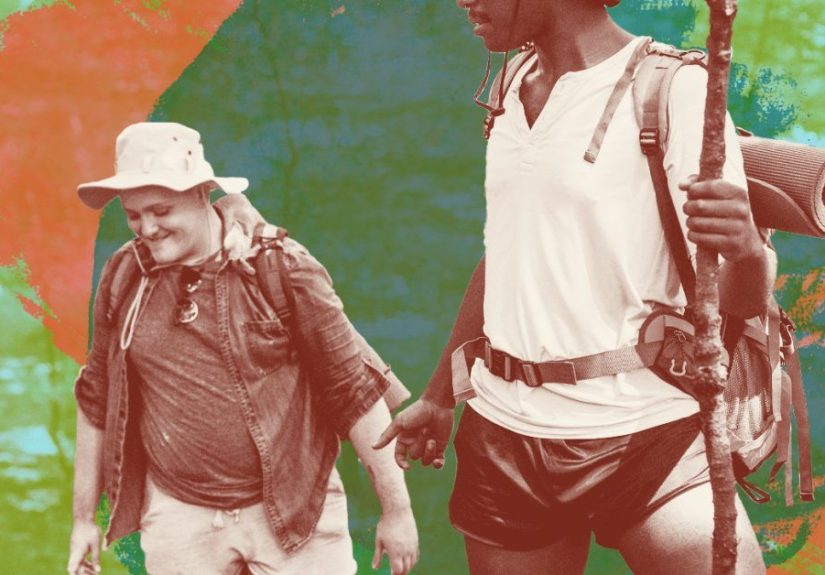
A trail can be public and still feel socially exclusive. Many hikers from underrepresented communities describe scanning spaces for subtle signals: Who else is here? Will I stand out? Will my family feel comfortable? Is this place welcoming, or merely available? That difference matters.
Representation plays a huge role. When trail signage, outdoor advertising, hiking clubs, park staff, guidebooks, and brand campaigns overwhelmingly reflect one kind of hiker, everyone else gets an unspoken message about who belongs in the frame. It is hard to feel ownership of a space when you are constantly reminded that you were not the original marketing plan.
For many Black, Latino, Indigenous, Asian American, LGBTQ+, immigrant, and plus-size hikers, the issue is not only scenic access. It is emotional access. Can they relax? Can they make mistakes without judgment? Can they show up as themselves? The outdoors should be restorative, not another place where people have to calculate how visible they are.
Disability access is part of diversity, too
Any serious conversation about hiking equity has to include disability justice. Too often, “outdoor inclusion” is framed only around race or marketing imagery, while accessibility remains an afterthought. But accessible parking, trail surface details, grade information, rest options, bathroom access, signage, sensory considerations, and accurate trail descriptions can make the difference between welcome and exclusion.
Not every trail can be accessible in the same way, and no honest person expects a cliffside scramble to become a paved sidewalk. Still, public land managers can do far more to provide detailed information, expand accessible recreation options, and treat disabled hikers as a core audience rather than a side note. Equity is not just about opening the gate. It is about giving people the information and design support to decide whether the gate leads somewhere they can actually go.
Why Outdoor Equity Matters More Than It Seems
This is bigger than recreation trends. Hiking access affects health, quality of life, and social connection. Time outdoors can support physical activity, stress relief, emotional well-being, and stronger ties to community. Parks and trails are not luxuries in a healthy society. They are part of the public infrastructure that helps people move, breathe, gather, and recover from the daily circus of modern life.
When certain communities have less access to those benefits, the inequality compounds. Fewer nearby parks can mean fewer chances for exercise, fewer safe places for children to play, fewer low-cost opportunities for stress reduction, and fewer chances to build routine relationships with nature. That is not just an outdoors issue. It is a public health issue and a neighborhood investment issue.
There is also a civic dimension. Public lands belong to the public. If entire groups feel underrepresented, unwelcome, or underserved in outdoor spaces, then public land is not functioning as fully public. That should concern anyone who cares about democracy, conservation, or the future of recreation. People protect what they feel connected to. Broadening access is not charity. It is how you build the next generation of advocates, stewards, and trail users.
Who Is Doing the Work?
Some of the most important progress is coming from organizations that were built precisely because the mainstream outdoors left too many people out. Outdoor Afro has helped expand Black leadership and community in nature. Latino Outdoors has worked to connect culture, language, community, and the outdoors in ways that reflect real lives rather than one-size-fits-all adventure culture. Hike Clerb has created space specifically for women of color and other marginalized communities to experience the outdoors with joy and affirmation. Disabled Hikers has pushed the entire conversation forward by demanding accurate trail information, better access, and a disability-centered vision of outdoor justice.
These groups are not just hosting hikes. They are changing the story. They are proving that inclusion is not about inviting people to squeeze into an old culture. It is about building a better culture in the first place.
Public agencies are also making moves, even if progress can be uneven and slower than a family of four trying to put sunscreen on a windy trailhead. Federal and local park systems have invested in accessibility standards, park creation in underserved communities, and better public information. Some land managers are improving maps, trail descriptions, and accessible site data. Outdoor brands and nonprofits have expanded grants, inclusive programming, and entry-level support. None of this solves the problem overnight, but it signals a shift from symbolic inclusion toward practical change.
How Hiking Becomes More Equitable
Build and improve green space close to home
The most effective way to broaden hiking participation is not to tell people to drive farther. It is to create more quality parks, urban trails, and natural areas near where people already live. Access should not depend on car ownership, flexible work schedules, or the willingness to turn a simple walk into a military operation.
Lower the cost of entry
Affordable gear libraries, loaner programs, free beginner outings, community transportation, low-cost permits, and family-centered programming can make a real difference. Outdoor equity gets practical fast. Sometimes inclusion looks less like a campaign slogan and more like a van, a snack table, and a pair of borrowed boots.
Make information actually useful
Many people do not need more inspiration. They need better details. Is the trail shaded? Are there restrooms? What is the surface like? Is there cell service? Is the route stroller-friendly, wheelchair-usable, beginner-friendly, or dog-friendly? Is the information available in multiple languages? Accurate, specific, and accessible trail information reduces uncertainty, which reduces exclusion.
Expand representation beyond marketing
Representation matters, but it cannot stop at brand photos. Park staff, guides, conservation leaders, outdoor educators, rangers, board members, and decision-makers should reflect the public they serve. When people see themselves in positions of knowledge and authority outdoors, the belonging gap gets smaller.
Support community-led groups
Many people enter hiking through trusted communities, not through an ad. Funding local leaders, neighborhood-based groups, disability advocates, culturally specific programs, and family-centered outings often produces better results than generic outreach. People are more likely to try something new when the invitation comes from someone who understands their reality.
Design for dignity, not just compliance
Accessibility should not be treated as a box to check. It should shape how trails, websites, visitor centers, and programs are designed from the beginning. Good inclusive design benefits everyone. Clear signage helps first-time hikers. Better transit helps workers and families. Detailed trail descriptions help disabled hikers and nervous beginners alike. Equity upgrades have a way of improving the experience for the whole crowd.
The Future of Hiking Should Look More Like America
The old image of the American hiker has been far too narrow for far too long. The future is wider. It includes multigenerational families, first-time hikers from cities, disabled adventurers, women hiking together, queer outdoor clubs, bilingual trail programs, community leaders of color, and people who show up in thrift-store layers instead of expensive matching gear. In other words, it includes real life.
Fixing hiking’s diversity problem does not require lowering standards or forcing anyone into the woods against their will. It requires removing unnecessary barriers, investing where access has been thin, and recognizing that “public” only means something if the public can actually use what is being offered. The goal is not a perfectly curated outdoors. It is a fairer one.
And honestly, a more inclusive hiking culture would be better for everyone. More stories, more traditions, more languages, more leadership styles, more family formats, more ways of being outside. That sounds less like a problem and more like an upgrade.
Experiences From the Trail: What Equity Feels Like in Real Life
Outdoor equity is easiest to understand when you stop talking in policy language and pay attention to what a day outside actually feels like. Imagine a teenager in a city neighborhood where there is no decent park within walking distance. She likes the idea of hiking, has seen beautiful trail videos online, and wants the same peaceful reset everyone talks about. But on Saturday morning, the nearest trail requires two bus rides, a train transfer, and a long walk from the station. By the time she gets there, she is already tired, behind schedule, and worried about getting home before dark. The trail itself may be lovely. The journey to reach it tells a different story.
Or think about a first-generation family that loves spending time together outdoors but has little experience with formal hiking culture. They arrive at a trailhead carrying homemade snacks, extra clothes, and a healthy amount of uncertainty. They are not afraid of nature. They are afraid of getting something wrong. Is this the right parking area? Are those permit rules meant for them? Is the route easy enough for grandparents and young kids? If the signage is confusing and no one around them looks remotely like their family, the message is subtle but clear: this space may be open, but it was not necessarily designed with them in mind.
For a Black woman hiking alone, the experience may include an invisible checklist long before the first overlook. Is the parking area isolated? Will other hikers read her presence as normal or suspicious? Can she relax enough to enjoy the quiet, or will she spend half the walk managing how she is perceived? For an LGBTQ+ hiker, a trail can feel freeing one moment and uncertain the next depending on the crowd, the location, and whether the environment feels respectful. The outdoors can be healing, but only when people are not carrying extra social armor into a place that is supposed to lower stress.
Disabled hikers often describe an even more practical version of exclusion. A trail description says “moderate,” which turns out to mean steep, rocky, root-covered, and about as useful as labeling hot sauce “a little spicy.” Without accurate details about grade, width, obstacles, seating, bathrooms, and surface type, planning becomes guesswork. And guesswork can waste energy, money, and trust. When accessible information is available, however, the experience changes completely. The hike becomes possible not because the mountain moved, but because the barriers to knowing were reduced.
Then there are the moments when equity works. A free group hike leaves from a neighborhood park instead of a distant trailhead. Gear is available to borrow. The leader explains the route in plain language. Kids are welcome. Information is shared in more than one language. The pace is flexible. Nobody acts like a beginner question is a federal crime. Suddenly the outdoors feels less like an audition and more like a community event. People laugh, take pictures, share food, point out birds they cannot identify, and go home thinking, “We can do this again.” That feeling matters. It is how access becomes habit and habit becomes belonging.
In the end, equity in hiking is not an abstract ideal. It is the difference between being tolerated and being welcomed, between being technically included and practically supported. A fairer outdoors is one where more people get to arrive with curiosity instead of anxiety, confidence instead of caution, and joy instead of the nagging sense that they wandered into someone else’s story. The trail should be wide enough for all of that.
Conclusion
Hiking’s diversity problem is real, but it is not permanent. The barriers are clear: unequal park access, transportation gaps, cost, cultural exclusion, thin representation, and inconsistent accessibility. The solutions are clear, too: invest locally, lower the price of entry, improve trail information, fund community leadership, and design outdoor experiences with dignity in mind. The outdoors does not need a new slogan nearly as much as it needs a fairer system.
If hiking is going to live up to its reputation as a simple, joyful, healthy way to connect with nature, it has to become more reachable for more people. Not in theory. In practice. That means more than saying everyone is welcome. It means making sure more people can actually say yes.