Table of Contents >> Show >> Hide
- The quick answer (because you’re itchy and busy)
- What scabies actually is (and why your mattress gets blamed)
- So… how long can scabies live in a mattress, exactly?
- Proper cleaning tips that actually matter
- A simple 3-day cleaning plan (no chaos, no flame-throwers)
- Prevent reinfestation: the part people accidentally skip
- When you should call a clinician (don’t tough it out)
- FAQ: quick myths and reality checks
- Extra: of real-world “what this feels like” experiences (so you don’t spiral)
Scabies is the kind of houseguest nobody invitedtiny, itchy, and totally unimpressed by your personal boundaries. If you’ve been diagnosed (or you’re strongly suspicious), it’s normal to look at your bed like it just betrayed you and ask: “Do I need to burn my mattress and move to a new ZIP code?”
Good news: you almost certainly do not need to replace your mattress. Even better: with the right treatment and a few smart cleaning moves, you can cut the risk of reinfestation without turning your home into a hazmat scene.
The quick answer (because you’re itchy and busy)
In most everyday cases, scabies mites typically survive off human skin for about 2–3 days. That means on surfaces like bedding or a mattress, they generally don’t last longespecially in normal indoor conditions. The goal is to treat the person (and close contacts) and clean the items that had recent close contact with skin.
Key takeaway: Cleaning helps prevent re-exposure, but medical treatment is what stops scabies. Think of cleaning as locking the door after you’ve kicked the party-crashers out.
What scabies actually is (and why your mattress gets blamed)
Scabies is caused by a microscopic mite (Sarcoptes scabiei) that burrows into the upper layer of human skin and triggers an allergic reaction. That’s why the itching can feel dramaticespecially at nighteven though the mites themselves are very small and don’t live forever off the body.
Most spread happens through prolonged, close skin-to-skin contact. Less commonly, scabies can spread through shared items like bedding or clothingparticularly when there’s heavy infestation (like crusted scabies, which is more contagious and requires stricter medical guidance).
Why the itch can linger (even after you’ve “won”)
One of the most annoying parts: itching can continue for weeks after successful treatment. That lingering itch doesn’t automatically mean you still have mites. Your skin may simply be reacting to the aftermathlike it’s replaying the world’s worst memory montage.
So… how long can scabies live in a mattress, exactly?
Here’s the practical, real-life version:
- On a person: mites can live for weeks and keep reproducing if untreated.
- Off a person (like on a mattress, sheets, clothing): mites generally survive about 48–72 hours (roughly 2–3 days), and heat kills them faster.
Because the survival window off skin is limited, cleaning focuses on anything that had direct, recent contact with the bodyespecially within the few days before treatment. The aim isn’t perfection. The aim is “no second round.”
Proper cleaning tips that actually matter
Let’s keep this simple, effective, and not overly dramatic. You want a plan that works even if you’re tired, stressed, and trying not to scratch through time and space.
1) Start with treatment day rules (the most important timing)
Most major medical guidance agrees on this: when you start treatment, you should clean items used in the previous ~3 days (clothes, bedding, towels). Why? Because that window matches the typical off-body survival range.
2) Laundry: heat is your best friend
Wash bedding, clothes, towels, and pajamas in hot water and dry on high heat. Heat is what reliably kills mites and eggs. Practical targets used in guidance include:
- Hot wash + hot dryer cycle (don’t “eco-mode” your way into a sequel).
- Temperatures around 122°F (50°C) for at least 10 minutes are commonly cited as lethal to mites and eggs.
- If a dryer is available, use it. Drying thoroughly on high heat helps a lot.
Examples: sheets, pillowcases, blankets, comforters (if washable), towels, washcloths, underwear, pajamas, and the hoodie you’ve worn for three straight days because it “feels safe.” (It is not safe. It is now laundry.)
3) Can’t wash it? Bag it and “starve” it
For items you can’t wash or dry-cleanstuffed animals, delicate fabrics, throw pillows that hate waterseal them in a plastic bag.
- Keep sealed for at least 72 hours (3 days).
- Some guidance allows several days up to a week for extra margin.
Yes, it feels weird putting your favorite sweater in time-out. But mites can’t survive indefinitely away from human skin. This method is simple and effective.
4) Mattress: what to do (and what not to do)
Your mattress doesn’t need to be exiled. Instead, do this:
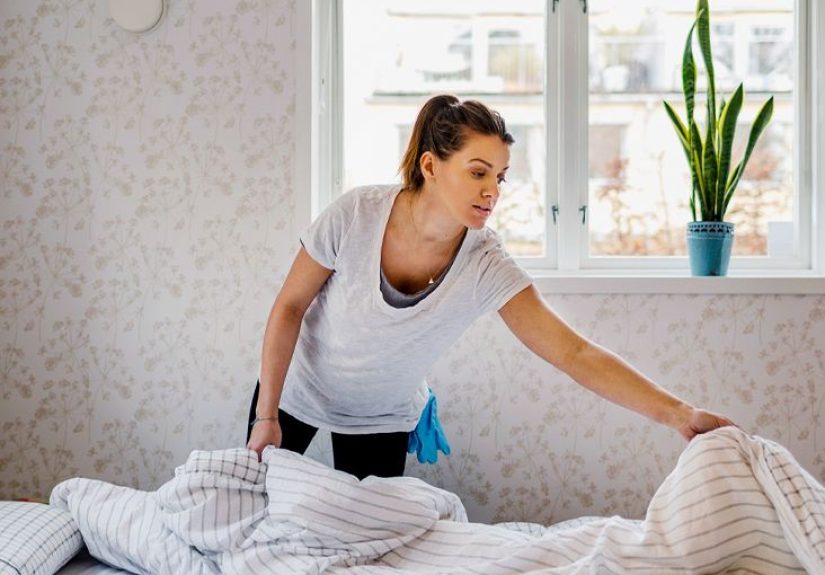
- Strip the bed completely (sheets, pillowcases, mattress pad) and launder them hot + high heat dry.
- Vacuum the mattress surface and bed frame carefully, especially seams and edges. Then discard the vacuum bag (if applicable) or empty the canister into a sealed bag and wash your hands.
- If you have a mattress protector, wash it hot and dry on high heat. If you don’t, consider using one after cleaning to make future laundering easier.
What not to do: Don’t spray insecticides, bug bombs, or harsh pesticides on your mattress. These aren’t recommended for scabies control in home settings and can create unnecessary health risks. Scabies is a medical conditiontreat it medically, not with “garage chemistry.”
5) Upholstered furniture and carpets: keep it reasonable
If you’ve been lounging on the couch a lot (and who hasn’t, especially when itchy?), do this:
- Vacuum upholstered furniture and carpets.
- Wash any removable covers hot + high heat dry if possible.
- If you can’t wash a cushion cover, you can isolate it similarly (bag it if practical), but most households don’t need extreme measures.
Remember: most transmission is skin contact, not “my sofa is cursed.” Still, vacuuming and laundering high-contact textiles is a sensible, low-effort layer of protection.
A simple 3-day cleaning plan (no chaos, no flame-throwers)
Day 1: The “treatment day” sprint
- Start prescribed treatment exactly as directed by a clinician.
- Wash and dry on high heat: bedding, towels, clothes worn recently (focus on the last ~3 days).
- Bag non-washables for 72 hours.
- Vacuum mattress, bed frame, and commonly used upholstered furniture.
Day 2: The “stay the course” day
- Use clean bedding and clean clothes.
- Keep bagged items sealed.
- Try not to re-wear “pre-treatment” clothes.
Day 3: The “release the hostages” day
- After 72 hours, unbag items and return them to normal life.
- Continue following the medical plan (some treatments require repeat dosing).
Prevent reinfestation: the part people accidentally skip
Reinfestation often happens because close contacts weren’t treated at the same time. Many health authorities recommend that household members and other close contacts be treated together when advisedbecause symptoms can take time to show up, but spreading can happen earlier.
Helpful habits while treatment is underway
- Avoid close skin-to-skin contact until treatment is completed as directed.
- Don’t share towels, bedding, or clothing.
- Keep nails trimmed to reduce skin injury from scratching (and reduce infection risk).
- If itching is intense, ask a clinician about safe itch relief options.
When you should call a clinician (don’t tough it out)
Get medical advice promptly if:
- You suspect crusted scabies (thick, crusted skin areas, very contagious, often needs more intensive treatment).
- Symptoms are spreading quickly in a group setting (school, dorm, shared housing).
- You see signs of skin infection (worsening redness, warmth, swelling, pus, fever).
- Itching and new bumps continue well beyond expected timelines and you’re unsure if it’s post-scabies irritation or ongoing infestation.
FAQ: quick myths and reality checks
Do I need to throw away my mattress?
Almost never. With treatment plus laundering/vacuuming, replacement is typically unnecessary. Mites don’t survive long off the body, and heat + time work in your favor.
Can scabies live in pillows and stuffed animals?
They can survive briefly on fabrics. Wash on hot + high heat dry when possible. If not washable, seal in a bag for at least 72 hours.
What about spraying my house?
Generally not recommended. Focus on medical treatment and targeted cleaning of high-contact textiles. Spraying pesticides can be risky and doesn’t replace treatment.
My itching won’t stopdoes that mean scabies is still alive?
Not necessarily. Itching can persist for weeks due to your immune system’s reaction, even after mites are gone. If you’re worried, check in with a clinician rather than repeating harsh treatments on your own.
Extra: of real-world “what this feels like” experiences (so you don’t spiral)
People often describe the moment they hear “scabies” as a mix of panic and disbelieflike their skin just filed a complaint with HR. The first experience many report is the relentless itch that seems to have a schedule: daytime is annoying, nighttime is a full Broadway production. You may find yourself standing in the hallway at 2 a.m. thinking, “Is my mattress alive?” while your brain drafts a resignation letter from your own body.
Then comes the cleaning urge. It’s common for people to over-clean at firstwashing everything twice, vacuuming like they’re training for the Vacuum Olympics, and side-eyeing every blanket as if it’s plotting against them. The good news is that you can usually dial it back once you understand the timeline: mites don’t live long off skin, and a focused plan (hot laundry, bagging non-washables, vacuuming the bed) is typically enough. Many people feel calmer once they have a checklist, because the situation stops feeling like an invisible horror movie and starts feeling like a solvable to-do list.
Another super common experience is the “post-treatment doubt.” Even after doing everything righttreatment, laundry, clean sheetsitching can hang around. That can be emotionally exhausting. People often worry they’re reinfested when, in many cases, it’s simply the skin’s allergic reaction taking its sweet time to settle down. A lot of folks say it helps to track symptoms in a simple way: Are there new bumps appearing in new places? Or is it mostly the same areas slowly improving? Seeing a trend (even a slow one) can reduce anxiety.
Households also describe the awkwardness of coordinating cleaning and contacts. If multiple people share a home, it can feel like organizing a small, itchy military operation: everyone changes bedding, everyone uses clean towels, nobody borrows that hoodie “just for a second.” In families with kids, people often say the hardest part is preventing re-sharingbecause kids can treat blankets like a community resource. Clear laundry bins, labeled towels, and a “clean clothes only” rule for a few days can make things easier.
Finally, many people come away with a surprisingly practical takeaway: the biggest turning point wasn’t scrubbing the mattress for the tenth timeit was getting the right medical treatment and making sure close contacts weren’t accidentally passing mites back and forth. Once that loop is broken, the rest becomes cleanup and patience. And yes, you’ll eventually sleep normally againwithout imagining your sheets whispering, “We need to talk.”