Table of Contents >> Show >> Hide
- Why Cowboy Boots Feel Stiff at First
- Before You Start: Make Sure the Fit Is Actually Right
- How to Break in Cowboy Boots: 12 Quick & Easy Ways
- 1. Wear Them Around the House First
- 2. Start Small and Increase Wear Time Gradually
- 3. Use the Right Socks
- 4. Apply Leather Conditioner Lightly
- 5. Flex the Boots Gently by Hand
- 6. Warm Tight Spots with Gentle Heat
- 7. Try a Boot Stretcher
- 8. Use Stretch Spray for Trouble Spots
- 9. Add Insoles if the Fit Is Slightly Loose
- 10. Walk on Real Surfaces, Not Just Carpet
- 11. Use Boot Trees Between Wears
- 12. See a Cobbler if One Spot Refuses to Cooperate
- Mistakes to Avoid When Breaking in Cowboy Boots
- How Long Does It Take to Break in Cowboy Boots?
- When to Stop and Reevaluate
- What the Break-In Experience Usually Feels Like in Real Life
- Conclusion
- SEO Tags
New cowboy boots are a little like a new gym membership: full of promise, slightly intimidating, and oddly good at reminding you where your weak points are. One minute you’re admiring the leather, the stitching, and that classic Western silhouette. The next minute you’re walking around your living room like you’ve just lost a duel at high noon.
The good news is that breaking in cowboy boots does not have to be dramatic. You do not need to suffer. You do not need to dunk them in a bathtub, bake them in the sun like a potato, or perform any weird internet ritual involving zip-top bags and a freezer. In most cases, the fastest way to break in cowboy boots is also the smartest way: gradual wear, a little leather care, and a few comfort tricks that help the boots mold to your feet without wrecking your day.
In this guide, you’ll learn exactly how to break in cowboy boots using 12 quick and easy methods that actually make sense. We’ll also cover what a proper cowboy boot fit should feel like, which mistakes to avoid, and how to tell whether your boots are just “new stiff” or truly the wrong size.
Why Cowboy Boots Feel Stiff at First
Cowboy boots are built differently from sneakers and slip-on shoes. A traditional pair often includes a structured leather upper, a firm outsole, a snug instep, and a heel designed to keep your foot secure once the boot starts shaping itself to you. That structure is part of the charm. It is also why brand-new boots can feel stubborn for the first few wears.
When you break in a pair of cowboy boots, several things are happening at once. The leather begins to soften, the sole starts flexing where your foot naturally bends, and the insole gradually conforms to your weight and walking pattern. In other words, the boot is learning your foot. It just needs a little time and a little cooperation.
Before You Start: Make Sure the Fit Is Actually Right
Here is the truth nobody wants to hear after spending good money on boots: a break-in period will improve a snug pair, but it will not magically fix a bad fit.
A properly fitting cowboy boot should feel snug around the instep, secure through the heel, and roomy enough in the toe box that your toes are not cramped or curled. A small amount of heel slip at first is normal. Full-on heel flopping like you’re wearing borrowed clown boots is not. Likewise, mild stiffness across the foot is normal. Numb toes, sharp pressure, or pinching that makes you question your life choices is not.
If the boots are painfully tight in length, crush your toes, or feel wrong in every possible way, stop trying to “break them in.” That is not a break-in issue. That is a sizing or width issue.
How to Break in Cowboy Boots: 12 Quick & Easy Ways
1. Wear Them Around the House First
The simplest method is still one of the best. Wear your boots indoors for short periods before taking them on a full day out. Your floors are forgiving, your couch is nearby, and your neighbors do not need to witness your first awkward cowboy shuffle.
Start with 30 to 60 minutes at a time. Focus on how the boots feel at the heel, instep, ankle, and ball of the foot. This gives the leather a chance to warm and relax while helping you spot trouble areas before they become blisters.
2. Start Small and Increase Wear Time Gradually
Do not go from “fresh out of the box” to “twelve-hour country concert.” That is how boots win and feet lose.
A better approach is to increase wear time in stages. Try one hour the first day, two hours the next, then half a day, then a full day once the boots start softening. Gradual wear lets the leather flex naturally and reduces the friction that causes hot spots.
3. Use the Right Socks
Socks matter more than most people think. A good boot sock reduces friction, cushions pressure points, and helps manage moisture. For break-in, slightly thicker socks can help create a more comfortable interface between your foot and stiff leather.
If you are prone to sweaty feet, skip thin cotton socks that stay damp and rub. Moisture-wicking socks are usually the better bet. Some people even double up for the first few wears if the boots are just a little snug.
4. Apply Leather Conditioner Lightly
If the leather feels stiff enough to file paperwork, a small amount of leather conditioner can help soften it. The key word is small. You want the leather more flexible, not greasy enough to slide across the room on its own.
Use a conditioner made for the type of leather your boots are made from. Apply it sparingly with a soft cloth, focus on the stiffest areas, and let it absorb fully before wearing the boots again. Over-conditioning can weaken leather, darken the finish, or make the boots feel overly soft in all the wrong ways.
5. Flex the Boots Gently by Hand
You do not need to wrestle your boots into submission, but a little hand-flexing can help. Bend the sole gently where your foot naturally flexes, massage stiff spots in the vamp, and work the shaft with your hands if it feels rigid.
This method is especially helpful before your first few wears because it starts loosening the structure without shocking the leather.
6. Warm Tight Spots with Gentle Heat
Gentle is doing a lot of work in that sentence. A little warmth can help soften stubborn leather, but extreme heat can dry it out, damage the finish, or shorten the life of the boots.
If a specific area feels tight, use a hair dryer on low or medium for a brief burst while wearing thick socks, then walk in the boots until they cool. Think “encouraging nudge,” not “boot sauna.” If the leather feels hot, you have already gone too far.
7. Try a Boot Stretcher
A boot stretcher is one of the fastest ways to target problem areas without overdoing it. If the width feels snug or one pressure point keeps showing up, insert a stretcher overnight and expand it gradually.
This works best for boots that are close to fitting well but need a little extra room. If your toes are rammed into the front like passengers on an overbooked flight, a stretcher is not the real solution.
8. Use Stretch Spray for Trouble Spots
Stretch spray can help relax stiff leather in targeted areas, especially when paired with a boot stretcher or worn with thick socks. Spray lightly on the outside where the leather feels tight, then wear the boots or insert the stretcher so the boot adjusts as it dries.
Always test products on a small area first. Some finishes are fussier than others, and your boots do not need any surprise chemistry experiments.
9. Add Insoles if the Fit Is Slightly Loose
Not every break-in problem comes from boots being too tight. Sometimes the boot fits okay overall but feels a little loose through the heel or instep. A thin insole can help take up extra space, improve comfort, and make the break-in period feel more controlled.
This is especially useful if the length is right but the volume feels a touch roomy. Just do not use a super-thick insole that changes the fit so much you create new pressure points.
10. Walk on Real Surfaces, Not Just Carpet
Once the boots feel decent indoors, take them outside for short walks on normal surfaces like sidewalks or smooth pavement. This helps the outsole flex and settle more naturally than pacing around your kitchen island for the fiftieth lap.
The goal is not mileage. The goal is movement. A quick walk, an errand, or a casual evening out is enough to help the boots adapt without turning your feet into a cautionary tale.
11. Use Boot Trees Between Wears
Boot trees do not technically “break in” a boot on their own, but they help maintain shape, smooth creases, and support the leather while it is adjusting to your foot. They are especially helpful if you are conditioning the boots and wearing them often during the first week or two.
Think of boot trees as the quiet, responsible friend in the group. Not flashy, but very useful.
12. See a Cobbler if One Spot Refuses to Cooperate
If everything feels good except one stubborn area, a cobbler can often stretch or adjust the boot far more safely than a DIY method gone rogue. This is the best option for expensive boots, exotic leathers, or persistent pinch points around the toe box, ankle, or calf.
Professional stretching is usually quicker, cleaner, and less risky than trying to outsmart the leather with home remedies you found at 1:00 a.m.
Mistakes to Avoid When Breaking in Cowboy Boots
There are smart ways to speed up the process, and then there are methods that belong in the “please don’t do this” category.
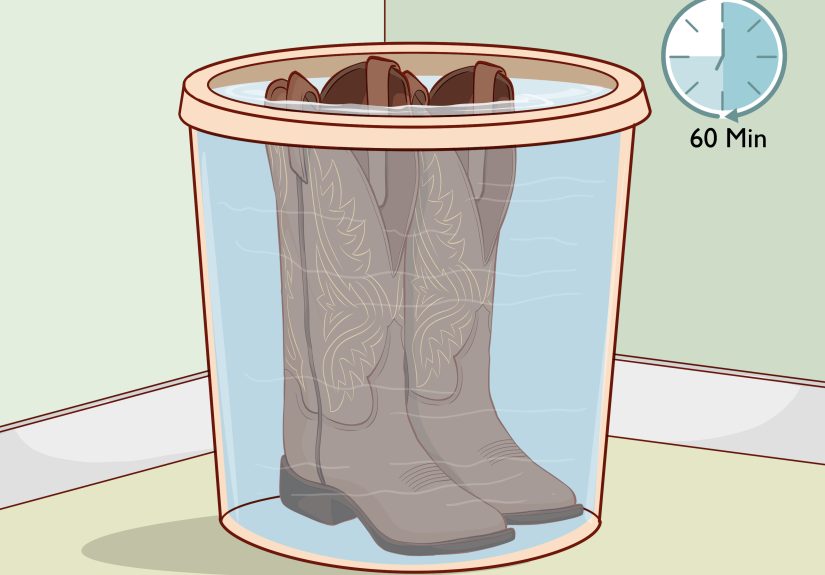
Avoid soaking your boots in water. Yes, people still suggest this. No, it is not a great idea for most leather boots. Water can dry leather out, warp the shape, and mess with the finish.
Avoid blasting them with high heat. Leather likes a little warmth, not a full identity crisis.
Avoid forcing yourself through pain. A little snugness is normal; blisters, numbness, and sharp rubbing are not badges of honor.
And avoid assuming every fit issue will disappear with time. If the length is wrong, the toe box is too shallow, or the width is way off, more wear will not solve the problem.
How Long Does It Take to Break in Cowboy Boots?
That depends on the leather, the construction, and how often you wear them. Some boots start feeling friendlier after a few days. Others take a couple of weeks to really settle in. Thicker, sturdier leather usually takes longer than softer leather. Leather linings may also need more time than softer fabric-lined styles.
In general, the more consistently you wear them in short, smart sessions, the faster they become comfortable. The process should feel progressive, not punishing.
When to Stop and Reevaluate
If you have worn the boots several times, tried the easy break-in methods, and they still feel sharply painful in the same spots, stop and reassess. Check the width. Check the length. Try them with different socks. Add or remove an insole. If the issue is still there, consider exchanging the boots or having a cobbler evaluate them.
Also, if you have diabetes, neuropathy, circulation issues, or very sensitive skin, do not push through rubbing and pressure just to “tough it out.” Your feet are not auditioning for a Western survival film.
What the Break-In Experience Usually Feels Like in Real Life
Most people expect a dramatic before-and-after moment with cowboy boots, but the real experience is usually more subtle. Day one often feels like this: the boots look incredible, the leather is firm, the shaft feels a little upright, and the heel slip makes you wonder whether you bought the right pair. Then you walk for twenty minutes, sit down, stand up again, and notice the boots already feel a little less bossy.
By the second or third wear, the biggest change usually happens across the instep and vamp. That snug pressure over the top of your foot starts to relax, and the sole begins to flex where you naturally bend. This is when people usually go from “I respect these boots” to “Okay, now we’re becoming friends.” It is also when smart wear habits pay off. If you started with short sessions and the right socks, you often avoid the blisters that come from doing too much too soon.
A very common experience is having one “problem spot” instead of an all-over fit issue. Maybe the right boot rubs your heel a bit. Maybe the left boot feels tighter at the ball of the foot. Maybe the shaft brushes your calf in a way that is annoying but not terrible. That is normal. Human feet are not perfectly matched, and boots are not custom-made for most people. A little targeted stretching, a thin insole, or a different sock choice can make a huge difference.
People also tend to notice that the boots feel better after normal daily movement than after standing still. A quick walk, a grocery run, or an evening out often helps the boots loosen up more naturally than just sitting around wearing them while answering emails. Movement warms the leather, flexes the sole, and helps the boot start molding in places that matter.
Another real-world lesson is that premium leather usually rewards patience. Some boots feel amazing quickly because the leather is softer from the start. Others take longer but end up forming a more personalized fit over time. That is why experienced boot wearers often say the best boots become your boots only after a few wears. The fit gets more familiar, the stiffness fades, and suddenly you stop thinking about the break-in process altogether.
And yes, almost everyone has at least one “I got overconfident” story. It usually involves wearing new boots to a long event too soon, pretending everything is fine, then limping back to the car with a smile that says, “I have made a tactical error.” The good news is that cowboy boots are very teachable. Once you understand your fit, your leather, and your pressure points, the next pair is usually much easier to break in.
So if your new boots feel a little stiff at first, do not panic. That is part of the process. Break them in gradually, treat the leather well, listen to your feet, and remember that comfort is the goal. Looking cool is great, but looking cool while walking normally is even better.
Conclusion
If you want to break in cowboy boots quickly and comfortably, skip the wild hacks and stick with methods that respect both your feet and the leather. Wear them in short sessions, use the right socks, soften stiff spots carefully, and stretch only where needed. Most importantly, remember that properly fitting cowboy boots should become more comfortable with time, not more painful.
A great pair of cowboy boots should eventually feel secure, flexible, and unmistakably yours. The break-in period is just the awkward first chapter. After that, it is all swagger.