Table of Contents >> Show >> Hide
- Why Vinegar and Baking Soda Work on a BBQ Grill
- What You Need
- Know Your Grill Before You Start
- Step-by-Step: How to Clean a BBQ Grill With Vinegar and Baking Soda
- How to Clean Different Grill Types
- Common Mistakes to Avoid
- How Often Should You Deep Clean a BBQ Grill?
- Quick Maintenance Between Deep Cleans
- What if the Grill Is Really Bad?
- Experience and Practical Lessons From Real Grill Cleanup
- Conclusion
- SEO Tags
If your BBQ grill looks like it just survived a sauce tornado, do not panic. You do not need a hazmat suit, a cabinet full of chemical cleaners, or the emotional resilience of a reality-show contestant. In many cases, you can deep-clean a grimy grill with two humble kitchen staples: vinegar and baking soda.
This method is popular for a reason. It is affordable, simple, and surprisingly effective on grease, baked-on residue, and that mysterious black crust that makes your grill look “well loved” in the worst possible way. Better yet, it fits real life. Maybe you forgot to clean the grill after the Fourth of July. Maybe your ribs left behind a sticky lacquer. Maybe last season’s burgers are still haunting the grates like smoky little ghosts. Vinegar and baking soda can help you reset the situation.
In this guide, you will learn exactly how to clean a BBQ grill with vinegar and baking soda, which grill parts you should treat gently, what mistakes to avoid, and how to keep your grill in good shape without turning cleanup into a full-time hobby.
Why Vinegar and Baking Soda Work on a BBQ Grill
Vinegar and baking soda are not magic, but they are useful. White vinegar helps loosen mineral deposits, cut through light grime, and soften stubborn residue. Baking soda acts as a mild abrasive that helps lift grease and burnt-on food without being as aggressive as heavy-duty scouring products.
When they meet, you get that classic fizzing reaction. No, your grill is not attending a middle-school volcano fair. The fizz can help loosen debris, while the baking soda paste adds gentle scrubbing power. For thick buildup, this combo works best when paired with time, patience, and a little elbow grease. The grill will not clean itself just because the mixture fizzes dramatically. If only.
What You Need
- White vinegar
- Baking soda
- Warm water
- Spray bottle
- Small bowl or bucket
- Non-scratch scrub sponge, soft-bristle brush, or grill-safe scrubber
- Microfiber cloths or clean rags
- Mild dish soap
- Gloves
- Tongs and paper towels for oiling the grates afterward
If your grill is especially dirty, a plastic scraper can also help remove caked-on mess before you start scrubbing.
Know Your Grill Before You Start
Stainless Steel Grates
These are usually the easiest to clean. Vinegar and baking soda work well here, but scrub with care so you do not scratch the finish more than necessary.
Porcelain-Coated Grates
These need a gentler touch. If the coating is chipped, the exposed metal underneath can rust. Use soft scrubbers, avoid aggressive scraping, and rinse thoroughly.
Cast Iron Grates
Cast iron is a little dramatic, but lovable. It can rust if it stays wet too long and needs to be dried well after cleaning. If you clean cast iron grates with vinegar and baking soda, keep the process controlled, do not let acidic mixtures linger forever, and oil the grates afterward.
Step-by-Step: How to Clean a BBQ Grill With Vinegar and Baking Soda
1. Warm the Grill First
If your grill is completely cold and covered in old grease, warming it for a few minutes can help soften residue. You do not want it blazing hot. You want it warm enough to loosen the mess, then cool enough to clean safely. Turn the grill off, disconnect the fuel if needed, and let the grates reach a safe handling temperature.
2. Remove Loose Debris
Brush off loose ash, charred bits, and flakes of food. This first pass is not about perfection. It is about getting the easy stuff out of the way so your vinegar and baking soda can work on the stubborn grime instead of making mud out of old burger confetti.
3. Choose Your Cleaning Method
There are two easy ways to use vinegar and baking soda on a grill.
Method A: The Soak for Removable Grates
Mix about 2 cups of white vinegar with 1 cup of baking soda. Place the grates in a large trash bag, tub, or deep container and pour the mixture over them. Seal or cover them and let them soak for at least 1 hour. For heavy buildup, several hours or overnight can help.
Method B: The Paste-and-Spray Method
Make a thick paste with baking soda and a little water. Spread it over the grates and grimy areas inside the grill. Then fill a spray bottle with white vinegar and spray over the paste. Let the fizzing action do its thing for 15 to 30 minutes.
If your grill is only moderately dirty, the paste-and-spray method is usually enough. If it looks like it has been hosting barbecue festivals in secret, use the soak.
4. Scrub Gently but Thoroughly
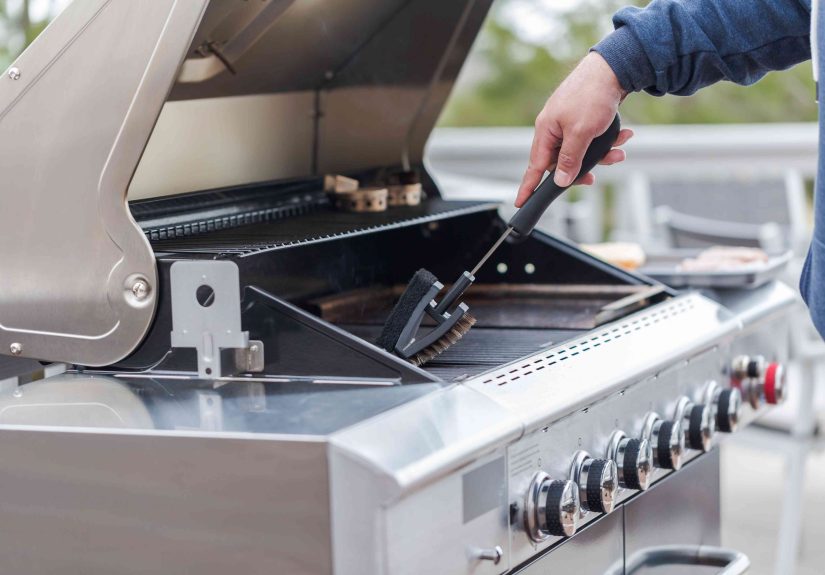
After the soak or paste has loosened the grime, scrub the grates with a non-scratch pad or soft-bristle brush. Focus on bars, corners, and sticky spots where sauces and grease like to hide. You want steady pressure, not a demolition derby.
For the inside lid and cook box, use the paste on greasy patches and scrub carefully. Built-up carbon on the lid may look like peeling paint, but it is often just cooked-on smoke residue. Remove what is loose and flaky without gouging the surface.
5. Clean the Grease Tray and Catch Pan
This step matters more than people think. A dirty grease tray is not just gross; it can contribute to flare-ups and nasty smoke. Remove the tray if your grill has one, scrape out the mess, wash it with warm water and dish soap, then rinse and dry it well.
6. Rinse Everything Well
Do not leave baking soda paste, vinegar residue, or loosened grease behind. Rinse the grates and other cleaned parts with warm water. Wipe down surfaces with a damp cloth until no cleaner remains. This is especially important if you used the mixture on cooking surfaces.
7. Dry Completely
Moisture is the enemy of metal, especially cast iron. Dry every part thoroughly with a clean cloth. Let the grates air-dry a bit more if needed before reassembling.
8. Lightly Oil the Grates
Once the grates are dry, add a very light coat of high-heat cooking oil using a paper towel and tongs. This helps protect the surface, discourages rust, and reduces sticking the next time you cook. Think light polish, not deep-fried patio furniture.
How to Clean Different Grill Types
Gas Grill
Turn off the burners and fuel source before cleaning. Pay attention to burner tubes, Flavorizer bars, heat tents, and the grease management system. These parts collect grease fast, and buildup can affect performance.
Charcoal Grill
Empty old ash completely before deep cleaning. Ash plus moisture can become corrosive over time, which is bad news for the grill body. Clean the grates the same way, then scrub the bowl and lid interior as needed.
Pellet Grill
Be more careful around electronic components and the pellet system. Clean removable grates separately and avoid soaking parts that should stay dry. Vacuum ash where the manufacturer recommends.
Common Mistakes to Avoid
Using Harsh Chemicals
Oven cleaners, bleach, and heavy degreasers can damage finishes or leave residues you do not want near food. A natural cleaner is not automatically perfect either, but vinegar and baking soda are generally more grill-friendly when used correctly and rinsed well.
Leaving Acid on Too Long
Vinegar is useful, but it should not sit endlessly on metal. Prolonged contact can be rough on some surfaces, especially if the grill is hot or the finish is already compromised. Use it, rinse it, dry it.
Ignoring Rust
A little rust does not mean the grill is doomed, but it does mean you should act quickly. Clean the area, dry it well, and oil or season the surface if appropriate. Rust never improves with neglect. It only gets promoted.
Forgetting the Final Rinse
If your grill still smells like a salad dressing experiment, it is not done yet. Rinse thoroughly and wipe everything clean before the next cookout.
Only Cleaning the Grates
The grates get all the attention, but grease trays, lids, and cook boxes are where long-term grime likes to settle. A grill can look decent on top and still be a mess underneath.
How Often Should You Deep Clean a BBQ Grill?
Light brushing after every use is the easiest way to avoid monster-level buildup. A deeper clean with vinegar and baking soda works well every few weeks during heavy grilling season, or whenever you notice sticky residue, off smells, excessive smoke, or flare-ups that seem more dramatic than your menu deserves.
If you grill occasionally, a deep clean before and after the main summer season is a smart baseline. If you are the kind of person who grills in January wearing a hoodie and determination, check the grill more often.
Quick Maintenance Between Deep Cleans
- Brush or wipe grates after each use while they are still warm
- Empty ash or grease regularly
- Keep the grill covered when not in use
- Wipe the exterior with a damp cloth to prevent grime buildup
- Oil grates lightly after cleaning to reduce sticking and rust
Small habits make a huge difference. Five minutes of maintenance now can save you from a two-hour scrub session later.
What if the Grill Is Really Bad?
If your grill has layers of carbon, sticky sauce residue, rust spots, and the personality of an abandoned shipwreck, vinegar and baking soda can still help, but you may need more than one round. Start with a scrape, use the soak method, scrub, rinse, and repeat. For certain grills, mild dish soap and warm water can be added after the DIY cleaner to finish the job.
If parts are warped, deeply rusted through, or flaking badly, cleaning may not be enough. Some grates and internal components are better replaced than endlessly rescued. A clean grill is wonderful. A structurally sound grill is even better.
Experience and Practical Lessons From Real Grill Cleanup
Anyone who has cleaned a BBQ grill with vinegar and baking soda a few times starts to notice the same pattern: the job is never as hard as it looks at first, but it is also never as effortless as the internet makes it sound. The mixture helps a lot, but the real win comes from using it at the right moment and on the right kind of mess.
For example, sticky barbecue sauce buildup responds differently than dry black carbon. Sauce residue softens fairly quickly, especially if the grill is slightly warm and the vinegar gets a few minutes to penetrate the mess. Carbon, on the other hand, tends to cling like it signed a lease. That is where a thick baking soda paste helps most. The paste stays where you put it, gives you a little abrasion, and keeps the cleaning job from becoming a watery streaky mess.
Another common experience is discovering that the grates are only half the story. Many people start cleaning the surface, feel proud for about three minutes, and then look underneath. Suddenly there is a greasy tray, a smoky lid, and a collection of drippings that could probably be carbon-dated. That is often the moment when people realize why the grill smoked so much the last time they cooked chicken thighs. The food was not the problem. The neglected grease tray was auditioning for a fireball.
There is also a big difference between a grill that is cleaned regularly and one that has been ignored for months. A regularly maintained grill usually needs one pass of spray, paste, scrub, rinse, dry, and oil. A neglected grill tends to need stages. First scrape. Then soak. Then scrub. Then another scrub, accompanied by a personal speech about making better life choices. This is normal. Nobody should feel betrayed because the first pass did not make the grill sparkle like a showroom model.
One of the most useful lessons is that drying matters almost as much as cleaning. People often do a beautiful job removing grime, then leave the grates damp and accidentally invite rust to dinner. Drying thoroughly and adding a light coat of oil afterward changes the whole outcome. The grill looks better, cooks better, and stays cleaner longer.
And finally, there is the emotional side of grill cleaning, which is strangely real. A dirty grill makes cooking feel like work before the food even hits the heat. A clean grill does the opposite. It makes burgers slide more easily, vegetables char instead of glue themselves to the bars, and the whole cookout feels a little more under control. That may sound dramatic for a pile of metal in the backyard, but anyone who has hosted friends while secretly scraping old debris off the grates knows the truth. Grill cleaning is not glamorous, but it is one of those quiet chores that makes everything else better.
Conclusion
Learning how to clean a BBQ grill with vinegar and baking soda is one of those practical kitchen-and-patio skills that pays off immediately. It is inexpensive, accessible, and effective for routine deep cleaning when you use it the right way. Warm the grill, loosen the mess, soak or coat the grates, scrub carefully, rinse thoroughly, dry completely, and finish with a light coat of oil. That is the formula.
You do not need to clean your grill like it is entering a beauty pageant. You just need it safe, clean, and ready for the next round of burgers, corn, wings, or whatever else is about to make your backyard smell fantastic. And if the grill currently looks hopeless, take heart. Vinegar, baking soda, and a little patience can do a lot for a piece of equipment that has been living a hard, delicious life.