Table of Contents >> Show >> Hide
- At-a-Glance: 6 Sweet Potato Cooking Methods
- Before You Cook: Choose, Prep, and Season Like You Mean It
- 1) Oven-Baked Sweet Potatoes (Whole)
- 2) Oven-Roasted Sweet Potatoes (Cubes or Wedges)
- 3) Microwave Sweet Potatoes (Fast, Legit, and Unapologetic)
- 4) Boiled Sweet Potatoes (Best for Mash and Smooth Recipes)
- 5) Steamed Sweet Potatoes (Gentle, Moist, and Underrated)
- 6) Air Fryer Sweet Potatoes (Crispy, Quick, Crowd-Pleasing)
- How to Tell When Sweet Potatoes Are Done (Without a Degree in Potato Science)
- Storage, Reheating, and Meal Prep Tips
- Quick Nutrition Notes (Because Someone Always Asks)
- Common Mistakes (AKA How Sweet Potatoes End Up Weird)
- Frequently Asked Questions
- Conclusion: Pick Your Method, Then Make It Yours
- Extra: Real-World Sweet Potato Experiences (The “What Actually Happens” Section)
Sweet potatoes are the rare food that can be both a cozy comfort carb and a “wow, I’m basically a wellness influencer” side dishsometimes in the same meal. If you’ve ever stared at a sweet potato and thought, “Okay, but what are my options besides ‘sad microwave’ or ‘holiday casserole with marshmallows,’” you’re in the right place.
In this guide, you’ll learn how to cook sweet potatoes 6 wayswith clear steps, realistic timing, and pro tips that turn “meh” into caramelized, fluffy, crispy-edged greatness. We’ll also cover picking the best sweet potatoes, prepping them like a calm, capable adult, and storing leftovers safely (because future-you deserves nice things).
At-a-Glance: 6 Sweet Potato Cooking Methods
| Method | Best For | Time | Texture | Biggest Win |
|---|---|---|---|---|
| Oven-Baked (Whole) | Meal prep, “loaded” sweet potatoes | 45–70 min | Fluffy + creamy | Deep sweetness, hands-off |
| Oven-Roasted (Cubes/Wedges) | Sheet-pan dinners, salads, bowls | 20–35 min | Caramelized edges | Fast flavor + great browning |
| Microwave | Weeknights, quick lunch | 5–10 min | Steamy + tender | Speed (like, immediately) |
| Boiled | Mash, soups, baby food, pies | 10–25 min | Soft, moist | Easy to blend/whip |
| Steamed | Clean flavor, moisture retention | 20–35 min | Silky-tender | Hard to over-dry |
| Air Fryer | Fries, crispy cubes, quick sides | 12–25 min | Crispy outside | Crunch with less oil |
Before You Cook: Choose, Prep, and Season Like You Mean It
Picking sweet potatoes
- Look for: firm potatoes with smooth-ish skin and no soft spots.
- Size matters: similar size = even cooking (your oven will thank you).
- Sweet potatoes vs. yams: in the U.S., “yams” are often just sweet potatoes labeled for tradition.
To peel or not to peel?
The skin is edible. If you’re roasting cubes or making fries, leaving the skin on can add texture and save time. If you’re making mash or pie, peeling usually gives the smoothest result. There’s no moral superiority either way.
Seasoning basics (so they don’t taste like beige regret)
- Sweet direction: cinnamon, nutmeg, maple, brown sugar, a pinch of salt.
- Savory direction: smoked paprika, cumin, garlic powder, chili flakes, rosemary, black pepper.
- Always helpful: salt + fat (olive oil, butter) bring out sweetness and improve texture.
1) Oven-Baked Sweet Potatoes (Whole)
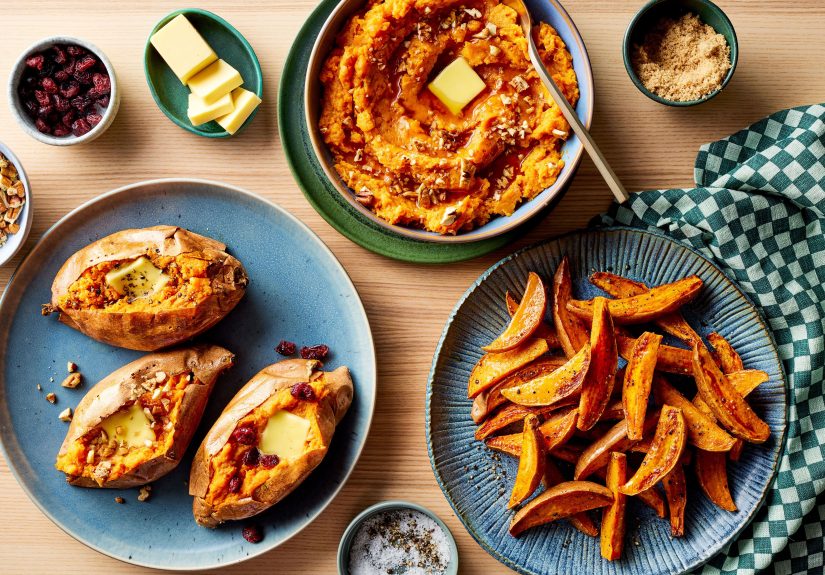
This is the classic: fluffy inside, naturally sweet, and basically begging to be loaded with toppings. Baking whole is also one of the easiest ways to cook sweet potatoes for meal prep.
How to do it
- Heat oven to 400–425°F.
- Scrub sweet potatoes, then dry well.
- Pierce each one 4–6 times with a fork (steam needs an exit plan).
- Optional: rub with a little oil and sprinkle with salt for better skin texture.
- Place on a baking sheet (or directly on the rack with a tray below for drips).
- Bake until a knife slides in easily: usually 45–70 minutes depending on size and temperature.
Pro tips for better baked sweet potatoes
- Don’t foil-wrap unless you want softer skin: foil traps steam and reduces “baked” texture.
- Want extra sweetness? Lower-and-slower can deepen caramel notes, but it takes longer.
- Done means “no resistance”: if the center fights your fork, it needs more time.
Favorite topping combos
- Savory loaded: Greek yogurt, salsa, black beans, lime, cilantro.
- Comfort mode: butter, salt, cracked pepper, a drizzle of honey.
- Fancy brunch: cottage cheese, chili crisp, scallions.
2) Oven-Roasted Sweet Potatoes (Cubes or Wedges)
Roasting is where sweet potatoes become their best selves: caramelized edges, tender centers, and a smell that makes people wander into your kitchen asking, “What’s that?” (as if they didn’t follow the aroma).
How to do it (sheet-pan style)
- Heat oven to 400°F (great balance of browning and sweetness).
- Cut into even pieces (about 3/4-inch cubes or thick wedges).
- Toss with oil, salt, and your seasoning mix.
- Spread on a sheet pan in a single layer (crowding = steaming).
- Roast 25–35 minutes, flipping once halfway, until browned and tender.
Pro tips for maximum caramelization
- Use enough space: if pieces touch, they sweat instead of roast.
- Preheat the pan: a hot pan jump-starts browning.
- Try a “sweetness boost” step: holding cut pieces in warm water around 135–170°F for a while can increase maltose (aka sweetness) before roastinggreat for the sweet-tooth crowd.
Easy seasoning ideas
- Smoky-savory: smoked paprika + garlic powder + cumin
- Herby: rosemary + thyme + black pepper
- Sweet-spicy: cinnamon + chili powder + pinch of brown sugar
3) Microwave Sweet Potatoes (Fast, Legit, and Unapologetic)
If you need a sweet potato in minutes, the microwave is not “cheating.” It’s “efficient.” And if anyone judges you, hand them a raw sweet potato and a fork and tell them to meditate on gratitude.
How to microwave a sweet potato
- Scrub and dry the sweet potato.
- Poke holes all over with a fork.
- Place on a microwave-safe plate (optional: cover with a damp paper towel for even cooking).
- Microwave on high for 5 minutes for a small/medium potato, then check.
- Continue in 1-minute bursts until tender (many take 7–10 minutes total).
- Rest 2 minutes before splitting (it keeps cooking and won’t scorch your fingertips).
How to make microwaved sweet potatoes taste more “oven-y”
- Quick crisp: after microwaving, brush with oil and broil 2–4 minutes for better skin.
- Flavor boost: finish with salt, butter, and an acid (lime, vinegar, hot sauce).
4) Boiled Sweet Potatoes (Best for Mash and Smooth Recipes)
Boiling is the workhorse methodespecially when your end goal is creamy mashed sweet potatoes, soups, purees, or pie filling. It’s fast, straightforward, and very hard to mess up unless you wander away and start a new life.
How to boil sweet potatoes (cubed)
- Peel (optional) and cut into 1-inch cubes.
- Add to a pot and cover with cold water by about an inch.
- Add a generous pinch of salt.
- Bring to a boil, then reduce to a steady simmer.
- Cook 10–20 minutes until fork-tender (smaller cubes cook faster).
- Drain well, then return to the warm pot for 1 minute to steam off excess moisture.
How to boil whole sweet potatoes
- Scrub the potatoes (leave skin on for easier handling).
- Place in a pot and cover with water.
- Simmer 20–35 minutes depending on size, until a knife slides in.
- Drain and cool slightly before peeling (skin slips off more easily when warm).
Best uses for boiled sweet potatoes
- Mashed sweet potatoes: butter + salt, then choose your vibe: maple-cinnamon or garlic-herb.
- Quick soup base: blend with broth, sautéed onion, and ginger.
- Baby-friendly puree: blend with a little water or breastmilk/formula as advised by a pediatrician.
5) Steamed Sweet Potatoes (Gentle, Moist, and Underrated)
Steaming is the quiet overachiever. It keeps sweet potatoes tender and moist without washing away flavor, and it’s especially great when you want clean sweetness for bowls, salads, or mashing.
How to steam sweet potatoes (whole)
- Add water to a pot so it sits below a steamer basket.
- Bring water to a boil.
- Place scrubbed sweet potatoes in the basket, cover, and reduce heat to maintain steady steam.
- Steam about 30 minutes (more for large potatoes) until a paring knife meets no resistance.
- Rest 5 minutes, then slice or peel as desired.
How to steam sweet potato cubes
- Cut into even cubes (about 1 inch).
- Steam 12–18 minutes until tender.
- Toss with butter, salt, and your favorite seasoning while still warm.
When steaming is your best move
- You want moist sweet potato for mash without extra dairy.
- You’re making a grain bowl and want cubes that won’t dry out.
- You’re cooking for someone who prefers “clean” flavors over heavy browning.
6) Air Fryer Sweet Potatoes (Crispy, Quick, Crowd-Pleasing)
The air fryer is basically a crisping machine with a fan obsession. It’s ideal for sweet potato cubes, wedges, and friesespecially when you want crunch without deep-frying.
Air fryer sweet potato cubes
- Preheat air fryer to 400°F (if your model recommends preheating).
- Cut sweet potatoes into 3/4-inch cubes.
- Toss with oil, salt, and spices.
- Air fry in a single layer for 12–18 minutes, shaking halfway, until browned and tender.
Air fryer sweet potato fries (crispier strategy)
- Cut into even fries (not too thin, or they over-brown before softening).
- Optional but helpful: rinse briefly, then dry very well.
- Toss with oil, salt, and a light dusting of cornstarch for extra crisp potential.
- Air fry around 375–390°F, shaking occasionally, until crisped to your liking (often 15–25 minutes).
Air fryer troubleshooting
- Not crispy? You likely crowded the basket. Cook in batches.
- Burning edges? Lower the temp slightly and shake more often.
- Soggy fries? Dry them better, and don’t skip the space between pieces.
How to Tell When Sweet Potatoes Are Done (Without a Degree in Potato Science)
- Whole: a paring knife slides into the thickest part with little to no resistance.
- Cubes/wedges: browned edges + a fork easily pierces the center.
- Fries: crisp on the outside, tender insidetaste-test a “sacrificial fry.”
Storage, Reheating, and Meal Prep Tips
Storing cooked sweet potatoes
- Cool leftovers quickly and refrigerate in an airtight container.
- Use within 3–4 days for best quality and food safety.
- Freeze for longer storage if needed; texture may soften after thawing, but it’s great for soups and mash.
Reheating without sadness
- Oven/air fryer: best for restoring crisp edges (reheat at 350–400°F until hot).
- Microwave: fastest for whole or mashed (add a splash of water and cover to prevent drying).
- Skillet: great for cubesuse a little oil and let them brown again.
Meal prep idea: sweet potato “mix-and-match” base
Cook a batch of roasted cubes or baked whole sweet potatoes, then use them all week: toss into salads, mash into tacos, blend into soup, or cube into breakfast hash with eggs. It’s like edible time management.
Quick Nutrition Notes (Because Someone Always Asks)
Sweet potatoes bring more than good vibes. A medium cooked sweet potato can provide a few grams of dietary fiber and a meaningful amount of vitamin C, plus naturally occurring sweetness that makes “healthy” food taste like it’s not trying to punish you. Cooking method changes texture more than it changes the fact that this is a nutrient-dense staple you can use in both sweet and savory dishes.
Common Mistakes (AKA How Sweet Potatoes End Up Weird)
- Skipping the fork holes on whole potatoes: steam needs a way out.
- Crowding the pan: you’ll steam instead of roast.
- Uneven cuts: some pieces burn while others stay firm.
- Under-seasoning: sweet potatoes love salt. Love it.
- Overcooking fries: they go from “crispy” to “why is this chewy?” fastwatch near the end.
Frequently Asked Questions
What’s the best way to cook sweet potatoes?
“Best” depends on your goal: for fluffy interiors, bake whole. For caramelized flavor, roast. For speed, microwave. For crispiness, air fry. For mash, boil or steam.
Do I need to soak sweet potato fries?
It can help with surface starch, but sweet potato fries can still be softer than white potato fries by nature. The biggest improvements usually come from drying well, spacing them out, and using cornstarch for oven or air fryer fries.
Can I eat the skin?
Yesjust scrub it well. If you’re sensitive to texture, peel it. If you like rustic vibes, keep it on.
Conclusion: Pick Your Method, Then Make It Yours
Now you have six solid ways to cook sweet potatoeseach with a different superpower. Bake for cozy fluffiness, roast for caramelized edges, microwave for speed, boil for mash and blending, steam for gentle tenderness, and air fry for crunch. Once you know the method, the rest is seasoning, timing, and a little confidence (plus maybe a sheet pan that isn’t warped).
Extra: Real-World Sweet Potato Experiences (The “What Actually Happens” Section)
Let’s talk about the part no recipe card can fully capture: the lived reality of cooking sweet potatoes in an actual home kitchenwhere ovens preheat slowly, someone always steals a fry, and your cutting board somehow becomes a sticky orange art installation.
One of the most common sweet potato experiences is the “I thought it would be faster” moment. You toss whole sweet potatoes in the oven at 425°F and assume you’ll be eating in 35 minutes… and then 55 minutes later you’re still poking one like it owes you money. The trick is size awareness: a small potato can be weeknight-friendly, but those giant sweet potatoes are basically baking-time influencers. When you’re in a hurry, roasting cubes or microwaving whole potatoes is the sanity move.
Another classic scenario: you roast sweet potato cubes, they smell incredible, and thensomehowthey’re soft but not browned. This is nearly always a crowding issue. Sweet potatoes release moisture, and if the pieces are packed tightly, the sheet pan turns into a steam room. The “fix” feels annoyingly simple: use a bigger pan, spread them out, and don’t be afraid to roast in two batches. It’s the kitchen equivalent of giving everyone personal space so they can become their best selves.
Fries bring their own emotional journey. People expect sweet potato fries to behave like regular fries, and sweet potatoes are like, “Absolutely not.” They’re higher in sugars and behave differently, so your fries may be tender with crisp edges rather than shatteringly crunchy. In practice, the best home-cook win is to aim for “crispy-enough and delicious” instead of chasing restaurant-level crunch at all costs. Drying thoroughly, adding a whisper of cornstarch, and cooking in a single layer gets you most of the way there. And if you’re air frying, the moment you stop doing batches is the moment your fries start doing that limp-sock thing. Batches are boring, but batches are also victory.
Microwave sweet potatoes are a surprisingly common “I can’t believe this works” experience. Many people assume microwaving equals rubbery disappointment, but sweet potatoes often come out tender and fluffy. The difference is in the details: poke holes, cook in intervals, and let it rest. That rest time is not optionalit’s when the heat finishes traveling inward. If you want the microwave version to feel more like oven-baked, a quick broil at the end can add texture that makes it feel like you tried harder than you did (no judgment; this is a safe space).
Boiling and steaming have their own practical lessons. Boiling is fast for mash, but if you don’t drain well (and let the potatoes steam briefly after draining), you can end up with watery mash that tastes like it got emotional and started crying. Steaming helps avoid that, which is why people who hate watery mash often become secret steam evangelists. Meanwhile, roasting is where “sweet potato magic” happensthose browned edges are basically flavor confetti. Once you experience that caramelized corner piece, it’s hard to go back.
Finally, there’s the meal-prep reality: cooked sweet potatoes are one of the easiest “future meals” you can stockpile. They’re flexiblesweet or savory, breakfast or dinner, snack or side. Many home cooks find that the easiest routine is to bake a few whole potatoes or roast a tray of cubes on Sunday, then remix them all week: tacos one night, grain bowl the next, blended soup when you’re tired, and a quick microwave reheat when life is chaos. Sweet potatoes don’t demand perfection. They just ask for heat, a little salt, and the chance to be delicious in whatever form your week requires.