Table of Contents >> Show >> Hide
- What Bullying Really Is (and Why Naming It Matters)
- The First 48 Hours: Your Anti-Bullying Response Plan
- Coping Methods That Actually Help
- Empowerment Tips for Students and Teens
- For Parents: How to Support Without Taking Over
- For Educators and Schools: What Effective Response Looks Like
- When to Get Professional Help
- What Not to Do
- 30-Day Empowerment Plan
- Final Takeaway
- Experience-Based Reflection (Extended Section)
Bullying is one of those problems that can make a school hallway feel a mile long and your phone feel like a trap. It can happen in person, online, in group chats, on the bus, in sports, and sometimes in places where adults assume “everything is fine.” If you’ve ever had your stomach drop before class because of one person’s behavior, this guide is for you.
Here’s the good news: bullying is not a personal failure. It is a behavior problem, a safety problem, and a community problem. That means there are proven ways to respond, protect your mental health, and regain your confidence. In this article, you’ll learn practical coping methods, empowerment tips, and clear action plans for students, parents, and educators.
What Bullying Really Is (and Why Naming It Matters)
Not every conflict is bullying. Two friends disagreeing once is conflict. Bullying is a repeated behavior meant to hurt, humiliate, or isolate someone, often with a power imbalance (social status, age, strength, numbers, or digital influence).
Common types of bullying
- Verbal bullying: insults, threats, slurs, taunting, “jokes” that target someone.
- Social/relational bullying: exclusion, rumor spreading, public embarrassment, silent treatment campaigns.
- Physical bullying: hitting, pushing, tripping, damaging belongings.
- Cyberbullying: harassment through texts, social media, gaming chats, fake accounts, non-consensual sharing.
- Bias-based harassment: targeting someone because of race, disability, religion, sex, sexual orientation, or identity.
Why this matters: when you label behavior correctly, you stop blaming yourself and start building a response plan. Translation: less “What is wrong with me?” and more “What is my next smart step?”
The First 48 Hours: Your Anti-Bullying Response Plan
When bullying happens, most people freeze, overreact, or replay the scene in their head like a bad trailer. Try this instead.
1) Protect safety first
- Move toward adults, staff, or a safer public space.
- If online, stop engaging immediately and tighten privacy settings.
- If there’s a threat of physical harm, treat it as urgent and alert adults right away.
2) Document, don’t debate
For in-person incidents, write down what happened: date, time, location, people involved, witnesses, exact words/actions. For cyberbullying, screenshot messages, usernames, timestamps, and URLs when possible. Evidence beats memory when stress is high.
3) Tell a trusted adult quickly
Choose someone who can act: parent, teacher, coach, counselor, school administrator, or school nurse. If the first person minimizes it, escalate to someone else. Reporting is not “snitching”; it is a safety action.
4) Use a short, assertive script
When safe, try one clear line, then disengage:
- “Stop. Don’t talk to me like that.”
- “Not okay.”
- “I’m leaving this conversation.”
No debate. No long speech. No attempt to win a courtroom case in the hallway.
Coping Methods That Actually Help
Coping is not pretending it doesn’t hurt. It is reducing harm, restoring control, and rebuilding confidence.
Regulate your body first
Bullying can trigger fight-flight-freeze. Your brain works better when your body settles down.
- Box breathing: inhale 4, hold 4, exhale 4, hold 4 (repeat 3–5 rounds).
- Grounding: name 5 things you see, 4 feel, 3 hear, 2 smell, 1 taste.
- Movement reset: brisk walk, stretching, or shaking out tension for 2 minutes.
Use “Thought Filters” for mental strength
Bullying often plants lies: “I deserve this,” “Everyone hates me,” “It will never stop.” Challenge those thoughts with evidence-based reframes:
- Lie: “It’s my fault.” → Truth: “Their behavior is their choice, not my value.”
- Lie: “I’m weak.” → Truth: “Asking for help is a power move.”
- Lie: “Nothing will change.” → Truth: “Action + support changes outcomes.”
Build a “Buddy Buffer”
Bullying is less likely when targets are socially connected. Walk with friends between classes, sit with supportive peers, and coordinate arrival/departure when needed. Think of it as social seatbelts.
Digital coping for cyberbullying
- Do not reply in anger (that often fuels more harassment).
- Save evidence before blocking.
- Use platform reporting tools.
- Turn off comments/DMs from unknown accounts.
- Limit doom-scrolling after an incident.
Recover self-esteem on purpose
Confidence doesn’t “magically come back.” Rebuild it through daily reps:
- Skill reps: do one thing daily that proves competence (music, coding, sports, art, math, language, anything).
- Identity reps: write 3 strengths each night (“I’m kind,” “I’m persistent,” “I’m funny under pressure”).
- Connection reps: spend time with people who are calm, respectful, and real.
Empowerment Tips for Students and Teens
Create your personal safety network
Pick 5 people you can contact quickly. Save them in your phone as “Support Team.” Include at least one adult in school and one outside school.
Practice boundary lines before you need them
Rehearse three phrases out loud. Yes, out loud. Confidence lives in rehearsal:
- “That comment is not okay.”
- “I’m not participating in this.”
- “I’m reporting this.”
Turn bystanders into allies
If you witness bullying, you can safely intervene without becoming a hero in an action movie:
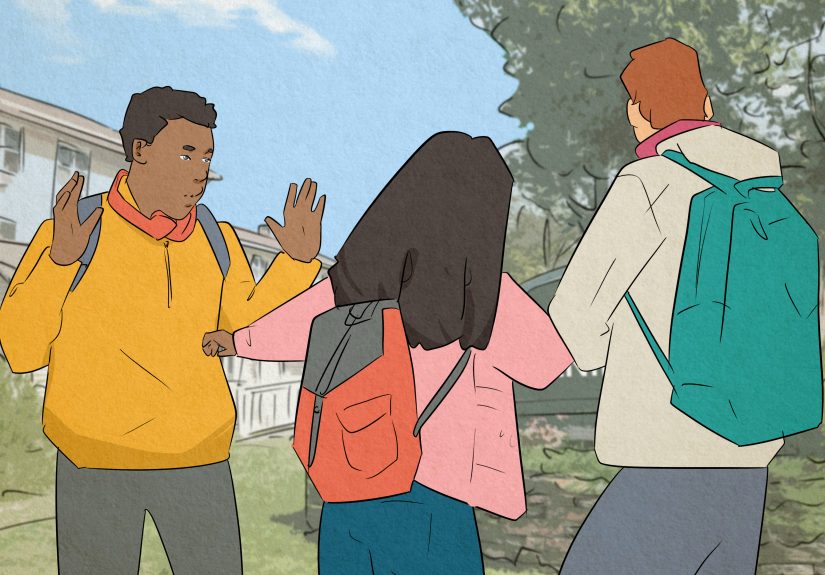
- Stand next to the targeted person and invite them away.
- Say, “Come with me,” then walk together.
- Report what you saw to a trusted adult.
- Online: do not like/share harmful posts; report and support the target publicly or privately.
Own your narrative
Bullies try to define you with one loud moment. Don’t hand them your biography. Your identity is bigger than their opinion and longer than their attention span.
For Parents: How to Support Without Taking Over
Start with listening, not cross-examination
Try: “Thank you for telling me. I believe you. We’ll handle this together.” Avoid: “Why didn’t you just ignore them?”
Collaborate with school using facts
Bring written incident notes and clear requests:
- What happened (specific incidents)
- What support is needed now (seating, hallway transitions, supervision)
- Who will follow up and when
Teach assertiveness at home
Role-play common scenarios. Keep responses short and calm. Think “firm customer service voice,” not “movie speech at graduation.”
Watch for warning signs
- School avoidance, headaches, stomachaches
- Sleep changes, appetite changes
- Mood shifts, irritability, withdrawal
- Drop in grades or sudden isolation
Know rights when harassment targets protected identities
If harassment is based on protected characteristics, schools may have legal obligations under civil rights frameworks. Ask for the district policy and formal complaint process in writing.
For Educators and Schools: What Effective Response Looks Like
Intervene immediately and calmly
Separate students, check safety, and avoid public shaming. Early adult action reduces escalation and signals clear norms.
Document patterns, not just incidents
Track locations, times, groups, and repeated behaviors. Patterns reveal prevention opportunities (hallways, locker rooms, bus lines, online school channels).
Protect the targeted student from retaliation
Follow-ups matter. A single meeting is not a system. Plan check-ins at 48 hours, 1 week, and 1 month.
Strengthen school climate
- Explicit anti-bullying norms
- Restorative and accountability-based responses
- Bystander skill training
- Staff consistency across classrooms and activities
When to Get Professional Help
If bullying leads to persistent anxiety, panic, depression symptoms, school refusal, self-harm thoughts, or major behavior change, connect with a licensed mental health professional. Early support can prevent long-term impact.
If someone is in immediate danger, call emergency services. If emotional distress is intense and immediate support is needed in the U.S., call or text 988 for confidential crisis support.
What Not to Do
- Don’t tell kids to “just toughen up.”
- Don’t force face-to-face apologies when safety is unclear.
- Don’t retaliate publicly on social media.
- Don’t ignore “small” incidents; patterns start small.
- Don’t wait for perfect proof before offering support.
30-Day Empowerment Plan
Week 1: Stabilize
- Create safety network and reporting plan.
- Practice 3 assertive scripts.
- Start sleep and stress routine.
Week 2: Protect
- Document incidents consistently.
- Adjust digital privacy settings.
- Meet school support staff.
Week 3: Rebuild
- Join one confidence-building activity.
- Reconnect with positive peers.
- Track wins daily (yes, tiny wins count).
Week 4: Empower
- Mentor or support a peer safely.
- Set personal goals beyond the bullying story.
- Celebrate progress with trusted people.
Final Takeaway
Learning how to deal with bullies is not about becoming harder; it’s about becoming wiser, safer, and more connected. Coping methods give you stability. Empowerment tips give you direction. Support systems give you momentum. And together, they give you something bullies hate most: a future they can’t control.
Remember: your worth is not a group chat vote, a hallway comment, or one person’s insecurity with extra volume. You deserve safety, respect, and a life where your energy goes toward growthnot defense.
Experience-Based Reflection (Extended Section)
Over the years, one pattern shows up again and again: people who recover best from bullying usually do three things earlytell someone, document clearly, and stop trying to solve it alone. I’ve seen students who spent months “handling it privately” because they thought reporting would make things worse. In reality, silence often gave the behavior more room. Once they involved a counselor or trusted teacher, the situation became manageable, and their stress dropped fast. The turning point was not a dramatic showdown. It was a boring, practical system: written logs, strategic check-ins, and one calm adult who followed through.
Another common experience is cyberbullying after school hours. The emotional whiplash is real: school ends, but the messages keep coming. Students often felt trapped by constant notifications and fear of missing something harmful being posted. The most effective shift was creating digital boundaries: muting late-night alerts, blocking known harassers after saving evidence, and having a parent or guardian review reports before escalation. People worry that blocking looks “weak,” but in practice it works like locking your front door. It’s not weakness. It’s basic safety hygiene.
I’ve also seen how bystanders can change everything. In one case, a student wasn’t close friends with the target, but started sitting nearby during lunch and walking with them between classes. No speeches, no spotlightjust consistent presence. The bullying lost power because isolation disappeared. That’s the underrated truth: bullies often seek social approval. Remove the audience, increase peer support, and the behavior becomes less rewarding. Small ally actions can be more effective than big confrontations.
Parents frequently ask, “Should I go straight to the principal?” The answer depends on urgency, but a balanced approach works best: begin with facts, keep emotion steady, and ask for specific safety actions with a follow-up date. Families who led with accusations often got defensive responses. Families who led with documentation and clear requests got faster cooperation. This doesn’t mean staying quiet about anger; it means channeling anger into leverage. Calm is not surrenderit is strategy.
One of the most powerful experiences comes from students who reframed identity after bullying. At first, many described themselves with labels the bully created. Later, they rebuilt confidence through repeated mastery in something meaningfulsports drills, robotics, debate, dance, coding projects, volunteering, art portfolios, anything that produced visible progress. Confidence came back not through motivation speeches but through evidence: “I can do hard things, and I’m improving.” That evidence becomes armor that doesn’t depend on other people’s approval.
Finally, recovery rarely looks linear. There are good weeks and hard days, especially when reminders pop up. People sometimes think setbacks mean failure. They don’t. Setbacks are normal stress responses, not proof that the plan failed. The strongest recoveries came from simple consistency: trusted relationships, clear boundaries, professional support when needed, and habits that restored daily stability. If you’re in that process now, you’re not behindyou’re building a life skill set that will serve you long after school. And yes, it counts even when progress feels slow. Quiet progress is still progress.