Table of Contents >> Show >> Hide
- Why Lithium Batteries Need Special Disposal
- How to Dispose of Lithium Batteries: 14 Steps
- Step 1: Identify the Battery Type
- Step 2: Do Not Toss It in the Trash
- Step 3: Check for Damage, Swelling, Heat, or Leaking
- Step 4: Check Whether the Battery or Device Was Recalled
- Step 5: Remove the Battery Only If It Is Designed to Be Removed
- Step 6: Tape the Battery Terminals
- Step 7: Bag Batteries Individually When Possible
- Step 8: Store Batteries in a Cool, Dry Place Before Drop-Off
- Step 9: Find a Local Battery Recycling Drop-Off Location
- Step 10: Use Retail Collection Bins Correctly
- Step 11: Take Large Batteries to the Right Facility
- Step 12: Handle Button and Coin-Cell Lithium Batteries Carefully
- Step 13: Do Not Mail Lithium Batteries Unless You Know the Rules
- Step 14: Keep a Simple Household Battery Routine
- What Happens When Lithium Batteries Are Recycled?
- Common Mistakes to Avoid
- Special Examples: What Should You Do With These Batteries?
- Personal Experience and Practical Lessons From Lithium Battery Disposal
- Conclusion: Dispose of Lithium Batteries the Smart Way
Note: This article is written for general household guidance in the United States. Lithium battery rules can vary by city, county, retailer, battery size, and battery condition, so always check your local waste authority before dropping off, mailing, or storing batteries for recycling.
Lithium batteries are the tiny powerhouses behind modern life. They run our phones, laptops, cordless tools, cameras, smartwatches, rechargeable flashlights, e-bikes, scooters, power banks, toys, and even that mysterious gadget in the kitchen drawer that no one remembers buying. Convenient? Absolutely. Harmless when tossed into the trash? Not even close.
Learning how to dispose of lithium batteries the right way matters because these batteries can spark, overheat, leak, catch fire, or cause damage when crushed in garbage trucks or recycling equipment. A dead battery may look as sleepy as a potato, but if the terminals touch metal or another battery, it can create a short circuit. In waste systems, that little spark can become a big problem fast.
The good news: safe lithium battery disposal is not complicated. You do not need a chemistry degree, a hazmat suit, or a dramatic soundtrack. You just need to identify the battery, protect the terminals, store it safely, and take it to the right drop-off point. This guide breaks the process into 14 practical steps so you can recycle lithium batteries responsibly, protect your home, and keep valuable materials out of landfills.
Why Lithium Batteries Need Special Disposal
Lithium batteries are different from ordinary household trash because they store a lot of energy in a compact package. That is what makes them useful in electronics, but it also makes them risky when damaged, punctured, overheated, or mixed loosely with other materials.
There are two common household categories. Lithium-ion batteries are rechargeable and often found in phones, laptops, power tools, e-bikes, cameras, tablets, and portable chargers. Lithium metal batteries are usually single-use and may be found in watches, cameras, key fobs, medical devices, smoke alarms, and coin-cell products. Both types deserve careful handling, especially when they are loose, swollen, damaged, or no longer working.
The main disposal rule is simple: do not put lithium batteries in household garbage or curbside recycling bins. Regular recycling carts are designed for bottles, cans, cardboard, and similar materialsnot hidden firecrackers with electrical terminals. Lithium batteries should go to battery recycling programs, electronics recyclers, retailer collection bins, or household hazardous waste facilities.
How to Dispose of Lithium Batteries: 14 Steps
Step 1: Identify the Battery Type
Before you dispose of anything, figure out what kind of battery you have. Look for labels such as “Li-ion,” “Lithium-ion,” “Lithium Polymer,” “LiPo,” “Lithium Metal,” “CR,” “DL,” or “3V Lithium.” Rechargeable packs from laptops, phones, cordless drills, power banks, and e-bikes are usually lithium-ion. Coin-shaped batteries like CR2032 are often lithium metal.
If the battery is inside a device and you cannot see a label, check the user manual, manufacturer website, or product specifications. Do not pry open sealed electronics just to satisfy your curiosity. Curiosity is great for learning; it is less great when paired with punctured battery cells.
Step 2: Do Not Toss It in the Trash
The most important step in lithium battery disposal is also the easiest: keep it out of your trash can. Loose lithium batteries can be crushed during collection, compacted in garbage trucks, or damaged at waste facilities. When that happens, they may short circuit, smoke, or ignite.
The same rule applies to curbside recycling. A recycling bin may feel like the responsible choice, but it is not the right place for lithium batteries unless your local program specifically says otherwise. Most curbside systems are not built to handle them safely.
Step 3: Check for Damage, Swelling, Heat, or Leaking
Inspect the battery before handling it. Warning signs include swelling, bulging, cracks, corrosion, a strange chemical smell, leaking fluid, discoloration, melted plastic, unusual heat, smoke, popping sounds, or wires that look loose or frayed.
If a battery looks damaged, do not put it in a retail recycling bin. Damaged, defective, or recalled lithium batteries often require special handling through a household hazardous waste facility or a specific manufacturer disposal process. If the battery is actively smoking, heating, hissing, or burning, move away and call emergency services. This is not the moment to become a YouTube firefighter.
Step 4: Check Whether the Battery or Device Was Recalled
Before recycling larger batteriesespecially power banks, e-bike batteries, scooter batteries, laptop packs, and cordless tool batteriescheck whether the product has been recalled. Recalled lithium-ion batteries can pose a higher fire risk and may not be accepted in normal battery collection boxes.
Search the brand name, model number, and the word “recall.” You can also check manufacturer notices or consumer safety announcements. If the battery is recalled, follow the exact disposal instructions from the manufacturer or local hazardous waste program.
Step 5: Remove the Battery Only If It Is Designed to Be Removed
Some batteries are easy to remove: power tool packs slide off, camera batteries pop out, and many rechargeable flashlight batteries unscrew from a compartment. Others are built into the device, such as many phones, tablets, wireless earbuds, and thin laptops.
If the battery is removable, remove it carefully after turning the device off. If it is glued, sealed, swollen, or difficult to access, do not force it. Take the whole device to an electronics recycling program or repair shop that handles battery-containing electronics. A stubborn battery is not an invitation to perform surgery with a butter knife.
Step 6: Tape the Battery Terminals
Cover the battery terminals with non-conductive tape. Electrical tape is ideal, but clear packing tape or masking tape can also work as long as it is not metallic. The goal is to prevent the terminals from touching other batteries, keys, coins, tools, foil, or anything else that can conduct electricity.
For cylindrical batteries, tape both ends. For rectangular packs, cover all exposed metal contacts. For coin-cell batteries, cover both flat sides or place each battery in its own small bag. This tiny step does a lot of heavy lifting. Think of tape as the battery’s little safety helmet.
Step 7: Bag Batteries Individually When Possible
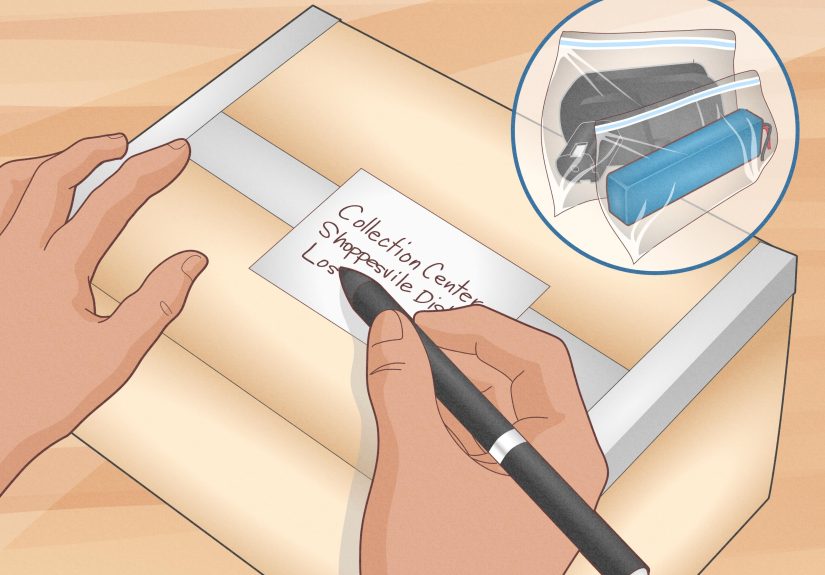
After taping the terminals, place each lithium battery in its own clear plastic bag if you have one. Individual bags prevent batteries from bumping into each other and creating sparks. This is especially helpful if you are collecting several used batteries before a drop-off trip.
Do not throw loose batteries into a coffee can, junk drawer, metal toolbox, or “future me will deal with it” box. Future you has enough problems. Give the batteries a safe, dry, separated storage setup now.
Step 8: Store Batteries in a Cool, Dry Place Before Drop-Off
Keep used lithium batteries away from heat, direct sunlight, moisture, flammable materials, and metal objects. A plastic container with a lid works well, especially if each battery is taped and bagged. Store the container in a garage shelf, utility closet, or other stable area where it will not be crushed or knocked around.
Avoid storing old batteries for years. Make recycling part of a routine. For example, collect used batteries in a labeled container and drop them off every few months when you run errands. The best battery disposal system is the one you actually use.
Step 9: Find a Local Battery Recycling Drop-Off Location
Use a battery recycling locator, your city or county waste website, or a household hazardous waste search tool to find a nearby drop-off location. Many communities have battery recycling events, permanent household hazardous waste facilities, or electronics recycling centers.
Retailers may also accept rechargeable lithium-ion batteries. Common examples include home improvement stores, electronics stores, office supply stores, and battery specialty stores. However, acceptance rules vary. Some locations accept only rechargeable batteries under a certain weight or watt-hour rating. Always check before showing up with a giant e-bike battery and the confidence of a person who did not read the rules.
Step 10: Use Retail Collection Bins Correctly
If you use a retailer battery recycling bin, follow the posted instructions. Many collection programs ask you to tape terminals, place batteries in bags, and avoid dropping off damaged, leaking, swollen, or recalled batteries.
Do not overfill a bin, leave batteries on the floor, or toss in random electronics that the program does not accept. A recycling bin is not a wishing well. If the bin is full or the instructions are unclear, ask an employee or use another approved site.
Step 11: Take Large Batteries to the Right Facility
Large lithium-ion batteries from e-bikes, scooters, mobility devices, backup power systems, and some lawn equipment often require special recycling arrangements. These batteries may exceed the size limits for standard retail boxes.
Contact the manufacturer, the retailer where you bought the product, your municipal waste authority, or a battery recycling program that handles larger packs. Some e-bike shops and specialty programs accept specific battery types. Do not force a large battery into a small collection box. That is not recycling; that is battery Tetris with consequences.
Step 12: Handle Button and Coin-Cell Lithium Batteries Carefully
Coin-cell lithium batteries are small, shiny, and easy to underestimate. They are commonly used in key fobs, watches, calculators, hearing devices, thermometers, remote controls, and small electronics. Because they are small, they are also dangerous if swallowed by children or pets.
Keep coin cells out of reach, tape both sides before recycling, and store them in a child-resistant container if possible. If a battery compartment is not secure, do not leave the device where a child can access it. Safe disposal starts before the battery is even dead.
Step 13: Do Not Mail Lithium Batteries Unless You Know the Rules
Mailing lithium batteries can be restricted because they are regulated for transportation. Rules depend on battery chemistry, watt-hour rating, lithium content, packaging, whether the battery is installed in equipment, whether it is shipped alone, and whether the shipment travels by air or ground.
Never mail a damaged, swollen, leaking, defective, or recalled lithium battery unless a qualified program specifically provides compliant packaging and instructions. If a manufacturer or recall notice asks you to return a battery, follow their process exactly. When in doubt, choose a local drop-off option instead of playing “Guess the Hazmat Rule.”
Step 14: Keep a Simple Household Battery Routine
The easiest way to dispose of lithium batteries safely is to make it boring. Create a small “battery recycling” container. Keep tape nearby. Label the container clearly. Teach everyone in the house that used lithium batteries do not go in the trash, junk drawer, or curbside recycling bin.
Once the container has a few batteries, drop them off during a normal errand. That one habit can reduce fire risk, protect sanitation workers, support recycling, and keep your home from becoming a museum of dead power packs.
What Happens When Lithium Batteries Are Recycled?
Battery recycling is not magic, although it sometimes feels like science wearing a hard hat. Recyclers sort, process, and recover useful materials from batteries, depending on the battery type and recycling method. Lithium-ion batteries may contain valuable materials such as cobalt, nickel, copper, aluminum, graphite, manganese, and lithium compounds.
Recovering these materials helps reduce waste and supports a more circular supply chain. Instead of sending useful metals to landfills, recycling gives them a chance to re-enter manufacturing. It also helps reduce the demand for new raw material extraction. Your one old phone battery will not save the planet by itself, but millions of people doing the right thing can make a real difference.
Common Mistakes to Avoid
Mistake 1: Mixing Batteries With Metal Objects
Loose batteries stored with screws, coins, keys, or tools can short circuit. Always tape terminals and keep batteries separated.
Mistake 2: Assuming “Dead” Means Safe
A battery that no longer powers your device may still hold enough energy to spark or overheat. Treat every used lithium battery with respect.
Mistake 3: Putting Batteries in Regular Recycling
Curbside recycling is not the same as battery recycling. Use approved drop-off locations, electronics recyclers, or hazardous waste facilities.
Mistake 4: Ignoring Damaged Batteries
Swollen, hot, leaking, or damaged batteries require special handling. Do not store them indoors for long periods or place them in normal collection boxes.
Mistake 5: Letting Batteries Pile Up Forever
A few batteries in a safe container is manageable. A five-year battery mountain in the garage is a tiny dragon hoard with electrical opinions.
Special Examples: What Should You Do With These Batteries?
Phone or Tablet Battery
If the battery is built into the device, recycle the whole device through an electronics recycling program, retailer trade-in program, or municipal e-waste event. Do not pry open swollen phones or tablets.
Laptop Battery
If the laptop has a removable battery, tape the terminals and take it to a battery recycling drop-off. If it is built in, recycle the laptop as electronics waste through an approved program.
Power Tool Battery
Remove the pack from the tool, tape the terminals, bag it if possible, and take it to a rechargeable battery collection site or home improvement store that accepts power tool batteries within program limits.
E-Bike or Scooter Battery
Check the brand, size, and condition. Contact the manufacturer, retailer, local hazardous waste facility, or a specialty battery recycling program. Do not place large mobility batteries in ordinary retail collection bins unless the program clearly accepts them.
Coin-Cell Lithium Battery
Tape both sides, store it away from children and pets, and take it to a battery recycling location or hazardous waste collection site. Never leave loose coin cells in drawers where they can be swallowed or shorted.
Personal Experience and Practical Lessons From Lithium Battery Disposal
One of the most useful lessons about lithium battery disposal is that the process becomes much easier when you stop treating batteries as random clutter. Most households do not have a battery problem because people are careless. They have a battery problem because used batteries appear slowly: one from a dead key fob, two from a camera, three from old wireless headphones, a power bank that stopped charging, and a tool battery that now has the enthusiasm of a sleepy turtle.
The best experience-based system is simple: create a battery station before you need one. A small plastic food container, a roll of electrical tape, a marker, and a sticky label can solve most of the problem. Write “Used BatteriesTape Before Recycling” on the container. Put it somewhere visible but safe, such as a utility shelf or cabinet. When a battery dies, tape it immediately and place it in the container. This takes less than a minute, which is important because any system that requires a spreadsheet, a calendar reminder, and emotional maturity is probably doomed.
Another practical tip is to recycle batteries during errands you already make. If your local home improvement store, electronics store, or municipal center accepts lithium batteries, connect the drop-off with something ordinary. For example, recycle batteries when you buy light bulbs, return packages, pick up garden supplies, or stop at the hardware store. The fewer special trips required, the more likely the habit will stick.
It also helps to sort batteries by condition. Normal used lithium batteries can usually be taped, bagged, and dropped off at approved collection points. Questionable batteriesswollen, leaking, hot, cracked, or recalledbelong in a separate decision category. Do not mix them with normal used batteries. Call the local household hazardous waste facility and ask how they want them handled. This one phone call can prevent a lot of guessing.
Families with kids should add one more habit: check battery compartments. Toys, thermometers, remotes, bathroom scales, greeting cards with sound chips, and small lights may contain button or coin batteries. These batteries are easy to overlook, and they can be dangerous if swallowed. Before donating or discarding old gadgets, open the battery compartment, remove the battery if it is designed to be removed, tape it, and recycle it properly.
People who use power tools, cameras, drones, e-bikes, or scooters should be extra organized. Bigger lithium-ion packs cost more, store more energy, and may have stricter disposal rules. Keep the original charger, read the battery label, and avoid charging or storing damaged packs. If a battery falls, gets wet, overheats, or starts acting strangely, stop using it and contact the manufacturer or a qualified recycling program. A battery that charges oddly or swells is not “just being dramatic.” It is waving a tiny red flag.
The biggest real-world lesson is this: safe lithium battery disposal is not about perfection. It is about reducing avoidable risk. Tape the terminals. Keep batteries dry and separated. Use official drop-off locations. Treat damaged batteries seriously. Do those things consistently, and you are already ahead of the average junk drawer.
Conclusion: Dispose of Lithium Batteries the Smart Way
Knowing how to dispose of lithium batteries safely is one of those small household skills that pays off in a big way. These batteries power the devices we rely on every day, but they do not belong in the trash, curbside recycling bin, or random drawer of forgotten electronics. The safest path is to identify the battery, inspect it for damage, tape the terminals, bag it when possible, store it in a cool dry place, and take it to an approved battery recycling or household hazardous waste location.
For normal rechargeable batteries, retailer drop-off programs and battery recycling locators can make disposal convenient. For damaged, defective, swollen, leaking, large, or recalled batteries, use special handling through your local hazardous waste program or manufacturer instructions. In other words, give each battery the exit plan it deserves. Your trash can is not that plan.
Safe battery disposal protects your home, waste workers, recycling facilities, and the environment. It also helps recover valuable materials that can be used again. Not bad for a chore that starts with a strip of tape and a little common sense.