Table of Contents >> Show >> Hide
- What Are Donkey Kicks, Really?
- Muscles Worked: Why Donkey Kicks Hit Glutes, Arms, and Core
- How to Do Donkey Kicks with Perfect Form
- Common Donkey Kick Mistakes (and Easy Fixes)
- Donkey Kick Variations for Every Fitness Level
- How to Program Donkey Kicks in Your Workouts
- Safety Tips: When to Modify or Skip Donkey Kicks
- Real-Life Payoff: How Stronger Glutes, Arms, and Core Help You Move Better
- Donkey Kick Experiences, Tips, and “I’ve Been There” Moments
- Conclusion
If you’ve ever scrolled past a “booty workout” on social media, you’ve probably seen donkey kicks in actionsomeone on all fours, calmly kicking a leg toward the ceiling like they’re trying to nudge an invisible door open. Simple? Yes. Easy to mess up? Also yes.
Donkey kicks (also known as quadruped bent-knee hip extensions) are one of those small, sneaky bodyweight moves that can transform your glutes, while quietly working your arms and core at the same time. With no equipment, little space, and just your body weight, you can build strength, stability, and better posturewithout stepping foot in a squat rack.
In this guide, you’ll learn exactly how to do donkey kicks with clean form, how they strengthen your glutes, arms, and core, the most common mistakes to avoid, and easy variations to level up or down. We’ll also walk through real-life scenarios and experiences so you know what to expect when you add them to your routine.
What Are Donkey Kicks, Really?
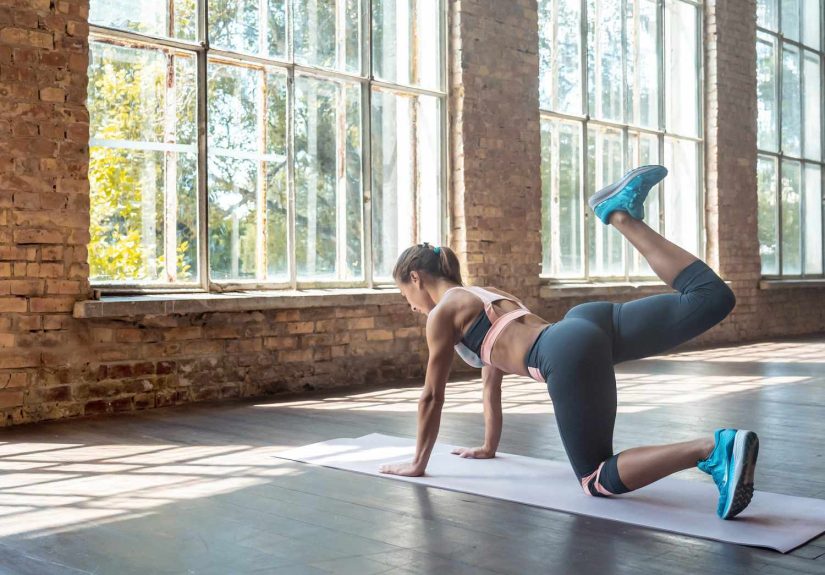
At their core (pun fully intended), donkey kicks are a glute isolation exercise. You start on all fourshands under shoulders, knees under hips, spine and neck in a neutral lineand extend one leg behind you while keeping the knee bent. The movement happens at the hip joint, not the lower back.
This position is sometimes called the quadruped position. You’re essentially using gravity and your own body weight to load the glute on the working side, while your arms and core stabilize your entire body. The result: your butt, shoulders, and deep abdominal muscles all get invited to the party.
Fun fact: Research from the American Council on Exercise (ACE) has highlighted quadruped hip extensions as one of the more effective moves for activating the gluteus maximus, the largest muscle in your backside.
Muscles Worked: Why Donkey Kicks Hit Glutes, Arms, and Core
Glutes: The Main Event
Donkey kicks primarily target the gluteus maximus, with help from the hamstrings. When you lift your leg up and back, you’re performing hip extension, which is one of the main jobs of the glutes. Keeping your knee bent slightly reduces the hamstring’s role and shifts more of the effort toward your glutes.
Strong glutes don’t just look good in jeansthey stabilize the pelvis, support your lower back, and power everyday moves like climbing stairs, sitting down and standing up, running, and jumping.
Arms and Shoulders: The Silent Support System
Your arms aren’t just hanging out while your leg does the work. In the quadruped position, your shoulders, triceps, and upper back muscles stabilize your upper body. You’re basically holding a mini plank through your shoulders while your leg moves, which can help build endurance and joint stability over time.
Core: The Anti-Wiggle Team
Your core musclesincluding the transverse abdominis, obliques, and spinal stabilizerswork isometrically to keep your spine neutral and your hips from rocking side to side. When you brace your abs and keep your ribs stacked over your pelvis, you turn donkey kicks into a powerful core stability exercise as well.
Peloton trainers and other coaches often highlight donkey kicks for improving balance, stability, and lower-back support, all of which rely heavily on a strong and coordinated core.
How to Do Donkey Kicks with Perfect Form
Step-by-Step Donkey Kick Instructions
-
Set up in tabletop.
Get down on all fours on a mat. Place your hands directly under your shoulders and your knees under your hips. Your knees should be hip-width apart. Keep your gaze slightly ahead of your hands or down to the mat so your neck stays neutral. -
Find your neutral spine.
Engage your core as if you’re gently tightening a wide belt around your waist. Avoid dropping your belly toward the floor or aggressively rounding your back. Think “flat and long” from head to tailbone. -
Brace before you move.
Take a breath in. As you exhale, gently draw your ribcage down and your belly in toward your spine. This brace will protect your lower back and help your glutes do the heavy lifting. -
Lift one leg.
Keeping your right knee bent at about 90 degrees, lift that leg up and back, pressing the sole of your foot toward the ceiling. Stop when your thigh is roughly in line with your torsono need to kick into the stratosphere. Avoid twisting or opening your hip to the side. The movement should be slow and controlled. -
Pause and squeeze.
At the top, pause for 1–2 seconds and deliberately squeeze your right glute. Imagine you’re trying to pinch something in your back pocket. -
Lower with control.
Slowly lower your leg back to the starting position without letting your knee slam into the mat. Maintain tension in your core the whole time. -
Repeat, then switch sides.
Perform all your reps on one side (for example, 10–15), then switch to the other leg.
Breathing, Tempo, and Reps
For most people, a good starting point is 2–3 sets of 10–15 reps per side, moving slowly and focusing on muscle engagement rather than speed. Exhale as you lift your leg; inhale as you lower.
If your lower back or shoulders start complaining before your glutes feel anything, you’re either doing too many reps, moving too fast, or letting your form slip.
Common Donkey Kick Mistakes (and Easy Fixes)
Even though donkey kicks look simple, a few small errors can make them less effectiveor downright uncomfortable. Here’s what to watch for:
Mistake 1: Overarching the Lower Back
If your goal is glute strength, you don’t want your lower back doing the job. Overarching usually happens when you try to kick too high or when your core isn’t engaged. Coaches and physical therapists often flag this as the number one issue with quadruped hip extension work.
Fix: Keep your range of motion smaller. Only lift your leg as high as you can while maintaining a neutral spine. Think “glute squeeze” rather than “how high can I fling this leg.” If needed, do a few reps in front of a mirror to check your back position.
Mistake 2: Rotating or Opening the Hips
When the working hip rotates outward, you lose some of that targeted glute activation and start relying on other muscles to cheat through the movement. Many guides emphasize keeping the hips “square” to the floor to get the most benefit.
Fix: Imagine both hip bones are headlights shining straight down into the mat. If one beam starts drifting to the side, reset your position and brace your core.
Mistake 3: Rushing the Reps
Fast, bouncy reps might feel like more work, but they actually reduce time under tension and can make it easier to use momentum instead of muscle control.
Fix: Use a rhythm like “two counts up, one count squeeze, two counts down.” Slow reps will make your glutes light up without needing extra weight.
Mistake 4: Letting the Core Go Limp
If your belly is dropping toward the floor or your ribs are flaring, your core isn’t doing its job. That not only steals the burn from your glutes but can also irritate your lower back.
Fix: Before each set, reset your tabletop position: brace your abs, gently tuck your ribs toward your hips, and maintain that brace throughout the movement. If it helps, think of doing a light plank from the shoulders to the knees.
Donkey Kick Variations for Every Fitness Level
Once you master the basic donkey kick, you can tweak it to match your goals and your current strength level.
1. Tabletop Donkey Kick (Beginner-Friendly)
If being on your forearms or maintaining a deep brace is uncomfortable, stick with a standard tabletop position with hands under shoulders. It’s gentler on the wrists and shoulders and easier to control.
2. Resistance Band Donkey Kick
Loop a small resistance band around your thighs, just above the knees. This increases tension at the top of the movement and challenges your glutes to work harder, especially if you hold the squeeze for a second or two. Many home workout guides recommend this variation as a simple but effective progression.
3. Straight-Leg Kickback
Instead of bending the knee, straighten your working leg and lift it back behind you. This version shifts a bit more work to the hamstrings while still engaging the glutes and core. It’s often listed as a variation of quadruped hip extension.
4. Bird-Dog Variation for Extra Core Work
For a true full-body stability challenge, add an opposite arm reach as you kick back with your legthe classic bird-dog move. This version heavily targets your core and spinal stabilizers while still working your glutes.
5. Elevated or Weighted Donkey Kicks
More advanced lifters sometimes perform donkey kicks with their hands elevated on a step or bench, or with a light dumbbell held behind the knee. This increases the range of motion or resistance, but it should only be added once your form is rock solid.
How to Program Donkey Kicks in Your Workouts
You can plug donkey kicks into your routine in several ways:
-
Warm-up or activation:
Do 2 sets of 10–15 reps per side before squats, lunges, deadlifts, or running to “wake up” your glutes and improve mind–muscle connection. -
Accessory strength work:
After your main lifts, use donkey kicks as a high-rep accessory movement3 sets of 12–20 reps per sideto fatigue the glutes in a low-impact way. -
Bodyweight or home workouts:
Combine donkey kicks with moves like glute bridges, side-lying leg lifts, planks, and shoulder taps to build a fully equipment-free lower-body and core session. -
Rehab or lower-impact routines:
For people easing back into exercise, donkey kicks offer a glute-focused option that doesn’t load the spine with external weight. Many rehab-oriented programs use quadruped hip extensions to restore glute activation.
Safety Tips: When to Modify or Skip Donkey Kicks
Donkey kicks are generally safe for most people, but a few precautions go a long way:
-
Listen to your lower back.
You should feel the effort mostly in your glutes and maybe your hamstringsnot sharp or nagging pain in your lower back. If your back gets cranky, reduce your range of motion, double-check your core brace, or try glute bridges instead. -
Protect your knees and wrists.
Use a mat or folded towel if pressure on your knees is uncomfortable. If wrists are an issue, you can come down onto your forearms or place your hands on dumbbells or a bench to keep them more neutral. -
Pregnancy or postpartum.
Many people can safely do donkey kicks during pregnancy or postpartum, but core and pelvic floor needs vary a lot. In those cases, getting clearance from a healthcare or pelvic floor specialist is wise before adding any new core work. -
Slow progression.
Don’t jump straight to weighted or banded variations if you’re still figuring out the basics. Quality reps beat fancy repsevery time.
Real-Life Payoff: How Stronger Glutes, Arms, and Core Help You Move Better
Strong glutes, arms, and core from donkey kicks don’t just show up in the gym. They show up when:
- You walk up a flight of stairs and your legs feel powerful instead of heavy.
- You carry groceries or pick up a toddler without your lower back complaining.
- You go for a run and feel more stable with every stride.
- You sit at a desk all day but feel less achy afterward because your posterior chain is stronger.
By training in a quadruped position, you’re teaching your body to coordinate your hips, spine, and shoulders togetherwhich is exactly what happens in normal daily movement.
Donkey Kick Experiences, Tips, and “I’ve Been There” Moments
If you’re new to donkey kicks, here’s what the journey usually looks likefrom that awkward first set to the “wow, I actually feel stronger” phase.
Week 1: The “Why Are My Arms Tired?” Stage
Most beginners expect their glutes to burn and are surprised when their shoulders and triceps start talking first. That’s normal. Your upper body is learning how to stabilize in the quadruped position, especially if you haven’t done many plank-style exercises before. The key here is to keep sets shortmaybe 8–10 reps per sideand focus on posture and breathing.
During this phase, it helps to film a quick side-view video or check yourself in a mirror. People are often shocked to see how high they’re trying to kick the leg, or how much their back arches. Once you see it, you can fix it.
Week 2–3: Finding the Glute “Switch”
After a few sessions, you start to feel that distinct glute squeeze at the top of each rep. This is where the mind–muscle connection really develops. Many lifters and trainers consider donkey kicks a great “activation” exercise for this exact reasonthey teach you what it feels like when the glute is truly firing, not just kind of participating.
A lot of people notice that other exercises improve too: squats feel more stable, lunges feel more controlled, and runs feel smoother because the glutes are finally doing their job.
Month 1 and Beyond: Adding Challenge Without Losing Form
Once you can breeze through 3 sets of 15 donkey kicks per side with clean form, it’s tempting to get wildankle weights, resistance bands, or marathon sets. Progress is great, but control still wins.
If you want more difficulty without sacrificing form, try:
- Slowing the tempo: 3 seconds up, 2 seconds hold, 3 seconds down.
- Adding a mini band around the thighs for extra tension at the top of the rep.
- Pairing donkey kicks with a plank or side plank to build a mini glute-and-core circuit.
People often report that when they get consistentsay, 2–3 times per week for a monthdonkey kicks become a sort of “check-in” move. You can feel right away if your hips are tight, if your core is sleepy, or if one side is weaker than the other. It becomes a built-in self-assessment tool.
Practical Experience Tips:
- Use a mat you actually like. If your knees hurt, you’ll rush the set. A soft but stable surface makes a huge difference.
- Focus on one side at a time. Doing all reps on one leg before switching lets you really dial into how that glute feels and moves.
- Pair donkey kicks with posture breaks. If you sit a lot, sprinkle 1–2 sets during the day as a “movement snack.” Your hips will thank you.
- Respect your weaker side. Almost everyone has one. If your left glute feels asleep, slow down and give it extra attention rather than just muscling through.
- Celebrate small wins. That first day you feel a deep burn exactly where you’re supposed tothat’s progress. So is the day your shoulders don’t fatigue as quickly.
Over time, donkey kicks can shift from “that random Instagram exercise” to a trusty staple in your routine. When done consistently and correctly, they help your glutes, arms, and core work together as a team. And once that team is strong, everything from workouts to daily life feels smoother and more powerful.
Conclusion
Donkey kicks are simple, but they’re far from basic. With nothing more than a mat and your body weight, you can build stronger glutes, more stable shoulders, and a more resilient core. By paying attention to formneutral spine, steady hips, controlled movementyou turn each rep into a highly efficient strength and stability drill.
Whether you use them as a warm-up, an accessory lift, or the star of your home workout, donkey kicks deserve a permanent spot on your training playlist. Go slow, stay consistent, and let your glutes (not your lower back) take the spotlight.
meta_title: How to Do Donkey Kicks for Stronger Glutes
meta_description: Learn how to do donkey kicks with perfect form to build stronger glutes, arms, and core, plus variations, tips, and safety advice.
sapo: Donkey kicks might look simple, but when you do them correctly, they’re a powerhouse move for your glutes, arms, and core. In this in-depth guide, you’ll learn step-by-step donkey kick form, how to avoid the most common mistakes, and the best variations to match your fitness level. We’ll also cover how to program them into your workouts, when to modify or skip them, and real-world tips from experience so you can feel stronger, more stable, and more confident in every single rep.
keywords: donkey kicks exercise, how to do donkey kicks, glute isolation workout, quadruped hip extension, bodyweight glute exercise, core and glute strength, home booty workout