Table of Contents >> Show >> Hide
- What Is a Sun Salutation in Yoga?
- Why Practice Sun Salutation Sequences?
- Before You Start: Simple Setup Tips
- How To Do Sun Salutation A Step by Step
- How To Breathe During Sun Salutations
- What Is the Difference Between Sun Salutation A, B, and C?
- Common Sun Salutation Mistakes and How To Fix Them
- Beginner Modifications for Sun Salutation Sequences
- A Simple 10-Minute Sun Salutation Practice
- Experience: What Sun Salutations Actually Feel Like Over Time
- Final Thoughts
- SEO Tags
If you have ever walked into a yoga class and wondered why everyone suddenly started moving like a beautifully synchronized school of very calm fish, chances are you were watching Sun Salutation sequences. Also known as Surya Namaskar, these flowing yoga movements are the not-so-secret handshake of many yoga styles. They warm the body, wake up the breath, sharpen focus, and make you feel like you have your life together even if you still cannot find your matching socks.
This guide breaks down how to do Yoga Sun Salutation sequences in a practical, beginner-friendly way. We will cover the classic flow, breathing cues, alignment tips, common mistakes, easy modifications, and how to build a short home practice without turning your mat into a scene of confusion and dramatic sighing. Whether you are brand new to yoga or just want a cleaner, smoother flow, this article will help you move with more confidence and less flailing.
What Is a Sun Salutation in Yoga?
A Sun Salutation is a sequence of yoga poses linked together with breath. In many classes, it begins and ends in Mountain Pose and moves through a rhythm of reaching, folding, lifting, stepping or jumping back, and returning to standing. The exact sequence can vary by yoga tradition, teacher, or style, but the main idea stays the same: breath leads, the body follows.
That is one reason Sun Salutations show up so often in Vinyasa yoga, Hatha yoga, and flow-based classes. They create heat, gently elevate the heart rate, mobilize major joints, and prepare the body for deeper poses. In plain English, they are the yoga version of a full-body “good morning.”
Why Practice Sun Salutation Sequences?
The benefits of Sun Salutation yoga go far beyond looking graceful for twelve whole seconds. A well-practiced sequence can help improve flexibility, strength, mobility, posture, balance, circulation, and body awareness. Because the movement is paired with steady breathing, it may also help reduce stress and leave you feeling more focused instead of mentally buffering like slow Wi-Fi.
Here is why many people love adding Sun Salutations to their routine:
- They warm up the whole body. You move the spine through extension and flexion, open the shoulders, stretch the hamstrings and calves, and activate the core and legs.
- They build strength. Plank, Chaturanga, and Downward-Facing Dog challenge the shoulders, chest, arms, and core.
- They support flexibility. Forward folds, lunges, and backbends gradually improve range of motion.
- They train breath awareness. Each movement is linked to an inhale or exhale, which helps regulate pace and attention.
- They fit almost anywhere. A few rounds can work as a warm-up, a standalone mini workout, or the opening to a longer yoga practice.
Before You Start: Simple Setup Tips
Before launching into your first Sun Salutation sequence, set yourself up for success. Use a yoga mat with enough traction that your hands and feet do not slide around like you are auditioning for an accidental split. Wear clothes that let you move comfortably. Practice with bare feet if possible so you can grip and ground through the mat.
If you are a beginner, start slowly. You do not win extra points for moving fast. In fact, racing through Sun Salutations usually leads to breath-holding, collapsed posture, and that special brand of confusion where your limbs file separate agendas.
When is the best time to practice?
Traditionally, many people practice in the morning, often facing the sunrise. But realistically, the best time is the time you will actually do it. Morning, afternoon, or evening can all work. Sun Salutations are flexible like that. Unlike your group chat, they do not judge.
Who should modify or be cautious?
If you have wrist pain, shoulder injuries, low back issues, high blood pressure concerns, balance problems, or you are pregnant, modify the sequence and follow guidance from a qualified instructor or healthcare professional. Beginners should also remember that yoga should feel challenging sometimes, but not sharp, unstable, or alarming.
How To Do Sun Salutation A Step by Step
Sun Salutation A is the most common starting point. Learn this first before worrying about more advanced versions. Move one breath per pose if that feels comfortable. If it feels rushed, stay for several breaths in each position.
- Mountain Pose (Tadasana)
Stand tall at the top of your mat with feet together or hip-width apart. Ground evenly through both feet. Relax your shoulders and lengthen through the crown of your head. Bring your hands to prayer at your chest or rest them by your sides. - Upward Salute (Urdhva Hastasana)
Inhale. Sweep your arms out and up overhead. Reach through your fingertips without shrugging your shoulders into your ears. Lift your chest and lengthen your spine. - Standing Forward Fold (Uttanasana)
Exhale. Hinge at your hips and fold forward. Bend your knees as much as needed. Let your head and neck relax. Think long spine first, not “must touch toes or perish.” - Halfway Lift (Ardha Uttanasana)
Inhale. Lift halfway, lengthening your spine forward. Place fingertips on the floor, blocks, or shins. Keep the back flat and the neck long. - Plank or Four-Limbed Staff Transition
Exhale. Plant your hands and step back to Plank. If you are more experienced, you may jump back. Keep shoulders stacked over wrists and engage your core. - Chaturanga Dandasana
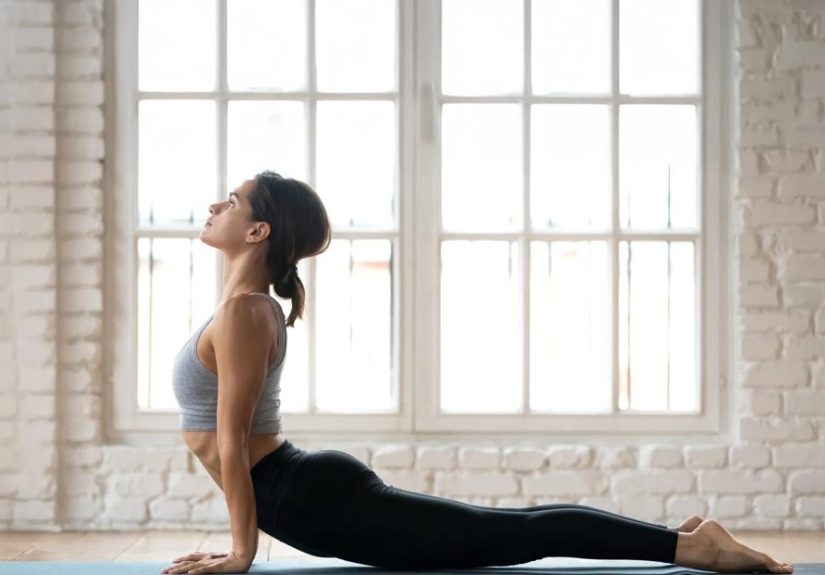
Lower halfway down with elbows hugging in close to your ribs. This is one of the trickiest parts of the sequence. If your form falls apart, lower your knees first or skip straight to the floor. - Upward-Facing Dog or Cobra
Inhale. Roll over your toes and open your chest into Upward-Facing Dog, or choose Cobra for a gentler option. Draw your shoulders back and broaden across the collarbones. - Downward-Facing Dog (Adho Mukha Svanasana)
Exhale. Lift your hips up and back into an inverted V-shape. Press through your palms, lengthen your spine, and let your heels move toward the mat. Bend your knees if your hamstrings feel tight. - Halfway Lift
Inhale. Step or lightly hop to the front of the mat and lengthen halfway again. - Forward Fold
Exhale. Fold back over your legs. - Upward Salute
Inhale. Rise to standing, sweeping your arms overhead. - Mountain Pose
Exhale. Return your arms to your sides or hands to prayer. Congratulations. You have completed one round.
How To Breathe During Sun Salutations
The breath is the engine of the flow. A common pattern is simple:
- Inhale when you lengthen, lift, or open the front body.
- Exhale when you fold, step back, lower, or ground down.
If one breath per movement feels too quick, slow it down. There is no rule saying your Sun Salutation has to look like a highlight reel. In fact, slower practice often improves alignment and control. A smooth breath matters more than dramatic speed.
What Is the Difference Between Sun Salutation A, B, and C?
Once you understand the basic flow, you will hear about different Sun Salutation variations.
Sun Salutation A
This is the foundational version. It is clean, direct, and ideal for beginners or as a warm-up.
Sun Salutation B
This version adds more intensity, often including Chair Pose and Warrior I. It challenges the legs more and increases heat quickly. If Sun Salutation A is coffee, Sun Salutation B is espresso.
Sun Salutation C
This one varies more from school to school. Some teachers use lunges, deeper standing poses, or beginner-friendly modifications. It is less standardized, which means you should treat it like a recipe everyone’s grandmother swears is the original.
Common Sun Salutation Mistakes and How To Fix Them
1. Rushing the sequence
Fix it by matching movement to breath instead of trying to “get through it.” A slower pace usually feels better and teaches more.
2. Forcing straight legs in forward folds
Keep a soft bend in your knees. This protects the lower back and makes the fold more accessible.
3. Dumping into the shoulders in Plank or Chaturanga
Press the floor away, engage your core, and keep elbows close. If needed, lower your knees and build strength gradually.
4. Crunching the neck in Upward Dog
Lift the chest instead of throwing the head back. Your neck will thank you.
5. Treating modifications like cheating
They are not cheating. They are smart. Using blocks, bending knees, stepping instead of jumping, and taking Cobra instead of Upward Dog are all completely valid choices.
Beginner Modifications for Sun Salutation Sequences
If you are learning how to do yoga Sun Salutation sequences for the first time, these adjustments can make the practice safer and more enjoyable:
- Place hands on blocks in forward folds and halfway lifts.
- Step back one foot at a time instead of jumping.
- Lower the knees before Chaturanga, or lower all the way to the belly.
- Choose Cobra Pose instead of Upward-Facing Dog.
- Keep knees bent in Downward Dog to prioritize a long spine.
- Rest in Child’s Pose whenever you need a break.
A Simple 10-Minute Sun Salutation Practice
Want a practical routine? Try this:
- Stand quietly in Mountain Pose for 3 slow breaths.
- Do 3 rounds of Sun Salutation A at an easy pace.
- Rest in Child’s Pose for 5 breaths.
- Do 2 more rounds, slightly more fluid if you feel good.
- Finish lying down or sitting quietly for 1 to 2 minutes.
This short practice works well in the morning, before a workout, or anytime you need to reset after too much sitting. It is enough to wake up the body without demanding an hour of free time and a dramatic soundtrack.
Experience: What Sun Salutations Actually Feel Like Over Time
At first, practicing Sun Salutations can feel a little like trying to pat your head, rub your stomach, and remember which way is inhale. You reach up, fold down, step back, forget a cue, bend something that probably should not bend that way, and wonder why everyone else seems to glide while you resemble a folding lawn chair with feelings. That is normal. In fact, it is practically part of the initiation.
The early experience of Sun Salutation yoga is often humbling, but it changes quickly. After a few sessions, you start noticing that the sequence makes sense. The inhale naturally supports the lift. The exhale helps you fold and ground. The transitions stop feeling random and begin to feel rhythmic. Instead of thinking about every limb like a stressed-out air traffic controller, you start moving as one connected system.
One of the biggest changes people experience is the way the body warms up from the inside out. A couple of rounds may feel gentle, but by round three or four, your shoulders are awake, your legs are engaged, and your spine feels more mobile. It is not just exercise. It is organized movement with a purpose. The practice can leave you feeling energized without feeling scattered, which is a rare and beautiful thing in modern life.
There is also a mental shift that happens with regular practice. Because each pose is linked to breath, your attention has somewhere useful to go. Instead of rehearsing awkward conversations from three years ago or mentally reorganizing your pantry for no reason, you focus on what is happening now: press the feet, lengthen the spine, breathe in, breathe out. That kind of repetition can be surprisingly calming.
Many people also notice emotional benefits. A short Sun Salutation practice can feel like a reset button on a stressful day. It creates structure when your mind feels messy. It gives you a ritual when your schedule feels chaotic. And because the sequence is familiar, there is comfort in returning to it. You do not have to invent a workout. You just begin with one breath and one reach upward.
Over time, the sequence becomes a mirror. Some days it feels light and strong. Other days your hamstrings complain, your wrists feel cranky, and your balance takes a coffee break. Sun Salutations teach adaptability because the practice meets you where you are. You can make it strong, gentle, slow, or simple. You can do one round or ten. You can modify without guilt. That flexibility is part of what makes the sequence sustainable.
Perhaps the most rewarding experience is realizing that progress in yoga is not only about deeper folds or cleaner Chaturangas. It is also about awareness. You begin to notice when you are holding your breath, when you are pushing too hard, and when backing off is actually the wiser move. That kind of insight tends to spill into everyday life. Suddenly, the mat is not just where you exercise. It is where you practice paying attention.
So yes, Sun Salutations can strengthen your shoulders, stretch your legs, and improve your mobility. But they can also teach patience, consistency, and the underrated art of starting again. Every round begins at the top of the mat. Every day offers another chance to breathe, move, and begin fresh. That is a pretty solid life lesson from a sequence of poses named after the sun.
Final Thoughts
If you want a single yoga practice that builds heat, coordination, mobility, strength, and focus, Sun Salutation sequences are hard to beat. They are foundational for a reason. Learn the pattern slowly, honor your breath, modify when needed, and let repetition do the teaching. You do not need to look advanced. You just need to keep showing up, one inhale and one exhale at a time.
In the end, learning how to do Yoga Sun Salutation sequences is less about perfect poses and more about steady practice. Start simple. Stay curious. And remember: a bent-knee forward fold done with good breath is far more impressive than a fancy-looking version held together by stubbornness and vibes.