Table of Contents >> Show >> Hide
- What Is a Rectangular Prism?
- The Formula for the Volume of a Rectangular Prism
- Why the Answer Uses Cubic Units
- Easy Steps to Find the Volume of a Rectangular Prism
- Example 1: Finding the Volume of a Small Box
- Example 2: Finding the Volume of a Fish Tank
- Example 3: Finding a Missing Dimension
- Common Mistakes When Calculating Rectangular Prism Volume
- How Rectangular Prism Volume Works in Real Life
- Helpful Tips for Students
- Quick Practice Problems
- Experience-Based Tips: Making Rectangular Prism Volume Easier to Understand
- Conclusion
Finding the volume of a rectangular prism may sound like something only a geometry teacher says with a suspiciously cheerful smile, but the idea is surprisingly practical. Every time you estimate how much a box can hold, how much water fits in an aquarium, how much storage space is inside a cabinet, or whether your new bookshelf will swallow your entire comic collection, you are thinking about volume.
The good news? The formula is short, friendly, and very hard to mess up once you understand what each part means. To find the volume of a rectangular prism, multiply its length × width × height. That is it. No dramatic math fog. No mysterious symbols hiding in a trench coat. Just three measurements working together to tell you how much three-dimensional space an object occupies.
In this guide, you will learn what a rectangular prism is, how to use the volume formula, how to work with different units, how to solve real-world examples, and how to avoid the most common mistakes students make. By the end, the phrase “rectangular prism volume” should feel less like homework and more like a useful life skill with better posture.
What Is a Rectangular Prism?
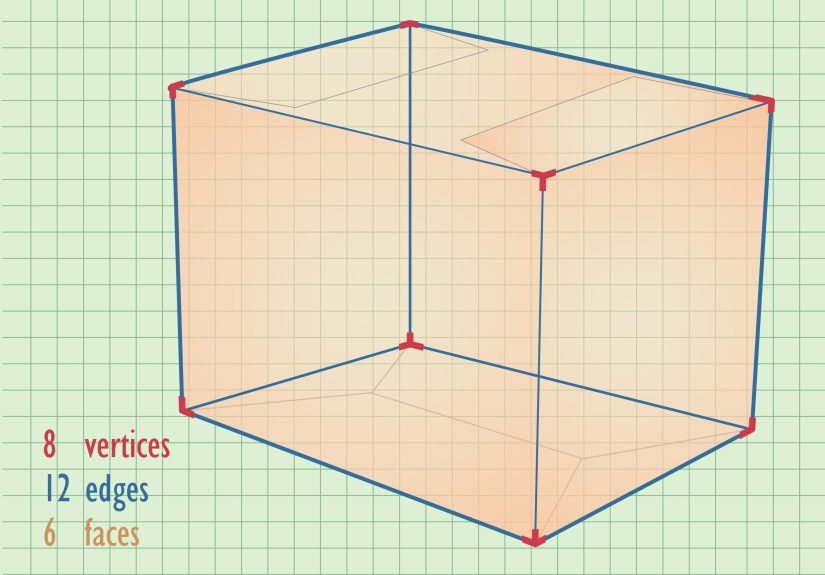
A rectangular prism is a three-dimensional solid shape with six rectangular faces. It has 12 edges, 8 vertices, and opposite faces that are equal in size. In everyday language, most people call it a box. Cereal boxes, shoe boxes, shipping boxes, storage bins, fish tanks, bricks, and many rooms are shaped like rectangular prisms.
A rectangular prism has three main dimensions:
- Length: how long the object is
- Width: how wide the object is
- Height: how tall or deep the object is
These three measurements create space inside or within the shape. That space is called volume. While area measures a flat surface, volume measures the amount of space inside a 3D object. Think of area as the amount of wrapping paper needed to cover a flat poster. Volume is how many marshmallows you could cram into a box before someone asks why you own that many marshmallows.
The Formula for the Volume of a Rectangular Prism
The standard formula is:
Volume = length × width × height
You may also see it written as:
V = l × w × h
In this formula, V stands for volume, l stands for length, w stands for width, and h stands for height.
Another way to understand the formula is:
Volume = area of the base × height
Since the base of a rectangular prism is a rectangle, the area of the base is found by multiplying length by width. Then, multiplying by height stacks that rectangular base upward into layers. If the base is 20 square inches and the prism is 5 inches tall, the total volume is 100 cubic inches.
Why the Answer Uses Cubic Units
Volume is measured in cubic units because it involves three dimensions. If the measurements are in inches, the volume is written in cubic inches, or in³. If the measurements are in centimeters, the answer is in cubic centimeters, or cm³. If the measurements are in feet, the answer is in cubic feet, or ft³.
For example, if a box measures 6 inches long, 4 inches wide, and 3 inches high, its volume is:
6 × 4 × 3 = 72 cubic inches
The number 72 tells you how much space the box contains. The cubic inches tell you the type of measurement. Forgetting cubic units is one of the most common mistakes in volume problems. It is a small detail, but in math, small details love to wear tiny crowns and act important.
Easy Steps to Find the Volume of a Rectangular Prism
Step 1: Identify the Length, Width, and Height
First, look at the rectangular prism and find its three dimensions. The problem may give them directly, or you may need to read a diagram. For example, a box might be labeled as 10 inches long, 6 inches wide, and 4 inches tall.
Sometimes the orientation of the prism changes. A box can be turned sideways, upside down, or placed at an angle in a drawing. Do not panic. The formula still works as long as you multiply the three perpendicular dimensions. Length, width, and height are names for the three directions of the shape.
Step 2: Make Sure the Units Match
Before multiplying, check the units. All three measurements should be in the same unit. If one side is measured in feet and another is measured in inches, convert first.
For example, if a storage container is 2 feet long, 18 inches wide, and 12 inches high, you should not multiply 2 × 18 × 12 and call it a day. That would mix feet and inches, which is like trying to bake a cake using cups, teaspoons, and “a feeling.” Convert 2 feet to 24 inches first, then calculate:
24 × 18 × 12 = 5,184 cubic inches
Step 3: Multiply Length by Width
Next, multiply the length and width to find the area of the base. If the length is 10 inches and the width is 6 inches:
10 × 6 = 60 square inches
This tells you the area of one flat rectangular layer at the bottom of the prism.
Step 4: Multiply by the Height
Now multiply the base area by the height. If the height is 4 inches:
60 × 4 = 240 cubic inches
So the volume of the rectangular prism is 240 in³.
Step 5: Write the Final Answer With Cubic Units
The final step is to include the correct unit. If the dimensions are in inches, use cubic inches. If they are in meters, use cubic meters. A correct answer should look like this:
The volume is 240 cubic inches.
Example 1: Finding the Volume of a Small Box
Suppose a gift box is 8 inches long, 5 inches wide, and 3 inches tall. Find the volume.
Formula: V = l × w × h
Substitute the values: V = 8 × 5 × 3
Multiply: 8 × 5 = 40, and 40 × 3 = 120
Answer: The volume is 120 cubic inches.
This means the box contains 120 cubic inches of space. Whether that is enough room for a gift depends on the gift. A necklace? Yes. A bowling ball? Your box has concerns.
Example 2: Finding the Volume of a Fish Tank
A rectangular fish tank measures 24 inches long, 12 inches wide, and 16 inches high. What is its volume?
V = 24 × 12 × 16
First multiply 24 × 12:
24 × 12 = 288
Then multiply by 16:
288 × 16 = 4,608
The volume is 4,608 cubic inches.
For aquariums, you may later convert cubic inches to gallons, but the rectangular prism volume formula gives you the starting point. This is especially useful when choosing filters, estimating capacity, or realizing your “small” fish tank is secretly a water-filled piece of furniture.
Example 3: Finding a Missing Dimension
Sometimes you know the volume and two dimensions, but one dimension is missing. You can still use the same formula.
Suppose a rectangular prism has a volume of 360 cubic centimeters. Its length is 12 centimeters, and its width is 5 centimeters. What is the height?
Start with the formula:
V = l × w × h
Substitute the known values:
360 = 12 × 5 × h
Multiply 12 × 5:
360 = 60h
Divide both sides by 60:
h = 6
The height is 6 centimeters.
This method works for any missing dimension. If length is missing, divide volume by width × height. If width is missing, divide volume by length × height. If height is missing, divide volume by length × width.
Common Mistakes When Calculating Rectangular Prism Volume
Mistake 1: Confusing Volume With Surface Area
Volume tells you how much space is inside a rectangular prism. Surface area tells you how much outside surface the prism has. If you are filling a box, use volume. If you are wrapping it, painting it, or covering it with stickers because apparently plain boxes offended you, use surface area.
Mistake 2: Forgetting to Use Cubic Units
A volume answer should use cubic units, such as cm³, in³, ft³, or m³. If you write “120 inches” instead of “120 cubic inches,” the answer describes length, not volume.
Mistake 3: Mixing Measurement Units
Always convert measurements to the same unit before multiplying. A rectangular prism with dimensions in feet, inches, and yards needs a unit makeover before the math begins.
Mistake 4: Adding Instead of Multiplying
Volume is found by multiplying length, width, and height. Adding the dimensions gives you something else, but it is not volume. For a prism measuring 7 by 4 by 2, the volume is 56 cubic units, not 13.
Mistake 5: Rounding Too Early
If the dimensions include decimals, wait until the final step to round unless the problem tells you otherwise. Rounding too early can slightly change the final answer.
How Rectangular Prism Volume Works in Real Life
The volume of a rectangular prism is not just a classroom topic. It appears in construction, shipping, interior design, gardening, storage planning, cooking, engineering, and everyday problem-solving.
When a moving company estimates how much space your furniture will take in a truck, it is thinking in volume. When a warehouse stacks boxes, it uses volume to plan storage. When a homeowner buys soil for a raised garden bed, the bed’s length, width, and depth determine how much soil is needed. When a baker uses a rectangular pan, the pan’s volume helps determine whether the batter will fit or stage a dramatic overflow in the oven.
Understanding rectangular prism volume also helps with unit sense. A tiny jewelry box may be measured in cubic inches. A storage shed may be measured in cubic feet. A large shipping container may be measured in cubic meters. Choosing the right unit makes your answer useful and realistic.
Helpful Tips for Students
Draw the Shape
If a problem feels confusing, sketch the rectangular prism. Label the length, width, and height. A quick drawing can turn a word problem from “math soup” into something you can actually see.
Use the Formula Every Time
Write V = l × w × h before plugging in the numbers. This helps you stay organized and reduces the chance of skipping a step.
Check Whether the Answer Makes Sense
After calculating, ask yourself whether the answer seems reasonable. A shoebox with a volume of 10,000 cubic feet is probably not a shoebox unless it belongs to a giant with excellent footwear taste.
Practice With Real Objects
Measure a cereal box, book, drawer, or storage bin. Then calculate the volume. Real-world practice makes the formula easier to remember because you can connect the numbers to actual objects.
Quick Practice Problems
Problem 1
A rectangular prism is 9 inches long, 4 inches wide, and 6 inches high. What is its volume?
Solution: 9 × 4 × 6 = 216
Answer: 216 cubic inches
Problem 2
A storage bin is 5 feet long, 3 feet wide, and 2 feet deep. What is the volume?
Solution: 5 × 3 × 2 = 30
Answer: 30 cubic feet
Problem 3
A rectangular prism has a volume of 144 cubic meters. Its length is 8 meters, and its width is 3 meters. What is the height?
Solution: 144 = 8 × 3 × h
144 = 24h
h = 6
Answer: 6 meters
Experience-Based Tips: Making Rectangular Prism Volume Easier to Understand
One of the best ways to learn how to find the volume of a rectangular prism is to stop treating it like a formula floating alone on a worksheet. The formula becomes much easier when you connect it to real experiences. Imagine packing a suitcase. You do not think, “Ah yes, behold my portable rectangular prism.” You think, “Will my shoes, shirts, charger, snacks, and emergency backup snacks fit?” That question is really about volume.
A helpful experience is to use unit cubes or small blocks. Build a rectangular layer that is 4 cubes long and 3 cubes wide. That layer has 12 cubes. Now stack 2 identical layers. Suddenly, you have 24 cubes. This shows why length × width gives the base area and multiplying by height counts the stacked layers. It is simple, visual, and slightly satisfying in the way only neatly stacked blocks can be.
Another useful habit is measuring objects around the house. Start with something simple, like a tissue box. Measure its length, width, and height with a ruler. Then multiply the three numbers. After that, compare it with a larger object, such as a drawer or a storage bin. You will quickly see that volume grows fast. Doubling just one dimension doubles the volume. Doubling all three dimensions makes the volume eight times larger. That is why a box that looks “a little bigger” can hold much more than expected.
Students also benefit from estimating before calculating. Before multiplying, guess whether the answer will be small, medium, or large. If a box measures about 10 inches by 10 inches by 10 inches, its volume should be around 1,000 cubic inches. If your calculator gives 10 cubic inches, something went sideways. Estimation is like a math seatbelt: it will not drive the car, but it can save you from a crash.
In real-life projects, unit conversion is often the sneakiest challenge. A garden bed might be measured in feet, while bags of soil are sold in cubic feet. A shipping box might be measured in inches, while freight companies may talk about cubic feet. The experience here is clear: always pause and check units before multiplying. That tiny pause prevents big confusion later.
Finally, remember that rectangular prism volume is not about memorizing a rule just long enough to survive a quiz. It is a practical thinking tool. It helps you pack smarter, buy the right amount of material, compare container sizes, plan storage, and understand space. Once you notice rectangular prisms in everyday life, they appear everywhere: boxes, rooms, drawers, bricks, books, cabinets, tanks, crates, and even that mysterious corner of the closet where old cables go to retire.
Conclusion
Finding the volume of a rectangular prism is one of the most useful geometry skills because it connects directly to real life. The formula is simple: Volume = length × width × height. Once you identify the three dimensions, make sure the units match, multiply carefully, and write the answer in cubic units, you have everything you need.
Whether you are solving a homework problem, planning a garden bed, choosing a storage box, estimating shipping space, or checking whether your aquarium can handle your ambitious fish-parent dreams, rectangular prism volume gives you a clear way to measure three-dimensional space. The more you practice with real objects, the more natural the process becomes. And yes, you may eventually start seeing boxes everywhere. That is not a problem. That is geometry politely moving into your daily life.
Note: This article is written in body-only HTML for web publishing and uses standard American math terminology for rectangular prism volume.