Table of Contents >> Show >> Hide
- Before You Begin: What “Stop Liking You” Actually Means
- Step 1: Check Your Motive (And Your Safety)
- Step 2: Stop Feeding the Crush (No More Mixed Signals)
- Step 3: Decide How Direct You Need to Be
- Step 4: Say It ClearlyKindlyOnce
- Step 5: Don’t Over-Explain (One Reason Is Plenty)
- Step 6: Set Friendly, Specific Boundaries
- Step 7: Align Your Actions With Your Words (Consistency Is Everything)
- Step 8: Manage Shared Spaces Like a Pro (Work, School, Friend Groups)
- Step 9: Use the “Broken Record” Technique If She Pushes
- Step 10: Respond to Emotions With EmpathyWithout Backpedaling
- Step 11: If Boundaries Are Ignored, Increase Distance (And Protect Yourself)
- Common Mistakes That Keep Her Liking You (Even More)
- Mini Playbook: Specific Scenarios
- Conclusion: Be Clear, Be Kind, Be Consistent
- Real-World Experiences People Commonly Report (Extra Notes, ~)
Let’s start with a truth that’s mildly annoying but extremely useful: you can’t control someone else’s feelings. You can control your behavior, your communication, and the boundaries you setaka the stuff that decides whether her crush fades naturally or turns into a long-running sitcom you never auditioned for.
This guide is for anyone thinking: “She’s great, but I’m not interested… and I’d like to handle this like a mature adult, not a cartoon villain.” We’ll keep it respectful, clear, and drama-minimizingwhile still being human (and yes, occasionally funny).
Before You Begin: What “Stop Liking You” Actually Means
“Getting a girl to stop liking you” is really about stopping the conditions that keep the crush alive. That usually means removing mixed signals, being honest (without being harsh), and setting boundaries that make your intentions unmistakably clear.
Your goal isn’t to embarrass her, punish her, or “win” the conversation. Your goal is to be kind, firm, and consistent so she can redirect her energy toward someone who’s actually available.
Step 1: Check Your Motive (And Your Safety)
Ask yourself: Why do you want her to stop liking you? Common reasons:
- You’re not attracted to her.
- You’re not available (emotionally or romantically).
- You don’t want to date anyone right now.
- You sense the dynamic is getting intense or uncomfortable.
Also consider context. If you have any reason to worry about backlash, harassment, or safetyespecially in situations involving repeated boundary pushingprioritize safety over “niceness.” You can be brief, choose public settings, or communicate via text if that’s safer.
Step 2: Stop Feeding the Crush (No More Mixed Signals)
Attraction often grows in the fog of ambiguity. So clear the fog. If your behavior says “maybe” while your mouth says “no,” her brain will trust the “maybe.”
Quick checklist: Are you accidentally flirting?
- Late-night texting “just because.”
- Private hangouts that feel date-y.
- Excessive compliments about her looks.
- Physical touch that lingers (hugs, shoulder touches, “playful” contact).
- Jealousy-inducing behavior or “teasing” romantic tension.
If you want her feelings to cool, your actions have to stop reheating them.
Step 3: Decide How Direct You Need to Be
Not every situation requires a formal “We need to talk.” Sometimes the crush fades with consistent, friendly distance. But if she’s clearly investing emotionallyconfessing feelings, making plans, acting like you’re basically already dating you owe her clarity.
Rule of thumb
The more obvious her interest, the more direct your response should be. Vagueness is not kindness; it’s a subscription to ongoing confusion.
Step 4: Say It ClearlyKindlyOnce
This is the main event. The sentence you’re avoiding is the sentence that will save both of you time. Be honest, use “I” statements, and keep it firm without being cold.
Simple scripts that work
- In person: “I really respect you, but I don’t feel a romantic connection. I don’t want to lead you on.”
- By text: “I’ve enjoyed talking, but I’m not interested in dating. I wanted to be clear and honest.”
- If she hints a lot: “I’m picking up that you might like me. I want to be upfrontI’m not looking for anything romantic.”
Notice what’s not in there: a debate invitation, a mystery, or a scavenger hunt for hidden meaning.
Step 5: Don’t Over-Explain (One Reason Is Plenty)
Over-explaining feels polite, but it often turns into a negotiation. If you list five reasons, she’ll try to solve four of them and ignore the real one: you’re not interested.
Good reasons
- “I don’t feel the connection.”
- “I’m not interested in dating.”
- “I’m not available for a relationship.”
Risky reasons
- “You’re amazing, I’m just broken.” (Sounds temporary and fixable.)
- “Maybe later.” (That’s a hope coupon.)
- “If you changed X…” (Now you’re editing her personality like a Google Doc.)
Step 6: Set Friendly, Specific Boundaries
If you want the feelings to fade, create a structure where romantic momentum can’t build. Boundaries aren’t punishments; they’re guardrails.
Examples of boundaries (pick what fits)
- Communication: “I’m going to keep our texts more occasional.”
- Hangouts: “I’m not doing one-on-one hangouts, but group stuff is fine.”
- Emotional intensity: “I can’t be your go-to for relationship-level support.”
If she asks “Why?” you can repeat: “I don’t want to give mixed signals. I want to be respectful.”
Step 7: Align Your Actions With Your Words (Consistency Is Everything)
This step is where people accidentally create sequels. If you say “I’m not interested,” then keep acting like her boyfriend, your words lose.
Consistency means:
- No flirty banter “because it’s funny.”
- No emotional intimacy you wouldn’t offer a platonic friend.
- No “accidental” date vibes (rides, dinners, late-night talks).
- No checking in constantly to see if she’s “over it” (that often reopens the wound).
Step 8: Manage Shared Spaces Like a Pro (Work, School, Friend Groups)
If you’re coworkers, classmates, or in the same friend group, you’ll still see each other. The goal is respectful normal, not awkward avoidance or public coldness.
Try this approach
- Keep interactions brief, friendly, and predictable.
- Avoid private “relationship talks” at group events.
- Don’t recruit mutual friends to “explain” for you.
- If needed, set a simple boundary: “I want things to stay comfortable in the group.”
You’re not trying to punish her. You’re trying to remove romantic ambiguity while keeping basic dignity intact.
Step 9: Use the “Broken Record” Technique If She Pushes
Some people push because they’re hopeful. Some push because they’re anxious. Some push because rejection stings. Your job is to be steady, not mean.
What to say when she keeps asking
- “I understand this is hard. I’m still not interested in dating.”
- “I’m not changing my mind, and I don’t want to keep revisiting this.”
- “I’m going to step back from this conversation now.”
Repeating yourself calmly is not rude. It’s clarity with a seatbelt.
Step 10: Respond to Emotions With EmpathyWithout Backpedaling
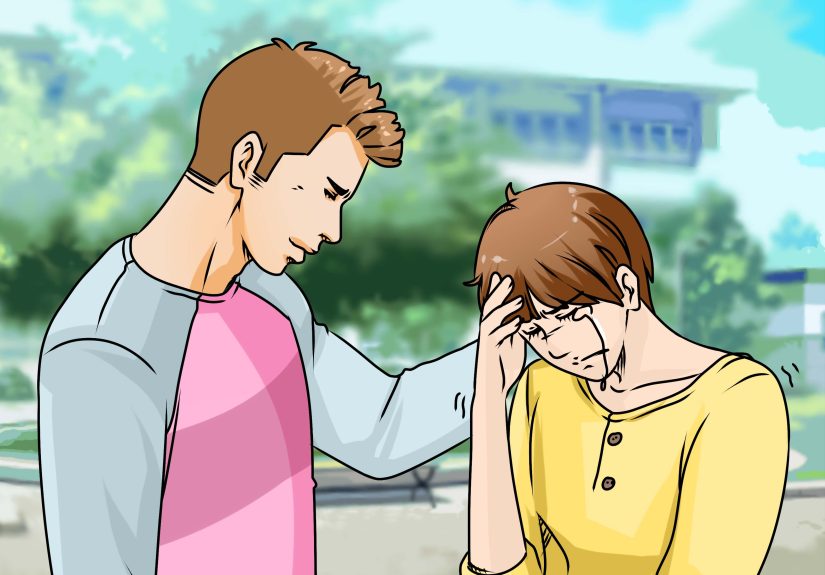
She might cry. She might get quiet. She might get mad. Your best move is empathy plus consistency:
A supportive response
“I’m sorry this hurts. I didn’t want to lead you on, and I wanted to be honest. I really do wish you well.”
What not to do
- Don’t comfort her in a romantic way (hugging for a long time, cuddling, “I need you”).
- Don’t “soften” the no into a maybe.
- Don’t turn it into a therapy session where she needs to persuade you.
You can be kind and still be firm. That combination is the entire cheat code.
Step 11: If Boundaries Are Ignored, Increase Distance (And Protect Yourself)
If she repeatedly ignores your “no,” escalates behavior, or tries to manipulate you into a relationship, you’re allowed to increase distance. That can look like:
- Reducing contact dramatically.
- Muting or unfollowing on social media.
- Blocking if harassment happens.
- Getting support from friends, workplace channels, or campus resources when appropriate.
Healthy boundaries require enforcement. If your boundary is “Please stop,” and the response is “No,” that’s not a crush anymore. That’s a respect problem.
Common Mistakes That Keep Her Liking You (Even More)
1) Ghosting
Ghosting doesn’t end feelings; it often turns them into confusion, obsession, or a need for closure. If safety isn’t an issue, clarity beats disappearance.
2) The “Let’s Be Friends” Trap
Friendship can be real, but offering it as a consolation prize can feel like hope in disguise. If you truly want friendship, be specific about what that looks likeand be prepared to give her space if she needs it.
3) Being Cruel “So She’ll Hate You”
Trying to make her dislike you on purpose is messy, immature, and often backfires. Also, you’re not a Disney villain. You’re a person with words. Use them.
4) Giving Tiny Romantic Treats
Random compliments, late-night emotional talks, “I miss you,” “You’re different from other girls”these are basically love-scented candles. Stop lighting them.
Mini Playbook: Specific Scenarios
If she’s a friend
“I care about you and I value our friendship. I don’t feel a romantic connection, and I don’t want to blur that line. If you need space, I understand.”
If you went on one or two dates
“Thank you for meeting up. You’re great, but I’m not feeling the connection I’m looking for. I’m going to step back. I wish you the best.”
If you work together
“I want to keep things professional and comfortable. I’m not interested in anything romantic. Let’s keep our communication work-focused.”
If she’s very persistent
“I’ve been clear that I’m not interested. I’m going to stop engaging with romantic conversations. Please respect that.”
Conclusion: Be Clear, Be Kind, Be Consistent
If you want a girl to stop liking you, don’t aim for “make her feel rejected.” Aim for “remove romantic ambiguity.” The fastest, healthiest way to do that is:
- Direct communication (clear no, no hidden maybes)
- Respectful delivery (kind, non-shaming, timely)
- Firm boundaries (no mixed signals)
- Consistent behavior (words and actions match)
You can’t control her feelingsbut you can control whether you accidentally keep watering them.
Real-World Experiences People Commonly Report (Extra Notes, ~)
In real life, the hardest part is rarely “what to say.” It’s managing the emotional aftershocksyours and herswithout turning the situation into a slow-motion misunderstanding.
One common experience: someone tries to be “nice” by being vague. They say things like, “I’m just busy,” or “I’m not looking for anything right now,” while still texting daily, sharing memes at midnight, and acting like an emotional partner. The result is predictable: the girl doesn’t hear “no,” she hears “not yet.” Weeks later, the same conversation happens again, except now it’s heavier because the bond is deeper and the hope has had time to decorate. People often describe this as exhausting, because it feels like they’re constantly managing another person’s expectations. The fix is almost always the same: one clear message plus consistent boundaries.
Another common experience: guilt. Many people feel guilty rejecting someone who is kind, supportive, and genuinely into them. That guilt can cause “compensating behaviors”extra attention, extra reassurance, extra hangoutsmeant to reduce her pain. Ironically, those gestures often prolong the pain because they keep the crush alive. In everyday stories, the turning point tends to come when someone realizes: “Being kind doesn’t mean providing ongoing emotional intimacy.” Kindness is clarity, not comfort that looks romantic.
In friend groups, a frequent pattern is the “social echo.” Mutual friends ask what happened, someone shares half a story, and suddenly there’s an invisible jury at every brunch. People who navigate this best usually keep it simple: “I was honest that I’m not interested. I’m trying to keep it respectful.” No character assassination, no gossip tour. This reduces the chance of group drama while giving her room to save face.
At work or school, many report that the most awkward moments come from unplanned one-on-one timewalking to the car, working late, studying togetherbecause it recreates the closeness that fuels feelings. A practical solution people mention is creating default structures: group study instead of solo sessions, work chats that stay work-focused, and predictable boundaries around after-hours messaging. This isn’t about being cold; it’s about not sending a romantic signal accidentally.
Finally, there’s the experience of pushback: she argues, bargains, or tries to “fix” whatever she thinks the issue is. Many people say the “broken record” approach feels awkward at first, but it’s the most effective long-term: repeat a calm, short truth without adding new material to debate. Over time, the lack of negotiation usually helps the crush fade because there’s no uncertainty to cling to.