Table of Contents >> Show >> Hide
- Why Hand Training Matters
- Before You Start, Set the Stage
- How to Hand Train a Parakeet Step by Step
- Step 1: Get Your Bird Comfortable With You Nearby
- Step 2: Introduce Your Hand Outside the Cage First
- Step 3: Offer Treats Through the Cage Bars
- Step 4: Place Your Hand Inside the Cage Calmly
- Step 5: Use Food to Encourage Curiosity
- Step 6: Teach the “Step Up” Cue
- Step 7: Practice Short, Positive Sessions
- What If Your Parakeet Is Afraid of Hands?
- Common Mistakes to Avoid
- How Long Does It Take to Hand Train a Parakeet?
- How to Build Trust Beyond Hand Training
- When to Pause Training
- Final Thoughts
- Common Hand-Training Experiences With a Parakeet
If you have ever looked at your parakeet and thought, “We’re going to be best friends,” only to be met with a dramatic side-eye and a lightning-fast hop in the opposite direction, welcome to the club. Hand training a parakeet is not about winning a staring contest with a six-inch feathered comedian. It is about building trust, creating safe routines, and teaching your bird that your hand is not a giant sky monster with opinions.
The good news is that most parakeets can learn to feel comfortable stepping onto a hand or finger. The less-good news is that this does not usually happen in one afternoon just because you bought millet and believed in yourself. Hand training takes patience, consistency, and the emotional strength to accept that sometimes a budgie will reject your hand like it is offering expired coupons.
Still, once your bird understands that your fingers bring calm, treats, and safety, everything gets easier. Daily care becomes smoother. Out-of-cage time becomes less chaotic. Vet visits and handling become less stressful. And best of all, you get the kind of bond that makes life with a parakeet extra rewarding. Here is how to hand train a parakeet step by step, without rushing the process or accidentally becoming “that human” your bird warns the others about.
Why Hand Training Matters
Hand training is about more than showing off that your parakeet can perch on your finger like a tiny, overqualified pirate. A hand-trained parakeet is usually easier to move safely, easier to socialize, and easier to care for in everyday situations. If your bird willingly steps up, you can guide it out of risky spots, return it to the cage calmly, and reduce stress during routine handling.
It also improves your relationship. Parakeets are intelligent, social birds, but they are still prey animals. That means they are naturally alert, cautious, and very aware of anything that moves too fast. When you teach a budgie to trust your hand, you are working with those instincts instead of against them. That is the foundation of a healthy bond.
Before You Start, Set the Stage
Give Your Parakeet Time to Settle In
If your parakeet is new to your home, do not start hand training the minute the cage hits the table. Let your bird get used to its surroundings first. A parakeet that is still figuring out the room, the sounds, the lighting, and the giant mammal who keeps saying “hi buddy” every 20 minutes is not ready for finger school.
Spend the first few days talking softly, changing food and water calmly, and sitting near the cage without demanding interaction. This helps your bird learn that your presence is normal and safe. Trust starts long before the first “step up.”
Create a Calm Environment
Hand training works best when your parakeet feels secure. Keep the cage in a bright but not stressful area, away from sudden drafts, heavy traffic, barking dogs, blaring TVs, and the sort of kitchen chaos that makes everyone nervous. A bird that feels jumpy all day will not suddenly become brave because you arrived with a millet spray.
Try training at the same time each day. Birds often respond well to routine. Choose a time when your budgie is alert but not overtired, hungry enough to care about treats, and not in the middle of a full-blown acrobatics session.
Choose the Right Reward
Most parakeets are highly motivated by millet, which is basically bird currency with excellent public relations. If your parakeet loves millet, use a small amount during training. If not, test other safe treats your bird enjoys. The trick is to offer something special enough that your bird thinks, “Fine, I will consider your proposal.”
Use tiny rewards. You want your bird interested, not stuffed like it just left an all-you-can-eat buffet.
How to Hand Train a Parakeet Step by Step
Step 1: Get Your Bird Comfortable With You Nearby
Before your parakeet trusts your hand, it has to trust you. Sit near the cage and talk in a calm, steady voice. Read out loud, answer emails nearby, or simply hang out. Your goal is to become part of the background in the best possible way.
Watch your bird’s body language. A relaxed budgie may chirp, preen, eat, or move around normally while you are close. A nervous bird may freeze, cling to the back of the cage, or dart away. If your bird looks tense, back off a little and give it more time.
Step 2: Introduce Your Hand Outside the Cage First
Some birds do better when they first see your hand near the cage rather than inside it. Hold your hand still near the bars for a few seconds, speak softly, and then move away. Repeat this over several sessions.
The keyword here is still. Wiggling fingers can look suspicious. To your parakeet, that may not be “friendly human.” That may be “untrustworthy spaghetti monster.”
Step 3: Offer Treats Through the Cage Bars
Once your bird seems calmer around your presence, offer a treat through the bars. Do not chase your budgie with it. Just hold it where your bird can see it and wait. If the parakeet comes closer, excellent. If not, that is fine too. End the session before your bird gets overwhelmed.
This step teaches your parakeet a simple idea: your hand predicts good things. That is a very powerful lesson in bird training.
Step 4: Place Your Hand Inside the Cage Calmly
After your budgie is taking treats comfortably, begin placing your hand inside the cage for short periods. Keep it low, slow, and steady. Do not reach toward the bird right away. Let your hand simply exist in the space without asking for anything.
If your bird retreats, hold still for a moment, then remove your hand quietly. Avoid fast withdrawals, because sudden movement can reinforce fear. Slow, predictable handling is your friend here.
Step 5: Use Food to Encourage Curiosity
Offer a piece of millet or another favorite treat from your fingers or open palm. At first, your parakeet may stretch dramatically without actually stepping closer, as if participating in tiny bird yoga. That is progress. Let it happen.
Over time, move the treat so your bird needs to come a little closer to reach it. The goal is not to trick the bird. The goal is to let the bird choose contact at a pace that feels safe.
Step 6: Teach the “Step Up” Cue
Once your bird is comfortable eating near your hand, you can begin teaching “step up.” Gently place your finger just above the feet and lightly against the lower chest. At the same time, say “step up” in a calm, clear voice.
Many parakeets will naturally step onto the finger for balance. The second your bird does, reward immediately with praise and a tiny treat. Keep the movement small at first. One foot on your finger is a win. Two feet is an even bigger win. A full perch without panic? That is practically a graduation ceremony.
Step 7: Practice Short, Positive Sessions
Keep training sessions brief. Five to ten minutes is usually enough, especially in the beginning. End while things are going well. That way your bird finishes the session thinking, “That was manageable. I might do that again,” instead of “I need a vacation.”
Practice daily if possible. Consistency matters more than intensity. You are building trust, not cramming for an exam.
What If Your Parakeet Is Afraid of Hands?
Some parakeets have a harder history with handling, while others are simply more cautious by nature. If your bird panics when your hand enters the cage, slow the process way down. You may need several days or even weeks on each step.
In some cases, target training or stick training can help. That means teaching the bird to step onto a perch or follow a target before transitioning to your hand. For a fearful bird, this can feel less invasive and more predictable. It is not cheating. It is smart training.
Also, remember that birds do not owe us instant trust. If a parakeet is nervous, the solution is not to push harder. The solution is to become safer and easier to understand.
Common Mistakes to Avoid
Forcing Contact
If you corner your parakeet, grab it, or keep pursuing when it is clearly afraid, you can undo progress fast. Forced handling may make the bird step onto your hand, but it does not create trust. It creates compliance under stress, which is not the same thing at all.
Training for Too Long
Long sessions can tire your bird mentally. When enthusiasm fades, so does learning. Keep it short, upbeat, and predictable.
Reacting Dramatically to Biting
Parakeets may nip if they feel scared or overstimulated. If your bird bites, stay as calm as possible. Do not yell, flick the beak, or start lecturing like a disappointed gym teacher. Just end the interaction calmly and think about what triggered the bite. Usually, the bird was telling you it was not comfortable yet.
Ignoring Body Language
A budgie that leans away, flutters frantically, freezes, or looks ready to launch is giving feedback. Listen to it. Hand training goes faster when you respect the “not today” signals instead of bulldozing through them.
How Long Does It Take to Hand Train a Parakeet?
There is no exact timeline, because parakeets are individuals. Some birds begin stepping up within days. Others need weeks or even months. Age, past experiences, personality, environment, and consistency all matter.
Young parakeets often learn faster, especially if they were well socialized. Older or under-socialized birds may need more repetition. Neither outcome means you are doing it wrong. It just means your bird has its own learning speed, which is honestly very on-brand for parakeets.
How to Build Trust Beyond Hand Training
Talk to Your Bird Often
Parakeets are social and often enjoy hearing your voice. Soft conversation helps your bird associate you with calm, familiar sounds.
Offer Safe Out-of-Cage Time
Once your bird is comfortable stepping up, supervised out-of-cage time can strengthen the bond. Make sure the room is safe first. That means closed windows, turned-off ceiling fans, covered mirrors if needed, and no easy access to toxic plants or kitchen hazards.
Use Enrichment
Toys, foraging activities, and varied perches help your parakeet feel mentally engaged. A bored bird is often a stressed bird, and a stressed bird is harder to train. Enrichment does not replace handling, but it supports emotional wellbeing, which supports training.
When to Pause Training
If your parakeet suddenly becomes less interested in food, fluffs up for long periods, sits low, breathes with an open mouth, or seems unusually quiet and inactive, pause training and consult an avian veterinarian. Behavior changes can sometimes be health-related. A bird that does not feel well is not being stubborn. It may simply need medical care.
Final Thoughts
If you want to hand train a parakeet, think relationship first, technique second. Your bird is more likely to step onto your finger when it feels safe, respected, and rewarded. Go slowly, keep sessions short, use positive reinforcement, and celebrate small wins. Today it might be one brave peck at millet near your hand. Tomorrow it might be one foot on your finger. A little later, your budgie may hop up like it has always belonged there.
And when that moment comes, try not to act too surprised. Your parakeet has been evaluating your qualifications for weeks. This is simply the day you passed.
Common Hand-Training Experiences With a Parakeet
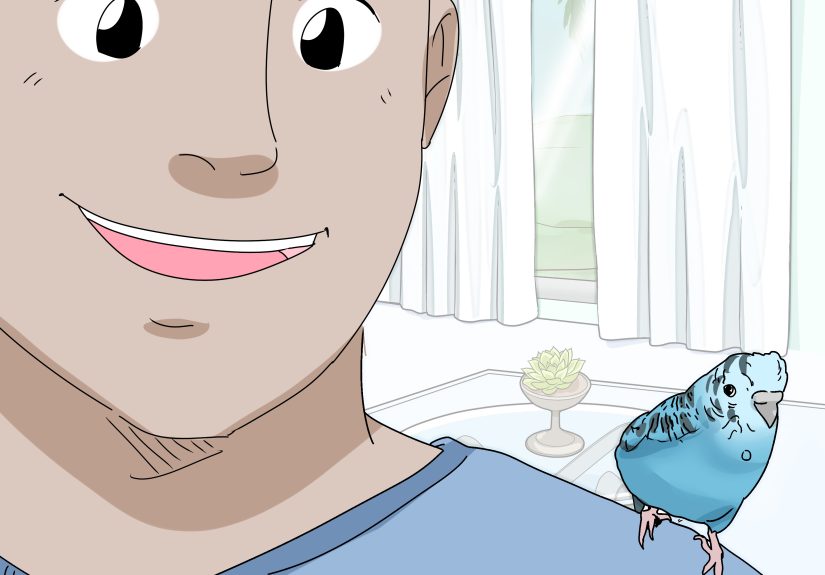
One of the most common experiences people have when learning how to hand train a parakeet is thinking the bird hates them during week one. In reality, the bird is usually just confused, cautious, and trying to decide whether the giant creature outside the cage is helpful or ridiculous. Many new owners make the same discovery: progress often starts with doing less, not more. Sitting nearby, speaking softly, and letting the parakeet observe from a safe perch can create more trust than trying to rush into step-up training on day one.
Another very typical moment comes when the bird finally takes a treat from your fingers. It sounds small, but for many people, that is the turning point. A nervous budgie stretches its neck as far as physics will allow, grabs a millet seed, and darts backward like it just committed a crime. Then it does it again. And again. Suddenly, the bird that acted offended by your existence now has a reason to tolerate your hand. Many owners say this stage feels slow while it is happening, but once the bird starts taking treats reliably, progress often becomes much more noticeable.
Then there is the first successful “step up.” For some parakeets, it happens smoothly. For others, it is more of an awkward stumble with feathers, hesitation, and a facial expression that somehow says, “I am doing this under protest.” Still, that first step matters. It teaches the bird that touching your finger does not lead to danger. It also teaches the owner something important: confidence helps. Birds often respond better when your movement is calm and deliberate rather than shaky and uncertain.
People also commonly experience setbacks, and that is worth talking about honestly. A parakeet may do beautifully for several days and then suddenly refuse your hand. This can happen after a loud noise, a room change, a bad night’s sleep, a molt, or no obvious reason at all. That does not mean training failed. It usually means the bird needs a little reassurance and a return to an easier step. Many successful bird owners will tell you that hand training is rarely a straight line. It is more like a staircase with the occasional dramatic feathered detour.
Perhaps the most rewarding experience is the moment the relationship starts to feel natural. Your parakeet sees your hand and leans forward instead of away. It steps up without a speech, without negotiations, and without behaving like you are asking for a mortgage signature. At that point, owners often realize the real achievement was not just finger training. It was trust. The bird learned that the human listens, respects boundaries, and brings good things. And the human learned that patience, consistency, and a little humor go a long way when your teacher happens to weigh less than an avocado.