Table of Contents >> Show >> Hide
- Why avocados ripen after you buy them
- Before you start: how to tell if an avocado is unripe, ripe, or overripe
- Method 1: Let avocados ripen naturally on the counter
- Method 2: Use a brown paper bag
- Method 3: Add a banana or apple to the paper bag
- Method 4: Bury the avocado in uncooked rice
- The myth: the oven or microwave will “ripen” an avocado
- Common mistakes that slow down avocado ripening
- What to do once the avocado is ripe
- Quick avocado ripening cheat sheet
- Real-life experiences with ripening avocados
- Final thoughts
- SEO Tags
Note: Clean publish-ready HTML body only. Source markers and unnecessary reference artifacts removed.
Buying avocados is a little like adopting moody roommates. One is hard as a baseball, one is mysteriously perfect for exactly 14 minutes, and one has already entered its “brown and regretful” phase. The good news is that learning how to ripen avocados is not difficult. The even better news is that you do not need a lab coat, a sacred chant, or a viral kitchen hack from a stranger with suspicious confidence.
If you want creamy avocado toast, guacamole that does not feel like chopped lawn furniture, or slices that actually behave on a sandwich, this guide breaks down four simple methods to ripen avocados and one common myth you can stop believing immediately. We will also cover how long ripening usually takes, how to tell when an avocado is ready, and what to do when you finally hit that glorious sweet spot.
Why avocados ripen after you buy them
Avocados are climacteric fruit, which is the science-y way of saying they continue to ripen after harvest. That is why a rock-hard avocado from the store can turn buttery on your countertop a few days later. The key player is ethylene gas, a natural plant hormone that helps trigger and speed the ripening process.
In plain English, your avocado is basically carrying its own tiny internal countdown clock. The trick is not forcing fake softness. The trick is helping natural ripening happen at the right pace, in the right environment, without turning your kitchen into an avocado crime scene.
Before you start: how to tell if an avocado is unripe, ripe, or overripe
Unripe avocado
If it feels firm, does not yield to gentle pressure, and looks bright green or simply feels stubborn, it is not ready yet. This is the avocado equivalent of saying, “Please respect my boundaries.”
Ripe avocado
A ripe avocado should give slightly when you press it gently in the palm of your hand. It should feel soft but not mushy. If you pop off the small stem cap and see green underneath, that is another good sign.
Overripe avocado
If it has sunken spots, feels squishy, or seems like it might collapse emotionally under light pressure, it has probably gone too far. Brown, stringy, or oddly gray flesh is another clue that the party is over.
Method 1: Let avocados ripen naturally on the counter
This is the simplest method and, honestly, still the best one for flavor and texture. Put your unripe avocados on the counter at room temperature and leave them alone. That last part is very important. Stop squeezing them every 14 minutes like you are checking a stress ball.
How it works
At room temperature, the avocado continues releasing ethylene gas and naturally softens over time. This method gives the fruit the best chance to develop a creamy texture and richer flavor instead of just becoming warm and confused.
How long it takes
Most avocados ripen in 2 to 5 days, though very firm ones can take longer. The exact timing depends on how mature they were when purchased and how warm your kitchen is.
Best for
This is the best approach when you planned ahead, bought several avocados for the week, or simply want the most reliable result.
Pro tip
Keep avocados out of direct harsh sunlight and away from places that get too hot. Warmth can help ripening, but too much heat can lead to uneven softening and disappointing texture. We are ripening lunch, not auditioning it for a sauna.
Method 2: Use a brown paper bag
If the countertop method feels a little too patient for your current avocado ambitions, try the classic brown paper bag trick. It is simple, low-drama, and backed by real produce science.
How it works
The paper bag helps trap some of the ethylene gas the avocado naturally produces. That concentrated environment speeds up ripening without creating the excess moisture you would get from sealing fruit in plastic.
How to do it
- Place the avocado in a brown paper bag.
- Fold the top loosely closed.
- Leave it at room temperature.
- Check it once a day.
How long it takes
You can usually shave the wait down to about 1 to 3 days, depending on how hard the avocado was to begin with.
Best for
This is ideal when you need your avocado sooner but still want it to ripen naturally. It is the weekday hero of avocado management.
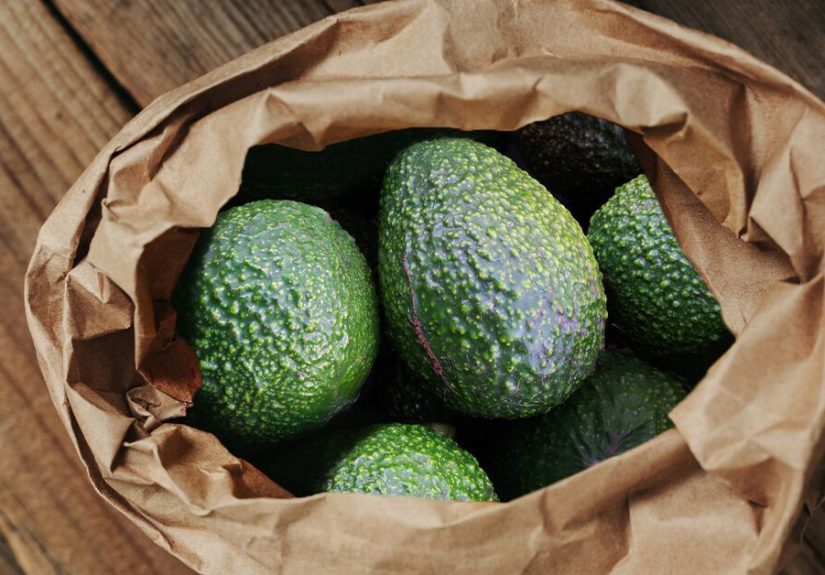
Method 3: Add a banana or apple to the paper bag
Now we are leveling up. If you want to ripen avocados faster, place the avocado in a brown paper bag with a banana or an apple. These fruits release more ethylene gas, which helps kick the avocado’s ripening process into higher gear.
Why it works
The avocado is already producing ethylene. The banana or apple adds more of it. The paper bag keeps that gas close. It is basically a tiny fruit-powered ripening chamber, minus the industrial equipment and the intimidating clipboard.
How to do it
- Put one unripe avocado in a brown paper bag.
- Add one banana or one apple.
- Fold the bag closed and keep it on the counter.
- Check daily so you do not overshoot the perfect window.
How long it takes
Sometimes this works in about 24 hours, though 1 to 2 days is more typical. If the avocado is very underripe, give it a little more time.
Best for
This method is perfect when taco night is tomorrow, the guacamole has been promised, and canceling would damage your reputation.
Method 4: Bury the avocado in uncooked rice
Yes, this one sounds like something somebody’s aunt invented in a legendary kitchen, but it is a real technique people use. Place the avocado in a bowl or container of uncooked rice so it is mostly or fully surrounded.
How it works
The theory is similar to the paper bag method: the rice helps create a contained environment that holds ethylene around the fruit. It can also help reduce excess surface moisture.
How to do it
- Fill a bowl or container with uncooked rice.
- Nestle the avocado into the rice so it is covered.
- Keep it at room temperature.
- Check daily for softness.
How long it takes
Usually a few days. It is not magic, and it is not necessarily dramatically faster than a paper bag, but it can work.
Best for
Use this if you do not have paper bags around or you just enjoy solving kitchen problems with pantry staples. Also, it makes you look extremely resourceful for no extra effort.
The myth: the oven or microwave will “ripen” an avocado
Let us clear this up kindly but firmly: heat does not truly ripen an avocado. The oven and microwave may soften the flesh, but they do not recreate the natural chemical ripening process that develops flavor, aroma, and that silky, buttery texture people actually want.
Why this myth sticks around
Because it sort of looks like it works. The avocado gets softer, so people assume it is ripe. But softness is not the same thing as ripeness. A warmed-up avocado can taste flat, odd, watery, or cooked in a way that makes guacamole feel strangely apologetic.
What to do instead
If your avocado is still hard, use one of the real methods above. If dinner is in 20 minutes, switch the recipe, use a different topping, or save the avocado for tomorrow. Sometimes the most mature kitchen choice is accepting that your avocado is not emotionally available yet.
Common mistakes that slow down avocado ripening
Putting unripe avocados in the fridge
Refrigeration slows ripening. That is useful after an avocado becomes ripe, but not before. If you refrigerate it too early, you may delay the process and wind up with disappointing texture.
Using plastic bags
Plastic can trap too much moisture. A paper bag is better because it keeps ethylene near the fruit while still allowing some airflow.
Checking by squeezing too hard
Avocados bruise easily. Gentle pressure is enough. Repeated aggressive squeezing is how perfectly good fruit ends up looking like it had a rough week.
Ignoring the avocado after speeding it up
The faster you ripen it, the more often you need to check it. An avocado can move from “not yet” to “eat me now” surprisingly fast.
What to do once the avocado is ripe
Once your avocado yields slightly to gentle pressure, it is ready. If you are not eating it immediately, move it to the refrigerator to slow further ripening. That can buy you a few extra days.
Before cutting, rinse the outside under running water and dry it. Even though you do not eat the peel, your knife passes through it, and washing helps reduce the chance of dragging surface bacteria into the flesh. That is a tiny step with a very grown-up payoff.
Best ways to use ripe avocado
- Mashed on toast with salt, pepper, and lemon
- Chunked into salads and grain bowls
- Blended into guacamole, dressings, or sauces
- Sliced for burgers, tacos, wraps, and sandwiches
Quick avocado ripening cheat sheet
Need it in 3 to 5 days? Leave it on the counter.
Need it in 1 to 3 days? Use a brown paper bag.
Need it even faster, maybe by tomorrow? Add a banana or apple to the paper bag.
No paper bag available? Try uncooked rice.
Need it in 10 minutes? You do not need ripening advice. You need a backup plan.
Real-life experiences with ripening avocados
Anyone who cooks regularly has an avocado story. Usually, it begins with optimism and ends with toast topped by something far less exciting than planned. One day the avocado is so hard it could qualify as sporting equipment. The next day it is perfect. By the morning after that, it has crossed into a mysterious brown era that feels personal.
One of the most common experiences is buying avocados for a specific meal, then discovering they are all at the exact wrong stage. You bring them home thinking, “No problem, I’ll make guacamole on Wednesday.” Wednesday arrives, and every avocado is still firm enough to bounce. That is when the paper bag method starts feeling less like kitchen folklore and more like a public service.
People who meal prep often learn the value of staggered ripeness the hard way. Buying four avocados that are all equally unripe sounds organized until all four become ready within the same 24-hour window. Suddenly breakfast, lunch, and dinner all involve avocado, and by day three you are putting it on things out of sheer responsibility. Eggs? Of course. Sandwiches? Naturally. Crackers? We are improvising now.
There is also the classic dinner-party experience: you planned a taco bar, told everyone there would be fresh guacamole, and then discovered your avocados were not ready. This is the precise moment when a banana and a brown paper bag become the most important duo in the kitchen. It feels strangely dramatic, like a tiny produce rescue mission happening between the onions and the tortilla chips.
Another relatable moment is overchecking. People say they are “monitoring ripeness,” but what they are really doing is poking the same avocado six times a day while hoping time will respect their dinner schedule. It never does. The smarter approach is to check once daily and let the fruit do its thing without being treated like a tiny green panic button.
Many home cooks also discover that naturally ripened avocados simply taste better. Heat-softened avocados may look usable in a rush, but they rarely deliver that rich, buttery flavor people expect. The difference becomes obvious in simple dishes. On toast, in guacamole, or sliced over a salad, a properly ripened avocado tastes rounder, creamier, and far more satisfying.
Perhaps the most useful real-world lesson is this: avocado success is less about one miracle hack and more about timing. Keep one on the counter, ripen one in a bag, and refrigerate one when it is ready. That simple rhythm makes avocado life dramatically easier. It is not glamorous, but neither is scraping brown mush out of a peel while pretending dinner is still “going great.”
In the end, learning how to ripen avocados is one of those small kitchen skills that pays off over and over. Once you understand the timing, the signs of ripeness, and the difference between true ripening and fake softness, you stop gambling and start getting reliable results. And that, in avocado terms, is basically inner peace.
Final thoughts
If you have been wondering how to ripen avocados without wasting money or falling for nonsense, the answer is wonderfully simple. Start with the countertop for the best natural result. Use a brown paper bag when you want to speed things up. Add a banana or apple when you are in more of a hurry. Try uncooked rice if that is what you have on hand. And when somebody tells you the microwave or oven “ripens” an avocado, smile politely and keep walking.
A perfectly ripe avocado is creamy, rich, and worth the wait. But with the right method, the wait does not have to feel endless. Your future toast, tacos, and guacamole thank you in advance.