Table of Contents >> Show >> Hide
- The Quick Answer: The Paper Recipe
- What You Need Before You Craft Paper
- How to Find Sugar Cane Fast
- How to Grow Sugar Cane (So You Can Make Unlimited Paper)
- How to Craft Paper Step-by-Step
- Other Ways to Get Paper (Without Crafting)
- What Paper Is Used For (And Why You’ll Want a Lot of It)
- 1) Books (and everything that comes with books)
- 2) Maps (aka “Where am I and why is it raining?”)
- 3) Cartography tables (map management made civilized)
- 4) Firework rockets (celebration and elytra fuel)
- 5) Banner patterns (because your base deserves branding)
- 6) Villager trading (paper → emeralds → power)
- Best Strategies: Make Paper Efficiently (Without Losing Your Mind)
- Troubleshooting: “Why Can’t I Grow Sugar Cane?”
- Player Experiences: The Paper Journey (500+ Words of Realistic, Relatable Minecraft Moments)
- Conclusion
Paper in Minecraft is one of those “small item, huge impact” resources. It doesn’t swing like a sword, it doesn’t sparkle like diamonds,
and it definitely won’t stop a creeper from redecorating your living roomyet somehow, paper is the gateway to maps, books, enchanting,
fireworks, villager trading, and the kind of organized adventuring that makes you feel like the responsible adult of your world.
The good news: making paper is ridiculously simple. The slightly less good news: you’ll need sugar cane, which means you’ll be doing a little
shoreline sightseeing first. Let’s turn you into a paper-producing legend (the eco-friendly kind, not the “I cut down every tree in a 10-chunk radius” kind).
The Quick Answer: The Paper Recipe
To craft paper in Minecraft, place 3 sugar cane in a straight horizontal row on a crafting grid.
You’ll get 3 paper per craft.
Crafting pattern (any row works)
- Top row: Sugar Cane + Sugar Cane + Sugar Cane = 3 Paper
- Middle row: Sugar Cane + Sugar Cane + Sugar Cane = 3 Paper
- Bottom row: Sugar Cane + Sugar Cane + Sugar Cane = 3 Paper
That’s it. No furnace. No brewing stand. No ancient ritual under a full moon. Just three stalks in a lineand boom, you’re basically a medieval scribe.
What You Need Before You Craft Paper
1) Sugar cane
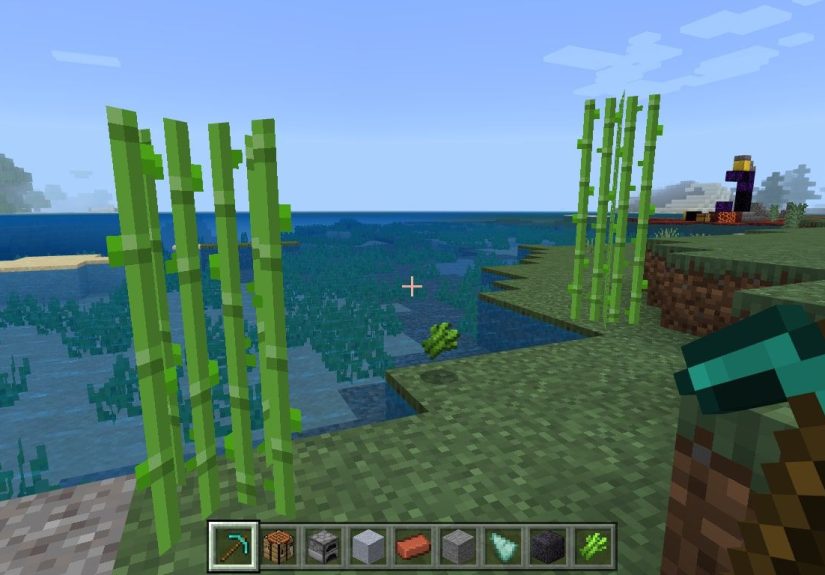
Sugar cane is a tall, green plant that naturally grows near water in the Overworld. It’s your main ingredient for paper (and also sugar, because Minecraft
believes desserts and stationery should come from the same plant).
2) A crafting grid
You can craft paper using either:
- Your 2×2 inventory crafting grid (works fine for paper)
- A crafting table (3×3) (more room, more convenience, more “I have my life together” energy)
How to Find Sugar Cane Fast
If you want sugar cane quickly, think like a vacation planner: water, beaches, riverbanks, and swampy edges. Sugar cane commonly spawns along the
borders of lakes, rivers, and oceans. The key is to follow water.
Best places to look
- Rivers: long, snaking paths with lots of shoreline
- Oceans and beaches: huge coastlines = more spawn chances
- Swamps: tons of water edges (and a vibe that says “don’t forget your torch”)
- Lakes and ponds: smaller, but sometimes packed with cane
Pro tip: use height and contrast
Sugar cane is vertical and bright green, so it stands out best when you’re slightly above ground level. Climb a small hill near water and scan the shoreline.
If you’re boating along a river, you can spot it faster because the shoreline stays in view.
How to Grow Sugar Cane (So You Can Make Unlimited Paper)
Finding sugar cane once is great. Having a sugar cane farm at your base is better. Why? Because paper demand sneaks up on you:
one minute you’re crafting a single map, and the next you’re building an enchanting library like you’re opening “Books & Sorcery, LLC.”
Sugar cane planting rules (the ones that actually matter)
- Sugar cane must be planted on certain blocks like dirt or sand (and several other natural blocks).
- The planting block must be directly adjacent to water (not diagonal, not “close enough,” truly side-by-side).
- Sugar cane grows up to 3 blocks tall in vanilla gameplay.
Simple beginner farm (easy, early-game, zero redstone)
- Dig a 1-block-wide trench and fill it with water (or use an existing shoreline).
- Place dirt or sand blocks along the water’s edge.
- Plant sugar cane on those edge blocks.
- Wait for it to grow, then harvest the top blocks and leave the bottom block planted so it regrows.
This farm is low effort and high reward. Put it near your house so you remember it exists. Otherwise, you’ll forget about it for ten in-game days
and then “discover” it like an archaeologist.
Mid-game upgrade: a compact automatic sugar cane farm (concept)
If you like redstone and you’re tired of manual harvesting, sugar cane is a classic automation target. A common setup uses:
- Observers to detect growth
- Pistons to pop the top blocks off
- Water streams and hoppers to collect drops
You don’t need this to make paperbut if you’re crafting lots of books, maps, or fireworks, automation turns “paper shortage panic” into “paper empire.”
How to Craft Paper Step-by-Step
- Collect at least 3 sugar cane.
- Open a crafting grid (inventory 2×2 or crafting table).
- Place the sugar cane in a horizontal line.
- Move the 3 paper into your inventory.
Congratulations. You can now make books, maps, and fireworks, and you are legally allowed to say, “Hold onlet me get my paperwork,” before doing anything heroic.
Other Ways to Get Paper (Without Crafting)
Crafting is the most reliable method, but Minecraft also sprinkles paper into loot structures. This is especially helpful early game when you
haven’t found sugar cane yet (or you found it and then immediately lost your way home… again).
Common places paper can appear
- Shipwreck chests (especially supply and map chests)
- Stronghold library chests
- Village chests, including cartographer-related loot
Think of this as Minecraft’s version of finding office supplies in abandoned buildings. Slightly spooky, surprisingly useful.
What Paper Is Used For (And Why You’ll Want a Lot of It)
Paper is rarely the “final product.” It’s the ingredient that unlocks bigger systemsnavigation, knowledge, enchantments, decoration, and trading.
Here are the most important uses.
1) Books (and everything that comes with books)
Combine 3 paper + 1 leather to craft a book. Books lead to:
- Bookshelves (for stronger enchanting)
- Enchanting setups (because plain diamond gear is cute, but enchanted diamond gear is a lifestyle)
- Book and Quill (if you want to write notes in-game)
2) Maps (aka “Where am I and why is it raining?”)
Maps are one of the best reasons to stockpile paper. The exact recipe can vary by edition and whether you want a location marker,
but the big idea is simple: paper + (sometimes) a compass gets you mapping power.
- In some cases, maps crafted with only paper won’t show a location markeradding a compass can turn it into a locator-style map.
- Once you have a map, a cartography table can use paper to zoom out, letting one map cover more area.
Practical example: If you’re exploring multiple biomes for a base location, maps help you avoid wandering in circles like a confused Roomba.
3) Cartography tables (map management made civilized)
A cartography table is a utility block for maps: you can clone maps, zoom out, and lock them. Paper plays a major role in upgrading map scale.
If you want a map wall in your base, paper is basically your interior designer.
4) Firework rockets (celebration and elytra fuel)
Firework rockets use paper plus gunpowder. You can make simple rockets or fancy ones with effects.
Even if you’re not in your “fireworks era,” rockets become extremely valuable once you’re using an elytra for travel.
5) Banner patterns (because your base deserves branding)
Several craftable banner pattern items are made with paper + a specific ingredient (like a creeper head, a wither skeleton skull,
or a flower). If you like customizing banners, flags, and shields, paper becomes part of your style budget.
6) Villager trading (paper → emeralds → power)
Paper can be traded to certain villagers (commonly librarians and cartographers) for emeralds. This is one of the cleanest early-to-mid game economies:
build a sugar cane farm, turn cane into paper, trade paper for emeralds, and suddenly you can afford enchanted books, name tags, and other goodies.
Best Strategies: Make Paper Efficiently (Without Losing Your Mind)
Strategy A: The “I just need paper now” run
- Find a river or ocean.
- Harvest every sugar cane stalk you see.
- Craft paper immediately (even in your inventory grid).
- Plant a starter farm as soon as you get home.
Strategy B: The “I want an enchanting table soon” plan
- Start sugar cane farming early.
- Collect leather while you’re at it (cows are the usual source).
- Turn paper into books, then books into bookshelves.
- Build toward a full enchanting corner over time.
Strategy C: The “villager economy” route
- Locate or build a village trading setup.
- Keep your sugar cane farm running.
- Trade paper regularly for emeralds.
- Use emeralds to buy gear, enchantments, and tools to speed up everything else.
Troubleshooting: “Why Can’t I Grow Sugar Cane?”
Problem: “It won’t plant.”
Make sure the block you’re planting on is valid (dirt or sand are easy picks) and that the block is directly next to water.
If the water is diagonal or one block lower with no adjacency, sugar cane will refuse to cooperate.
Problem: “It planted, but it won’t grow.”
Growth takes time. Also, make sure your area is safe and you’re not constantly trampling around breaking things.
If you’re in a chaotic spot (mobs, explosions, your friend “testing TNT”), relocate the farm.
Problem: “I harvest it and it never comes back.”
Harvest the top sections and leave the bottom block planted. If you break the bottom block, you’ll need to replant every time.
That’s not hardbut it’s the kind of repetitive chore that slowly turns you into a Minecraft bureaucrat.
Player Experiences: The Paper Journey (500+ Words of Realistic, Relatable Minecraft Moments)
If you’ve played Minecraft for more than ten minutes, you’ve probably had a “paper problem” without realizing it. It usually starts innocent:
you craft a couple of maps because you’re tired of pretending you remember where your base is. Then you decide you want a Book and Quill to jot down
coordinates like a responsible explorer. Then you hear enchanting is important, so you craft books, then bookshelves, then more bookshelves,
and suddenly your sugar cane farm is the most valuable piece of real estate you own.
A very common experience goes like this: you spot sugar cane on day one, think “neat,” and keep walkingbecause you’re busy punching trees and
trying not to get eaten. Later, after you’ve built a base and you’re feeling safe, you remember paper exists. You go looking for sugar cane again
and discover the universe’s funniest rule: the moment you actively need sugar cane, it becomes mysteriously rare. Rivers turn into “decorative water features”
with zero cane. Beaches become empty. You start circling the same lake like you’re searching for a lost contact lens.
Then it happens: you find a fat cluster of sugar cane along an ocean edge. It feels like winning the lottery, except the prize is plants.
Many players do the same thing at this moment: they harvest every stalk in sight and sprint home like they’re carrying ancient treasure.
And honestly? That’s not a bad instinct. The best early tip is to bring sugar cane back to base as soon as you find itbecause even a tiny starter farm
changes everything. It’s the difference between “I can craft one book” and “I can build an enchanting corner, make maps for every expedition, and still
have paper left for fireworks at my victory party.”
Another classic paper-related moment shows up when players begin trading with villagers. Paper trades feel almost too good: you’re turning a renewable plant
into emeralds. Once people realize that, they often redesign their base area around sugar cane production. Farms get longer. Water channels multiply.
Suddenly you have a “cane wing” of your base like it’s a scientific facility. If you’re playing with friends, this is the point where someone says,
“Why does your house have a moat?” and you have to answer, “It’s not a moat. It’s a supply chain.”
Paper also becomes emotional when you’re mapping. Players who build map rooms know the feeling: you zoom out a map with paper, hang it in an item frame,
and watch the world become a neat, readable grid. It’s satisfying in a way that’s hard to explain to non-Minecraft people. You go from wandering chaos
to documented civilization. The paper you crafted from a handful of sugar cane turns into a living record of your adventuresvillages discovered,
mountains climbed, oceans crossed, and the occasional crater where a creeper made an unplanned remodel.
And then there’s the “fireworks era.” Some players ignore rockets for a long time, and then they get an elytra and realize: paper is flight time.
That’s the moment paper stops being “a crafting ingredient” and becomes “fuel for freedom.” You build a bigger farm, not because you want to,
but because soaring across your world is too fun to give up. Many players end up with the same conclusion:
if you want Minecraft to feel smooth, organized, and adventurous, a steady paper supply is one of the best quality-of-life upgrades you can make.
So if your current paper situation is “three sheets and a dream,” don’t worry. Start small: plant a few stalks by water, harvest carefully,
and keep crafting. Before long, you’ll have enough paper to map the world, enchant your gear, trade for emeralds, and still toss fireworks into the sky
like you’re hosting the Overworld Olympics.
Conclusion
Learning how to make paper in Minecraft is a tiny skill with massive benefits. The recipe is simplethree sugar cane in a rowbut the payoff is enormous:
maps for navigation, books for enchanting, banner patterns for customization, fireworks for mobility, and trading routes that can turn a humble farm into
an emerald-generating machine.
The smartest move is to treat sugar cane like a long-term investment. Find it, bring it home, plant it by water, and harvest it sustainably.
Once paper becomes renewable, your Minecraft world becomes easier to explore, easier to upgrade, and a lot more fun to manage.