Table of Contents >> Show >> Hide
- What Is a Butterfly Knife Trebuchet?
- 12 Safety-First Steps Before Learning About Any Butterfly Knife Trick
- 1. Understand That a Real Butterfly Knife Is Not a Toy
- 2. Check Local Laws Before Buying, Carrying, or Displaying One
- 3. Choose Safety Over Showing Off
- 4. Use Only Non-Sharp Practice Tools in Safe, Legal Settings
- 5. Learn the Vocabulary Without Copying the Motion
- 6. Avoid Learning from Reckless Videos
- 7. Keep Practice Areas Clear and Private
- 8. Do Not Mix Practice with Fatigue, Stress, or Distraction
- 9. Respect Other People’s Comfort
- 10. Focus on General Coordination Skills Instead
- 11. Write About the Topic Responsibly
- 12. Know When to Walk Away
- Why Butterfly Knife Tricks Became Popular Online
- Common Misconceptions About the Trebuchet Trick
- Safer Alternatives for Curious Beginners
- Experience Section: What People Often Learn When They Approach This Topic Carefully
- Conclusion
Editor’s note: This safety-first article does not teach the mechanics of flipping, throwing, catching, opening, closing, or performing tricks with a real butterfly knife. Instead, it explains how readers can understand the topic responsibly, reduce risk, respect the law, and choose safer, non-sharp learning paths.
The phrase “how to perform a trebuchet with a butterfly knife” sounds like it belongs in the same dramatic universe as action movies, slow-motion sunglasses, and someone saying, “Trust me, I saw this online.” In reality, butterfly knivesalso called balisongsare sharp folding knives that can be illegal or restricted in many places, risky to handle, and easy to underestimate. The “trebuchet” is known in flipping circles as a flashy balisong trick, but learning it with a live blade is not a cute shortcut to looking skilled. It is more like inviting a tiny metal drama queen into your hand and hoping it behaves.
So what should a responsible article do? Not hand out dangerous instructions. Instead, this guide covers 12 safety-focused steps for understanding the topic without encouraging risky blade use. You will learn how to think about legality, practice culture, trainer tools, hand safety, supervision, online video habits, and skill progression. Whether you are writing about butterfly knife tricks, researching balisong culture, or simply curious about what the “trebuchet” refers to, this article gives you a smarter way to approach the subject.
What Is a Butterfly Knife Trebuchet?
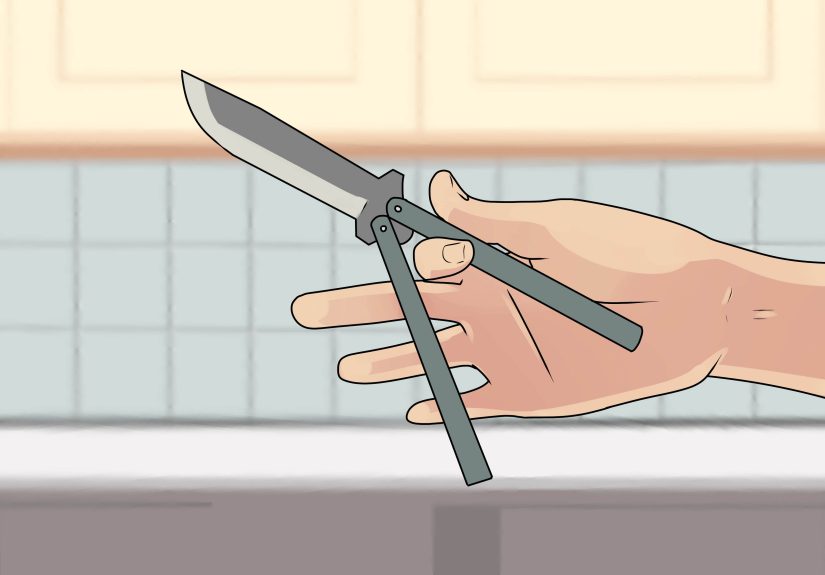
A butterfly knife, or balisong, is a folding knife with two handles that rotate around the blade. In communities focused on flipping, people often discuss trick names, combos, flow, timing, and style. The “trebuchet” is one of those trick names that sounds medieval, because apparently “spinny hand thing number seven” was not poetic enough.
However, naming a trick is not the same as making it safe. Real butterfly knives are sharp tools, and their moving handles create unpredictable moments for beginners. Even people with experience can make mistakes when distracted, tired, rushed, or using poor equipment. That is why modern responsible balisong culture often separates live blades from trainers. A trainer is a non-sharp practice version designed to imitate the shape and movement without having a cutting edge.
The safest way to discuss the trebuchet trick is to focus on preparation, awareness, and responsible boundariesnot on step-by-step blade handling.
12 Safety-First Steps Before Learning About Any Butterfly Knife Trick
1. Understand That a Real Butterfly Knife Is Not a Toy
The first step is the least glamorous but the most important: recognize what the object is. A butterfly knife is a knife. It may look sleek in videos, but it is still a tool with a blade. Treating it like a fidget spinner with a villain origin story is a bad idea.
For beginners, the safest rule is simple: do not practice tricks with a live blade. Curiosity is fine. Research is fine. Writing an article is fine. But using a sharp knife to copy a trick from the internet can lead to accidents, panic, and regret. Skill should never depend on pretending risk is not real.
2. Check Local Laws Before Buying, Carrying, or Displaying One
Butterfly knife laws vary widely by location. In some areas, owning one may be legal, but carrying it in public may not be. In other places, possession, import, sale, or concealed carry may be restricted. Laws can also change, and online advice may be outdated.
Before interacting with a butterfly knife in any way, check official local rules. Do not rely on a comment section, a random forum post, or a friend who says, “I think it’s probably fine.” That phrase has never improved a legal situation.
3. Choose Safety Over Showing Off
Many people become interested in butterfly knife tricks because they look impressive. The smooth motions, the rhythm, the snap of the handles, and the confident flow can be visually fascinating. But social media often edits out mistakes, dull practice, and safety preparation.
A responsible learner should prioritize safety over style. The goal is not to look cool for twelve seconds. The goal is to avoid harm, respect others, and understand the culture without copying dangerous behavior. If a trick requires risk to be interesting, it is not worth doing with a live blade.
4. Use Only Non-Sharp Practice Tools in Safe, Legal Settings
People who study balisong flipping responsibly often use non-sharp trainers rather than real knives. A trainer has no cutting edge and is designed for practice. Even then, it should be handled carefully, away from people, pets, fragile items, and dramatic glass coffee tables that did nothing wrong.
This article does not provide instructions for using a trainer, but the principle matters: a non-sharp practice tool is safer than a live blade. Anyone underage should also involve a parent, guardian, coach, or qualified adult when exploring hobbies that imitate weapon handling.
5. Learn the Vocabulary Without Copying the Motion
There is a difference between understanding a topic and performing it. You can learn that balisong communities use terms like “trainer,” “safe handle,” “bite handle,” “combo,” “flow,” and “chaplin” without physically attempting moves. Vocabulary helps writers, researchers, and curious readers understand discussions while staying away from risky imitation.
For SEO content, this is especially useful. Readers searching for “butterfly knife trebuchet” may be looking for trick information, but a responsible article can redirect the intent toward safety, legal awareness, and beginner-friendly caution.
6. Avoid Learning from Reckless Videos
Online videos can make dangerous skills look easy. A short clip may show one successful attempt, not the dozens of failed attempts before it. It may also hide whether the person is using a trainer, a dull prop, or a carefully controlled environment.
Be cautious with videos that encourage speed, risk, public performance, or live-blade practice. A good safety mindset asks: Is this person emphasizing control? Are they clear about using a non-sharp trainer? Are they discouraging live-blade practice for beginners? If the answer is no, scroll away. Your thumb can save you trouble.
7. Keep Practice Areas Clear and Private
Even with safe, non-sharp props, practice should never happen in crowded rooms, classrooms, public spaces, vehicles, sidewalks, or anywhere someone could be startled or accidentally struck. A controlled environment matters.
A safe area is uncluttered, well-lit, dry, and free from distractions. No pets wandering through. No friends standing nearby saying, “Do it again, but faster.” No recording stunts for attention. Respect the space, and respect the people around you.
8. Do Not Mix Practice with Fatigue, Stress, or Distraction
Hand coordination drops when people are tired, upset, rushed, or multitasking. That is true for sports, music, cooking, and yes, prop-handling hobbies. If someone is sleepy, distracted, or irritated, that is not the moment to practice anything involving fast hand movement.
A calm mindset is part of safety. Put the prop away when attention fades. Skill-building should not feel like a dare. It should feel controlled, boring in the best way, and repeatable without pressure.
9. Respect Other People’s Comfort
Not everyone wants to see knife-like objects flipped around, even if the object is a trainer. Some people may feel nervous, threatened, or uncomfortable. Responsible hobbyists care about that.
Never bring a butterfly knife or trainer into a school, workplace, event, public transit area, or someone else’s home without clear permission and legal certainty. Even a harmless trainer can cause alarm if people do not know what it is. Safety includes emotional safety and social awareness, not just avoiding physical accidents.
10. Focus on General Coordination Skills Instead
If the appeal of the trebuchet trick is rhythm, hand coordination, or flow, there are safer ways to build those abilities. Juggling scarves, pen spinning, cardistry with playing cards, martial arts forms taught in supervised settings, or musical instrument drills can develop timing and dexterity without involving a blade.
These alternatives may not have the same edgy aesthetic, but they are excellent for motor control. Plus, nobody has ever had to explain to a teacher why they brought “three juggling scarves of doom” to class.
11. Write About the Topic Responsibly
For bloggers and publishers, the key is to match search intent without creating unsafe instructions. A page titled “How to Perform a Trebuchet with a Butterfly Knife: 12 Steps” can still be responsible if it clearly explains that it will not teach live-blade mechanics and instead provides safer alternatives.
Use plain language. Avoid glamorizing danger. Do not include close-up technical instructions, timing cues, grip breakdowns, or motion sequences. Readers can still get value from a safety-focused guide that explains context, risk, legality, and smarter choices.
12. Know When to Walk Away
The final step is knowing when not to participate. If a hobby requires secrecy, pressure, illegal possession, risky public behavior, or live-blade practice before someone is ready, it is time to step back. Walking away is not boring. It is grown-up-level wisdom wearing sneakers.
Responsible curiosity means asking better questions: Is this legal? Is this safe? Is there a non-sharp alternative? Am I doing this for learning, or just to impress people? Those questions can keep a simple interest from becoming a bad decision.
Why Butterfly Knife Tricks Became Popular Online
Butterfly knife tricks spread online because they combine rhythm, sound, and visual motion. The handles create a recognizable click, the movement looks fluid, and short videos can make the performer seem effortlessly skilled. The internet loves anything that fits into a quick clip and makes viewers say, “Wait, how did they do that?”
But popularity does not equal safety. Many viral skills look simple because the difficult parts are hidden. Editing removes mistakes. Camera angles hide distance. Captions often skip context. A responsible viewer should remember that online performance is not the same as instruction.
Common Misconceptions About the Trebuchet Trick
“It Looks Easy, So It Must Be Beginner-Friendly”
Many advanced motions look easy when performed by someone experienced. That is the magic and the trap. A piano solo can look easy when a musician plays it smoothly, but that does not mean a beginner should sprint toward the hardest part with zero training. The same logic applies here.
“Using a Real Knife Makes Practice More Authentic”
Authenticity is not worth unnecessary risk. A non-sharp trainer can provide a safer way to understand movement culture without introducing a cutting edge. Serious learners in many fields use training tools before real equipment. Pilots use simulators. Athletes use drills. Chefs practice knife skills slowly and safely. Safety is not fake; it is how skill survives long enough to improve.
“Everyone Online Is Doing It”
Not everyone online is making good choices. Some creators prioritize views over safety. Others may be using props or trainers without clearly saying so. A viewer does not know the full setup, experience level, or number of failed attempts behind the clip. Copying content blindly is like following a GPS into a lake because the blue line seemed confident.
Safer Alternatives for Curious Beginners
If the main interest is hand skill, start with safer hobbies. Pen spinning teaches finger control. Cardistry teaches flow and presentation. Juggling develops timing and tracking. Yo-yo tricks build rhythm and coordination. These activities have learning curves, communities, tutorials, and creative expression without the same level of concern as blade-based tricks.
If the interest is writing or content creation, focus on educational angles: the history of balisong design, legal differences across regions, the rise of trainer communities, safety gear culture, or the psychology of viral skill videos. These angles can attract search traffic while keeping the article useful and responsible.
Experience Section: What People Often Learn When They Approach This Topic Carefully
People who first search for “how to perform a trebuchet with a butterfly knife” usually expect a quick trick guide. They may imagine a tidy list, a few simple movements, and a satisfying result. But after spending time around responsible skill communities, many realize the most important lesson is not the trick itself. It is the discipline behind not rushing.
One common experience is surprise. Beginners often discover that what looks smooth in a video is the result of patience, repetition, and strict safety boundaries. The performer may have spent months with a trainer before creating a short clip. The camera does not show the slow practice, the awkward first attempts, or the decision to avoid using a live blade. That invisible preparation is the real story.
Another experience is learning humility. A flashy trick name like “trebuchet” can make the move sound like a badge of honor, but responsible learners quickly find that ego is the enemy of safety. The moment someone thinks, “I’ve got this, no need to be careful,” they are already moving in the wrong direction. Skilled people tend to be calm, methodical, and honest about limits. They know that control matters more than speed.
Many people also become more aware of laws and public perception. Something that seems normal inside a niche online community may look alarming in real life. A trainer or knife-like object can cause concern in schools, parks, workplaces, or shared spaces. Responsible hobbyists learn to separate private practice from public performance. They understand that other people’s comfort matters, and they do not expect strangers to instantly understand their hobby.
Writers and bloggers can learn from this, too. A good article does not have to provide dangerous instructions to satisfy readers. In fact, the better article may be the one that slows the reader down. It can explain why safety matters, why live blades are not appropriate for beginners, why laws should be checked, and why safer alternatives exist. That kind of content builds trust. It may not give readers the risky shortcut they expected, but it gives them something more valuable: judgment.
A final experience is realizing that skill culture is bigger than one trick. People who are drawn to butterfly knife tricks often enjoy rhythm, precision, and the feeling of making movement look effortless. Those interests can lead to safer hobbies, from cardistry to juggling to music. The original curiosity becomes a doorway rather than a dead end. Instead of chasing danger, the learner discovers control, patience, and creativity.
That is the healthiest way to approach the topic. The trebuchet trick may be the search term, but the real lesson is choosing safety over impulse. Anyone can click a video. It takes maturity to pause, think, and decide not to copy something risky with a real blade. In the long run, that decision is not just saferit is smarter, cooler, and much easier to explain to your future self.
Conclusion
The search phrase “How to Perform a Trebuchet with a Butterfly Knife: 12 Steps” may sound like a direct trick tutorial, but a responsible guide should not provide live-blade instructions. Butterfly knives can be dangerous, legally restricted, and easily misunderstood. The smarter path is to learn the context, respect the law, use only safe non-sharp alternatives where appropriate, and avoid copying risky online content.
Good skill-building is patient, legal, private, and safety-first. Whether you are a curious reader, a blogger, or someone exploring hand-coordination hobbies, the best move is not the flashiest trick. It is making choices that protect you and the people around you. The internet has enough chaos. Your hands do not need to audition for more.