Table of Contents >> Show >> Hide
- Before You Start: 60-Second Safety & Legal Check
- Know Your Lockbox Type First
- The 3 Easy Solutions
- Quick Comparison: Which Solution Should You Use?
- Common Mistakes to Avoid
- Troubleshooting a Stubborn Lockbox (Without Going Full Superhero)
- After Removal: Don’t Skip These Security Steps
- FAQ
- Conclusion
- Experience Section (Extended): What I’ve Seen Work in the Real World
Lockboxes are one of those “love them when you need them, side-eye them when they jam” inventions.
They’re great for real estate showings, contractors, family access, and emergency backups. But eventually,
you may need to remove onebecause you’re selling, moving, replacing hardware, or just done fighting a stubborn
little metal box hanging on your doorknob like it pays rent.
The good news: removing a lockbox is usually easy when you use the right method. The better news: you don’t need
dramatic tools, action-movie soundtrack music, or a “hold my coffee” attitude. In this guide, you’ll learn
3 easy, legal, and low-stress solutions to remove a doorknob lockbox safely. We’ll also cover what to do
when the code is forgotten, how to avoid scammy “emergency” locksmith experiences, and how to secure your home after removal.
If you only remember one thing from this article, make it this: remove only lockboxes you own or are explicitly authorized to manage.
That keeps you safe, legal, and far away from expensive misunderstandings.
Before You Start: 60-Second Safety & Legal Check
Before touching the lockbox, run this quick checklist:
- Do you own the property, own the lockbox, or have written permission from the owner/listing agent?
- Do you have the working combination, app credentials, or account authorization?
- Is the door stable and not under tension (for example, no warped knob pulling downward)?
- Do you have a soft cloth to protect door hardware from scratches?
- Do you have a backup entry plan (spare key, trusted contact, or pro locksmith) if something goes wrong?
A calm setup beats a rushed fix every time. Most lockbox “disasters” happen when people skip this step and start forcing things.
Know Your Lockbox Type First
The way you remove a lockbox depends on its design. If you use the wrong process, you can lock yourself out of progress quickly.
1) Portable Shackle Lockbox (Most Common on Doorknobs)
This model hangs over a doorknob via a U-shaped shackle. Removal typically requires opening the compartment or using app-based release,
then disengaging the shackle.
2) Electronic Real Estate Lockbox
These are often controlled through licensed apps and permissions. The lockbox may require a secure session from your phone, PIN, and role-based authorization.
3) Wall-Mounted Lockbox
This one is fixed permanently with screws/anchors and is not a “remove from doorknob” case. If yours is wall-mounted, skip to replacement/removal planning.
The 3 Easy Solutions
Here are the simplest methods in order of speed and sanity.
Solution #1: Use the Authorized Release Method (Fastest)
If you still have valid access (combination or app), this is almost always a 2–5 minute job.
- Stand in good light and steady the lockbox with one hand to reduce pressure on the knob.
- Enter the correct code (or use the authorized app flow).
- Open the compartment/release shackle per your model.
- Lift the shackle off the doorknob gentlydon’t twist it against the knob finish.
- Relock the box after removal so it can be stored safely.
Pro tip: If the mechanism feels sticky, stop, reset, and retry carefully.
Forcing a half-engaged shackle is how “easy removal” turns into “weekend project.”
When this works best
- You know the code/PIN and the lockbox is yours.
- The app account is active and credentials are current.
- The lockbox isn’t physically damaged.
Solution #2: Use Official Recovery (Forgotten Code, App, or Key)
Forgot the code? App token expired? No panic. Use the manufacturer or vendor recovery pathnot guesswork, not random internet hacks.
- Identify the exact model (usually stamped on back or inside door).
- Collect ownership proof: purchase record, account email, serial number, or listing assignment record.
- Use official support to reset/retrieve combination or verify credentials.
- After access is restored, remove the lockbox using normal release steps.
- Set a fresh code and store it securely for next time.
This approach is boring in the best possible way: it’s legal, trackable, and less likely to damage the lockbox or doorknob.
When this works best
- You are authorized but missing access details.
- You inherited the lockbox from a prior owner/agent.
- You want to keep the lockbox reusable.
Solution #3: Call a Qualified Locksmith or Listing Professional
If the lockbox is jammed, corroded, damaged, or ownership is complicated, bring in a pro. A trained locksmith or listing-side professional
can remove it with less risk to the door and lock hardware.
- Verify credentials, business identity, and pricing before dispatch.
- Request an itemized estimate (service fee, labor, any parts).
- Show proof that you’re authorized to request removal.
- Ask for minimally invasive methods first.
- Get an invoice and keep photos of before/after condition.
This route can cost more than DIY, but it often saves money by avoiding scratched finishes, damaged knobs, or broken deadbolts.
Quick Comparison: Which Solution Should You Use?
| Scenario | Best Solution | Time | Risk Level |
|---|---|---|---|
| You know the code/app credentials | Solution #1 | 2–5 minutes | Low |
| You forgot code or account details | Solution #2 | 15 minutes to 1 day | Low–Medium |
| Lockbox is jammed, old, or physically damaged | Solution #3 | 30–90 minutes | Medium (managed by pro) |
Common Mistakes to Avoid
- Forcing the shackle: This can damage the doorknob finish or bend the mechanism.
- Trying random “bypass tricks”: Risky, often ineffective, and can create legal issues.
- Skipping authorization checks: Especially in rental, HOA, and listing situations.
- Using unverified emergency locksmith ads: Hidden fees and unnecessary drilling are common complaints.
- Reusing old codes: Reset after removal/reinstall to reduce access risk.
Troubleshooting a Stubborn Lockbox (Without Going Full Superhero)
Problem: The code is correct, but it won’t open
Try gentle pressure relief. Sometimes the compartment door is slightly loaded. Hold the box steady, re-enter the code, and operate release smoothly.
Problem: App can’t connect to lockbox
Confirm account status, Bluetooth/network permissions, and that you’re in proper range. If applicable, wake the lockbox per device instructions, then retry.
Problem: Shackle releases but won’t clear the knob
Rotate the box to align the shackle opening with the narrowest knob angle. Use a cloth barrier to prevent scratching if clearances are tight.
Problem: Rust or outdoor wear
Avoid aggressive force. Move to professional service if the mechanism has corrosion or deformation. Quick brute-force decisions can become expensive door-hardware repairs.
After Removal: Don’t Skip These Security Steps
Removing a lockbox is not the finish line. It’s halftime. Once the box is off, secure your access setup:
- Change any temporary code used during recovery.
- If the property changed hands, rekey or replace locks promptly.
- Store backup keys in a secure, intentional locationnot obvious hiding spots.
- Document who currently has access (family, vendors, property staff).
- If you keep using lockboxes, standardize one policy for setup, access, and removal.
FAQ
Can I remove a lockbox without the combination?
If you are authorized, use official recovery channels (vendor/manufacturer support) or a qualified locksmith.
Skipping authorization and trying unauthorized methods can create legal and security problems.
Is it okay to cut the lockbox off?
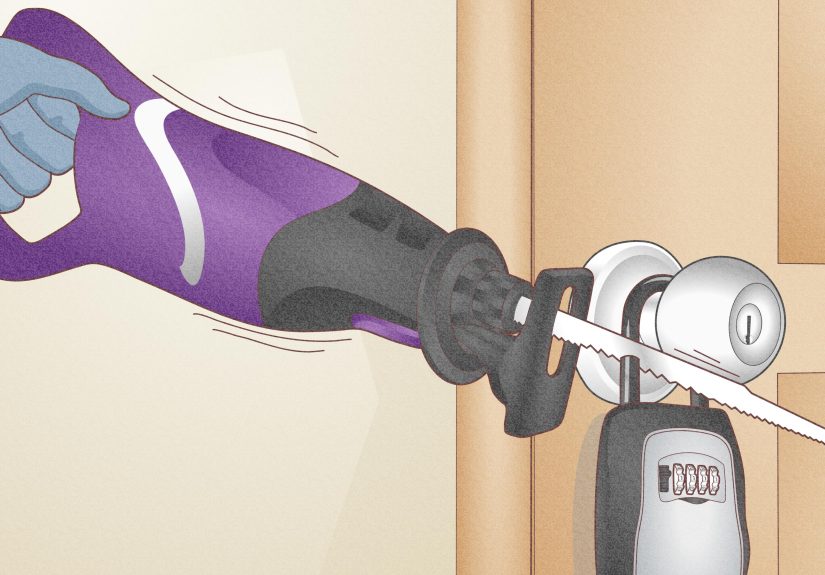
Usually nounless a licensed professional determines it’s necessary and you are authorized. Cutting can damage door hardware and lead to avoidable costs.
I just bought a home and found an old lockbox. What now?
Contact your agent or the listing side first, then remove through authorized channels. After removal, rekey or change locks as part of move-in security.
Do real estate lockboxes have stricter access rules?
Yes. Many systems use app-based credentials, user audits, temporary access controls, and seller authorization requirements.
Conclusion
Most doorknob lockbox removals are easy when you use the right lane:
(1) authorized release,
(2) official recovery, or
(3) qualified professional help.
If you try to skip those lanes, things get slower, pricier, and riskier fast.
Think of lockbox removal like assembling furniture: when you follow the instructions, it takes 10 minutes.
When you freestyle, suddenly it’s a character-building event. Stay legal, stay calm, and your doorknob (and wallet) will thank you.
Experience Section (Extended): What I’ve Seen Work in the Real World
Over the years, I’ve seen lockbox removal play out in every flavor of “this should be easy”from smooth five-minute wins to Saturday-afternoon sagas
fueled by caffeine and stubborn optimism. The patterns are surprisingly consistent, and if you learn them once, you can avoid 90% of the pain.
In one case, a homeowner was convinced the lockbox was broken because “the code definitely works.” It didn’t open, everyone was annoyed, and the
doorknob had already survived three rounds of tugging. The fix? We stabilized the box with one hand, reset the sequence calmly, and applied light
pressure while opening. It worked instantly. The mechanism wasn’t broken; it was just under mild tension from how the box was hanging. Moral of the story:
mechanical things love calm hands.
Another time, the issue wasn’t the boxit was access ownership. A new owner inherited an older lockbox with zero documentation. Instead of trying random
code combinations forever (the “9999 life strategy”), they collected serial/model info, contacted official support, and confirmed ownership through closing
documents. It took longer than brute-force guessing, but it ended with verified access, no damage, and a reusable lockbox. This is the unglamorous path,
but it’s usually the one that saves the most money and stress.
Real estate scenarios are their own universe. I’ve seen agents handle removal flawlessly by using app permissions and temporary access exactly as intended.
I’ve also seen teams run into chaos when someone shares credentials informally and nobody knows who changed what. The difference between smooth and messy
is simple: clear access records. When everyone treats lockbox access like a systemnot a group chat rumorproperties stay secure and removal stays easy.
There was also the classic “urgent locksmith” moment: a caller was quoted a tiny fee over the phone, then got a much higher on-site number plus
pressure to drill immediately. They paused, requested itemized pricing, and called a second verified provider. The second pro resolved it with less invasive
work and transparent billing. That experience reinforced a rule I now repeat constantly: desperation is expensive; verification is cheaper.
The most overlooked step comes after successful removal. People celebrate, toss the box in a drawer, and forget to re-secure access. Then months later,
someone asks, “Wait, who still has keys?” The smartest homeowners and property managers treat removal as part of a broader security reset: update codes,
rekey when ownership changes, confirm who has access, and document everything. It sounds administrative, but it prevents the late-night “why is this still open?” panic.
If I had to summarize all these experiences in one practical sentence, it would be this:
slow is smooth, smooth is fast. Slow down enough to use authorized steps.
Smooth execution follows. And then, ironically, you finish faster than if you had rushed.
So yes, lockbox removal can absolutely be easy. Not because the hardware is magical, but because the process is predictable when you follow the right sequence.
Identify your lockbox type. Use authorized release. Recover credentials through official channels when needed. Bring in a qualified professional for damaged units.
Then secure your property post-removal. Do those five things, and this entire task moves from “annoying mystery” to “quick household win.”
And if you ever catch yourself muttering at a lockbox like it personally offended your familytake a breath, put the pliers down, and go back to Step 1.
Future-you will be grateful.