Table of Contents >> Show >> Hide
- Can You Sleep with Wet Curly Hair?
- What Happens When You Sleep on Wet Curly Hair?
- The Best Way to Sleep with Wet Curly Hair
- Best Overnight Methods by Curl Type
- Mistakes to Avoid When Sleeping with Wet Curly Hair
- A Good Night Routine for Wet Curly Hair
- How to Refresh Curly Hair the Next Morning
- When You Should Avoid Sleeping with Wet Curly Hair
- Common Experiences People Have with Wet Curly Hair at Night
- Final Thoughts
If you have curly hair, you already know bedtime can feel less like a peaceful nightly ritual and more like a high-stakes negotiation. You want to shower at night. Your curls want a full drying session, a satin throne, emotional support, and probably a written apology. And when you climb into bed with wet curls, you may wake up looking like you fought a ceiling fan and lost.
The good news is that sleeping with wet curly hair is not automatically a disaster. The less-fun news is that it does take strategy. Curly hair tends to be drier, more delicate, and more prone to frizz than straight hair, which means an overnight routine matters a lot. The goal is simple: go to sleep with hair that is protected, supported, and not soaking your pillow like a tiny indoor rainstorm.
In this guide, you will learn how to sleep with wet curly hair without wrecking your curl pattern, inviting frizz to the party, or waking up with a scalp that feels grumpy. We will cover what actually happens when curls stay wet overnight, the best pre-bed routine, which protective styles work best, what mistakes to avoid, and how to rescue your hair the next morning if things still go sideways.
Can You Sleep with Wet Curly Hair?
Yes, you can sleep with wet curly hair, but “can” and “should every night” are not the same thing. Wet hair is more fragile than dry hair, and curly strands are already more likely to be dry and prone to tangling. Add a pillow, tossing and turning, and a warm scalp environment, and you have the perfect setup for flattened curls, frizz, and breakage.
That does not mean one late-night shower will ruin your hair forever. It simply means that if you are going to sleep with wet curls, you need to be smarter than the average pillowcase. The best approach is to avoid going to bed with hair that is dripping wet. Instead, aim for damp or partially dried curls, then use a protective sleep setup that reduces friction and keeps the curl pattern from getting crushed.
What Happens When You Sleep on Wet Curly Hair?
1. Your curls get squashed
Curly hair has a pattern that needs space to form. When you lie on wet curls, your head presses them into the pillow for hours. That pressure can stretch some sections, flatten others, and leave you with a mysterious combination of one perfect curl, three limp waves, and a chunk near your neck that looks like it gave up on life around 2 a.m.
2. Frizz shows up before breakfast
Friction is one of the biggest reasons curls look rough in the morning. Cotton pillowcases can rub against damp hair, rough up the cuticle, and separate curl clumps. Translation: hello, halo frizz. If your curls normally look great after wash day but chaotic after sleep, nighttime friction is probably the culprit.
3. Tangles and breakage become more likely
Wet hair stretches more easily. When that fragile hair rubs, twists, and snags during sleep, it can lead to breakage, split ends, and tangles. Curly hair especially hates being handled when wet and vulnerable. That is why aggressive brushing before bed is not a cute idea. It is a trap.
4. Your scalp may stay too damp
Another issue is moisture hanging around the scalp for too long. A warm, damp environment is not ideal, especially if you regularly sleep with fully wet hair. While it does not mean you will instantly develop a scalp problem, keeping your roots wet night after night can increase the odds of irritation, itchiness, or flaking over time.
The Best Way to Sleep with Wet Curly Hair
If your schedule, gym routine, or sanity makes nighttime washing necessary, this routine gives you the best chance of waking up with healthy, defined curls.
Step 1: Do not go to bed with soaking wet hair
This is the biggest rule. If water is still dripping down your neck, you are not ready for bed. Gently squeeze out excess water with your hands first. Then use a soft cotton T-shirt or microfiber towel to blot and scrunch. Do not rub. Do not twist your hair into a towel like you are wringing out laundry. Your curls deserve better.
Step 2: Apply lightweight moisture and hold
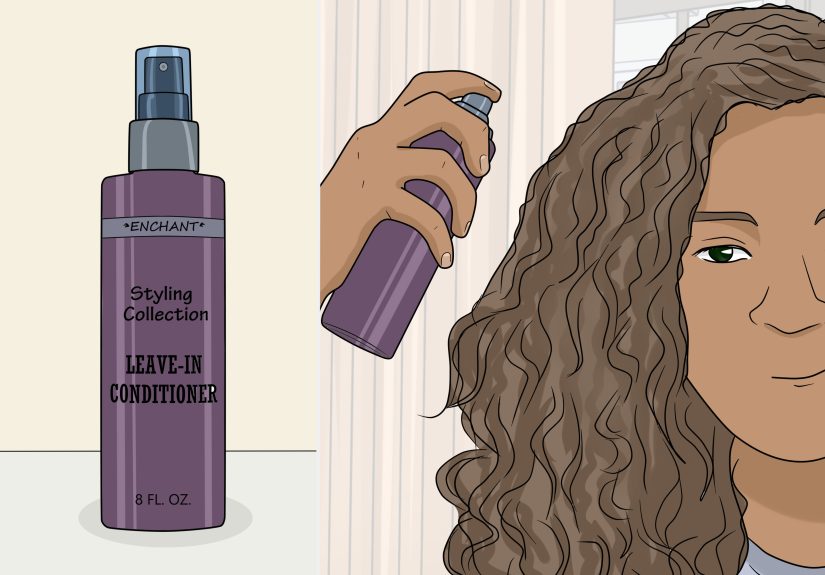
The sweet spot for curly hair at night is usually damp hair with a little support. A leave-in conditioner can help keep hair moisturized, while a light gel, mousse, or curl cream can encourage definition and reduce next-morning puffiness. The exact product depends on your hair type. Fine curls may prefer a lightweight foam or gel. Thick, coily hair often likes richer cream layered under a hold product.
The trick is not to drown your hair in product right before bed. Too much can slow drying time, leave your roots wet longer, and create buildup faster than you can say “why is my scalp mad at me?”
Step 3: Dry the roots first
If you only have five or ten minutes, spend them on the roots. The scalp area is where lingering moisture causes the most discomfort, and roots that stay wet overnight can make your whole style collapse by morning. You can air-dry for a while before bed, use a diffuser on low or medium heat, or briefly plop your curls to absorb extra water.
Think of this as reducing risk, not chasing perfection. Your hair does not need to be bone dry. It just should not feel like you are sleeping in a freshly rinsed sweater.
Step 4: Pick the right protective style
The best overnight style depends on your curl type and length.
- Pineapple: Great for medium to long curls. Gather hair loosely at the crown with a satin scrunchie so the curls stay lifted instead of crushed.
- Loose braid: Better for waves or looser curls that tangle easily.
- Twists or loose sections: Helpful for tighter curls and coils that need shape control overnight.
- Loose bun: Works for some people, but keep it gentle. Too tight means dents, breakage, and regret.
Step 5: Sleep on satin or silk
If you do only one thing differently tonight, make it this. A satin or silk pillowcase reduces friction compared with cotton, which helps prevent tangles, frizz, and flattened curls. A satin bonnet or scarf can add even more protection, especially if you move around a lot in your sleep or if your hair is dense and textured.
In other words, your cotton pillowcase may be soft to your face, but to your curls it is basically a tiny wilderness survival challenge.
Best Overnight Methods by Curl Type
For wavy to loose curly hair
If your hair is more 2C to 3A, go easy on the heavy creams. These textures can lose volume fast and may wake up looking stretched if they stay too wet. Use a lightweight leave-in, plop briefly, diffuse the roots, and put your hair into a loose pineapple or a very soft braid. The next morning, refresh only the sections that need help instead of re-wetting your whole head.
For springy ringlets
Ringlets usually benefit from moisture plus a bit of hold. A leave-in conditioner and light gel combo often works well. Pineapple your hair if it is long enough, or gather it into two high loose sections if one ponytail squashes the back. A bonnet is especially useful here because ringlets frizz quickly when rubbed overnight.
For tight coils and dense curls
Coily hair often needs more moisture and more intentional sectioning. Instead of one pineapple, try several loose twists or braids, especially if your hair takes forever to dry. Dry the roots well before bed, then cover with a satin bonnet. This method helps prevent the “wet roots, dry ends, zero patience” situation that tighter textures know all too well.
Mistakes to Avoid When Sleeping with Wet Curly Hair
Going to bed with dripping hair
This is the fastest route to frizz, scalp discomfort, and misshapen curls. Damp is manageable. Dripping is a decision.
Using a regular terry cloth towel
Traditional bath towels can be rough on curls and may disrupt the curl pattern. A T-shirt or microfiber towel is usually gentler.
Skipping protection
If you are sleeping with wet or damp curls and using a cotton pillowcase with no bonnet, no scarf, and no protective style, your hair is basically freelancing. Give it structure.
Making the style too tight
A super-tight bun, braid, or ponytail can create tension and dents. The goal is protection, not punishment.
Overloading on product
Too much cream, oil, or gel before bed can leave hair sticky, limp, or still wet by morning. Use enough to support the curl pattern, not enough to start your own beauty supply aisle.
Brushing curls aggressively in the morning
If you wake up with flattened or tangled hair, do not attack it with a brush. Use your fingers, a little water, or a light refresher product to reshape sections gently.
A Good Night Routine for Wet Curly Hair
Here is a simple routine you can actually stick to on a busy night:
- Wash and condition your hair as usual.
- Gently squeeze out excess water.
- Apply leave-in conditioner and one styling product with hold.
- Blot with a T-shirt or microfiber towel.
- Diffuse the roots for 5 to 10 minutes or air-dry for a while before bed.
- Put hair in a loose pineapple, braid, or twists.
- Sleep on a satin pillowcase or wear a satin bonnet.
- Refresh lightly in the morning instead of starting over.
This routine is practical, fast, and realistic for people who do not have 45 minutes to hover under a dryer while staring into the middle distance.
How to Refresh Curly Hair the Next Morning
Even with a good overnight routine, curly hair sometimes wakes up with opinions. A quick refresh can bring it back.
- Shake out the roots first to restore volume.
- Use damp hands or a light mist of water to reactivate product on flattened sections.
- Scrunch in a tiny amount of curl cream, foam, or gel if needed.
- Finger-coil a few problem curls around your face.
- Diffuse briefly on low heat if the refresh made your hair too damp.
Try not to re-wet everything unless absolutely necessary. Spot-fixing is usually faster and gives better results than accidentally restarting wash day at 7:12 a.m.
When You Should Avoid Sleeping with Wet Curly Hair
There are times when it is worth making the extra effort to dry your hair more fully before bed. For example, if your scalp is already itchy, flaky, or irritated, keeping it damp overnight may make things worse. The same goes if you recently had a scalp treatment, struggle with buildup, or know your hair tangles badly when wet.
You may also want to avoid the habit if your curls are fine, color-treated, or especially fragile. Those hair types often show damage more quickly. In that case, even drying your hair to 70 to 90 percent before bed can make a big difference.
Common Experiences People Have with Wet Curly Hair at Night
One reason this topic gets so much attention is that the experience is incredibly relatable. Many people with curly hair do not sleep with wet hair because they want to. They do it because life is busy. Evening showers happen after work, after the gym, after putting kids to bed, or after staring at a to-do list and realizing it is suddenly 10:47 p.m. That is when the internal debate begins: dry the curls properly, or trust the universe.
A very common experience is waking up with hair that looks fine from the front and totally chaotic underneath. The crown may still have decent definition, but the back sections, especially near the nape, can feel flat, damp, and oddly stretched. This happens because the back of the head gets the most pressure against the pillow. It is the part of your curl pattern that takes the biggest overnight hit, even if the rest looks almost normal.
Another familiar scenario is the “false optimism phase.” Your curls look amazing right after products are applied. You pineapple them, put on your bonnet, go to sleep feeling organized and powerful, and then wake up to discover that the roots are still damp. The hair is soft, but it has lost lift. It is not ruined, but it is not exactly giving day-two-curls confidence either. Usually, that means the products were fine, but the roots needed more drying before bed.
People with looser curls often describe another issue: overnight stretching. Their hair may dry into softer waves than expected, especially if it stayed wet too long in a braid or bun. Meanwhile, people with tighter curls and coils often report the opposite problem. Their shape may hold fairly well, but the scalp stays damp for too long, which can feel uncomfortable and make the next day’s hair feel less fresh.
There is also the classic cotton pillowcase lesson. Many curly-haired people do not realize how much nighttime friction matters until they switch to satin or silk. Suddenly, the morning routine gets shorter. There is less fuzz, fewer knots, and fewer random sections that seem to have developed a completely new personality overnight. It is one of those changes that sounds small but often feels surprisingly dramatic.
And then there is the emotional journey of the morning refresh. Some days, it takes two minutes: shake, scrunch, done. Other days, one side looks great, the other side looks like it slept in a wind tunnel, and now you are finger-coiling face-framing pieces while negotiating with a spray bottle before coffee. This is not failure. This is curly hair. The important thing is learning your own pattern. Over time, most people discover that their best overnight results come from three simple adjustments: less water, more root drying, and better protection while sleeping.
That is the real experience of sleeping with wet curly hair. It is not about chasing flawless perfection every morning. It is about creating a routine that gives your curls a fair chance and gives you fewer reasons to start the day annoyed at your own head.
Final Thoughts
If you want to sleep with wet curly hair and still wake up with curls worth leaving the house for, the secret is not magic. It is preparation. Get your hair from wet to damp, support it with the right products, dry the roots as much as possible, use a protective style, and swap cotton for satin or silk. Those small changes can make a huge difference in frizz control, curl definition, and overall hair health.
So yes, you can shower at night and still have good hair in the morning. You just need a system. Once you find the combination that works for your texture, length, and patience level, bedtime stops feeling like a gamble and starts feeling like part of your curly hair routine. Your pillow may never understand the effort, but your curls absolutely will.