Table of Contents >> Show >> Hide
- First, the 60-second sanity check: What “C to B-flat” really means
- Step 1: Decide the direction and interval (the “whole-step rule”)
- Step 2: Change the key signature (use the “two sharps / two flats” shortcut)
- Step 3: Transpose every note and chord, then proofread like your future self is grumpy
- A full worked example (so you can see the whole thing)
- Tools that speed this up (without turning your brain into mush)
- Troubleshooting: why it “still sounds wrong”
- Quick practice workout (5 minutes, no excuses)
- Bonus: Real-world experiences that make C to B-flat transposition finally click (extra)
- Final thoughts
Transposing music sounds like one of those musical superpowers you’re either born with or forced to learn at
10:47 p.m. the night before rehearsal. The good news: transposing from C to B-flat is one of the most common,
most useful, and (once you know the trick) most repeatable transpositions you’ll ever do.
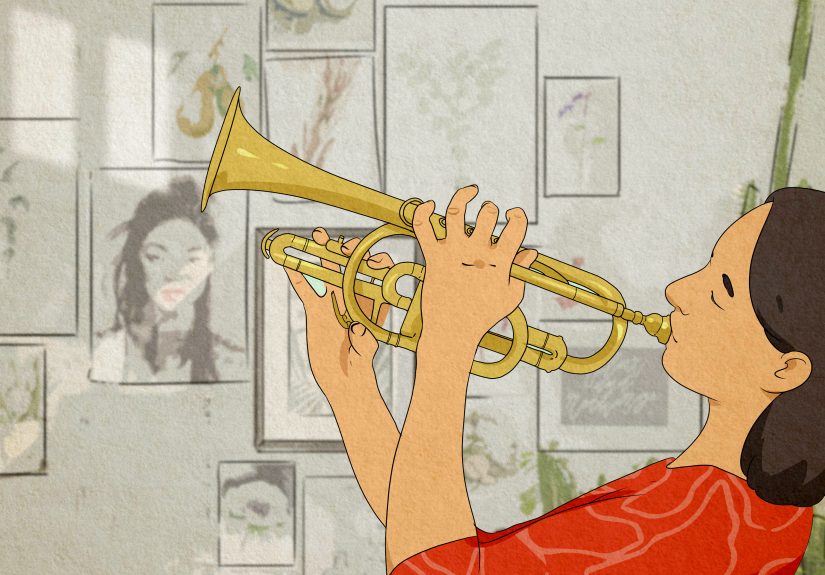
Whether you’re rewriting a piano/vocal lead sheet for a B-flat trumpet, making a clarinet part from a concert-pitch
melody, or trying to keep a tenor sax player from giving you “that look,” this guide breaks it down into three
easy stepswith real examples, common traps, and a couple of sanity checks so your final result sounds like music
instead of a polite argument between keys.
First, the 60-second sanity check: What “C to B-flat” really means
Here’s the core idea: many instruments are transposing instruments. For a typical B-flat instrument
(like B-flat clarinet, B-flat trumpet, soprano sax, or tenor sax), when the player sees a written C and plays it,
the pitch that actually comes out (the sounding pitch) is B-flat.
That’s why it’s called “in B-flat.” The written note name and the sounding note don’t match. This isn’t a prank
it’s a long-standing notation convention that helps players use the same fingerings across different sizes of the same instrument family.
So when you say “transpose music from C to B-flat,” you’re usually doing one of these:
- Concert pitch (C instruments like piano, flute, violin) → write a B-flat instrument part that will sound correctly.
- B-flat instrument part → convert it to concert pitch so it matches piano/guitar/strings.
This article focuses on the most common real-life job:
taking concert pitch music and rewriting it for a B-flat instrument.
In plain English: you want the B-flat instrument to sound in tune with the piano.
Step 1: Decide the direction and interval (the “whole-step rule”)
If you remember one thing, make it this:
To write for a B-flat instrument from concert pitch, transpose UP a major second (a whole step).
Why “up a whole step” works
A B-flat instrument sounds a whole step lower than written. So you “pre-compensate” by writing everything a whole step higher.
When the player reads your higher notes, the instrument’s natural transposition brings the sound back down to the correct concert pitch.
Mini example (single note)
- Desired concert pitch: C
- Write for B-flat instrument: D
- Player reads D, instrument sounds down a whole step → concert C. Boom.
Reverse direction (if you need concert pitch from a B-flat part)
If you’re staring at a B-flat trumpet part and want to know what it sounds like on piano:
transpose DOWN a major second.
Quick “keyboard check”
If your brain starts buffering, do this: pick one note you’re sure about. Most people use written C.
On a B-flat instrument, written C sounds B-flat. If your math doesn’t match that relationship, you’re transposing the wrong way.
Step 2: Change the key signature (use the “two sharps / two flats” shortcut)
Notes are only half the battle. Key signatures are where transpositions either become elegant… or turn into accidental soup.
The goal: keep the rewritten part in a clean, playable key signature that matches your new written notes.
The shortcut
Because you’re transposing up a whole step, the written key moves up a whole step too.
On the circle of fifths, that’s the same as:
- Add two sharps (or)
- Remove two flats
Same result, two different ways to think about it. Pick whichever feels less like taxes.
Concert key → B-flat written key examples
- C major (0 sharps/flats) → D major (2 sharps)
- F major (1 flat) → G major (1 sharp)
- B-flat major (2 flats) → C major (0)
- E-flat major (3 flats) → F major (1 flat)
- A major (3 sharps) → B major (5 sharps)
What about minor keys?
Same exact process. Transpose the tonic up a whole step, then use the matching key signature.
Example: A minor (no sharps/flats) → B minor (2 sharps).
If you’re using harmonic or melodic minor with raised scale degrees, those accidentals get transposed too (Step 3).
Accidentals follow the same rule
Any sharp, flat, or natural in the original music moves with its note by the same interval.
If an original note is F-sharp and you transpose up a whole step, it becomes G-sharp. If you’re thinking,
“That seems obvious,” congratulationsyou’ve earned the right to be confused later by an E-sharp. We’ll handle that soon.
Step 3: Transpose every note and chord, then proofread like your future self is grumpy
Now you do the real work: move the music up a whole step.
This applies to melody notes, bass lines, chord symbols, and accidentals.
Then you check it, because transposition is 20% math and 80% catching your own typos.
3A) Melody notes: move everything up a whole step
Go note by note. Every pitch rises by two semitones (a major second).
A quick cheat list for common letter-name jumps:
- C → D
- D → E
- E → F-sharp (yes, really)
- F → G
- G → A
- A → B
- B → C-sharp
Accidentals come along for the ride. A-flat → B-flat. F-sharp → G-sharp. E-flat → F.
3B) Chord symbols: transpose the root (and keep the chord quality)
For chord charts, transpose the chord roots up a whole step, but keep the chord type the same.
The “personality” stays; the “address” changes.
- C → D
- Am → Bm
- F7 → G7
- B♭maj7 → Cmaj7
- E♭m9 → Fm9
- G/B (slash chord) → A/C♯
If the original uses Nashville Numbers, you can often avoid rewriting chord names entirelyjust apply the new key.
But if you’re handing a literal chord chart to a B-flat player, you’ll usually want transposed chord names too.
3C) Watch out for octave traps (tenor sax and bass clarinet)
Here’s where people get blindsided: some B-flat instruments transpose by a major second plus an octave.
Common examples include tenor sax and bass clarinet.
In practice, most notation software handles this if you pick the correct instrument.
If you’re transposing manually, the safest approach is:
transpose by the correct written interval for the instrument you’re writing for,
then check the range so it sits where the player expects.
3D) Proofread with “anchor notes”
Spot-check a few structural notes:
- Tonic: If the concert key is C major, your written key should feel like D major (tonic D).
- Dominant: Concert G should become written A.
- Leading tone: Concert B should become written C-sharp.
If your transposed line no longer behaves like a scale in the new key signature, something went sideways.
A full worked example (so you can see the whole thing)
Let’s transpose a simple concert-pitch melody and chords from C major to a B-flat instrument part.
Original (concert pitch)
- Key: C major
- Chords (1 bar each): C | F | G7 | C
- Melody: C D E G | F E D C | G G A B | C (hold)
Transposed (written for B-flat instrument)
- Key: D major (2 sharps)
- Chords: D | G | A7 | D
- Melody: D E F♯ A | G F♯ E D | A A B C♯ | D (hold)
If a B-flat trumpet plays that written part, it will sound a whole step lowerback in concert C majormatching the piano.
Tools that speed this up (without turning your brain into mush)
Yes, you can do this with pencil and stubbornness. But if you’re working with lots of pages, consider:
- Notation software transpose features (choose the correct instrument, then export parts).
- Transposition charts for quick key-signature lookups.
- Circle of fifths to visualize “add two sharps / remove two flats.”
Even if software does the heavy lifting, still proofread. Computers are great at math and surprisingly brave about spelling notes as E-sharp.
You’re the one who has to rehearse it with humans.
Troubleshooting: why it “still sounds wrong”
- You transposed the wrong direction. If your B-flat part sounds a whole step too low (or too high), flip the interval.
- You changed notes but not key signature. Your line may be correct, but it’s drowning in accidentals.
- Tenor sax/bass clarinet octave confusion. If it sounds right but sits in a weird register, you likely need the octave adjustment.
- Minor-key accidentals didn’t move correctly. Raised 7ths and 6ths must transpose too.
- Enharmonic spelling got messy. F-flat might be technically correct but practically rude. Respelling can help readability.
Quick practice workout (5 minutes, no excuses)
- Pick a concert key each day (start with C, F, B♭, G).
- Say the transposed written key for B-flat instruments out loud (C→D, F→G, B♭→C, G→A).
- Transpose a short four-bar melody up a whole step. Then check by playing it on a keyboard and imagining the B-flat instrument sounding down.
Do this for a week and your brain will start doing “whole-step math” automaticallylike autocorrect, but helpful.
Bonus: Real-world experiences that make C to B-flat transposition finally click (extra)
Most musicians don’t fall in love with transposition because it’s “fun.” They fall in love with it because it saves the day in very specific,
slightly chaotic situations. If you’ve never been there yet, congratulations on your peaceful life. If you have, you’ll recognize these.
1) The last-minute gig folder surprise.
A common rite of passage: you show up to play, open the folder, and discover your chart is in concert pitch while you’re holding a B-flat instrument.
The room goes quiet in a way that feels personal. This is where the “whole-step rule” becomes your best friend. Players who can instantly think
“concert C means I read D” don’t just survivethey look magically prepared. And yes, it’s okay to write tiny reminder notes in pencil.
The pros do it too; they just pretend they didn’t.
2) The jam session that moves keys like it’s allergic to commitment.
Someone calls a tune in F, and two choruses later it’s in G because the guitarist got excited. If you understand transposition, you can keep up
without panic-sweating through your valve oil. For B-flat players, you translate the new concert key into your written key on the fly:
concert F becomes written G; concert G becomes written A. When you practice this enough, it starts to feel like reading subtitlesyour eyes see one
thing, your brain hears another, and your fingers just… do the correct thing.
3) The “why are there so many accidentals?” moment.
Beginners often transpose notes correctly but forget to change the key signature. The result technically works, but the page looks like a snowstorm
of sharps, flats, and naturals. In rehearsals, that turns into missed entrances and the kind of counting that makes you question your life choices.
Once you learn the key-signature shortcut (add two sharps/remove two flats), the part becomes cleaner, faster to read, and friendlier to the person
who has to play it at tempo.
4) The school band “unison line” puzzle.
In mixed ensembles, directors often want everyone to play the same-sounding melody. Concert pitch instruments (flutes, strings, piano) read it as written.
B-flat instruments need their transposed parts. When transposition is done right, the room locks in and it feels like magicbecause it is, in the
same way synchronized swimming is magic (it’s really math, rehearsal, and not drowning).
5) The confidence boost of checking your work like a scientist.
A surprisingly comforting habit: after transposing, pick three “anchor” tonestonic, dominant, and leading toneand confirm they behave correctly in the
new written key. For concert C major, you expect written D major. If your transposed melody lands heavily on D, uses A like a dominant, and features C-sharp
as a leading tone, you’re probably correct. This tiny test turns transposition from “hope and vibes” into an actual repeatable process, which is exactly
what you want when you’re under time pressure.
Over time, these real-world moments build a simple truth: transposition isn’t just a theory exercise. It’s communication. It’s what lets musicians with
different instruments share the same musical idea without rewiring fingerings, relearning note names, or starting a minor philosophical debate about what
pitch “C” even is. And once you internalize the C-to-B-flat relationship, you’ll start noticing that your brain can generalize itsuddenly E-flat
instruments and horn in F won’t feel like mythical creatures. They’ll just feel like… more math. (Friendly math. Mostly.)
Final thoughts
Transposing music from C to B-flat is simpler than it looks because it follows one consistent rule:
concert pitch to B-flat written pitch = up a whole step.
Do that for the notes, do that for the chords, update the key signature, and then proofread with a couple of anchor checks.
After a little practice, you’ll stop thinking of transposition as a scary skill and start thinking of it as a convenient shortcut to making music with more people.