Table of Contents >> Show >> Hide
- How My Paper Technique Actually Works
- Why Animals And Plants Are Perfect Subjects For Paper Art
- From Petals To Wings: Where The Illusion Gets Stronger
- What These 34 New Pics Reveal About The Process
- Why Viewers Connect With Realistic Paper Art
- The Bigger Lesson Behind The Work
- My Experience With Turning Paper Into Living-Looking Nature
- Conclusion
Note: Clean HTML body only for web publication. No source links or oaicite markers included.
Paper has a funny reputation. People trust it with grocery lists, homework panic, and birthday cards signed in a rush, but they do not always expect it to impersonate a beetle, a flower, or a leaf so convincingly that someone leans in and whispers, “Wait… that’s paper?” And yet, that is exactly what happened when I started pushing this humble material far beyond its usual desk-job responsibilities.
My approach to paper art did not begin with a grand manifesto or a dramatic studio montage with violin music in the background. It started with curiosity. I wanted to see whether paper could hold the softness of petals, the crisp tension of leaves, the glossy delicacy of insect wings, and the tiny irregularities that make something feel alive instead of merely decorative. One experiment became another, one petal turned into a plant, one plant led to an insect, and before long I was building a whole small universe from paper, wire, paint, glue, patience, and a suspiciously unhealthy level of obsession with texture.
This collection, framed under the title I Use My Unique Technique To Create Realistic Animals And Plants From Paper (34 New Pics), is about more than pretty craft. It is about observation, discipline, invention, and the kind of realism that makes viewers do a double take. My goal is never to make “cute paper things.” My goal is to create paper sculptures that feel like they were paused mid-bloom or mid-crawl. I want the viewer to notice the bend of a stem, the uneven edge of a petal, the believable posture of an insect, and the way color shifts in real life rather than sitting politely in one flat tone.
How My Paper Technique Actually Works
The simplest way to explain my technique is this: I treat paper less like a flat surface and more like a living skin. Instead of forcing the material to behave like cardboard with ambitions, I work with its grain, stretch, thickness, curl, and memory. Some papers are perfect for delicate petals because they wrinkle in a way that resembles natural bloom texture. Others are better for firmer leaves, structured bodies, or layered wings. Choosing the wrong paper is like casting the wrong actor in a dramatic role. It can still perform, but something feels off.
My process usually begins with close study. I do not just glance at a flower and say, “Yep, pink.” I look for transitions: where color deepens, where the petal thins near the light, where a leaf edge dries, where the stem changes direction, where an insect’s body becomes unexpectedly elegant instead of purely strange. Realism lives in those little transitions. If I skip them, the piece may still be attractive, but it will not feel convincing.
After sketching and planning, I build forms in layers. Petals are shaped, stretched, curled, and sometimes subtly creased. Leaves are cut with attention to vein direction and posture. Bodies of insects or small animals are assembled piece by piece, with structural support hidden inside. Then comes the slow magic: coloring, toning, feathering edges, and making sure nothing looks too clean. Nature is not tidy. Nature is gorgeous, but it is also irregular, asymmetrical, and gloriously unwilling to behave like clip art.
The Secret Ingredient Is Restraint
People often assume realism comes from adding more and more detail until the artwork practically applies for citizenship in the natural world. But detail alone is not enough. Restraint matters just as much. Sometimes the most realistic choice is knowing when to stop curling an edge, when not to overpaint a shadow, or when a stem should remain slightly awkward because that awkwardness is exactly what makes it believable.
That balance between precision and restraint is the heartbeat of my technique. Every sculpture asks the same question: what is the fewest number of moves required to make this paper feel alive?
Why Animals And Plants Are Perfect Subjects For Paper Art
Plants and animals are ideal for this medium because paper already shares some visual qualities with nature. Think about flowers with delicate, crinkled petals. Think about leaves that fold, curl, or dry into translucent edges. Think about moth wings, seed pods, grasses, bark, and thin insect limbs. Paper can mimic fragility beautifully. The trick is not merely to copy shape, but to capture behavior.
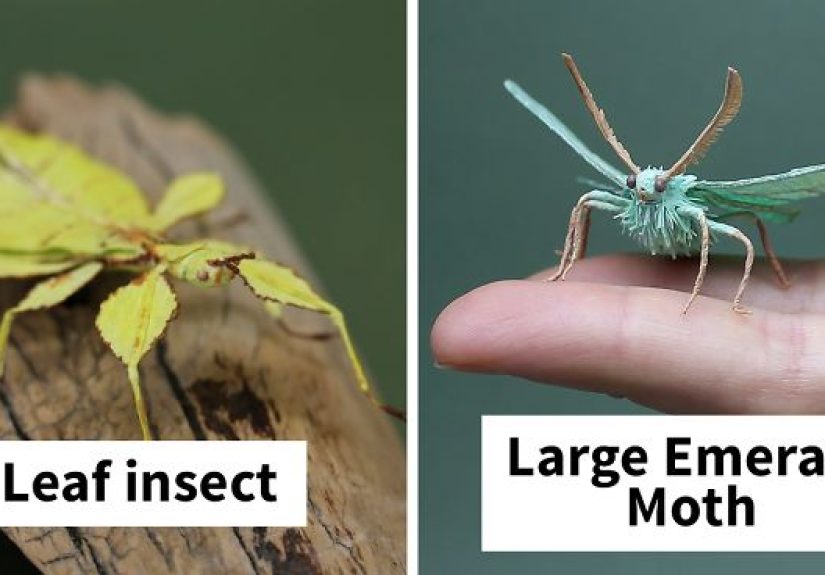
That is why I am drawn especially to flora, insects, and small creatures with extraordinary design built right into them. An orchid-like blossom has drama. A stick insect has attitude. A leaf-mimicking creature looks like nature decided to write a visual joke and then committed to the bit. These subjects are naturally theatrical, but they are also rich with structure. They challenge me to build beauty and anatomy at the same time.
Plants also offer endless opportunities for variation. One flower may demand airy softness; another may need thick, folded petals with a near-sculptural presence. Some leaves hang lazily. Others spear outward like they have a deadline. That diversity keeps the work exciting. I never feel like I am making the same object twice, even when the theme returns to blossoms, stems, or layered greenery.
Realism Is Really About Observation
If there is one lesson this work teaches over and over again, it is that realism does not begin in the hand. It begins in the eye. Before the scissors do anything useful, I have to notice what makes a subject itself. A flower is not “a flower.” It is a specific arrangement of tension, thickness, color, and movement. An insect is not just “a bug.” It is an architecture of joints, camouflage, posture, rhythm, and odd little design choices that somehow make perfect sense in nature.
That is why I study references so carefully. I am not copying in a mechanical way. I am translating. I want the final piece to communicate the personality of the subject, not just its outline.
From Petals To Wings: Where The Illusion Gets Stronger
One of the most exciting parts of this body of work is the shift from botanical subjects into creatures. Flowers taught me softness. Leaves taught me structure. Insects taught me tension. Once I understood how to build convincing plant forms, I realized I could take the same logic into animals and create something even more surprising.
That is where the project became truly addictive. A mantis, a moth, a beetle, or a tiny reptile asks for a different kind of realism than a bloom. The sculpture must feel anatomical without becoming stiff. It must look delicate without collapsing. It must keep the elegance of art while holding onto the oddness of biology. That balance is what keeps me coming back to the table with one more sheet of paper and one more “I swear this is the last piece for tonight” lie.
In many of these works, I aim for the moment when the line between decorative object and natural specimen becomes pleasantly blurry. Viewers often react first with delight, then confusion, then a flood of questions about materials. That reaction is part of the experience. I want the paper to disappear just long enough for the subject to take over.
Color Does More Work Than People Realize
Realistic paper sculpture lives or dies by color transitions. A flat, single-color petal looks like paper. A petal with subtle shifts, slight darkening at the base, gentle fading at the edge, and an almost accidental-looking imperfection begins to feel organic. The same goes for leaves, insect bodies, and textured surfaces. Real life is rarely one-note.
I spend a lot of time making sure color behaves naturally. It should suggest sunlight, age, moisture, softness, shadow, and structure without screaming for attention. Loud color can be fun, but nuanced color is what convinces the eye.
What These 34 New Pics Reveal About The Process
This latest set of 34 new images is not just a gallery of finished objects. It is evidence of how the technique has matured. The newer pieces carry more confidence in form, more subtlety in shading, and more understanding of how small distortions can make a sculpture feel real. Early on, I was focused mainly on whether I could make paper look lifelike. Now I am more interested in whether I can make it feel specific, intimate, and emotionally memorable.
Some pieces lean into botanical elegance. Others celebrate the weird brilliance of the natural world. Together, they show how broad paper can become when it is treated as a sculptural medium instead of a backup plan for people who ran out of clay. Every curl, cut, and layer is part of a visual argument: paper is not limited. We are just used to underestimating it.
There is also a quieter story in the collection. The work reflects patience. It reflects revisions. It reflects the kind of trial and error nobody posts because “Here is a leaf I ruined at 1:14 a.m.” does not sound especially glamorous. But those invisible hours matter. They are what make the finished pieces feel effortless, even though they are absolutely not effortless. Realistic paper art is basically an elaborate agreement between vision and stubbornness.
Why Viewers Connect With Realistic Paper Art
I think people respond to this kind of work because it delivers two pleasures at once. First, there is the beauty of the subject itself: a flower, a leaf, a small animal, an insect with impossible elegance. Second, there is the surprise of the material. The mind knows it is paper, but the eye keeps wanting to negotiate. That tension is delightful.
There is also something emotional about recreating nature by hand. In a fast, filtered, endlessly scrolling world, hand-built realism asks people to slow down. It invites close looking. It rewards patience. It says, “Come here, notice this vein, this shadow, this tiny curve.” That invitation feels rare now, and maybe that is why it resonates.
Paper also carries a softness that other media do not always have. Even when the sculpture is precise, it retains a certain humanity. It looks touched, shaped, persuaded. You can sense the hand in it. That is important to me. I do not want the work to feel sterile. I want it to feel lovingly observed and carefully built.
The Bigger Lesson Behind The Work
If this collection says anything beyond “paper can be weirdly convincing,” I hope it says that materials are more flexible than our assumptions. Creativity often grows when we stop asking what a medium is supposed to do and start asking what it might do if pushed, stretched, layered, and trusted a little further.
My unique technique was not born from following a neat formula. It came from paying attention, making mistakes, noticing what looked natural, and refining those discoveries over time. That is true of most good creative work. The style people call “unique” is usually just the visible result of private persistence.
And yes, it is still funny to me that something as ordinary as paper can end up resembling a flower that looks freshly opened or an insect that appears ready to scamper off the table. That little miracle never gets old.
My Experience With Turning Paper Into Living-Looking Nature
Working on realistic paper animals and plants has changed the way I move through the world. I do not look at a flower casually anymore. I study how the petals overlap, how one edge catches more light than another, how the stem supports the bloom without looking rigid. Even a half-dried leaf on the sidewalk can become a lesson in color theory, because browns are never just brown, and green never exits the stage quietly. Once you spend enough time trying to recreate nature by hand, you stop walking past details and start collecting them with your eyes.
That has probably been the most rewarding part of the journey. The technique is important, of course, but the deeper experience is attention. My work has taught me to slow down and observe with far more generosity. A tiny insect on a branch is no longer background noise. It becomes a master class in engineering. A curling petal is no longer decorative fluff. It becomes a sculpture problem waiting to be solved. Nature starts to feel less like scenery and more like a brilliant instructor with slightly chaotic methods.
I have also learned that realism is emotional, not just technical. The pieces people remember most are not always the most complicated ones. Sometimes it is the sculpture that feels most vulnerable, quiet, or unexpectedly tender. A simple stem with one imperfect flower can say more than a huge, dramatic arrangement if it captures the right posture. The same is true for tiny creatures. A realistic paper insect is not interesting only because it looks accurate. It becomes memorable when it also carries mood, fragility, or a bit of personality. Yes, I know assigning personality to a paper beetle sounds unhinged. I accept that.
Another part of the experience has been learning patience in a very literal way. Paper is forgiving in some moments and hilariously unforgiving in others. One extra pull can tear a petal. One careless drop of glue can flatten the illusion. One wrong color decision can make an elegant piece look like it had an argument with a highlighter. So I have had to become calmer, slower, and more willing to rebuild sections that do not work. That discipline has improved not only the art, but also my relationship with the process.
There is a special kind of satisfaction in making something realistic from a material that most people consider ordinary. When viewers realize the work is paper, their reaction often shifts from admiration to curiosity, and that curiosity is wonderful. It opens a conversation about craft, labor, observation, and the hidden possibilities inside familiar materials. I love that moment because it reminds me why I kept experimenting in the first place. I wanted paper to surprise people. Honestly, I wanted it to surprise me too.
The longer I work this way, the more I understand that my technique is not really about tricking the eye. It is about honoring the strange elegance of the natural world through a handmade language. Every new sculpture is a translation: from petal to paper, from wing to cut edge, from living form to crafted illusion. And with each new piece, I feel like I am getting slightly better at that translation. Not perfect, never perfect, but closer. That is what keeps me going back to the studio, back to the scissors, back to the next bloom, the next leaf, the next tiny creature waiting to be rebuilt out of paper and patience.
Conclusion
I Use My Unique Technique To Create Realistic Animals And Plants From Paper (34 New Pics) is really a celebration of transformation: flat sheets becoming dimensional life, craft becoming sculpture, observation becoming illusion, and patience becoming style. The pieces may begin with paper, but they end in something much richer. They become encounters. They invite viewers to look twice, smile once, and maybe reconsider what “paper art” can actually mean.
For me, that is the whole point. I am not trying to make paper behave like something else just for the novelty of it. I am trying to reveal how much beauty, complexity, and realism this medium can hold when treated with respect, curiosity, and a willingness to chase tiny details until they finally look alive. And judging by these 34 new pics, the experiment is still getting better.