Table of Contents >> Show >> Hide
- What the Numbers Actually Say
- Why Grocery Inflation Feels Worse Even When Restaurant Inflation Runs Higher
- Why Americans Still Spend More on Food Away From Home
- How Households Adapt When Grocery Inflation Won’t Chill
- What This Means for Grocery Stores
- What This Means for Restaurants
- The Real Bottom Line
- Everyday Experiences: Why This Inflation Story Feels So Personal
Inflation is one of those dinner-table topics that somehow makes the mashed potatoes feel judgmental. Everyone knows prices went up. Everyone has opinions. And nearly everyone has that one grocery item they still side-eye like an old enemy. Eggs. Ground beef. Orange juice. Pick your villain. But here is the twist: even when official inflation data show restaurant prices rising faster than grocery prices, many Americans still feel like inflation hits harder at the supermarket than at the restaurant table.
That sounds backward until you think about how people actually experience food spending. A restaurant meal is a single number on a menu. Groceries are a thousand tiny negotiations with your wallet. One item is up 80 cents, another is up $1.25, and suddenly your cart looks ordinary while your receipt looks like it went to law school and now bills by the hour. The pain is not only about economics. It is about visibility, routine, psychology, and the fact that groceries are one of the few expenses households confront again and again, week after week, aisle after aisle.
So yes, restaurant inflation matters. Menu prices have climbed, labor costs remain high, and dining out is far from cheap. But grocery inflation often feels more personal, more immediate, and more exhausting. That is why the phrase “inflation bites more at grocery stores than restaurants” rings true for so many households, even when the headline numbers are more complicated. The real story is not just where prices are rising faster. It is where inflation feels sharper, more frequent, and harder to dodge.
What the Numbers Actually Say
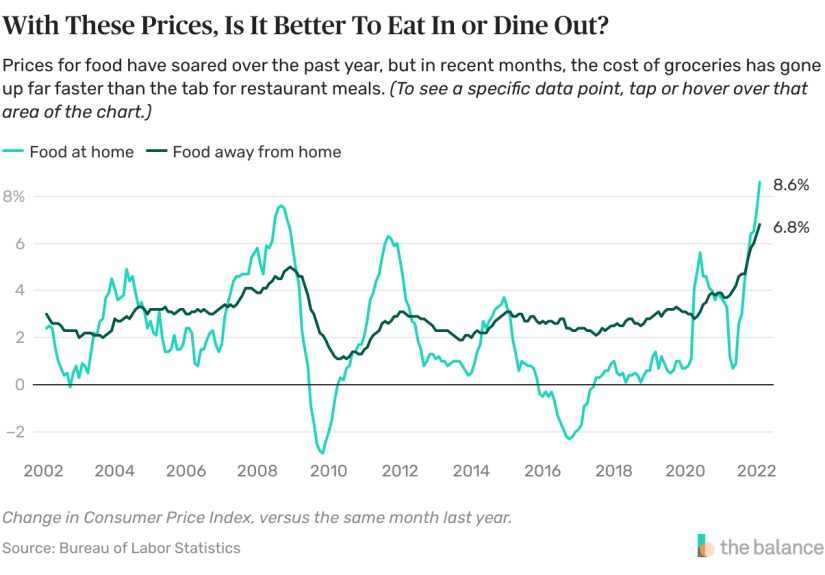
Let’s start with the grown-up part of the conversation: the data. Recent U.S. inflation reports have often shown food away from home, which includes restaurant meals, rising faster than food at home, which covers groceries. That has been the pattern in much of the post-spike cooldown period. In other words, menus have not exactly been offering a charity program.
But the longer timeline matters. Grocery inflation exploded more dramatically during the worst of the food-price surge, especially in 2022. That year, food-at-home prices jumped much faster than their usual historical pace. Since then, grocery inflation has cooled, but the memory of that spike has not. Consumers still remember when staple categories seemed to go feral at the same time. And unlike restaurant meals, grocery prices keep changing at the item level, which makes the pain feel ongoing even when annual averages improve.
This creates a weird but very real public experience: the official inflation trend can say restaurant prices are running hotter, while households still swear the grocery store is where inflation punches them in the face. Both things can be true. One is a statistical comparison. The other is lived reality.
Why Grocery Inflation Feels Worse Even When Restaurant Inflation Runs Higher
Groceries are not optional
People can postpone brunch. They can skip takeout. They can tell themselves that the $19 burger is “an experience” and stay home instead. Groceries do not give you that luxury. Households need milk, bread, produce, snacks for kids, coffee for adults, and something that can pass as dinner on a Wednesday when nobody has the emotional range to make a casserole.
That necessity changes how inflation is felt. Grocery spending is recurring, practical, and difficult to avoid. Even households that cut back on restaurant visits still need to stock the fridge. So while dining out can be framed as optional, grocery shopping is a standing appointment with prices. If inflation shows up there, it feels like a tax on ordinary life.
The price is broken into dozens of tiny paper cuts
A restaurant check is one big number, maybe two if dessert stages a successful coup. A grocery trip is a parade of small price discoveries. Bananas cost more. Cereal costs more. Yogurt costs more. Chicken costs more. Sparkling water now apparently has opinions about your income bracket. That repeated exposure makes grocery inflation emotionally louder.
Economists can tell you that a 4% increase in restaurant prices is meaningful, and they are right. But consumers do not experience that number in the abstract. They experience a shelf tag that changed since last week. They notice that the same cart does not stretch as far. They realize the “quick stop for a few things” somehow turned into a triple-digit receipt. Grocery inflation turns abstract macroeconomics into a series of tiny betrayals.
Grocery prices are more volatile and more noticeable
Another reason grocery inflation bites harder is volatility. Grocery categories can swing sharply because they are tied to supply shocks, weather, disease outbreaks, transportation costs, and commodity pressures. That means shoppers do not just see a slow upward crawl. They sometimes see whiplash. One month eggs are absurd. Another month beef steals the spotlight. Then beverages creep up and somehow your basic lunch ingredients start acting like luxury goods.
Restaurant pricing tends to feel smoother because it bundles many costs together. Labor, rent, utilities, insurance, ingredients, and service all get folded into the menu price. Grocery pricing, by contrast, leaves each item out in the open. It is inflation with bright lighting and barcodes.
Restaurants sell an occasion, groceries sell arithmetic
There is also a psychological difference. When people dine out, they are not only buying calories. They are buying convenience, time, atmosphere, celebration, a break from dishes, and sometimes the opportunity to pretend the week is going better than it actually is. A restaurant meal is easier to justify because it comes wrapped in experience.
Groceries do not get that halo. Groceries are practical. They are budgeting. They are meal prep. They are the suspiciously expensive bag of grapes your household somehow demolishes in 14 minutes. Even when restaurant prices are objectively high, grocery price increases can feel more offensive because the purchase is stripped of ceremony. It is not fun money. It is lunchbox money.
Why Americans Still Spend More on Food Away From Home
Here is where the story gets even more interesting. Americans have continued spending heavily on food away from home. That does not mean restaurants became cheap. It means convenience still has powerful value. Busy work schedules, long commutes, delivery apps, dual-income households, and plain old exhaustion keep demand for prepared food strong.
In fact, food-away-from-home spending now takes up a very large share of total food spending in the United States. That says less about bargain hunting and more about how modern households operate. Prepared food saves time, reduces planning, and solves the eternal late-day question: “What are we eating?” For many people, a higher menu price is still worth paying if it buys back an hour of life and prevents a 7:15 p.m. family debate that ends with someone angrily eating crackers.
There is another factor too: consumers often cut restaurant frequency rather than quit entirely. Instead of dining out three times a week, they may go once. Instead of ordering appetizers and drinks, they stick to entrees. Instead of premium casual, they trade down to quick service or pickup specials. Restaurants still get the visit, but value becomes the star of the show.
How Households Adapt When Grocery Inflation Won’t Chill
Consumers are not passive in this story. When grocery prices rise, shoppers get creative fast. They compare prices more carefully. They use coupons. They switch stores. They buy private-label products. They watch for promotions. They buy smaller quantities or cut nonessential items. In some households, meal planning becomes less about nutrition goals and more about tactical maneuvers worthy of a football coach.
These shifts are especially important because grocery inflation affects health and food quality decisions too. When staple foods and fresh items feel expensive, households may pivot toward whatever stretches the budget, not whatever earns applause from a nutritionist. That can make higher food costs feel like more than a financial nuisance. They start to feel like a constraint on daily well-being.
Lower-income households feel this pressure most intensely, of course, but the effect travels far beyond them. Even middle-income shoppers who can still afford groceries often report frustration, trade-offs, and more deliberate shopping behavior. Inflation changes not only what people buy, but how they think while buying it. And once that mindset settles in, it can outlast the worst price spike itself.
What This Means for Grocery Stores
For grocers, the lesson is simple and brutal: consumers notice everything. They may not know the latest CPI release, but they know when a weekly staple suddenly costs more. That means value communication matters. Promotions matter. Private-label quality matters. Loyalty programs matter. Pricing transparency matters.
Grocery retailers cannot rely on the idea that slower inflation automatically feels like relief. If prices remain elevated relative to a few years ago, shoppers still feel squeezed. A cooler rate of increase is not the same thing as lower prices. Consumers do not celebrate because the pain is arriving more politely.
What This Means for Restaurants
Restaurants are dealing with their own inflation headache. Labor costs remain heavy. Food costs still matter. Margins are often thin. Operators have to raise prices carefully because customers are watching value just as closely as they do in grocery aisles. That is why restaurants increasingly compete on bundles, limited-time deals, lunch specials, loyalty perks, and a sense that the meal is still “worth it.”
In other words, restaurants do not win because inflation ignores them. They win when they make the total experience feel more valuable than the total price feels painful. That is a very different game from grocery retail, but it is still a game of consumer trust.
The Real Bottom Line
So, does inflation bite more at grocery stores than restaurants? In the emotional and behavioral sense, absolutely yes. In the recent official inflation data, not always. That distinction matters.
Restaurant inflation has often run hotter lately. But grocery inflation feels harsher because it is constant, visible, necessary, and itemized. It does not arrive as a special treat. It arrives as breakfast, packed lunches, pantry restocks, and the recurring realization that somehow a perfectly normal cart now costs enough to make you stand silently in the parking lot for a moment.
That is why grocery inflation lives rent-free in so many American minds. It is not just about percentages. It is about repetition. It is about necessity. It is about how often people have to confront the price of ordinary life. And when inflation settles into the shopping cart, households feel it in a way no spreadsheet can fully capture.
Everyday Experiences: Why This Inflation Story Feels So Personal
Imagine a parent walking into the grocery store with a sensible list and deeply unrealistic optimism. The plan is simple: grab ingredients for tacos, cereal for breakfast, fruit for lunches, and maybe one treat so the household does not stage a revolt. Nothing fancy. No imported cheese. No truffle oil. No wild luxury behavior. But halfway through the trip, the math starts to wobble. The ground beef costs more than expected. The cereal box seems to have shrunk while the price quietly wandered upward. The berries look great until the price tag snaps you back to reality. By checkout, the cart still looks normal, but the total feels strangely disrespectful.
That is the emotional fingerprint of grocery inflation. The shopper is not reacting to one giant splurge. They are reacting to the steady accumulation of higher prices on basic things they buy all the time. It feels unfair because the purchases are ordinary. This is not a birthday dinner or a weekend celebration. It is Tuesday. Inflation on Tuesday is always ruder.
Now compare that with a restaurant outing. A family may already expect the meal to be expensive before they sit down. The price is visible on the menu. The outing is framed as convenience, entertainment, or a break. That mental framing changes everything. People may still complain about the bill, of course, because complaining about restaurant prices is one of America’s more affordable hobbies. But the purchase comes with context. You are paying for someone else to cook, serve, and clean up. At the grocery store, you are paying more and still going home to chop onions yourself. That difference is not small.
There is also the issue of repetition. Grocery inflation follows shoppers home. They feel it again when they pack lunches, refill snacks, replace coffee, or realize they need to shop again sooner than expected. Restaurant spending is episodic for many households. Grocery spending is a loop. That loop creates stress because the next trip is never far away. Even when households are managing, they often feel like they are constantly adjusting: buying store brands here, skipping extras there, choosing a different protein, delaying a pantry restock, or crossing fingers that the kids suddenly develop a passion for whatever is on sale.
For some people, the most frustrating part is that the shopping routine itself changes. The old autopilot disappears. You stop tossing familiar items into the cart without thinking. You compare unit prices. You scan apps. You debate whether convenience is worth the premium. You stand in front of the yogurt section doing budget analysis worthy of a congressional hearing. Inflation turns a simple errand into a strategic exercise, and that mental load is part of the pain. It is not just that food costs more. It is that buying food takes more thought, more compromise, and more emotional energy than it used to.
That is why grocery inflation sticks in people’s minds so stubbornly. It is not merely an economic trend. It is a recurring household experience. It changes routines, moods, meals, and small family decisions. Restaurant inflation may rise faster on paper, but grocery inflation often leaves the deeper footprint because it shows up in the most ordinary corners of life, exactly where nobody asked for extra drama.