Table of Contents >> Show >> Hide
- What happened in the viral cupcake story?
- Why “dairy-free” is not always a magic safety phrase
- Why the ER part is the whole point
- The real workplace issue was bigger than dessert
- Why office potlucks are sneakier than they look
- What employers should learn from this mess
- What employees and interns should take away
- Conclusion
- Related Experiences: What Situations Like This Look Like In Real Life
Every office has its hazards. Some are obvious, like mystery leftovers in the break room fridge that have developed a legal claim to sentience. Others are less obvious, like favoritism, simmering resentment, and a homemade cupcake labeled “dairy-free” by someone who either misunderstood food allergies or treated them like optional fine print.
That’s what makes the viral story behind this headline so unsettling. On the surface, it reads like peak workplace drama: an intern, a jealous coworker, a creepy supervisor, a potluck, and a cupcake that turned a celebration into an emergency. But underneath the frosting, this is really a story about how food allergies are still misunderstood at work, why casual office food can become a serious health risk, and how a little jealousy plus a lot of carelessness can create a disaster faster than you can say “Who brought the red velvet?”
And yes, there is some dark absurdity here. A cupcake is supposed to cause crumbs, not an ER visit. But when someone has a real milk allergy, “just try one” is not friendly coworker energy. It is a medically terrible idea wearing party sprinkles.
What happened in the viral cupcake story?
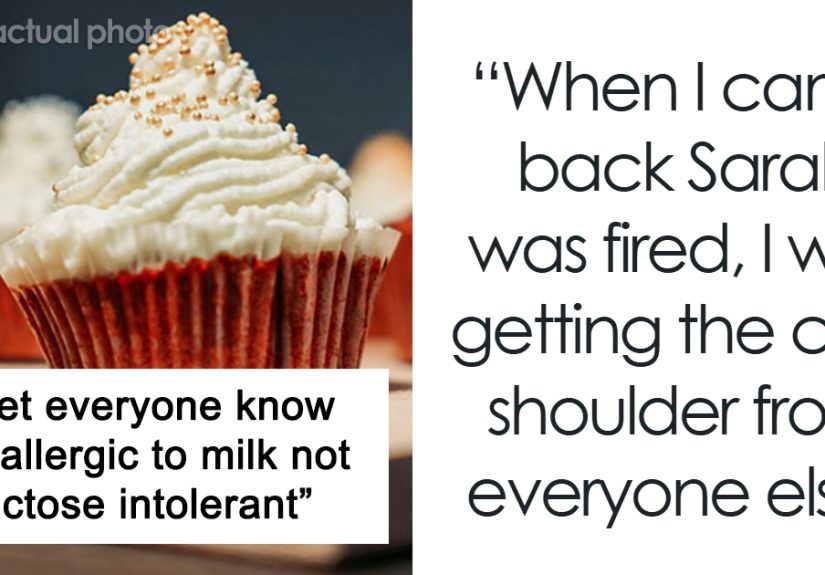
The story that made the rounds online centered on a 19-year-old intern who said he had clearly told coworkers that he was allergic to milk, not merely lactose intolerant. According to his account, office dynamics were already awkward. His supervisor allegedly gave him extra attention, which made some of the other interns resentful. One coworker in particular seemed irritated that she worked harder but got less recognition.
Then came a workplace potluck. The coworker brought cupcakes and, according to the post, repeatedly encouraged him to eat one of the red velvet cupcakes, insisting they were “dairy-free.” He did. He then suffered an allergic reaction serious enough to require his epinephrine auto-injector and a trip to the hospital after his throat and tongue swelled.
That is the kind of detail that changes the story instantly. This was not a quirky misunderstanding about office snacks. It was a medical emergency. And once a food allergy escalates to swelling, breathing trouble, or systemic symptoms, the situation has moved far beyond “Oops.”
Now, because this was an internet story, nobody sensible should pretend we have courtroom-level certainty about every fact. Online posts are one-sided by nature, and viral retellings tend to polish the drama until it gleams. But even if you strip away the comment-section confetti, the case hits a nerve because the core problem is very real: people with food allergies are still expected to trust homemade food, social pressure, and other people’s confidence more than their own survival plan.
Why “dairy-free” is not always a magic safety phrase
Let’s start with the biggest point of confusion. A milk allergy is not the same thing as lactose intolerance. Those two conditions get mashed together in casual conversation all the time, but medically they are very different beasts.
Lactose intolerance is a digestive issue. It can be miserable, inconvenient, and deeply unfair to pizza lovers, but it typically causes symptoms like bloating, gas, cramps, and diarrhea. A milk allergy, by contrast, is an immune-system response to proteins in milk. That means even a small amount can trigger hives, swelling, vomiting, wheezing, or anaphylaxis. One condition ruins your afternoon. The other can threaten your life.
That distinction matters because people often hear “no dairy” and assume it means “safe.” Not necessarily. In homemade food, the danger can come from incorrect ingredient choices, confusing labels, or cross-contact in a shared kitchen. Maybe the baker used a substitute frosting but overlooked butter in the batter. Maybe the cream cheese was truly dairy-free, but the cupcake recipe still included milk somewhere else. Maybe the same spatula, bowl, or counter touched a milk-containing ingredient. Homemade food is charming, but it is not regulated, audited, or accompanied by a legal ingredients panel.
In other words, “dairy-free” can be a promise, a guess, a misunderstanding, or wishful thinking wearing an apron.
That is why many people with severe allergies avoid office potluck food entirely, even when coworkers mean well. Not because they are rude. Not because they hate joy. But because “I’m pretty sure it’s fine” is not a risk-management strategy.
Why the ER part is the whole point
It is easy to read a headline like this and get distracted by the jealousy angle. But the medically important part is simple: the intern ended up in the ER. Once a reaction involves throat swelling, tongue swelling, trouble breathing, dizziness, or rapid progression, this is emergency territory.
Epinephrine is the first-line treatment for anaphylaxis, and delays can make outcomes worse. That is why allergists and emergency guidance consistently stress using epinephrine promptly when severe symptoms appear and then seeking emergency care. The dramatic twist in this story is not that an intern ate the wrong cupcake. It is that a workplace social event created the kind of scenario that allergy experts warn about all the time: accidental exposure, delayed recognition, and reliance on other people’s food assurances.
For people who do not live with food allergies, it can be hard to grasp how fast a normal moment can become a crisis. One bite. A weird feeling. A little throat tightness. Then the body starts acting like it has been invaded. That timeline is exactly why allergy safety cannot depend on politeness, office hierarchy, or whether someone seems embarrassed to ask follow-up questions.
If anything, the most realistic part of the story is the social pressure. People with food allergies often describe the same script: “Come on, try it.” “I made it specially.” “It’s totally fine.” “Are you sure?” That pressure can be hard enough for adults. For an intern trying to fit in, not offend people, and navigate power dynamics, it can be even worse.
The real workplace issue was bigger than dessert
The cupcake may have caused the medical emergency, but the story also hints at a second workplace problem: a toxic office environment. The intern described a supervisor who gave him unusual attention, called him outside work, bought him lunch, and made the rest of the interns feel he was getting special treatment. Whether that behavior was merely unprofessional or something more concerning, it clearly shaped the office dynamic.
That context matters because resentment rarely stays in a neat little emotional jar. It spills. It distorts judgment. It makes people rationalize behavior they would normally know is unacceptable. If a coworker already feels passed over, embarrassed, or angry, a potluck becomes more than a potluck. It becomes a stage for passive-aggressive theater featuring buttercream and bad decisions.
None of that excuses what happened. A food allergy is not a prop in office politics. You do not “send a message” with someone’s allergen. You do not test whether they are exaggerating. You do not pressure them to eat because you are annoyed at their supervisor. That is not petty. That is reckless.
There is also a practical HR lesson here. When a workplace already has blurred boundaries, favoritism, or poor team trust, even routine events become riskier. The company is no longer just managing personalities. It is managing safety. That includes food-related safety, accommodation requests, and the possibility that employees may not feel comfortable declining food in front of peers or managers.
Why office potlucks are sneakier than they look
Potlucks have an innocent reputation. They sound wholesome, affordable, and vaguely team-building, like mayonnaise with a mission statement. But for employees with food allergies, they are often a minefield.
Homemade dishes usually come without full ingredient lists. Labels, if they exist at all, may be vague, incomplete, or optimistic. Cross-contact is common. Serving utensils wander. People move food around. Someone uses the same knife for three desserts and a cheese tray because “it was just quicker.” Suddenly the gluten-free, nut-free, or dairy-free item is no longer any of those things.
Then there is the social layer. A catered event at least creates some distance between the eater and the maker. A coworker’s homemade dish comes with feelings attached. Declining it can feel personal. Asking detailed ingredient questions can feel awkward. Pointing out cross-contact can make someone defensive. That tension is one reason workplace allergy guidance often focuses on planning, communication, and clear accommodation practices instead of casual improvisation.
In plain English: the more a workplace relies on vibes to manage allergy risk, the worse the odds get.
What employers should learn from this mess
1. Food allergies are a safety issue, not a personality quirk
If an employee or intern says they have a serious food allergy, that information should be treated with the same seriousness as any other health-related workplace concern. It is not something to joke about, test, or casually forget because a birthday happened.
2. Office events need actual planning
That means asking about dietary restrictions in advance, not after the cupcakes are already on the conference table. It means clearly labeling food. It means avoiding homemade “safe” items unless the person with the allergy explicitly says they are comfortable. And it means making sure nobody feels pressured to eat what is offered.
3. Accommodation is not overkill
Workplace accommodation resources routinely suggest practical steps like flexible meal arrangements, workspace adjustments, and policy changes to reduce exposure. In many offices, the simplest accommodation is also the most effective: provide a safe alternative, give the person space to manage their own food, and do not turn lunch into a loyalty test.
4. Supervisors set the tone
Managers who play favorites, blur personal boundaries, or ignore team resentment create the perfect environment for bad judgment. A healthy office culture does not eliminate every risk, but it makes it far less likely that an allergy warning will be dismissed as office drama.
What employees and interns should take away
If you have a severe food allergy, the safest rule is brutally simple: do not eat homemade food unless you trust the source completely and have verified ingredients in a way that works for your medical needs. That may sound overly cautious to people without allergies. It sounds downright boring compared with surprise cupcakes. But boring is underrated when the alternative is a hospital bracelet.
Carry your prescribed epinephrine. Tell at least one trusted person at work what to do in an emergency. Do not let embarrassment outrank your safety. And if something feels off, whether it is the food itself or the social pressure around it, trust that instinct. Your body does not care whether declining dessert makes the room awkward for seven seconds.
For coworkers, the takeaway is even easier: believe people when they describe their allergy. Do not negotiate. Do not tease. Do not try to be a hero with homemade substitutions unless you truly know what you are doing. And absolutely do not pressure someone to “just have one bite.” That sentence has ended too many good days.
Conclusion
The viral story of the “dairy-free” cupcake is memorable because it has all the ingredients of internet drama: jealousy, office politics, questionable management, and a dessert that behaves like a plot twist. But the reason it sticks is more serious. It exposes how easily a real food allergy can be trivialized in ordinary workplaces.
The lesson is not “Never trust cupcakes,” though frankly that headline would have range. The real lesson is that food allergies require respect, clarity, and systems that do not depend on guesswork. A severe milk allergy is not the same as avoiding dairy for wellness points. A potluck label is not a medical guarantee. And a coworker’s bruised ego does not become less dangerous just because it arrives in a paper baking cup.
In the end, the story is less about dessert than trust. Trust in labels. Trust in coworkers. Trust in managers to maintain a safe environment. When that trust breaks down, the consequences can be far more serious than office gossip. Sometimes they are measured in epinephrine doses, ambulance calls, and the quiet realization that the break room was never harmless at all.
Related Experiences: What Situations Like This Look Like In Real Life
Stories like this go viral because they sound outrageous, but people who live with food allergies often hear a more ordinary version of the same problem every week. Not always with cupcakes. Not always with jealousy. But almost always with a weird mix of confidence, misunderstanding, and social pressure.
One common experience is the well-meaning coworker who says, “I made this specially for you,” expecting gratitude instead of questions. The intention may be kind, but severe allergies do not run on intention. They run on ingredients, cross-contact, and whether the person preparing the food understood the difference between “contains no obvious milk” and “is truly safe for a milk-allergic person.” Those are not the same thing, and the allergic employee is often the one forced to play detective while trying not to look ungrateful.
Another familiar scenario is the office skeptic. This is the person who acts like allergies are trendy, exaggerated, or interchangeable with food preferences. They hear “milk allergy” and translate it into “sensitive stomach.” They hear “I can’t risk homemade desserts” and interpret it as “dramatic.” That mindset is dangerous because it turns medical caution into a social flaw. The allergic person becomes the difficult one instead of the person simply trying to avoid a trip to urgent care.
Then there is the cross-contact trap. Even when a workplace tries to be inclusive, the execution can be a mess. The safe dish gets placed next to the unsafe one. The serving spoon travels like it is on a networking tour. The “dairy-free” dessert gets cut with the same knife used for cheesecake. Someone removes the label. Someone else puts the wrong label back. By the time the food reaches the allergic person, the original plan has dissolved into buffet chaos.
Young workers and interns can feel this pressure even more sharply. They are often trying to make a good impression, avoid conflict, and prove they are easy to work with. That is exactly why stories like this hit such a nerve. A seasoned employee may feel comfortable saying, “No thanks, I brought my own food.” A 19-year-old intern surrounded by coworkers and a supervisor may second-guess that boundary, especially if declining food feels like refusing the group itself.
People with food allergies also talk about the mental exhaustion that comes from constantly evaluating risk in supposedly casual moments. Team lunches. birthday cakes. holiday cookie swaps. retirement potlucks. It is never just lunch. It is a small risk assessment disguised as social bonding. Read the room. Read the label. Read the body language. Decide whether the person answering your question actually knows what casein is. Smile while doing all of it.
And yet, many workplaces do get it right. The best experiences usually have the same pattern: nobody is offended by questions, managers normalize accommodation, safe alternatives are provided without fanfare, and declining food is treated as completely normal. That is what respectful inclusion looks like. No guilt. No debate. No pressure. Just clear information and enough maturity to understand that someone else’s allergy is not about your baking skills.
That is why this cupcake story resonates beyond its headline. It is not just about one intern and one coworker. It reflects a wider truth: food allergies reveal the character of a workplace very quickly. In a healthy office, boundaries are respected and safety is easy. In an unhealthy one, even dessert can become a stress test.