Table of Contents >> Show >> Hide
- Why This Maker Faire Film Conversation Matters
- Meet the Filmmakers, Meet the Maker Spirit
- What the Two-Minute Format Teaches Better Than a Semester of Overthinking
- Why This Conversation Is Valuable for Aspiring Filmmakers
- The Bigger Picture: Maker Culture Is a Natural Home for Independent Film
- What Viewers Can Expect From the Chat
- A 500-Word Reflection on the Experience of Maker-Filmmaker Conversations
- Conclusion
If you have ever looked at a cardboard spaceship, a blinking LED, a slightly suspicious fog machine, and a glue gun that has seen things, then congratulations: you already understand the spirit behind the Maker Faire Two-Minute Film Festival. This is not filmmaking as a distant, velvet-rope art form. This is filmmaking as a hands-on, sleeves-rolled-up, “let’s see if this servo can make the monster head turn without setting off the smoke alarm” kind of adventure.
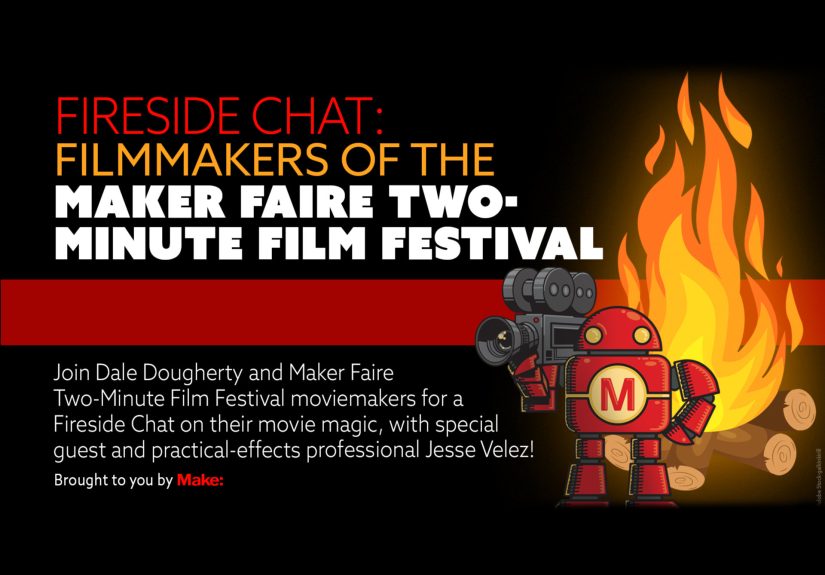
The conversation around the Maker Faire Two-Minute Film Festival is exciting because it brings together two worlds that have always belonged together: makers and moviemakers. On one side, you have people who build, solder, sew, print, paint, program, carve, and improvise. On the other, you have storytellers who need props, costumes, miniatures, practical effects, clever rigs, sound cues, and visual imagination. Put those groups in one room, or one livestream, and suddenly the line between workshop and movie set disappears. That is exactly why a chat with filmmakers from the Maker Faire Two-Minute Film Festival feels so timely, so useful, and honestly, so much more fun than another generic conversation about “content creation.”
Why This Maker Faire Film Conversation Matters
The Maker Faire Two-Minute Film Festival is a perfect expression of what Make: has always celebrated: creativity that works with the hands as much as the head. Instead of focusing only on polished studio filmmaking, the festival shines a light on short-form cinematic storytelling built from practical skills. That means costume design, prop making, animatronics, model building, fabrication, electronics, painting, and design are not side dishes. They are the meal.
That is what makes this particular filmmaker chat more than a promotional stop. It is a glimpse into how modern independent creators are blending old-school ingenuity with new-school tools. In an age when many people assume every cool effect is just “done in post,” the Maker Faire mindset cheerfully interrupts and says, “Sure, but what if we built it first?” That is not nostalgia. It is craft. It is problem-solving. It is storytelling with texture.
And the two-minute format adds even more charm. Two minutes is short enough to demand discipline and bold enough to reward strong visual choices. It forces filmmakers to make every second count. There is no room for lazy exposition, wandering scenes, or cinematic throat-clearing. A two-minute short has to arrive, make its point, cast its spell, and leave before your coffee gets cold.
Meet the Filmmakers, Meet the Maker Spirit
The featured filmmakers represent exactly why this event deserves attention. Their work shows that maker skills are not just useful in film; they can be the engine that powers the whole story. Whether the emphasis is on props, atmosphere, costumes, or creature effects, these creators show how physical craftsmanship can shape mood, character, and worldbuilding.
From Workshop Table to Story World
What makes a maker-filmmaker different from someone who only thinks in scripts and shot lists? Usually, it comes down to a deliciously practical question: “Can I build the thing I am imagining?” For the maker-filmmaker, that question is not an obstacle. It is the invitation.
A blinking machine is not just a background object; it becomes a story clue. A hand-painted mask is not just a costume; it becomes a character. A servo-powered creature is not just a technical flex; it becomes a tiny miracle the audience can actually feel. That tactile quality matters. It gives short films a handmade soul that glossy digital perfection sometimes misses.
In the Maker Faire context, the filmmakers are not merely discussing finished films. They are opening the shop door and showing how imagination travels through materials. Foam, fabric, cardboard, paint, metal, resin, LEDs, and 3D-printed pieces all become storytelling tools. The result is cinema that feels built, not just rendered.
Why Practical Effects Still Win Hearts
There is a reason practical effects never really go out of style. Audiences respond to physicality. When a prop casts a real shadow, when a puppet moves with mechanical weirdness, or when a costume occupies space in a way a digital asset never quite can, the frame gains a different kind of credibility. It becomes touchable. You may not literally touch it, but your brain believes you could.
This is also where the Maker Faire film conversation becomes especially useful for aspiring creators. Practical effects are not only about aesthetics. They are about access. A filmmaker without a giant budget can still invent something memorable through fabrication, smart design, and fearless experimentation. Sometimes a weird handmade object is more cinematic than an expensive effect because it carries personality. It also carries the fingerprints of its maker, which is a poetic way of saying somebody probably hot-glued it at 1:13 a.m. and prayed for the best.
What the Two-Minute Format Teaches Better Than a Semester of Overthinking
Short films have long played an important role in independent cinema, and for good reason. They are a proving ground for voice, pacing, and vision. They are also often the fastest way for emerging filmmakers to figure out what kind of stories they actually want to tell. That is especially true in a two-minute format, where clarity is not optional.
In two minutes, a filmmaker has to decide what matters most. Is it mood? Character? A reveal? A joke? A transformation? A creature emerging from the shadows with all the confidence of a raccoon that knows where the snacks are? Whatever the answer, the film has to commit.
That compression is good for artists. It sharpens instincts. It reveals whether the creator understands visual storytelling or is still trying to explain everything like a nervous tour guide. It also mirrors a larger truth in the short-film world: festivals, curators, and audiences remember distinctive voices. They remember filmmakers who know how to create a world quickly and precisely.
The Maker Faire Two-Minute Film Festival leans into that challenge beautifully. By limiting runtime, it increases imagination. Instead of asking creators to be bigger, it asks them to be smarter. That is a very maker question. You have constraints. What can you invent anyway?
Why This Conversation Is Valuable for Aspiring Filmmakers
Anyone curious about DIY filmmaking should pay attention to this kind of event because it translates abstract advice into visible examples. It is one thing to hear “find your voice” or “be resourceful.” It is another to see how a filmmaker built a prop, solved a costume problem, used animatronics, or turned workshop skills into production value.
That is the practical magic of a filmmaker chat anchored in maker culture. It moves the discussion from vague inspiration to useful inspiration. Viewers do not just leave thinking, “That was cool.” They leave thinking, “Wait, I might actually be able to do this.”
Lessons Hiding in Plain Sight
There are several likely takeaways from a conversation like this. First, great short films are often built around one strong idea executed clearly. Second, handmade details can define a project’s identity. Third, practical effects do not have to compete with digital tools; they can work alongside them. Fourth, storytelling gets stronger when filmmakers understand materials as well as mood.
This is where the participation of practical-effects professionals adds real depth. Advice from someone who works in animatronics, props, modelmaking, and scenic craft is valuable because it reminds creators that worldbuilding is not an abstract concept. It is engineering, sculpture, texture, movement, and performance all working together.
For new filmmakers, that can be liberating. You do not need permission to start. You need a small story, a few smart choices, and the willingness to make something with what you have. In the maker world, resourcefulness is not a fallback plan. It is the culture.
The Bigger Picture: Maker Culture Is a Natural Home for Independent Film
Independent filmmaking has always rewarded people who can do a lot with a little. That is basically the maker movement wearing a different hat. Makers prototype. Filmmakers previsualize. Makers iterate. Filmmakers edit. Makers troubleshoot mechanical failures. Filmmakers troubleshoot sound, light, weather, actors, batteries, locations, and the mysterious disappearance of that one cable everyone swears was right here five seconds ago.
So when Make: hosts a conversation with filmmakers from the Maker Faire Two-Minute Film Festival, it is not trying to mash together unrelated communities. It is spotlighting a relationship that already exists. Plenty of modern creators sit at the overlap of fabrication and narrative. They use 3D printers for props, microcontrollers for interactive effects, sewing skills for costumes, painting for scenic texture, and electronics for lighting gags or creature mechanics. The film set and the makerspace are increasingly cousins.
That crossover matters because it opens doors. A student builder might discover directing. A cosplay designer might discover production design. A robotics enthusiast might discover creature effects. A hobbyist woodworker might discover miniature sets. A short film festival built around making helps people see that their existing skills are not side hobbies. They might already be part of a filmmaking toolkit.
What Viewers Can Expect From the Chat
A good filmmaker conversation does more than retell plot summaries. It gets into decisions. Why this design? Why this effect? Why this shot? Why make something physically instead of digitally? Why tell this particular story in only two minutes? Those are the kinds of questions that reveal process, and process is catnip for the maker brain.
Expect the most interesting moments to revolve around choices under pressure. Limited time. Limited resources. Big imagination. That is where the best maker stories live. The audience will likely hear how filmmakers translated skills like costume fabrication, prop design, and animatronics into cinematic storytelling that feels immediate and personal.
Just as important, the chat offers a roadmap for the next wave of creators. It quietly says: if you have a vision and a willingness to build, there is room for you here. Maybe next year you are not just watching the film festival. Maybe you are submitting to it.
A 500-Word Reflection on the Experience of Maker-Filmmaker Conversations
There is a particular energy that fills a room, physical or virtual, when makers start talking about film. It feels different from a standard filmmaking panel because the conversation rarely stays in the clouds for long. Someone mentions a dramatic reveal, and within seconds the talk turns to magnets, hinges, adhesives, servos, paint finishes, or how to make a tiny set look enormous without spending the GDP of a small moon. That shift is thrilling because it reminds everyone that cinema is not just an idea machine. It is a build machine.
One of the best experiences in listening to maker-filmmakers is hearing how casually they cross creative boundaries. A person may start by describing a character, then pivot into the engineering behind a moving prop, then swing back into editing rhythm, then somehow land on fabric choice. It sounds chaotic until you realize it is actually a perfect description of modern creative work. The story is not separate from the object. The object is part of the story.
That is why these chats can be so motivating for beginners. They make filmmaking feel less mysterious. When established creators talk honestly about prototypes that failed, materials that behaved badly, scenes that had to be simplified, or happy accidents that improved the final result, the audience sees a path in. Perfection stops being the goal. Momentum becomes the goal. Curiosity becomes the fuel.
There is also something deeply encouraging about hearing practical-effects artists speak. Their work lives in the space between sculpture, mechanics, illusion, and performance. They prove that a film can feel magical not because it is expensive, but because somebody cared enough to make it tangible. A blinking eye on a creature, a scratched-up prop weapon, a hand-painted control panel, or a deliberately theatrical background can instantly create personality. Viewers respond to that effort, even when they cannot explain why.
Another memorable part of these experiences is how generous the maker community tends to be with knowledge. Instead of guarding techniques like secret treasure maps, many makers enjoy explaining how something was done. That generosity changes the atmosphere. A filmmaker chat becomes less like a lecture and more like a welcome mat. The message is not “Admire us from a distance.” The message is “Try this yourself.”
And maybe that is the biggest reason an event like this matters. It turns spectators into participants. A person can watch a short film, laugh, gasp, or lean closer to inspect a prop, and then suddenly imagine building their own version. Not a copy, but a response. Their own tiny world. Their own two-minute burst of sci-fi, comedy, fantasy, suspense, or joyful weirdness. That leap from admiration to action is where new work begins.
So yes, a chat with filmmakers from the Maker Faire Two-Minute Film Festival is entertaining. But it is also something more useful. It is permission. Permission to make something small. Permission to make something handmade. Permission to tell a story with the tools on your bench, the scraps in your drawer, and the idea that will not leave you alone. Sometimes that is all a future filmmaker needs.
Conclusion
The Maker Faire Two-Minute Film Festival captures the best kind of creative chaos: the kind that turns workshop skills into cinematic storytelling. A chat with these filmmakers is more than an event notice. It is a front-row look at how short films can grow out of practical effects, costume work, clever fabrication, and maker ingenuity. For anyone interested in indie filmmaking, DIY movie magic, or the future of hands-on storytelling, this is exactly the kind of conversation worth showing up for. Bring your curiosity. Bring your notebook. Bring that half-finished prop in your garage some emotional support. It may have a future in pictures.