Table of Contents >> Show >> Hide
- What Is “Lemonade Crunchy Ice”?
- One Common Version of the “Lemonade Crunchy Ice” Lyrics
- How to Play “Lemonade Crunchy Ice”
- A Simple Beginner Version for Kids
- Popular Lyric Variations
- Why the Lyrics Change So Much
- Why Kids Still Love This Clapping Game
- Tips for Parents, Teachers, and Camp Counselors
- The Experience of Playing “Lemonade Crunchy Ice”
- Final Thoughts
If you grew up on a playground, at summer camp, or in a classroom where the last five minutes before dismissal somehow turned into organized chaos, there is a decent chance you crossed paths with “Lemonade Crunchy Ice”. It is one of those classic hand-clapping games that seems to appear out of thin air, spread from kid to kid at lightning speed, and then stick in your brain for years like a glitter craft project you thought you cleaned up thoroughly. You did not. It is still there.
The beauty of this clapping game is that it is simple, catchy, and wonderfully flexible. One group says sip it once, sip it twice. Another says beat it once, beat it twice. Some versions end with a dramatic freeze. Some toss in an extra line that sounds like it came straight from the glorious weirdness of schoolyard improv. That is exactly why people keep searching for the “Lemonade Crunchy Ice” lyrics and the rules for how to play it: everyone remembers it a little differently.
In this guide, you will get one of the most common versions of the chant, a clear explanation of how to play Lemonade Crunchy Ice, beginner-friendly hand motions, popular lyric variations, and a longer look at why this tiny playground rhyme has survived generation after generation. Spoiler: it is fun, fast, and just competitive enough to make kids take it very seriously.
What Is “Lemonade Crunchy Ice”?
“Lemonade Crunchy Ice” is a traditional hand clapping game or playground rhyme usually played by two children facing each other, though it can also be adapted for small groups. Players chant the words while following a repeating clap pattern. At the end, there is usually a physical action, like turning around, touching the ground, or freezing in place.
Like many schoolyard games, it does not belong to one single writer, one official source, or one perfectly polished version. It belongs to childhood itself. Kids learn it from siblings, cousins, friends, classmates, neighbors, and random playground legends who somehow know every chant before anyone else. That is why the lyrics shift from region to region and year to year.
So, if the version you remember is slightly different from the one below, do not panic. Your memory is probably fine. The playground simply ran its own remix culture long before social media got involved.
One Common Version of the “Lemonade Crunchy Ice” Lyrics
Here is a family-friendly version that reflects one of the most common forms of the chant:
Lemonade, crunchy ice,
Sip it once, sip it twice.
Lemonade, crunchy ice,
Turn around, touch the ground,
Freeze!
That is the short version many people remember. In longer playground versions, children sometimes add a line between touch the ground and freeze. One commonly remembered line is kick your boyfriend out of town or a similar variation using brother, troubles, or another playful substitute. If you are teaching the game to younger kids, a cleaner modern swap works beautifully:
Turn around, touch the ground,
Kick your worries out of town,
Freeze!
That keeps the rhythm, preserves the joke, and avoids the odd feeling of hearing second graders suddenly become relationship consultants.
How to Play “Lemonade Crunchy Ice”
Step 1: Stand Face to Face
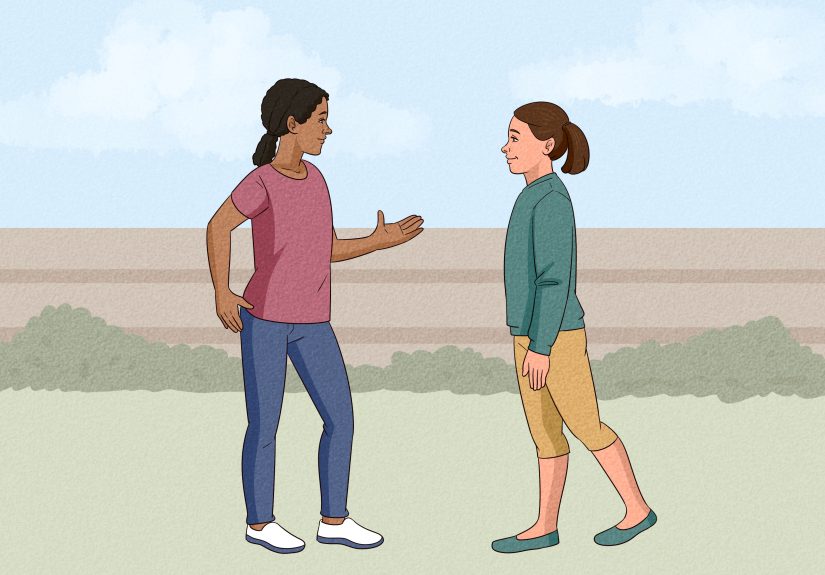
You need two players to start. Stand facing each other with enough room to clap comfortably without turning the game into an accidental boxing lesson. Keep your hands relaxed and your feet planted.
Step 2: Pick a Clap Pattern
This is the part that changes the most from group to group. There is no single mandatory clap sequence, but one of the most common beginner patterns works like this:
- Clap your own hands
- Clap both of your partner’s hands
- Clap your own hands again
- Repeat to the beat of the words
Another popular version uses an up-down partner clap followed by a triple self-clap after key phrases. If you learned the game on a playground, there is a good chance this is the version living rent-free in your muscle memory.
Step 3: Match the Clap to the First Four Phrases
For a common classroom-friendly version, do this:
- Say Lemonade and do the partner clap
- Clap your own hands three times
- Say crunchy ice and do the partner clap
- Clap your own hands three times
- Say sip it once and do the partner clap
- Clap your own hands three times
- Say sip it twice and do the partner clap
- Clap your own hands three times
That gives the chant its bouncy rhythm and makes the game feel more dramatic than it really is. Which, to be fair, is also the secret of half of childhood.
Step 4: Do the Action Lines
After the opening pattern, move into the action part:
- Turn around spin in place once
- Touch the ground bend down and tap the floor
- Freeze stop moving completely
If your group includes an extra line like kick your worries out of town, act it out before the freeze. The freeze is often the funniest part because someone always wobbles, giggles, blinks dramatically like they are in a soap opera, or forgets the whole mission and keeps moving.
Step 5: Decide Whether It Is Competitive or Just for Fun
Some kids play until the chant ends and then start over faster. Others treat the freeze like a mini contest: the first person to move loses. In group settings, players who move first may be “out,” while everyone else keeps going. There is no universal rule, so choose the version that fits the mood.
A Simple Beginner Version for Kids
If you are teaching this to younger children, keep it easy. Use only three actions:
- Clap your own hands
- Clap your partner’s hands
- Freeze at the end
You can skip the triple claps, skip the faster speed, and even shorten the chant. The goal is rhythm and fun, not turning recess into an audition for elite hand-game championships.
Popular Lyric Variations
Because this is a piece of playground folklore, the lyrics vary a lot. Here are some of the most common changes you may hear:
“Sip it” vs. “Beat it”
Some groups say sip it once, sip it twice. Others say beat it once, beat it twice. Both versions are widely recognized. The rhythm works either way, so this often comes down to region, school, or whatever the oldest kid on the playground declared law that year.
The Extra Middle Line
Some versions jump straight from touch the ground to freeze. Others insert a line like kick your boyfriend out of town, kick your brother out of town, or a softer modern substitute such as kick your troubles out of town.
The Sneeze Ending
Another version adds a goofy tag after the freeze, often involving American cheese and a fake sneeze. This is peak playground humor: unexpected, slightly chaotic, and somehow hilarious every single time.
Drink-Themed Variations
Some kids turn the chant into a longer food-and-drink riff with lines about iced tea, cola, or other beverages. At that point, the game becomes less of a fixed rhyme and more of a group performance powered by memory, invention, and confidence.
Why the Lyrics Change So Much
The answer is simple: kids pass these games to other kids, not usually through official books or formal lessons. That means words get misheard, swapped, cleaned up, personalized, or improved for comedy. One cousin teaches one version. A best friend teaches another. A teacher shortens it for a classroom. A camp counselor sanitizes it for a younger group. Before long, there are ten versions floating around, and all ten feel “right” to the people who learned them first.
This is one reason clapping games are so charming. They are not polished in a studio and sealed behind glass. They stay alive because people perform them. Every repetition is also a tiny rewrite.
Why Kids Still Love This Clapping Game
Even in a world filled with tablets, apps, and enough notifications to make an adult stare into the void, Lemonade Crunchy Ice still works because it asks for almost nothing and gives back a lot. No equipment. No prep. No batteries. No one has to download anything or remember a password created in 2019.
It also hits the sweet spot between rhythm and movement. Players have to listen, watch, time their claps, remember the sequence, and react at the end. That combination makes clapping games great for focus, coordination, memory, and social interaction. More importantly, they feel playful rather than instructional. Kids are practicing timing and pattern recognition without feeling like they have been tricked into homework.
And let us be honest: the freeze ending is irresistible. Humans, regardless of age, are deeply vulnerable to games that end in sudden dramatic stillness.
Tips for Parents, Teachers, and Camp Counselors
1. Start Slow
Teach the words first, then the claps. Once children know the chant, add speed little by little.
2. Choose a Friendly Version
If a lyric sounds dated or awkward, swap it out. Playground games have always changed. You are not breaking the rules by making the words more age-appropriate.
3. Let Kids Personalize It
Part of the fun is making the chant your own. Invite players to invent a silly final line or a new freeze pose.
4. Use It as a Transition Game
This chant is perfect for short bursts of movement before lining up, between lessons, or during indoor recess.
5. Keep It Light
The point is rhythm, laughter, and connection. If someone messes up, that is not failure. That is the entire entertainment package.
The Experience of Playing “Lemonade Crunchy Ice”
What makes “Lemonade Crunchy Ice” memorable is not just the rhyme itself. It is the whole experience around it. The game has that magical playground quality where everything feels half-organized and half-invented on the spot. Two kids start playing. A third kid watches. A fourth says, “No, that’s not how it goes.” Within two minutes, there is a tiny debate, one self-appointed expert, and a crowd forming like this is a major sporting event.
For a lot of people, the first memory of the game is not the exact lyric but the rhythm of it. You remember the slap of hands, the quick burst of self-claps, and the way everybody tried to keep a straight face at the freeze. Someone always took the freeze far too seriously, locking into position like a museum statue. Someone else always burst out laughing before the chant even finished. And someone, without fail, would insist that their older sister knew the “real” version.
That is part of the charm. The game feels social in a very specific way. You are not just reciting words. You are syncing up with another person. You have to watch their timing, trust their rhythm, and recover when one of you claps too early. It creates a little partnership, even if it only lasts for thirty seconds. In that sense, the game teaches cooperation without ever announcing itself as a lesson. It just quietly sneaks in the skill while everyone is busy trying not to mess up the turn-around part.
There is also something deeply nostalgic about how portable the game is. It can happen on blacktop, carpet, grass, a sidewalk, or the tiny patch of classroom floor near the cubbies. It does not need equipment, setup, or permission from the internet. It belongs to the category of childhood fun that starts instantly. That matters more than it may seem. So many memorable games from childhood were built on availability. If you had your hands, your voice, and one other willing person, you were ready.
Older players often remember the game as a social connector. It was a way to join in, learn from someone else, and prove you knew the words. Sometimes it even felt like a tiny badge of belonging. If you could do the clap pattern without crashing halfway through, you were in. If you could do it fast, you were impressive. If you could teach it to somebody younger, you were basically playground royalty.
And then there is the grown-up experience of remembering it years later. You hear the phrase lemonade, crunchy ice and suddenly you are back in a school hallway, on a front porch, at camp, or in a lunchroom corner trying to squeeze one more round into the last minute before an adult said it was time to stop. That is why people keep looking up the lyrics. They are not only searching for a chant. They are trying to recover a feeling: the speed, the silliness, the teamwork, and the tiny burst of triumph when you made it all the way to the end without missing a beat.
In other words, this game lasts because it is bigger than its words. It is a memory machine with a clap track.
Final Thoughts
If you came here looking for the “Lemonade Crunchy Ice” clapping game lyrics, the biggest takeaway is this: there is no one sacred version carved into playground stone. What exists instead is something better a living hand game that changes slightly as it moves from child to child, school to school, and generation to generation.
The most common structure stays the same: a catchy opening, a steady clap rhythm, a few action lines, and a freeze ending that somehow never gets old. Whether your version says sip it once, beat it once, or includes an extra line that only makes sense if you are eight and running on pure recess energy, the spirit of the game remains the same.
So teach the version you know. Tweak the lyrics if needed. Start slow, clap clearly, and let the chant do what it has always done best: turn a few simple words into laughter, rhythm, and one more reason to stay on the playground for just another minute.