Table of Contents >> Show >> Hide
- What “Most-Searched” Actually Means (and Why It’s Not the Same as “Most-Visited”)
- The Headline: Yellowstone Is Basically Everyone’s Default Answer
- Regional Favorites: When Local Legends Beat the Giant
- Acadia in New England: Coastal drama, but make it wholesome
- Shenandoah: The “close enough for a weekend” superstar
- Zion: Big cliffs, big energy, big “I should’ve trained for this” moments
- Yosemite: Granite celebrity with waterfall charisma
- Rocky Mountain: Altitude therapy
- White Sands: The “how is this in New Mexico?” surprise
- Crater Lake: A sleeping volcano with ridiculously deep, ridiculously blue water
- Mount Rainier: The skyline boss of Washington
- Badlands: A geology glow-up
- New River Gorge: Bridge views and adrenaline hobbies
- Full List: Most-Searched National Park by State
- What the Map Suggests About How Americans Plan Trips
- How to Use This Map to Plan a Better National Park Trip
- Experiences: What This Map Feels Like in Real Life (and How to Make It Awesome)
Somewhere in America, right now, someone is typing “Yellowstone” into Google with the same intensity they reserve for “how to stop my smoke alarm from chirping at 3 a.m.” And according to a nationwide look at search interest, that person is probably not alonelike, not even a little.
A map of the most-searched U.S. national parks by state is a fascinating peek into how we daydream, plan vacations, and procrastinate at work (no judgment). It’s part popularity contest, part bucket-list mood board, and part “Wait, why is that park trending in this state?” mystery.
Let’s unpack what the map is really telling us, why one park shows up everywhere like the world’s most scenic pop-up ad, and what you can do with this info if you’re actually trying to go outside instead of just Googling it.
What “Most-Searched” Actually Means (and Why It’s Not the Same as “Most-Visited”)
First: this map is based on Google search interest, not turnstile clicks. Search data captures curiosity, planning, and sometimes pure entertainment (“Is Yellowstone a supervolcano?” is a very real rabbit hole). It’s a different lens than visitor counts, which depend on drive time, airport access, lodging, seasonality, and whether your family can agree on a playlist for six straight hours.
Why search trends can look “weird” (but still useful)
- Search is relative, not raw volume. The “winner” in each state is the park with the highest relative search interest there, not necessarily the park with the most total searches nationwide.
- Search reflects planning. People Google permits, weather, trail closures, “best time to visit,” and “do I need bear spray?” long before they show up.
- Search reflects pop culture. When a park becomes a symbolthrough TV, social media, or iconic imageryit can surge even in places far away.
- Search reflects proximity… sometimes. If a state is close to a famous park (or a big airport that feeds it), search interest may spike even if the park is across state lines.
In other words: the map is basically America’s collective “wish list.” It doesn’t guarantee where crowds are thickest, but it does spotlight which parks live rent-free in our brains.
The Headline: Yellowstone Is Basically Everyone’s Default Answer
The biggest takeaway is so loud it practically honks: Yellowstone dominates. In well over half the states, Yellowstone is the most-searched national parkoften even beating the local park you can drive to with one tank of gas and a questionable gas-station burrito.
So why Yellowstone?
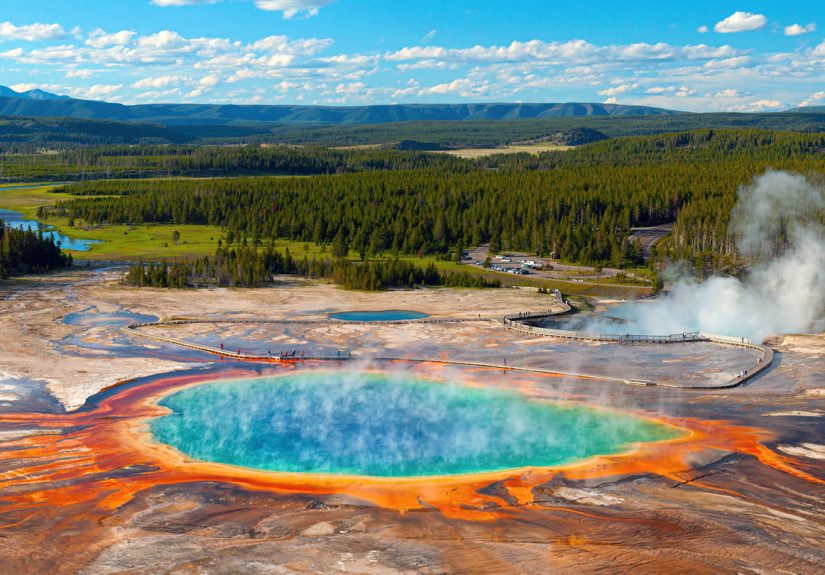
Yellowstone isn’t just a park; it’s a whole genre. It’s geysers and bison. It’s “Old Faithful” as a cultural reference point. It’s the kind of place where the ground can look like a science fair project designed by a dragon.
On the geology side, Yellowstone is tied to a massive volcanic systemsomething that inspires equal parts wonder and “Wait, should I be worried?” searches. The park’s volcanic history includes super-eruptions, a giant caldera, and a hydrothermal landscape that fuels the kind of photos people text their friends with the caption: “This can’t be real.”
On the wildlife side, it’s one of the few places where the phrase “Please stay in your car” can be less about parking etiquette and more about not becoming a bison’s new personal problem.
The “Yellowstone Effect” (yes, it’s a thing)
Yellowstone also benefits from pop culture gravity. When a park’s name is also a hit TV title, it gets free marketing that no tourism board can buy. People search the word “Yellowstone” for lots of reasonstrip planning, curiosity, filming locations, and occasionally confusion about whether Kevin Costner lives there (he does not; your odds of meeting a bison are better).
Regional Favorites: When Local Legends Beat the Giant
While Yellowstone is the map’s main character, several parks claim loyal regional followings. These “home team” favorites often win because they’re iconic, closer, or tied to a very specific dream: sunrise above clouds, a canyon so big it feels like a glitch, or a lake so blue it looks Photoshopped.
Acadia in New England: Coastal drama, but make it wholesome
In parts of New England, Acadia shows up as the top search. It’s the “I want ocean air and pine trees at the same time” park. Plus, it comes with the kind of scenic roads and classic hikes that make you feel like you’re starring in a fall catalog minus the part where you have to smile the whole time.
Shenandoah: The “close enough for a weekend” superstar
Shenandoah wins in states where weekend access matters. Skyline Drive, ridgeline overlooks, and a vibe that says “Yes, you can do nature and still be back for Monday.” It’s the park you search when you want big scenery without big logistics.
Zion: Big cliffs, big energy, big “I should’ve trained for this” moments
Zion is a consistent magnet because it’s visually loudin the best way. Towering sandstone walls, slot canyons, and hikes that range from “pleasant stroll” to “I am now part mountain goat.” Even people who haven’t been can picture it, which is half the battle in the search-trends Olympics.
Yosemite: Granite celebrity with waterfall charisma
Yosemite has brand recognition that borders on myth. Waterfalls, giant sequoias, and that famous granite landscape that makes you want to whisper “respect” even if you’re just looking at a photo on your phone.
Rocky Mountain: Altitude therapy
Rocky Mountain is the kind of park people search when they want high peaks, big views, and the satisfying exhaustion of hiking at elevationwhere even your water bottle feels heavier out of spite.
White Sands: The “how is this in New Mexico?” surprise
White Sands is a classic search-trend curveballin a good way. It looks like snow, but it’s not. It looks like a beach, but it’s not. It’s a sea of gypsum dunes that feels like a different planet you can visit without leaving the country.
Crater Lake: A sleeping volcano with ridiculously deep, ridiculously blue water
Crater Lake is a search winner that makes perfect sense once you’ve seen a photo. It sits in a volcanic caldera and gets described with words like “pure,” “deep,” and “that can’t be a real color.” It’s the park that makes people Google: “Is it always that blue?” (And then immediately Google “best time to avoid clouds.”)
Mount Rainier: The skyline boss of Washington
Mount Rainier isn’t just a mountain; it’s a presence. It dominates the horizon and the mental space of anyone in the region. It’s also an active volcano draped in glaciersbasically a reminder that nature is both beautiful and casually intense.
Badlands: A geology glow-up
The Badlands aren’t “bad” like a boring movie. They’re “bad” like a dramatic landscape of jagged formations and wide skies. It’s the type of terrain that makes you understand why people say “the land tells a story” and then immediately take 300 photos.
New River Gorge: Bridge views and adrenaline hobbies
New River Gorge shows up as a top search in West Virginia, and it’s not hard to see why: it’s a mix of big scenery and big activitiesrafting, climbing, biking, and the kind of bridge views that make your palms sweat even from a safe distance.
Full List: Most-Searched National Park by State
Here’s the state-by-state breakdown from the map. Notice how some states “adopt” a park that isn’t inside their bordersbecause search interest doesn’t care about lines on a map. It cares about dreams, road trips, and occasionally a very specific TV show.
| State | Most-Searched National Park |
|---|---|
| Alabama | Yellowstone |
| Alaska | Denali |
| Arizona | Grand Canyon |
| Arkansas | Yellowstone |
| California | Yosemite |
| Colorado | Rocky Mountain |
| Connecticut | Yellowstone |
| Delaware | Yellowstone |
| Florida | Yellowstone |
| Georgia | Yellowstone |
| Hawaii | Haleakalā |
| Idaho | Yellowstone |
| Illinois | Yellowstone |
| Indiana | Yellowstone |
| Iowa | Yellowstone |
| Kansas | Yellowstone |
| Kentucky | Yellowstone |
| Louisiana | Yellowstone |
| Maine | Acadia |
| Maryland | Shenandoah |
| Massachusetts | Acadia |
| Michigan | Yellowstone |
| Minnesota | Yellowstone |
| Mississippi | Yellowstone |
| Missouri | Yellowstone |
| Montana | Yellowstone |
| Nebraska | Yellowstone |
| Nevada | Grand Canyon |
| New Hampshire | Acadia |
| New Jersey | Yellowstone |
| New Mexico | White Sands |
| New York | Yellowstone |
| North Carolina | Yellowstone |
| North Dakota | Yellowstone |
| Ohio | Yellowstone |
| Oklahoma | Yellowstone |
| Oregon | Crater Lake |
| Pennsylvania | Yellowstone |
| Rhode Island | Yellowstone |
| South Carolina | Yellowstone |
| South Dakota | Badlands |
| Tennessee | Yellowstone |
| Texas | Yellowstone |
| Utah | Zion |
| Vermont | Yellowstone |
| Virginia | Shenandoah |
| Washington | Mount Rainier |
| West Virginia | New River Gorge |
| Wisconsin | Yellowstone |
| Wyoming | Yellowstone |
What the Map Suggests About How Americans Plan Trips
Beyond the fun of seeing which park “wins” your state, the bigger story is how national parks function as shared cultural shorthand. A few parksYellowstone, Yosemite, Grand Canyonare so embedded in the national imagination that they become default dream destinations, even for people who live far away.
1) Fame beats geography
Search behavior often follows icons. When a park is tied to a “first” (first national park, first in a state, first on your childhood postcard rack), it becomes a headline even when it’s not the easiest trip.
2) Scenic variety wins
Parks with distinct “signatures”geysers, giant cliffs, glaciers, a lake in a volcano, dunes that look like snowget Googled because they’re easy to visualize and easy to sell to a group text.
3) Search spikes can be a crowd-warning siren
High search interest doesn’t automatically mean gridlock, but it often correlates with peak-season pressure. If your state’s winner is a famous park, assume lots of other humans had the same idea. The smartest move is to plan like you’re not the only person with a calendar.
How to Use This Map to Plan a Better National Park Trip
The map isn’t just triviait’s a planning tool if you treat it like one. Here are a few practical ways to turn “most searched” into “best experienced.”
Pick your “why,” then pick your park
- Want geothermal weirdness? Yellowstone is legendary, but build in time for less-crowded boardwalk areas, and visit early or late in the day.
- Want canyon awe? Grand Canyon is unmatched for scalejust decide whether you’re a rim-view person or a “let’s hike into it” person.
- Want cliffs and slot canyons? Zion delivers, but plan around shuttles, permits, and weather realities.
- Want “I can’t believe that color is real” water? Crater Lake rewards patienceespecially with clouds.
- Want otherworldly landscapes without a passport? White Sands is your move.
Use shoulder seasons like a cheat code
If your goal is a peaceful experience and not a photo that includes 47 strangers, shoulder seasons are your friend. Spring and fall can mean fewer crowds, more availability, and better odds of not spending your whole trip looking for parking.
Don’t just search the parksearch the rules
The single best “pro move” is to Google logistics early: entry rules, seasonal road closures, reservations, and permits for popular hikes. The parks are incredible, but they are not psychic. If you show up without a plan, the park will not reorganize reality to accommodate you.
Experiences: What This Map Feels Like in Real Life (and How to Make It Awesome)
Imagine you’re staring at the map with a cup of coffee, thinking, “Okay, so my state is obsessed with Yellowstone. Cool. What do I do with that?” Here’s the fun part: the map can become your travel “choose-your-own-adventure,” because every top search points to a different kind of experience.
If you chase Yellowstone, you’re signing up for a park that feels like the Earth is still being built. You’ll roll into a basin and see steam rising from the ground like the landscape is exhaling. Then you’ll spot bison near the road and realize the phrase “wildlife viewing” can mean “respectfully sitting very still while a thousand-pound animal decides the traffic pattern.” The best Yellowstone days are the ones where you build in slack: sunrise drives, long lunch breaks, extra time to wander boardwalk loops, and the emotional maturity to accept that sometimes the geyser schedule is more of a suggestion than a promise.
If the map points you toward Yosemite, the experience is a mix of cathedral vibes and joyful chaos. The granite walls make you feel small in a good way, like your problems got downgraded from “crisis” to “minor inconvenience.” The key to Yosemite is timing: early mornings for valley views, afternoons for higher elevations, and a plan that includes at least one moment where you sit quietly and let the place do what it does. (Bonus tip: bring a picnic like you’re auditioning for a nature documentarysimple food tastes better when the view is illegal in 47 states.)
If you’re a Zion state, your experience is more “vertical.” You’ll spend half your day looking up. The cliffs glow, the canyon air feels cooler, and every short walk has a “wait, how is this real?” payoff. Zion is also a park where logistics matter: shuttles, trail crowding, and weather can shape your whole day. The secret is to mix famous highlights with less-hyped trails and viewpoints. That’s how you get the “iconic” photos without the “I stood in line for a photo of a line” memories.
If your winner is Crater Lake, you’re chasing mood. The lake is so deep and clean-looking that it feels like it was poured from a paint can labeled “Blue, but emotionally.” But Crater Lake also teaches patience: clouds can drift in and hide the entire main attraction like a magician’s reveal gone rogue. The best experience is to treat it as a day of chancesmultiple viewpoints, a slow loop, and a willingness to celebrate the moments when the sky opens up like it’s granting you access.
And if the map points you to White Sands, the experience is playful and surreal. The dunes look like snow but feel warm, and the whole place invites you to do kid stuff on purpose: walk barefoot (carefully), slide down slopes, watch the light change at sunset, and take photos that make your friends ask what country you visited. It’s also a reminder to plan for desert reality: water, sun protection, and the fact that “just one more dune” can turn into “why is the parking lot so far away?” surprisingly fast.
The bottom line: the map is a catalog of American daydreams. If you use it well, it becomes a strategypick a park, plan around the park’s personality, and build a trip that feels less like checking a box and more like actually being there.