Table of Contents >> Show >> Hide
- What Medicare for All actually promises (and why people love it)
- The U.S. problem is costspecifically, prices
- “But Medicare for All will slash administrative costs!” True-ish. Also… not enough.
- Access is a supply problem, not just an insurance problem
- Medicare4All doesn’t automatically fix Medicare’s finances
- The transition problem: you can’t just “swap the engine” at 70 mph
- So what would fix the problem?
- 1) Attack high prices with real rate discipline
- 2) Enforce competition (and stop rewarding “bigger” as a healthcare strategy)
- 3) Build capacity: workforce, primary care, mental health
- 4) Simplify administration inside provider organizations
- 5) Drug pricing reforms that actually bite
- 6) Cover everyonewithout pretending the delivery system is infinite
- The honest conclusion: Medicare for All is a coverage strategy, not a full cure
- Real-world experiences: why “fixing insurance” isn’t the same as “fixing care” (about )
- SEO tags (JSON)
If American health care were a sitcom, insurance would be the loud character who takes up all the screen timealways talking, always confusing,
always somehow billing you for the privilege. So it’s understandable that the crowd-favorite solution is: “Fine. Replace the character. New cast. Same show.”
That’s the emotional appeal of Medicare for All (a single-payer plan): one card, one system, fewer arguments with customer service representatives
named “Brad” who definitely aren’t brads.
Here’s the twist: even if you made insurance simpler (or even mostly invisible), the U.S. would still be stuck with the bigger villain:
the underlying cost of careprices, market power, workforce bottlenecks, and a delivery system that’s optimized for billing codes,
not necessarily for health outcomes. In other words, Medicare4All might change who pays, but it doesn’t automatically change what things cost,
how care is delivered, or whether you can get an appointment this month.
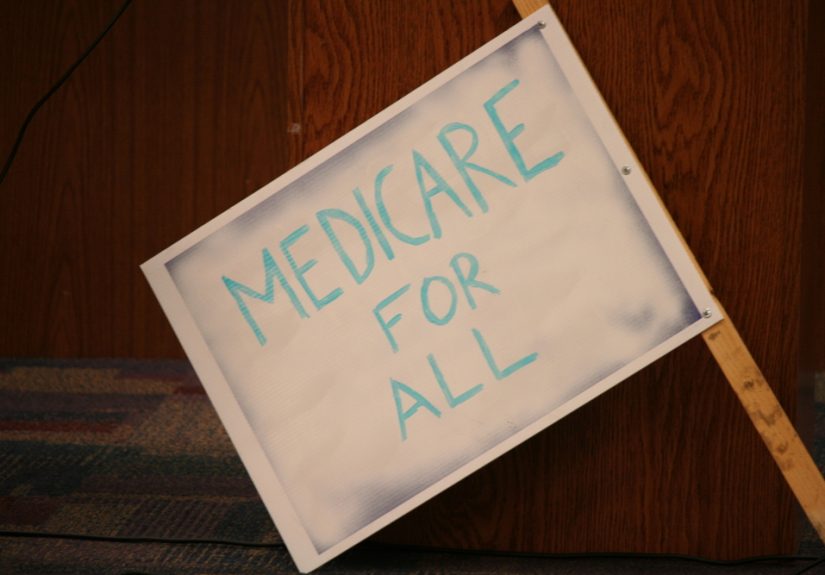
This article isn’t a dunk contest. Universal coverage is a serious moral goal. The question is whether #Medicare4Allas a singular policy movesolves
the actual disease or just changes the hospital wristband.
What Medicare for All actually promises (and why people love it)
Most Medicare for All proposals (as commonly discussed in U.S. politics) aim to create a nationwide insurance program with broad benefits, minimal cost sharing,
and coverage for nearly everyone. That’s not a small thing. People are tired of:
- Having “coverage” that evaporates the moment you need care.
- Deductibles that feel like a Kickstarter campaign for your own surgery.
- Network rules that turn choosing a doctor into a scavenger hunt.
The real wins (if implemented well)
Done well, a single-payer system can simplify enrollment and reduce the number of uninsured and underinsured Americans. It can also make it easier for families to
budget, because “What’s my out-of-pocket max?” stops being a monthly riddle.
The catch: insurance reform isn’t the same as care reform
Insurance is the payment method. The U.S. cost crisis is about the price and structure of the goods and services being purchasedhospital care,
physician services, drugs, facility fees, administrative complexity inside provider organizations, and a market that often rewards size and leverage.
If Medicare4All doesn’t aggressively tackle those, we risk building a bigger payment system that still buys care at inflated pricesor buys it cheaper by squeezing
providers in ways that can backfire on access.
The U.S. problem is costspecifically, prices
Start with the uncomfortable baseline: the U.S. spends an enormous amount on health care. In 2024, national health expenditures were about
$5.3 trillionroughly $15,474 per personand about 18% of GDP. That’s not a rounding error. That’s a second
mortgage for the entire country.
When researchers compare the U.S. to other wealthy countries, the story isn’t “Americans go to the doctor dramatically more.” It’s more like:
we pay more for the same categories of careespecially for hospital services and many prescription drugsplus we carry heavy administrative costs.
In plain English: the menu prices are wild, even before the tip.
Hospital pricing power: when “local” becomes “monopoly with valet parking”
Provider consolidationhospital systems buying hospitals, hospitals buying physician practices, and private equity rolling up clinicscan increase market power.
More market power often means higher negotiated prices, and not necessarily better quality.
It’s not just theoretical. Evidence from health policy research has repeatedly linked consolidation to higher prices. And the modern flavor of consolidation
can also add “facility fees” to routine outpatient visitsturning “I saw my doctor in a normal office” into “Congratulations, you also visited a hospital,
spiritually.”
Drugs and devices: yes, negotiating helpsno, it’s not the whole plot
A national payer can have more leverage in drug price negotiations. But drug spending is only one piece of the total cost pie. Also, negotiations don’t happen
automatically just because you have a big program; they require clear rules, political will, and enforcement power. A Medicare4All label doesn’t guarantee the
hardest parts of price discipline get done.
“But Medicare for All will slash administrative costs!” True-ish. Also… not enough.
Administrative complexity is real. We have entire industries dedicated to arguing about claims. Many studies suggest single-payer designs could reduce some
administrative spendingespecially on the insurance sideand simplify billing.
For example, one widely cited analysis estimated large reductions in administrative spending under a Medicare for All framework, driven by lower health plan
overhead and some provider-side simplification. That’s meaningful money.
Why admin savings won’t magically “pay for everything”
Two reasons:
-
Coverage expansion increases use. If more people have first-dollar coverage (or close to it), more people will seek care they previously skipped.
That’s good for health, but it raises demand. -
The biggest spending buckets are still prices and volume of services. Even a perfectly streamlined payment system still has to buy hospital care,
specialist care, imaging, procedures, and drugs. If prices remain high, the bill remains highjust paid by different hands.
Access is a supply problem, not just an insurance problem
Here’s a sneaky truth: you can give everyone the best “ticket” in town, but if there aren’t enough seats, the line gets longer. Medicare4All discussions often
focus on financial access (who can afford care). But real access is also:
- How many primary care slots exist in your county
- Whether specialists are taking new patients
- How many nurses, therapists, and pharmacists are available
- Whether rural hospitals and clinics can stay open
Workforce constraints are not imaginary
U.S. physician workforce projections continue to warn about potential shortages in coming years, including in primary care. When demand rises faster than supply,
“universal coverage” can collide with “universal wait time.”
Provider payment cuts can boomerang
Many Medicare4All proposals assume lower payment ratesoften closer to Medicare fee-for-service levelscompared to today’s commercial insurance rates. And it’s true:
private insurers typically pay more than Medicare for many services. But if you move the whole country to lower rates without redesigning care delivery, you risk:
- Provider pushback and political gridlock
- Service line cuts (especially in rural areas)
- Longer wait times in constrained markets
Even analysts who model single-payer scenarios often note the trade-off: pushing rates too low can threaten supply and impede access unless you pair it with capacity
building and smarter payment design.
Medicare’s own experience is a clue
Medicare is popular, but it’s not frictionless. It already wrestles with payment policy, participation, and geographic access challenges. Expanding Medicare to everyone
without fixing the care delivery pipeline is like scaling a restaurant before hiring cooks. You can print more menus; the kitchen still has one stove.
Medicare4All doesn’t automatically fix Medicare’s finances
Another plot twist: Medicare itself is a large and growing program. Its financing is a perpetual policy debate, and projections regularly show long-term pressure from
demographics, service use, and overall cost growth.
A Medicare-for-All system would require a brand-new financing structurelikely significant tax changesand would shift spending from private premiums to federal outlays.
That shift could be economically manageable in theory, but politically explosive in practice, especially if households see “taxes up” before they feel “premiums down.”
Federal budget math is not optional
The central debate isn’t whether Americans pay for health carethey do, through premiums, deductibles, employer contributions, and taxes already. The debate is
how transparently they pay and who writes the check. Medicare4All makes the check very visibleand visibility, in Washington,
is basically a jump scare.
The transition problem: you can’t just “swap the engine” at 70 mph
Even if Medicare4All is the destination you want, getting there matters. The U.S. has:
- Employer-sponsored insurance covering a huge share of non-elderly people
- Union-negotiated plans with specific benefits
- Medicaid programs intertwined with state budgets
- Medicare Advantage enrollment patterns and provider contracts
A rapid transition could disrupt coverage for millionseven if the end state is “better.” And transitions create openings for administrative chaos, lobbying wars,
and implementation mistakes. Big reforms don’t fail because the idea is bad; they fail because the rollout gets treated like an app update.
(Spoiler: health care is not an app. If it were, the “Terms and Conditions” would be a cardiology fellowship.)
So what would fix the problem?
If Medicare4All is “insurance reform at scale,” then fixing the U.S. system also needs “care reform at depth.” Here’s the menu of changes that actually targets the
disease, not just the billing interface.
1) Attack high prices with real rate discipline
- All-payer rate setting (or variants): reduce the ability of dominant systems to charge wildly different prices for the same service.
- Site-neutral payments: stop paying extra just because a clinic has a hospital logo on the door.
- Global budgets for hospitals in some settings: pay for capacity and outcomes, not the sheer number of billable events.
2) Enforce competition (and stop rewarding “bigger” as a healthcare strategy)
- Stronger antitrust scrutiny of hospital mergers and cross-market consolidation
- Oversight of physician-practice acquisitions that raise prices without improving care
- Transparency and limits around facility fees and “hospital-owned office” billing practices
3) Build capacity: workforce, primary care, mental health
- Expand residency slots and training pathways, especially for primary care and rural practice
- Reduce burnout drivers (documentation overload, prior auth pileups, staffing gaps)
- Invest in behavioral health capacity so “call 12 therapists” stops being the standard treatment plan
4) Simplify administration inside provider organizations
Even if insurance becomes simpler, providers still need fewer forms, fewer billing variations, fewer hoops. Standardized claims processes, fewer prior authorization
games, and better interoperability matter whether you’re single-payer or multi-payer.
5) Drug pricing reforms that actually bite
Negotiation authority, inflation caps, competitive biosimilar markets, smarter formularies, and procurement strategies can reduce drug costs. But again: it’s not a
magic wandit’s a toolkit that needs rules and political backbone.
6) Cover everyonewithout pretending the delivery system is infinite
Universal coverage is still the moral center. But there are multiple routes:
a public option, Medicaid expansions, auto-enrollment for the uninsured, enhanced ACA subsidies, or hybrid models that preserve choice while tightening price regulation.
The key is pairing coverage expansion with cost control and capacity expansion so access improves instead of bottlenecking.
The honest conclusion: Medicare for All is a coverage strategy, not a full cure
If your house is on fire, you want water. Medicare4All is water for the coverage problemuniversal enrollment, simpler benefits, fewer people falling through cracks.
But the U.S. health care fire has multiple rooms burning:
- High and inconsistent prices driven by market power
- Administrative complexity embedded in provider operations
- Workforce shortages and uneven capacity
- Incentives that reward volume over value
So, no: #Medicare4All won’t fix the problem by itself. It might fix a problemcoverage and financial protectionif designed and implemented
well. But if we want a system that’s affordable, accessible, and sustainable, we need a broader package that changes how care is priced, delivered, and staffed.
The good news is we don’t have to choose between “do nothing” and “flip the entire table.” We can push toward universal coverage while simultaneously
doing the hard, unglamorous work of price discipline, competition policy, and capacity-building. The boring fixes are often the real fixes. (Yes, “site-neutral payments”
is a boring phrase. That’s how you know it might save billions.)
Real-world experiences: why “fixing insurance” isn’t the same as “fixing care” (about )
To make this concrete, here are common, real-life experiences people report in the U.S. systempresented as composite vignettes to illustrate the mechanics without
pretending any single story is “the” story.
The “I finally have coverage” appointment paradox
A newly insured patient gets a shiny card and a responsible new mindset: annual physical, therapy intake, maybe finally checking that weird knee thing that’s been
squeaking since 2019. Then the scheduling reality hits: the first available primary care appointment is in three months, and the in-network therapist is accepting
new patients “sometime after the next ice age.” The issue isn’t that coverage is badcoverage is great. The issue is that demand arrived faster than supply.
Any universal-coverage plan that doesn’t simultaneously expand capacity risks turning financial access into a calendar problem.
The facility fee jump-scare
Someone goes to what looks like a normal clinic visit. Same building, same parking lot, same doctor. The bill arrives and includes an extra line item because the
clinic is now “hospital-affiliated.” Translation: you didn’t just see a physician; you also, apparently, had an emotional encounter with a hospital’s balance sheet.
That extra charge isn’t solved by changing the insurer alone. It’s solved by site-neutral rules and limits on how ownership structure gets monetized.
The administrative obstacle course (a.k.a. “prior authorization: the sequel”)
A doctor recommends a medication or imaging study. Before you can get it, there’s a gatekeeper process. You wait. Your doctor’s staff faxes a form. Then another form.
Then a phone call. Sometimes it’s approved, sometimes it’s denied, sometimes it’s “approved if you try three other things first,” and sometimes it’s approved after
you’ve already healed out of spite. This is why people crave single-payer simplicity. But notice: prior authorization and paperwork are also cultural and operational.
Even in a simpler insurance system, you still need rules that prevent unnecessary bureaucracy from re-growing like a weed that knows your Social Security number.
The rural access reality
In many rural communities, the challenge is not choosing among five hospitalsit’s having one that can stay open. Payment rates, staffing, and patient mix all matter.
A blunt shift to lower rates without targeted stabilization can hurt fragile providers. A better approach is boring but effective: rural facility support, smarter
global budgeting where appropriate, and workforce pipelines that make rural practice feasible and attractive.
The “cost shift” you feel but can’t see
Workers with employer coverage often experience higher premiums, narrower networks, and rising deductibles. Employers may compensate through slower wage growth or
higher employee contributions. To the average household, it feels like a pay cut that arrives disguised as “open enrollment.” Medicare4All changes the payment path
premiums may shrink or vanishbut if underlying prices remain high, the burden returns through taxes or constrained benefits. That’s why the real mission isn’t just
changing who writes the check. It’s changing what the check is for, why it’s so big, and who has the power to inflate it.
In short, the lived experience of American health care isn’t only “insurance is confusing” (it is). It’s that the entire system can be difficult to access, expensive
to operate, and structurally incentivized to grow costs. Medicare4All can be part of a humane solutionbut only if it’s paired with the less glamorous fixes that
make care affordable and available in the real world.