Table of Contents >> Show >> Hide
- Why an Old Hotel Chair Is Worth Saving
- Why Geometry Makes the Makeover Look Expensive
- How to Plan the Makeover Before You Touch a Paintbrush
- The Real Anatomy of a Geometric Chair Makeover
- A Before-and-After Example That Actually Feels Real
- Common Mistakes That Can Ruin the Look
- How to Style the Finished Chair
- Why This Trend Has Staying Power
- The Experience of Living With an Old Hotel Chair That Got a Geometric Makeover
- Final Thoughts
Every old hotel chair has a story. Maybe it spent years in a lobby beneath a chandelier the size of a small moon. Maybe it survived late check-ins, coffee spills, awkward small talk, and at least one suitcase wheel attack. And yet, beneath the tired upholstery, faded finish, and “I have seen things” energy, there is often a surprisingly good piece of furniture waiting for a second act.
That is exactly why the geometric chair makeover works so well. Instead of trying to hide age, this approach turns it into personality. Clean lines, bold shapes, sharp color blocking, and a little boutique-hotel drama can transform a worn chair from forgotten furniture into a statement piece. It is part upcycling, part design therapy, and part revenge against beige.
In today’s world of furniture that sometimes arrives in a flat box and emotionally expires before the warranty does, an old hotel chair has real appeal. These pieces were usually built for heavy use, which means the frames tend to be sturdier than many bargain-store alternatives. Give one a geometric makeover, and you get something rare: a chair with backbone, style, and enough visual confidence to carry a room.
Why an Old Hotel Chair Is Worth Saving
Commercial furniture is designed to survive the public. That alone deserves respect. A hotel chair often has a solid frame, balanced proportions, and a silhouette that already feels intentional. Even when the fabric looks tired or the wood finish seems dated, the structure underneath is often better than what you would find in many mass-market accent chairs.
That makes an old hotel chair the perfect candidate for a furniture makeover. Instead of paying for a brand-new statement chair, you can update what already exists. Sand the frame, tighten the joints, replace the foam if needed, and refresh the surface with paint, fabric, or both. Suddenly, the same chair that once whispered “conference room overflow seating” now says, “Yes, I absolutely belong next to this sculptural lamp.”
There is also the sustainability angle, and it matters. Upcycling furniture keeps usable materials out of landfills, cuts down on waste, and gives forgotten pieces a longer life. A geometric redesign makes that practical choice feel stylish instead of sacrificial. You are not settling. You are editing.
Why Geometry Makes the Makeover Look Expensive
Geometric patterns do something magical in interior design: they make a space feel deliberate. Even simple shapes like triangles, stripes, arches, grids, and diamonds can give furniture a sharper identity. They create rhythm, guide the eye, and add a custom feel that plain upholstery often lacks.
That is one reason geometric chair makeovers feel so high-end. The look nods to Art Deco, modernist interiors, and boutique-hotel styling without becoming costume drama. Done well, geometry adds polish. Done badly, it looks like the chair lost a fight with masking tape. The difference is restraint.
Best Geometric Directions for a Chair Makeover
Art Deco diamonds: perfect for glam spaces, especially in black, ivory, brass, emerald, or navy.
Soft arches and curves: great for modern interiors that want pattern without harshness.
Color-blocked panels: ideal when the chair shape is strong and the design needs only a subtle push.
Linear striping: useful for making a compact chair look taller, cleaner, and more architectural.
Asymmetrical shapes: best for playful spaces where the chair is meant to be the room’s extrovert.
The key is matching the pattern to the chair’s silhouette. A rounded club chair can handle curvier geometry. A square-backed occasional chair usually looks best with cleaner lines. Think of the chair as the body and the pattern as the outfit. You would not put a tuxedo on a kayak, and you should not force the wrong motif onto the wrong frame.
How to Plan the Makeover Before You Touch a Paintbrush
The most successful DIY chair makeover starts before the makeover. First, assess the bones. Is the frame sturdy? Do the joints wobble? Is the seat cushion flattened into a philosophical concept rather than actual padding? If the structure is sound, you are in business.
Next, decide whether you are painting the frame, reupholstering the chair, painting fabric, or combining techniques. Wood or metal arms and legs can usually be refreshed with sanding, proper prep, primer when needed, and thin, even paint coats. Upholstered surfaces may need a deeper decision tree. Tightly woven fabrics can sometimes be painted successfully. Heavily textured, fuzzy, or worn fabrics usually look better reupholstered.
Then comes the design plan. Choose one lead color, one supporting color, and one accent. That is usually enough. Too many colors can make the chair feel busy instead of bold. A geometric makeover should look intentional, not like your paint samples developed trust issues.
Three Palettes That Work Especially Well
Black, cream, and brass: classic, dramatic, and very hotel-lobby-after-a-renovation.
Terracotta, blush, and warm white: softer and more modern, especially in cozy living rooms.
Emerald, camel, and matte black: rich, tailored, and perfect for a reading corner that wants to feel expensive.
The Real Anatomy of a Geometric Chair Makeover
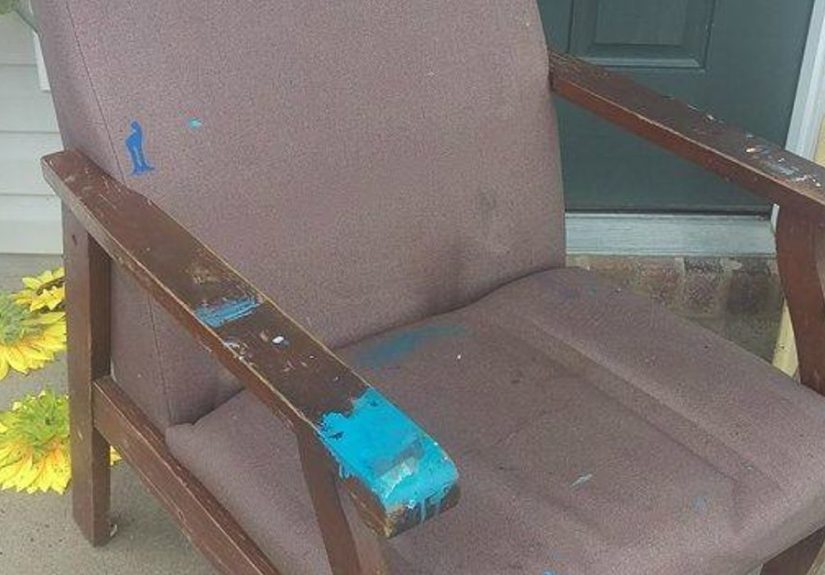
Let’s say you found a worn lounge chair from an old hotel clearance sale. The wood frame is scratched. The seat fabric is dated. The overall vibe is “retired banquet manager.” Here is how that chair becomes memorable.
Start with cleaning. Vacuum every seam, crevice, and dusty little corner where old crumbs go to build a new civilization. Wipe down hard surfaces, deodorize the upholstery if necessary, and let everything dry completely. A clean chair gives you a better result and saves you from painting over mystery grit, which is never the glamorous step people think it is.
Then prep the frame. Lightly sand glossy or rough areas, repair chips, tighten screws, and use the right primer if the surface demands it. Good prep is not the exciting part of a furniture transformation, but it is the reason the after photo still looks good six months later.
Now the fun starts. If you are reupholstering, use the original fabric pieces as templates whenever possible. If you are painting upholstery, work in thin layers and be realistic about the material. Smooth, tightly woven fabric tends to cooperate more than plush or fuzzy textures. Either way, this is where the geometric idea comes to life.
You can add geometry through fabric, painted panels, stenciling, piping, contrast welting, or even just smart color blocking. A chair does not need a circus act. Sometimes a solid fabric paired with a geometric-painted frame is more powerful than a fully patterned seat. Other times, a simple wood frame becomes stunning when paired with a diamond-print upholstery fabric. Balance matters.
A Before-and-After Example That Actually Feels Real
Imagine a vintage hotel side chair with a dark cherry frame, rolled arms, and faded tan upholstery. It is not ugly, exactly. It is just deeply committed to being ignored. The makeover goal is to give it a crisp geometric identity without erasing its age.
The frame gets sanded and painted in a soft matte black. The seat and inside back are reupholstered in an ivory fabric printed with oversized charcoal diamonds. The outer back is finished in a solid warm camel for contrast. A slim line of black welting sharpens the edges. Suddenly, the chair no longer looks accidental. It looks edited, composed, and surprisingly expensive.
Put that chair beside a round side table, a brass reading lamp, and a textured rug, and you have a whole moment. The room feels more layered. The furniture tells a story. And best of all, nobody would guess the chair once lived next to a fake ficus and a continental breakfast sign.
Common Mistakes That Can Ruin the Look
Skipping prep
Paint does not reward impatience. Dirt, grease, dust, and glossy finishes all interfere with adhesion. Prep is annoying, but regret is worse.
Using too many shapes
Pick one geometric language and commit. If the chair has stripes, triangles, checkerboard, scallops, and a random starburst, it is no longer a makeover. It is a cry for help.
Ignoring the room around it
A bold accent chair should still belong to the space. Pull one or two colors from existing rugs, art, or pillows so the chair feels connected rather than parachuted in from another zip code.
Overworking the finish
Heavy paint buildup, thick brush marks, and muddy color combinations make a piece look homemade in the wrong way. Thin, even layers almost always win.
How to Style the Finished Chair
Once the old hotel chair gets its geometric makeover, give it a placement worthy of the effort. It can anchor a reading nook, sharpen up a bedroom corner, add character to an entryway, or act as the visual spark in an otherwise quiet living room.
If the pattern is bold, let nearby pieces breathe. Use a simpler side table, a clean-lined lamp, and maybe one patterned pillow elsewhere in the room to create harmony. If the chair is more subtle, you can lean into layered texture with boucle, velvet, linen, or wool around it.
This is where the makeover becomes more than a DIY project. It becomes a design tool. A single chair can shift the mood of a room. It can make a basic space feel curated, personalized, and just polished enough to suggest that yes, someone here definitely knows what they are doing.
Why This Trend Has Staying Power
The geometric furniture makeover trend works because it balances nostalgia and modernity. People want homes with personality, but they also want things to feel useful and fresh. An old hotel chair delivers history. Geometry delivers modern energy. Together, they create something that feels collected rather than copied.
That blend is hard to fake. It is also why these projects perform so well in real homes. You get a one-of-a-kind accent piece, a more sustainable decorating choice, and a design story that feels richer than buying something generic off a warehouse shelf. In a world full of lookalike furniture, character is a feature.
The Experience of Living With an Old Hotel Chair That Got a Geometric Makeover
There is a particular satisfaction that comes from living with a piece of furniture you rescued yourself. Not bought, not blindly assembled, not delivered in five layers of cardboard and existential dread. Rescued. An old hotel chair with a geometric makeover does not just sit in a room. It changes how the room feels.
At first, the experience is visual. You notice the angles of the pattern catching light in the morning. You notice how the chair suddenly gives purpose to a formerly awkward corner. It starts acting like it has always belonged there, which is funny because two weeks earlier it looked like it belonged in a hallway outside Ballroom C.
Then there is the emotional shift. The chair becomes a conversation starter, but not in an exhausting way. Guests ask where you found it. They assume it came from a boutique store with a dramatic price tag and a sales associate named Celeste. You get to casually explain that it used to be an old hotel chair and watch their eyebrows do a little gymnastic routine. That part never gets old.
There is also the tactile experience. A properly restored chair feels different. The seat is firmer. The frame feels solid. The fabric looks fresh instead of apologetic. Even the act of sitting becomes more enjoyable because the piece has been brought back with intention. It no longer feels like overflow seating. It feels like a destination seat, the kind of chair you choose instead of the couch.
Over time, the makeover begins to influence the rest of the room. One geometric chair can push you to sharpen the styling nearby. A plain lamp suddenly seems too shy. The little side table gets upgraded. Maybe a throw pillow joins the party. The chair becomes the stylish friend who convinces everyone else to dress better.
What is especially rewarding is the sense of authorship. In a lot of homes, furniture is simply acquired. With a project like this, furniture becomes interpreted. You make choices about color, contrast, line, mood, and material. You solve practical problems and aesthetic ones at the same time. That makes the finished result feel more personal than almost anything bought new.
And yes, there is humor in it. An object that once hosted tired travelers, spilled drinks, and lobby waiting has been reinvented into something proud, graphic, and a little glamorous. It is a comeback story in chair form. Not every makeover needs to be dramatic, but this one earns the word.
Best of all, the chair keeps reminding you that good design is not always about starting from scratch. Sometimes it is about seeing potential in a piece that everyone else walked past. Sometimes it is about recognizing that solid bones and a bold idea can still beat brand-new sameness. And sometimes, if we are being honest, it is just deeply satisfying to take an old, ignored chair and let it become the coolest thing in the room.
Final Thoughts
An old hotel chair gets a geometric makeover because the formula simply works: strong bones, smart prep, bold pattern, and thoughtful restraint. It is one of the best examples of how upcycled furniture can feel elevated instead of improvised. With the right palette and a little patience, a forgotten chair can become the kind of accent piece that gives an entire room more style, more depth, and more confidence.
That is the real win. You are not just saving furniture. You are creating something with presence. And in interior design, presence is everything.