Table of Contents >> Show >> Hide
- Why This Idea Has Become So Appealing
- The Biggest Benefits of Filling 3D Prints With Spray Foam
- Where Spray Foam Makes the Most Sense
- Where It Makes Little or No Sense
- Closed-Cell Matters More Than People Think
- Why More Infill Is Not Always the Better Answer
- The Real Risks and Limitations
- So, Is It Actually Worth It?
- Final Verdict
- Workshop Experiences and Practical Observations
- SEO Tags
Every 3D printing hobby eventually creates the same dramatic moment: you pick up a giant print that took twelve hours, two coffee refills, and most of your patience, and it feels like a hollow Easter egg with a mortgage. It looks impressive, sure, but tap it with a fingernail and it sounds like it might answer back. That is exactly why more makers have started talking about filling large 3D prints with spray foam.
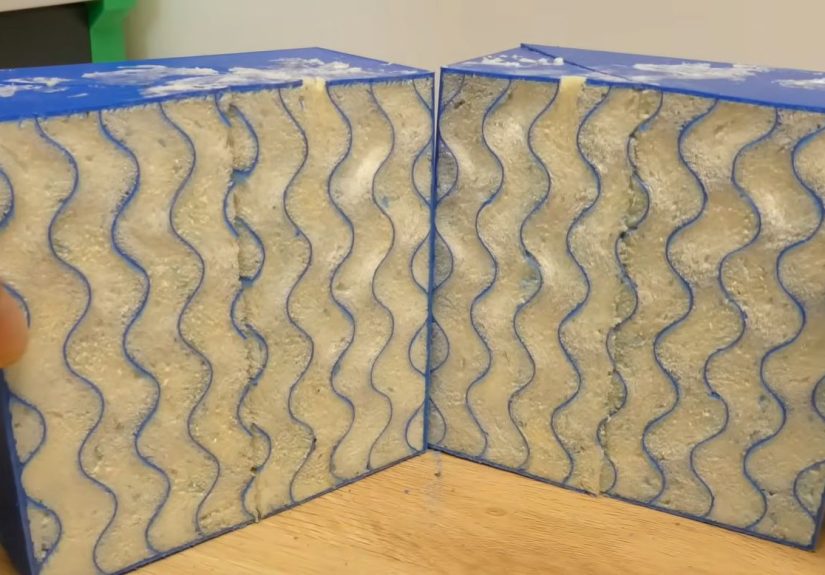
At first glance, the idea sounds a little chaotic. Construction foam and carefully printed plastic parts do not exactly look like soulmates. One lives in home improvement aisles next to weatherproofing products. The other lives on workbenches beside calipers, filament scraps, and mysterious Allen keys that somehow reproduce at night. But the match is not as weird as it seems. For the right kind of print, foam can add stiffness, reduce that hollow drum effect, improve water resistance, and make a lightweight shell feel far more substantial without forcing you to print the part at a painfully high infill.
That said, this is not magic, and it is definitely not a universal upgrade. Filling a print with spray foam can help in very specific ways, but it also comes with tradeoffs involving expansion pressure, heat limits, curing behavior, and product safety. In other words, this technique can be brilliant when used thoughtfully and ridiculous when used like an overcaffeinated shortcut.
Let us talk about where spray foam really shines, where it disappoints, and why so many makers are now giving it serious attention.
Why This Idea Has Become So Appealing
FDM printing is wonderful, but it has a few very obvious habits. Large parts are often printed as thin shells with moderate infill because nobody wants to spend a small fortune printing a decorative helmet at 100% solid. That is practical, but it creates a familiar compromise: the part is light, fast to print, and affordable, yet it may also feel flimsy, resonate when tapped, and flex more than you would like.
Normally, the obvious answer is “just use more infill.” That works, but only up to a point. Higher infill means more print time, more material, and more waiting around while your printer sings its tiny plastic opera. It also does not always deliver proportional real-world gains. For many common prints, the jump from moderate infill to extreme infill brings smaller benefits than people expect.
That is where foam becomes interesting. Instead of asking the printer to build every cubic inch of internal volume out of filament, the shell does the geometric work and the foam supports the empty space afterward. Think of it less like replacing engineering and more like giving the shell a lightweight internal partner. It is the difference between wearing a jacket and stuffing the jacket with bricks. One makes sense. The other is how back problems begin.
The Biggest Benefits of Filling 3D Prints With Spray Foam
1. It can improve buckling resistance in thin-walled parts
One of the most persuasive reasons to use spray foam is that it can help a thin shell resist crushing or buckling. That matters most in large prints where the walls are broad, lightly supported, and prone to flex under hand pressure. A foam-filled shell often behaves less like a plastic drum and more like a semi-rigid body.
This does not mean the part suddenly turns into forged metal or a superhero-grade component. Foam is not a cheat code for poor design. But it can provide internal support that helps a large print keep its shape better under compression. That makes a noticeable difference in props, display pieces, enclosures, buoyant shells, and lightweight housings that are big enough to flex but not so critical that they need full structural engineering.
2. It helps hollow prints feel more solid and less toy-like
This benefit is not always measured in lab charts, but it is absolutely real in the hand. A large hollow print often feels cheap even when it looks amazing. Foam changes that experience. The print tends to feel more planted, less echoey, and less like something that came free with breakfast cereal.
For cosplay props, costume parts, decorative helmets, display models, and large custom shells, that tactile improvement matters more than people admit. Makers do not only judge parts by tensile strength. They judge them by how stable they feel, how much they flex, how they sound when handled, and whether they inspire confidence or concern.
3. It can improve water resistance in the real world
FDM prints are notorious for tiny paths between layers and walls. Even when a model looks fully sealed, moisture can still work its way into the part. That is a headache for floating objects, outdoor decorative pieces, and enclosures that are expected to survive splashes or damp conditions. Foam can help occupy internal voids that would otherwise trap water or allow seepage to spread.
This does not mean every foam-filled print becomes submarine-ready. That fantasy usually ends with regret and a towel. But for practical use cases such as non-pressurized housings, floats, and basic outdoor shells, foam can meaningfully improve how forgiving the part is when exposed to moisture.
4. It adds insulation without forcing a fully solid print
Another underrated upside is thermal insulation. Cellular foams are good at slowing heat transfer compared with empty shells or sparse internal structures. If you are dealing with a printed box, case, or lightweight enclosure, that can be useful. It will not transform your print into industrial thermal armor, but it may keep contents better protected from rapid temperature swings than a hollow print would.
That is especially relevant for novelty coolers, electronics housings, field gadgets, and other shells where “a little more thermal resistance” is actually enough.
5. It can be faster and cheaper than brute-force infill
For large-volume parts, printing more infill is the slow, honorable, predictable approach. Foam filling is the sneaky practical one. If the part does not need to be fully solid and the outer geometry is already doing most of the work, a printed shell plus foam can be a smarter use of time and material than printing dense internals.
That is why the technique makes the most sense for large, mostly low-load objects. The bigger the empty space, the more attractive the math becomes.
Where Spray Foam Makes the Most Sense
The sweet spot is not “all 3D prints.” It is much narrower than that. Spray foam is most compelling when the part is large, shell-like, and not dependent on high-precision internal geometry. Think helmets, prop weapons, costume armor, floating bodies, robot shells, display sculptures, custom housings, outdoor decor, and big enclosures that would otherwise require a lot of infill just to stop feeling flimsy.
It also makes sense when your goal is not ultimate strength but practical stiffness, water resistance, damping, and better feel. Those are very different design goals from “survive constant high heat” or “handle repeated structural loading.”
Where It Makes Little or No Sense
Foam filling is much less impressive when the part fails because of poor layer adhesion, bad material choice, or weak geometry in a critical direction. If the print is tearing apart in tension, cracking at stress risers, or deforming in heat, foam is not your hero. It may support the shell, but it does not rewrite the basic mechanical limits of the printed plastic.
It is also a poor fit for high-temperature applications. Many common 3D printing plastics are not especially heat-resistant to begin with, and cured consumer spray foams also have heat limits and combustibility concerns. Put simply, if your part will live near significant heat, sparks, or hot surfaces, this is not the place to get clever.
And then there is precision. If the part contains channels, mounts, serviceable interiors, or areas you may want to reopen later, foam can become an annoying permanent roommate. It is great at occupying space. It is less great at moving out peacefully.
Closed-Cell Matters More Than People Think
When makers talk about the promise of spray foam in 3D prints, they are usually chasing the behavior associated with closed-cell or semi-rigid closed-cell products. That style of foam is appealing because it can create more durable, water-resistant internal support instead of acting like a sponge in a plastic shell.
That distinction matters because not every expanding foam behaves the same way. The phrase “spray foam” sounds simple, but product chemistry, density, rigidity, expansion behavior, and cure characteristics can vary a lot. The benefit people imagine and the product they actually buy are not always the same thing. And when that mismatch happens, the result is usually somewhere between disappointment and modern art.
Why More Infill Is Not Always the Better Answer
This is where the topic gets especially interesting from a design standpoint. In many prints, perimeters, shell thickness, and overall geometry matter at least as much as simply cranking infill upward. Extra walls, ribs, gussets, or smarter part geometry may improve performance more efficiently than turning your slicer into a filament glutton.
Foam enters the picture as a post-print way to support hollow volume after the shell has already been made. That does not replace good design. It complements it. If a part is already well-designed as a shell, foam can make the shell more usable without demanding a huge printing penalty. If a part is badly designed, foam may only help it fail with more confidence.
The Real Risks and Limitations
This is the part where responsible grown-up energy arrives and ruins everyone’s party, but it is necessary. Spray foam products are not harmless craft supplies. Many contain isocyanates and flammable blowing agents, require strong ventilation, and have specific warnings about skin, eye, and respiratory exposure. They also have temperature limitations once cured.
Beyond chemical safety, there is a design risk: expansion pressure. A hollow print is still just a printed shell. If the foam expands aggressively inside a confined space, the shell can deform, split, or fail. In other words, the same property that makes foam useful is also the one most likely to punish sloppy assumptions.
There is also the maintenance problem. A foam-filled part is harder to modify, harder to recycle cleanly, and harder to repair internally. Once you commit, you are often committing for good. This is not necessarily bad, but it does mean the decision should be deliberate rather than impulsive.
So, Is It Actually Worth It?
Yes, for the right category of print.
If you are building large hollow parts that need better hand feel, more compressive support, improved water resistance, and some insulation without the punishment of heavy infill, spray foam is genuinely interesting. It is one of those workshop ideas that sounds like a meme until you think about the material logic and realize it is not a meme at all. It is just niche.
No, it is not the answer for every print. It will not fix poor filament choice, bad shell design, terrible layer bonding, or high-heat environments. It is not a universal strength booster. It is a practical enhancer for shell-based prints where hollow volume is the opportunity.
The best way to think about it is this: spray foam is not replacing print design. It is extending what a smart shell design can do after the printer stops moving.
Final Verdict
The benefits of filling 3D prints with spray foam are real, but they are specific. The technique shines when your part is large, mostly hollow, and limited by feel, buckling resistance, water intrusion, or thermal performance rather than pure tensile strength. In that lane, foam can be a clever upgrade that saves print time, cuts material waste, and makes a print behave more like a finished object than a fragile shell.
That is why the idea keeps popping up in maker circles. It solves a real problem. Not every 3D print wants to be solid, but many hollow ones would love to stop sounding like empty cereal boxes.
Workshop Experiences and Practical Observations
In real-world maker discussions, the most consistent reaction to foam-filled prints is not “Wow, this is indestructible now.” It is usually something more grounded: “Oh, this feels way better.” That matters. People who work with large prints quickly notice that a hollow shell can look excellent on a table and still feel underwhelming in the hand. Foam changes that first impression immediately. The part often sounds quieter, flexes less under casual handling, and comes across as more finished.
Another common observation is that foam works best when the print was already designed like a shell, not when it was treated like a weak part that needed rescuing. Makers who expect foam to save a badly printed object are usually disappointed. If the shell has poor adhesion, thin trouble spots, or obvious weak seams, the foam does not perform miracles. It may reduce local flex, but it does not erase design problems that were baked in layer by layer.
Large props are where the enthusiasm gets louder. Helmet builders, costume makers, and display model fans often like the way a foam-filled part becomes less “boomy” and more confidence-inspiring. A prop sword or blaster shell may still be lightweight, but it stops feeling flimsy. A helmet may remain comfortable to wear while gaining a more substantial feel during handling. That balance is the sweet spot: better presence without turning the object into a neck workout.
People also tend to appreciate the psychological benefit of internal support. A big print with lots of empty space can make users nervous. They squeeze it gently, hear a hollow thud, and immediately imagine disaster. Once the interior is supported, even if the engineering change is moderate, the part often feels safer to carry, transport, or display. Sometimes confidence is not fake; it is simply the result of less flex and less resonance.
On the downside, experienced makers are quick to point out that this route makes a print less reversible. Once the inside is occupied, modifications become messier. Cutting into the shell later is no longer just cutting plastic. Repairs, internal rewiring, or redesigns can become much more annoying. That is why foam-filled prints are often better for finished objects than for prototypes that will be revised repeatedly.
There is also a practical split in user satisfaction. Makers who use the technique for decorative, buoyant, or enclosure-style parts usually seem happiest. Makers who expect it to replace smart mechanical design usually become critics. That is the pattern. When the goal matches the material, the experience tends to be positive. When the expectation is “cheap shortcut to structural perfection,” the result is usually disappointment wearing shop gloves.
In the end, workshop experience points to a very simple conclusion: foam filling is not a gimmick, but it is not a miracle either. It is a targeted upgrade for the kinds of prints that are mostly shell, mostly air, and just one good internal partner away from feeling much more useful.