Table of Contents >> Show >> Hide
- Why a Basement Spare Bedroom Makeover Needs a Different Game Plan
- Step One: Fix the Basement Stuff Before Buying Pretty Things
- Step Two: Brighten the Room Without Making It Feel Like a Dentist’s Office
- Step Three: Choose Colors That Warm Up the Basement
- Step Four: Make the Bed the Star
- Step Five: Use Smart Storage So the Room Does Not Turn Back Into a Basement
- Step Six: Add Personality Without Overcrowding the Room
- Design Details That Made the Biggest Difference
- What We Avoided in Our Basement Bedroom Makeover
- The Final Result: Cozy, Useful, and Actually Guest-Ready
- Extra Experience: What Living With the Makeover Taught Us
- Conclusion
Note: This version includes only the HTML body content and is ready to paste into a webpage.
Every house has that one room with “potential,” which is real-estate speak for “currently giving storage closet energy.” Ours was the basement spare bedroom. It had the usual basement drama: dim lighting, chilly corners, a suspiciously beige personality, and the kind of vibe that made overnight guests say, “Oh, this is cozy,” while clearly meaning, “I hope there’s an extra blanket and no mysterious noises.”
So we decided it was time for a real basement spare bedroom makeover. Not a lazy one-weekend shuffle where you move a lamp, fluff a pillow, and declare victory. We wanted a room that felt warm, practical, welcoming, and genuinely finished. A guest room should not feel like a punishment for visiting. It should feel like a quiet retreat.
This makeover became part design project, part comfort mission, and part detective story. Basements have their own rules. They deal with less natural light, more moisture risk, cooler temperatures, and occasionally awkward layouts that seem to have been designed by someone who was mad at right angles. But that also means a basement bedroom makeover can make a huge impact. With the right choices, a below-grade room can feel every bit as polished as an upstairs bedroom.
Why a Basement Spare Bedroom Makeover Needs a Different Game Plan
A basement guest room is not just a regular bedroom that happens to be downstairs. It has different strengths and different headaches. The good news is that it can be naturally quiet, private, and great for guests who want to sleep in. The less charming news is that a basement can also feel dark, damp, and forgotten if you decorate first and solve problems later.
That is why our makeover started with function before style. We looked at the room the way a practical guest would. Was it dry? Did it smell fresh? Did it feel comfortable enough to sleep in for a few nights? Was the lighting flattering, or did it make everyone look like they were auditioning for a detective show? And did the room feel intentional, not like leftover furniture had been sentenced there without a trial?
Once we answered those questions honestly, the plan became much easier. We needed to improve comfort, brighten the space, add smart storage, and create a layout that made the room feel restful rather than cramped.
Step One: Fix the Basement Stuff Before Buying Pretty Things
Moisture came first
Before we picked paint colors or daydreamed about throw pillows, we checked for signs of moisture. In a basement bedroom, this matters more than almost anything else. If the room feels humid, smells musty, or has cold surfaces that collect condensation, no amount of stylish bedding is going to save it. We made sure the room stayed dry, improved airflow, and treated moisture control like part of the design instead of an annoying side quest.
That mindset changed everything. A comfortable basement bedroom starts with a room that feels clean and stable. Once the basics were handled, we knew every decorative choice would actually last.
We thought about air quality and sleep comfort
Because this was going to be a real sleeping space, we also paid attention to the overall feel of the room. Basements can trap stale air and feel a little stuffy if they are not well managed. We wanted the bedroom to feel fresh, calm, and easy to rest in. That meant cleaner airflow, softer materials, and a setup that supported better sleep rather than just prettier photos.
We kept safety and code in mind
If you are turning a basement room into a true sleeping area, this is where being a grown-up becomes deeply inconvenient but very necessary. Local building requirements for sleeping rooms can vary, especially around emergency egress, ceiling height, ventilation, and other life-safety issues. We approached the makeover like homeowners, not just decorators, and made sure the room made sense as an actual bedroom, not just a room with a bed in it.
Step Two: Brighten the Room Without Making It Feel Like a Dentist’s Office
One of the biggest basement bedroom ideas we borrowed from good design advice is simple: stop fighting the fact that basements usually have limited natural light, and start layering artificial light like you mean it. Overhead lighting alone rarely makes a basement bedroom feel finished. It makes it feel like a storage unit that got promoted.
We used a layered lighting approach. First came the main ambient light to brighten the whole room. Then we added bedside lighting for reading and winding down. After that, we added a few softer accent touches to make the room feel warm at night. That combination made the room feel bigger, more comfortable, and much more intentional.
We also made a point to bounce light around the room. Lighter wall colors helped, but so did mirrors, reflective finishes, and not overloading the space with heavy dark furniture. A basement spare bedroom makeover does not have to be all-white to feel bright, but it usually benefits from a palette that helps light travel instead of getting swallowed whole.
Step Three: Choose Colors That Warm Up the Basement
We skipped anything too cold or too stark. Basement rooms can already feel cool, so a paint color that looks crisp upstairs can feel flat downstairs. Instead, we leaned toward soft neutrals with warmth. Think creamy whites, gentle taupes, muted greiges, and earthy tones that feel cozy without making the room dark.
The walls became the quiet backdrop, and that gave us room to bring personality through textiles and accents. This is one of the easiest ways to make a basement guest room feel elevated. Keep the architecture calm, then let the bedding, art, and accessories do the talking. Preferably in an inside voice.
We also paid attention to the ceiling. In basement rooms, the ceiling often gets ignored when it should really be part of the strategy. A brighter ceiling can reflect light and visually open the room. It sounds like a small thing, but in a lower-light basement, small things pull a lot of weight.
Step Four: Make the Bed the Star
No guest has ever texted their friends, “The wall color was nice, but sadly the bed was uncomfortable.” The bed is the headline act. Our basement spare bedroom makeover really came together once we focused on making the sleeping setup feel generous and layered.
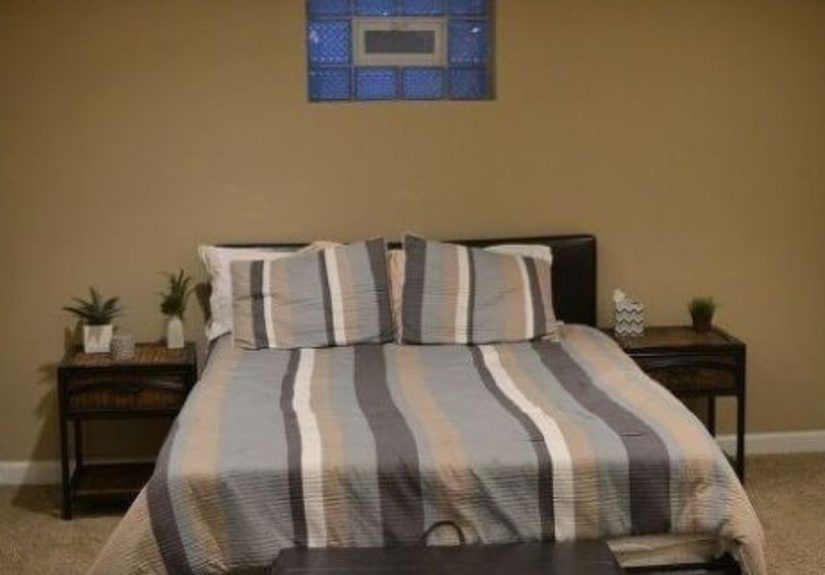
We chose bedding that looked inviting and worked for different temperatures. Basements can run cooler, but guests do not all sleep the same way, so layering was the answer. A breathable sheet set, a comfortable duvet or quilt, an extra throw blanket, and a mix of pillows made the bed feel flexible and hotel-ish in the best possible way.
We also paid attention to the bed frame. In a basement room, bulky furniture can make the space feel shorter and tighter. A cleaner-lined frame, especially one with built-in storage or some visual breathing room, helped the room feel less crowded. If the room is small, under-bed storage is a gift from the home organization gods.
Step Five: Use Smart Storage So the Room Does Not Turn Back Into a Basement
The quickest way to ruin a basement bedroom makeover is to let the room become the backup closet for everything that does not fit upstairs. Holiday bins, random cords, luggage from 2019, emotional-support paint cans: they all need to live somewhere else. A guest room cannot feel restful if it is also moonlighting as a chaotic storage annex.
We gave the room real storage on purpose. Under-bed bins, a slim dresser, a nightstand with drawers, and a few baskets made the room more useful without making it feel stuffed. The goal was not to cram in as much furniture as possible. It was to make the essentials easy to access while keeping surfaces calm and uncluttered.
That made a huge difference in how the room felt. Even a small basement bedroom can feel polished when there is a place for the basics: extra blankets, charging cords, a book, folded towels, and a few guest-ready items. Mess creates visual noise. Good storage creates peace.
Step Six: Add Personality Without Overcrowding the Room
Once the functional choices were done, we got to the fun part. This is where a basement guest bedroom makeover stops feeling like a repair project and starts feeling like a room with a point of view.
We added artwork, but kept it simple. We used texture, but not so much that the room started looking like a fabric sample sale. We brought in a rug to soften the floor and make the room feel warmer underfoot. We used curtains to make the window area feel more finished, even though basement windows usually do not bring dramatic penthouse energy.
Most importantly, we made the room feel personal without making it feel overdesigned. Guests want warmth. They do not need to be trapped inside someone else’s aggressive design experiment. The room should feel styled, but still easy. Welcoming. Relaxed. Like you thought about their comfort, not just your Pinterest board.
Design Details That Made the Biggest Difference
Low-profile furniture
Because basement spaces can feel visually compressed, lower furniture helped the room feel taller and less boxy. It is one of those subtle tricks that makes a room breathe a little easier.
Warm lighting instead of harsh bulbs
This was a major upgrade. Soft, warm light instantly made the basement feel more like a bedroom and less like a place where someone stores folding chairs.
Textiles with purpose
We used layered bedding, a soft rug, and a few throw pillows to bring comfort into the space. Texture is especially helpful in basement bedrooms because it offsets the hard surfaces that can make lower-level rooms feel cold.
A chair or small bench
Even a tiny extra seat makes a guest room feel more complete. It gives guests a place to sit, set down a bag, or pretend they are in a boutique inn instead of your basement. We respect the fantasy.
A few practical guest touches
We included the little things people appreciate immediately: easy access to outlets, a lamp within reach of the bed, a mirror, spare blankets, and space to set down a phone, glasses, or water. These details are not flashy, but they make the room feel genuinely thoughtful.
What We Avoided in Our Basement Bedroom Makeover
Not every good makeover is about what you add. Sometimes it is about what you refuse to do.
We avoided overly dark paint that would make the room feel closed in. We skipped too much bulky furniture. We did not carpet the room wall-to-wall just because “basements should feel warm.” In a basement, materials need to work hard, and that means thinking about durability as much as softness.
We also avoided decorating around problems instead of fixing them. A stylish room that still smells damp is not charming. It is confusing. Basement bedroom ideas work best when beauty and practicality are on the same team.
The Final Result: Cozy, Useful, and Actually Guest-Ready
By the end of the makeover, the room felt completely different. It no longer looked like the basement bedroom equivalent of “we’ll deal with this later.” It felt calm, put together, and useful. The lighting was softer. The layout made sense. The storage worked. The bed looked inviting. The entire room finally had an identity beyond “extra room downstairs.”
What surprised us most was how much the makeover changed the whole basement. Once this room looked finished, the rest of the lower level suddenly felt more intentional too. A good basement spare bedroom makeover does that. It upgrades one room, but it also changes how you think about the entire floor of your home.
And yes, guests noticed. No one gave us the polite smile of concern that unfinished spare rooms tend to inspire. Instead, they settled in. They slept well. They stayed comfortable. They used the room. That may not sound glamorous, but in home design terms, that is a standing ovation.
Extra Experience: What Living With the Makeover Taught Us
Once the makeover was finished, we learned something important: a basement spare bedroom is not successful just because it looks good on day one. It succeeds when it still feels good after real use. That is where this room really proved itself.
The first time we hosted family after the makeover, the room finally worked the way we had imagined. Instead of apologizing for the basement and offering a tour full of excuses, we just opened the door and let the room speak for itself. The response was immediate. It felt quiet, cozy, and private. The room had that rare quality every guest space needs: it helped people relax fast.
We also realized that comfort comes from dozens of small decisions, not one dramatic reveal. Guests noticed the extra blanket basket. They liked having a place to charge their phones without moving furniture around like a competitive sport. They appreciated a lamp they could switch off from bed, and enough surface space for a book, glasses, and a glass of water. None of those choices would win a flashy makeover show before-and-after montage, but together they made the room feel deeply usable.
Another surprise was how often we started using the room ourselves. On busy weekends, it became a quiet place to read. During holiday chaos, it worked as a retreat when the rest of the house was loud. When someone in the family needed a calmer sleeping space, the basement room became the obvious choice. That is when we knew the makeover had real value. It was no longer a room reserved for occasional guests. It had become part of how our house functioned.
We also got better at maintaining it because the design supported better habits. Storage made cleanup easier. The lighter palette made dust and clutter more noticeable in a useful way. The room stayed fresher because we took the basement side of the project seriously from the start. In other words, we did not just make it prettier; we made it easier to live with.
If we could give one takeaway from the experience, it would be this: treat a basement bedroom like a real bedroom from the beginning. Do not decorate around discomfort. Solve for dryness, light, layout, and sleep quality first. Then bring in the cozy layers, art, and personality. That order matters.
Looking back, this makeover was not about chasing a perfect designer room. It was about making an underused space feel cared for. That is what guests respond to, and honestly, what homeowners do too. A basement spare bedroom makeover works best when it balances charm with common sense. Make it soft, but make it practical. Make it stylish, but make it easy to use. Make it feel special, but not so precious that no one wants to put a suitcase down.
Now when we head downstairs, the room feels finished in the most satisfying way. Not staged. Not stiff. Just welcoming. It feels like a space with purpose, personality, and enough comfort to make anyone want to stay an extra night. Which is lovely, right up until checkout gets emotionally complicated.
Conclusion
Our basement spare bedroom makeover taught us that a lower-level room can absolutely become one of the coziest spaces in the house. The secret is not chasing trendy decor first. It is building the room from the ground up with comfort, dryness, storage, light, and guest-friendly details in mind. Once those pieces are in place, the style part becomes much easier.
If you are planning your own basement bedroom makeover, think beyond the before-and-after photos. Focus on how the room should feel when someone actually spends the night there. Warm, quiet, fresh, uncluttered, and easy to use. That is what turns a basement guest room from a forgotten extra space into a retreat people genuinely enjoy.