Table of Contents >> Show >> Hide
- What Is an Out-of-Body Experience, Exactly?
- Why OBEs Feel Paranormal (Even When a Brain Mechanism Is Involved)
- The Neuroscience Case: How the Brain Can Generate an OBE
- When OBEs Show Up in Real Life (And Why Context Matters)
- Near-Death Experiences: The Hardest Part of the Debate
- So… Neuroscience or the Paranormal?
- When to Seek Medical Advice
- Extended Experience Section: What These Episodes Can Feel Like (Patterns People Commonly Describe)
- Conclusion
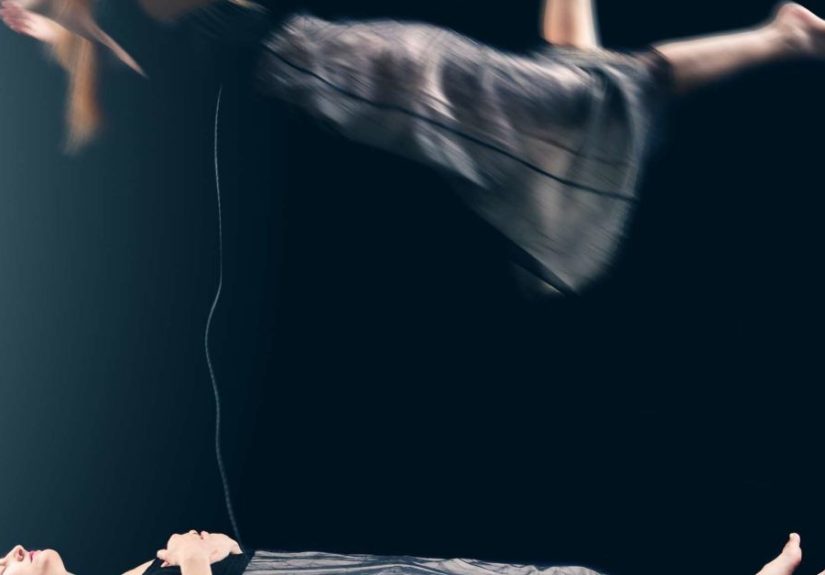
Few human experiences create more instant goosebumps than an out-of-body experience (OBE). One minute you are “you,” inside your body, paying taxes, reheating coffee, or trying to remember why you walked into the kitchen. The next, people report feeling as if they are floating above themselves, watching from the ceiling like a very confused drone.
So what is going on here? Is an OBE proof that consciousness can leave the body? Or is it a brain-based illusion created when the systems that anchor us to space, movement, and self temporarily misfire?
The short answer: neuroscience has strong, growing explanations for many out-of-body experiences, especially those linked to sleep paralysis, seizures, dissociation, neurological conditions, and experimental body illusions. But the paranormal interpretation remains culturally powerful because the experience can feel startlingly real, deeply meaningful, and emotionally unforgettable. In other words: your brain may be the director, but the movie still feels absolutely real while you are in it.
What Is an Out-of-Body Experience, Exactly?
An out-of-body experience is typically described as a sensation of consciousness or the “self” being located outside the physical body, often with a changed visual perspective (for example, seeing oneself from above). In many reports, people also describe floating, spinning, sinking, or drifting before the visual “separation” happens.
That detail matters. OBEs are not just visual events. They are usually multisensory events involving body position, balance, motion, perspective, and self-location. Think of it less like “seeing a ghost” and more like your brain briefly scrambling the GPS, gyroscope, and camera feed for your sense of self.
This is why neuroscientists are especially interested in the brain systems that integrate vision, touch, proprioception (your sense of body position), and vestibular input (balance and motion from the inner ear).
Why OBEs Feel Paranormal (Even When a Brain Mechanism Is Involved)
Here is the part people often underestimate: an experience can have a biological explanation and still feel life-changing, spiritual, or “otherworldly.” Human beings do not experience life as raw data. We experience it as meaning.
OBEs often occur during emotionally intense momentstrauma, medical emergencies, severe stress, sleep disruption, or altered states. When the brain produces a rare event under extreme conditions, the result can feel more significant than ordinary waking experience. Add cultural beliefs, religious frameworks, and memory reconstruction over time, and it is easy to see why paranormal interpretations persist.
That does not make experiencers “wrong” or “crazy.” It makes them human. In fact, one of the most important takeaways from modern research is that unusual experiences are often linked to understandable neurophysiological processesnot personal weakness and not automatic psychosis.
The Neuroscience Case: How the Brain Can Generate an OBE
1) The temporo-parietal junction (TPJ): your self-location switchboard
One of the most influential neuroscience explanations points to the temporo-parietal junction (TPJ), a region involved in integrating multisensory information about the body and surrounding space. When this integration breaks down, the sense of where “you” are can shift.
Classic neurology and cognitive neuroscience research linked OBEs to disturbances in self-processing at the TPJ. In practical terms, if the brain cannot properly combine visual perspective, body signals, and vestibular cues, you may experience a mismatch: “I know my body is here, but I feel like I am over there.”
That mismatch can produce core OBE features: altered self-location, odd perspective, illusory body duplication, and disturbed agency. Not exactly paranormal in mechanismyet still very dramatic in experience.
2) Vestibular glitches: when balance signals go rogue
If you have ever gotten dizzy and immediately felt “not right,” you have already sampled a milder version of the same principle. Several researchers and explainers have highlighted the vestibular system’s role in OBE-like sensations. The vestibular system helps the brain calculate motion, gravity, and orientation. When signals conflict, people may report floating, falling, rotation, or “leaving” the body.
That is one reason OBEs are sometimes associated with dizziness, neurological disorders, and certain sleep-state transitions. The body says one thing, the brain’s internal model says another, and your conscious experience becomes a very strange compromise.
3) The lab can trigger OBE-like illusions (yes, really)
OBEs are not only stories from crisis moments. Researchers have produced OBE-like body illusions in controlled settings using multisensory tricks, including virtual reality setups and synchronized touch/vision manipulations. Participants can feel displaced from their physical bodies or identify with a seen body from a shifted perspective under the right conditions.
These experiments do not recreate every detail of a spontaneous OBE. But they do something scientifically powerful: they show that self-location and body ownership are built processes, not fixed constants. Your sense of “I am here, inside this body” is usually stablebut it is constructed, and construction can be disrupted.
That finding is one of the strongest arguments for a neuroscience-based explanation. If an experience can be partially reproduced through sensory manipulation, we no longer need to assume it requires a supernatural mechanism.
4) Newer brain research: the bodily self network
More recent research coverage from Stanford has emphasized the role of the anterior precuneus and a broader “bodily self” network involved in integrating motion, position, and first-person perspective. Electrical stimulation in this area has been reported to create odd changes in self-location and orientation, including floating or falling sensations and feelings that the world suddenly seems unreal.
Important nuance: these reports are not identical to a full classic OBE in every case. But they strengthen a key ideaour sense of embodiment depends on real, mappable neural systems. When those systems are disrupted, the self can feel detached, displaced, or distorted.
When OBEs Show Up in Real Life (And Why Context Matters)
Sleep paralysis and REM intrusions
Sleep paralysis is one of the most common “this felt supernatural” experiences on earth. You are awake (or partly awake), aware of the room, but unable to move. Many episodes include hallucinations, chest pressure, fear, and vestibular-motor sensations such as floating or out-of-body feelings.
From a neuroscience perspective, this looks like a mixed state in which REM sleep features (muscle paralysis, dream imagery) spill into wakefulness. Translation: your brain is running two modes at once, and your conscious mind gets front-row seats. It is terrifying, but it is also a very useful example of how OBEs can emerge from disrupted state transitions rather than the paranormal.
Dissociation, depersonalization, and trauma-related detachment
Some people describe OBE-like experiences during severe stress, panic, trauma, or prolonged emotional overload. Psychiatry and major medical organizations describe depersonalization as feeling detached from oneself, sometimes as if observing oneself from outside the body. In dissociation, this can function as a psychological coping response when events feel overwhelming.
This does not mean every OBE is “just anxiety.” It means the brain and mind have multiple routes to detachment. A trauma-related episode, a sleep-related episode, and a seizure-related episode may feel similar on the surface but arise from different mechanisms underneath.
Neurological conditions and seizures
Neurology has documented OBE and autoscopy-like phenomena in some patients with brain lesions, epilepsy, or seizure-related disturbancesespecially when systems involved in body schema and multisensory integration are affected. Some seizure disorders can also involve unusual auras or altered awareness that may be remembered as profoundly strange body experiences.
This is one reason doctors take recurrent or distressing OBE-like episodes seriously, especially if they are new, sudden, or accompanied by other neurological symptoms.
Near-Death Experiences: The Hardest Part of the Debate
If OBEs happened only in VR labs and sleep clinics, this article would be much shorter and much less dramatic. The real controversy lives in near-death experiences (NDEs) and cardiac arrest reports, where some patients describe vivid awareness, separation from the body, or life-review-like experiences during resuscitation.
Recent resuscitation research, including the AWARE-II study, has fueled the conversation by examining consciousness-related reports during cardiac arrest and CPR, alongside EEG and oxygen monitoring. The findings are intriguing and important: some survivors reported memories or perceptions suggestive of consciousness, and the study observed episodes of EEG activity compatible with organized brain function during prolonged CPR in some cases.
But here is the key point many headlines flatten: these findings do not prove that consciousness leaves the body. They also do not disprove patients’ experiences. What they do show is that consciousness near death is more complex than older “brain off = experience impossible” assumptions suggested.
That complexity leaves room for different interpretations. A neuroscience interpretation focuses on disinhibition, altered network dynamics, memory processing, and intermittent recovery of organized brain activity during resuscitation. A paranormal or spiritual interpretation sees evidence that consciousness may not be fully reducible to brain activity. The data are fascinating, but the metaphysical verdict remains unsettled.
In science terms: the phenomenon is real as an experience; the explanation is still debated at the edges.
So… Neuroscience or the Paranormal?
If the question is “Can neuroscience explain many out-of-body experiences?” the answer is yesconvincingly. We have evidence from neurology, psychiatry, sleep medicine, and experimental body illusion research showing multiple brain-based pathways to OBE-like states.
If the question is “Has science explained every OBE in every context?” not yet. Human consciousness is still one of the hardest problems in science, and near-death experiences in particular remain a frontier where data, interpretation, and philosophy collide.
If the question is “Should we treat people who report OBEs with respect?” absolutely yes. The best response is not eye-rolling and not instant supernatural certainty. It is curiosity, compassion, and context.
In other words, the most evidence-based answer right now is this: many OBEs are best understood as brain-generated alterations in self-location and embodiment, but the subjective meaning of the experience can still be profound.
When to Seek Medical Advice
If you have recurrent out-of-body experiencesor sudden episodes with confusion, fainting, severe headaches, seizures, panic, trauma symptoms, sleep disruption, chest symptoms, or memory gapsit is a good idea to talk with a healthcare professional. Start with a primary care doctor, and consider neurology, sleep medicine, or mental health support depending on the pattern.
An OBE-like event can be benign (for example, sleep paralysis) but can also be a clue to something treatable, such as a sleep disorder, dissociative symptoms, panic disorder, or a neurological condition. Better to get a boring answer than to self-diagnose from the internet at 2:13 a.m. while convinced your ceiling fan is a portal.
Extended Experience Section: What These Episodes Can Feel Like (Patterns People Commonly Describe)
To make this discussion practical, it helps to understand what people often report experientially. The descriptions below are not single-person testimonials; they are composite patterns drawn from common themes in clinical, sleep, and consciousness research reports.
Pattern 1: The sleep-transition “float.” A person wakes in the early morning, fully aware of the room but unable to move. Panic rises fast. They feel chest pressure, hear a sound that may be real or dreamlike, and then comes the weird part: a sense of lifting, sliding, or rolling out of bed without physically moving. Some say they “see” the room from a slightly elevated angle. Others feel they are hovering but do not clearly see their body. The episode lasts seconds to minutes, then ends abruptly. Afterward, they are shaken but physically okay. This pattern strongly overlaps with sleep paralysis and REM intrusion phenomena.
Pattern 2: The trauma-detachment “movie scene.” During an accident, assault, or overwhelming event, a person feels emotionally numb and strangely distant. They may describe the event as if they were watching themselves in a film, speaking in the third person, or feeling that everything around them became unreal or slowed down. In some cases, the experience is not a visual OBE from above, but a deep sense of separation from self and body. Later, the person may interpret it as protective, terrifying, or both. This pattern aligns with dissociation and depersonalization, which can occur as the mind’s emergency coping response.
Pattern 3: The neurological “orientation scramble.” A person with dizziness, migraine-related symptoms, or a seizure disorder experiences sudden changes in balance, body position, and perception. They may feel as if they are tilting, falling, shrinking, rotating, or looking at the world from the wrong place. Some report seeing part of themselves or sensing a “double.” These episodes can feel bizarre and meaningful, but they may come from disruptions in vestibular processing or multisensory integration. In everyday language: the brain’s map of the body and the world briefly stops agreeing with itself.
Pattern 4: The medical-crisis “lucid memory.” After a severe medical event and resuscitation, some survivors report exceptionally vivid experiences: separation from the body, unusual clarity, life review, or a sense of presence and meaning unlike ordinary dreams. Whether these reflect brain-based processes during periods of altered circulation, memory formation during recovery, or something more remains debated. What matters clinically is that these experiences can have lasting psychological effectscomforting for some, distressing for others. People may need support processing them, not dismissal.
Pattern 5: The “I know this sounds weird” reaction. Across many contexts, one emotional pattern repeats: embarrassment. People often worry that describing an OBE means they will be labeled unstable. That fear delays care and honest conversation. Yet medical and psychological literature makes clear that detachment, unreality, and OBE-like sensations can occur in recognized conditions without meaning someone has “lost their mind.”
What these patterns have in common is not a single cause, but a shared result: the normal bond between body, perspective, and self becomes unstable. For a brief period, the brain’s best model of “where I am” and “what is happening to me” changes. Sometimes that change feels mystical. Sometimes it feels mechanical. Sometimes it feels like both at once. And that may be the most honest description of all: OBEs sit at the crossroads of neuroscience, psychology, culture, and human meaningwhere hard data and deep experience shake hands, a little awkwardly, but productively.
Conclusion
Out-of-body experiences remain one of the most fascinating examples of how reality is constructed in the human mind. Neuroscience has made major progress, especially through research on multisensory integration, the TPJ, vestibular processing, sleep paralysis, dissociation, and brain stimulation. At the same time, near-death experience research reminds us that consciousness under extreme conditions is still not fully understood.
So are OBEs neuroscience or the paranormal? Right now, the strongest evidence supports a neuroscience-first explanation for many cases. But the emotional force and existential impact of these experiences ensure the debate will not disappear anytime soon. And honestly, that is probably a good thing. The question keeps science humble, and it keeps us paying attention to what people actually experience.