Table of Contents >> Show >> Hide
- Why Positioning Matters More Than People Think
- The Golden Rule: The Best Gardening Position Is the Next One
- Best Pain-Free Positions for Common Gardening Tasks
- Positions to Avoid or Limit
- Smart Tools and Garden Setups That Reduce Strain
- How to Position Yourself for Specific Gardening Jobs
- Warm Up, Pace Yourself, and Recover Like a Gardener Who Wants to Come Back Tomorrow
- When to Stop and Reassess
- Comfortable Gardening Is Also About Garden Design
- Experiences and Lessons Gardeners Commonly Learn the Hard Way
- Conclusion
Gardening is supposed to give you tomatoes, basil, and a suspicious sense of pride over one very dramatic hydrangea. It is not supposed to give you a cranky lower back, sore knees, and wrists that complain louder than the blue jays. Yet that is exactly what happens when people garden for long stretches in awkward positions, grip tools like they are in a tug-of-war contest, or spend an hour bent over because “I’m almost done” turned into a full afternoon.
The good news is that comfortable gardening is rarely about toughness. It is about positioning. A few smart posture changes, better body mechanics, and a more forgiving garden setup can make a major difference. Whether you are dealing with arthritis, occasional stiffness, or the ordinary reality that joints are less cheerful than they were at age twelve, you can make gardening easier on your back, knees, hips, shoulders, and hands.
This guide breaks down the best pain-free positioning for comfortable gardening, the setups that reduce strain, and the daily habits that help you stay in the garden longer without feeling like you just lost a wrestling match with a bag of mulch.
Why Positioning Matters More Than People Think
Gardening looks gentle from a distance. Up close, it is a mix of kneeling, bending, lifting, twisting, reaching, gripping, and repeating the same movement over and over. That combination can overload muscles and joints, especially when your posture is awkward or fixed for too long.
The biggest troublemakers are usually predictable: prolonged stooping, deep crouching, twisting while lifting, overreaching, and staying in one position until your body goes from “fine” to “absolutely not.” Pain-free positioning for gardening works because it reduces those stress points. Instead of forcing your body to adapt to the task, you adapt the task to your body.
That shift sounds simple, but it changes everything. When your spine stays more neutral, your knees are cushioned, and your wrists stay in a natural angle, gardening feels less like punishment and more like what it is supposed to be: satisfying outdoor movement with bonus flowers.
The Golden Rule: The Best Gardening Position Is the Next One
If there is one principle that belongs on a sign in every shed, it is this: do not stay in any one posture too long. Even a good gardening position becomes a bad one if you camp there forever. Comfortable gardening positions work best when you rotate them often.
Think in short cycles. Weed for a while in half-kneeling. Stand to water. Sit on a stool to deadhead. Walk a lap around the garden. Stretch your hands. Switch sides. That rhythm prevents stiffness, gives overworked tissues a break, and keeps you from locking into the posture that usually starts the pain spiral.
Best Pain-Free Positions for Common Gardening Tasks
1. Half-Kneeling for Close-Up Work
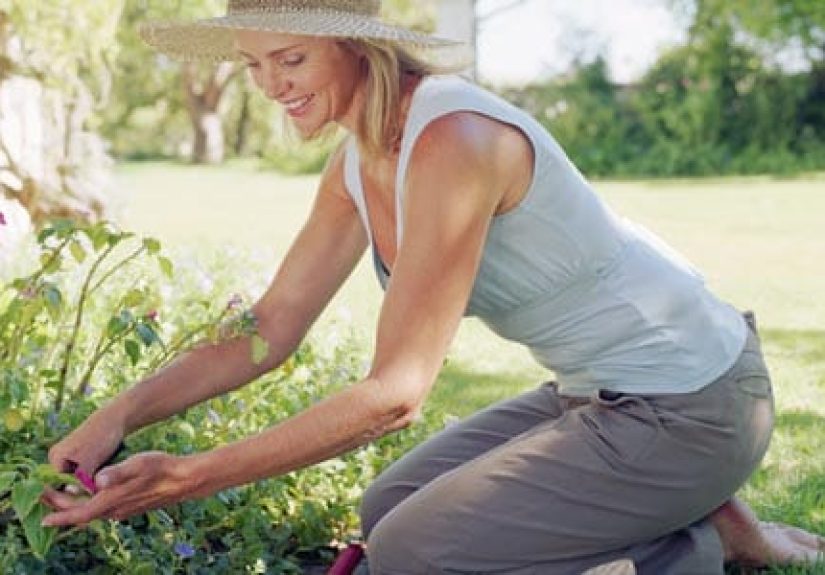
Half-kneeling is one of the most useful positions for gardening close to the soil. One knee rests on a pad while the other foot stays planted on the ground in front of you. This setup helps keep your back straighter than a deep crouch and gives you a stable base for weeding, planting small starts, or working along the edge of a bed.
Why it works: you are lower to the task without folding your spine like a lawn chair. Your planted foot also helps you shift weight and stand up more easily. Switch sides every few minutes so one hip and one knee do not do all the work.
2. Supported Kneeling Instead of Bare-Knee Bravery
If both knees feel okay on the ground, kneeling can be comfortable for short tasks, but only when you add support. Use a thick foam kneeling pad, garden kneeler, or padded bench. Hard ground plus bare knees is a terrible long-term relationship.
Keep your torso tall and your work close. If your hands are too far forward, you will round through your back and shoulders. Pull the task toward you whenever possible instead of lunging forward like a determined crab.
3. Seated Gardening on a Low Stool
A sturdy garden stool is a hero for people with knee pain, back pain, or fatigue. Sitting lowers the demand on your legs while also preventing the long forward fold that happens when you stand and stoop. This is especially helpful for harvesting, pruning low plants, potting up seedlings, or hand-weeding a concentrated area.
Choose a stool that is stable, easy to move, and tall enough that you are not curling into a tiny ball. If standing up from low seating is hard, a kneeler bench with side handles can be even better.
4. Standing With a Hip Hinge, Not a Rounded Back
When you do need to work standing up, bend from your hips and knees instead of collapsing through your waist. Keep your chest open, your spine long, and the object or task close to your body. This position is better for raking, hoeing, mixing soil, and light digging with long-handled tools.
One helpful cue is to think “long back, soft knees.” Another is to step closer instead of reaching farther. Your tomato cage is not going anywhere. You can walk the extra two feet.
5. Raised-Bed or Table-Height Gardening
If you want the biggest comfort upgrade with the least daily effort, bring the garden up. Raised beds, containers, window boxes, vertical planters, and tabletop gardening stations reduce repeated stooping and kneeling. They are especially useful for gardeners with arthritis, low back pain, or reduced mobility.
You do not need a full backyard redesign, either. Even one raised herb bed or a waist-high potting table can save your joints during the tasks you repeat most often.
Positions to Avoid or Limit
Some positions are famous for starting trouble. Deep squatting for a long time can overload knees and hips. Crouching with heels up often causes tension through the feet, calves, and lower back. Twisting while carrying pots or bags of soil is a classic recipe for back pain. Reaching far in front of you while kneeling or standing pulls your spine and shoulders into stressful angles.
And then there is the “just one more weed” posture: neck craned, shoulders hunched, one hand braced awkwardly, and zero awareness of how long you have been there. That posture should come with a warning label.
Smart Tools and Garden Setups That Reduce Strain
Comfortable gardening is not only about posture. It is also about using tools that let you keep better posture in the first place.
Choose Tools That Help Your Body Stay Neutral
- Long-handled tools reduce bending and reaching.
- Curved, padded, or larger grips help keep wrists in a more natural position.
- Spring-action or ratcheting pruners reduce repeated hand strain.
- Lightweight tools are easier on shoulders and forearms.
- Push-lever hose nozzles are usually kinder to painful hands than squeeze triggers.
Little changes count. Wrapping handles with grip material can make a standard tool more comfortable. Using a cart or wheelbarrow instead of carrying heavy items by hand can save your back before the real work even starts.
Build in Rest Without Feeling Lazy
Put a bench, chair, or stool near the area where you garden most. Keep water nearby. Store your favorite hand tools where you do not have to hunt for them. The easier your setup is to use, the less likely you are to push through fatigue and end up moving badly.
How to Position Yourself for Specific Gardening Jobs
Weeding
Weeding is notorious because it combines repetition with awkward reach. Use half-kneeling, a stool, or a kneeler bench. Work in a small section at a time. Pull weeds close to your body instead of leaning way forward. If weeds are everywhere, use a long-handled weeder or hoe for at least part of the job so your hands and spine do not do all the labor.
Planting
When planting seedlings or annuals, set up the tools and plants beside you before you start. That way, you are not constantly twisting to grab the next item. Keep the tray at stool height or on an overturned bucket instead of flat on the ground. For larger plants, squat or kneel close to the hole, and lift with your legs when moving pots.
Watering
Watering seems harmless until the hose becomes an anaconda with opinions. Use a nozzle that does not require constant gripping. Move your feet instead of reaching with your arm. If you use watering cans, fill them partially and make more trips. Your spine prefers extra steps over one heroic haul.
Pruning and Deadheading
Keep elbows relaxed near your sides. Do not lift your shoulders while clipping. For overhead work, use a stable stance and take breaks before neck tension builds. For hand comfort, swap to spring-action pruners and loosen your grip between cuts.
Lifting Soil, Mulch, or Pots
Face the load. Get close. Bend through hips and knees. Tighten your core gently and lift with your legs. Avoid twisting while holding weight; pivot your whole body instead. Break large loads into smaller ones whenever possible. There is no prize for carrying the biggest bag in one shot.
Warm Up, Pace Yourself, and Recover Like a Gardener Who Wants to Come Back Tomorrow
One of the easiest ways to reduce pain is to stop treating gardening like it starts the second your trowel hits the dirt. A brief warm-up matters. Walk for a few minutes. Roll your shoulders. Open and close your hands. Gently move your hips, knees, and ankles. A warm body moves better than a cold one.
Next, pace your time. Shorter sessions are often smarter than marathon weekends. Break up the work, rotate tasks, hydrate, and stand up before you feel glued to the ground. If you live with arthritis or chronic pain, time of day matters too. Many people move better later in the morning or afternoon than first thing after waking.
After gardening, do a quick reset. Stretch the muscles you used. Wash up. Rest. If a joint feels irritated, heat can help with stiffness and ice can help calm post-activity soreness or inflammation. Persistent, sharp, or worsening pain deserves attention, not denial and another bag of compost.
When to Stop and Reassess
Mild muscle fatigue is one thing. Sharp pain, numbness, swelling, weakness, or pain that lasts into the next day at the same intensity is another. Those are clues that your positioning, workload, or tool setup needs to change. They can also be signs that it is time to check in with a clinician or physical or occupational therapist, especially if gardening consistently triggers the same problem area.
The goal is not to prove you can ignore pain. The goal is to keep gardening comfortably for months and years.
Comfortable Gardening Is Also About Garden Design
If you garden often, design choices matter just as much as technique. Mulch can cut down on weeds. Wider paths make movement easier. Containers near the house reduce carrying distance. Vertical supports bring climbing plants closer to eye level. Low-maintenance plants in hard-to-reach corners save you from unnecessary strain later.
In other words, a pain-free garden is not just something you do. It is something you build.
Experiences and Lessons Gardeners Commonly Learn the Hard Way
Many gardeners discover pain-free positioning only after one overly ambitious weekend. The pattern is almost comical. On Saturday morning, they feel energetic. By Saturday afternoon, they are kneeling without a pad, reaching too far, hauling oversized pots, and insisting they are “almost finished.” By Saturday night, the basil is thriving and the gardener is negotiating with the couch. The lesson is simple: enthusiasm is wonderful, but it is not an ergonomic strategy.
Another common experience happens with weeding. People assume weeding is a light task because the plants are small. Then they spend forty minutes in the same crouched position, using finger strength instead of body position, and wonder why their wrists and lower back are angry. The gardeners who stay comfortable usually do the opposite. They set a stool nearby, use a kneeling pad, work one small patch at a time, and switch positions before discomfort becomes pain. They do not look dramatic, but they finish the season in much better shape.
Gardeners with knee pain often describe a turning point when they finally use a kneeler bench or raised bed. Before that, gardening can feel like a choice between enjoying plants and protecting joints. Afterward, the whole hobby becomes more accessible. Suddenly, deadheading flowers is pleasant again, planting herbs is easier, and standing back up does not feel like a full upper-body event. It is a reminder that adaptive tools are not “extra.” They are often the reason people get to keep doing what they love.
People with hand pain or arthritis report similar relief when they stop fighting their tools. Traditional narrow handles, stiff pruners, and squeeze-trigger nozzles can turn a peaceful hour outside into a grip-strength competition. Switching to larger handles, spring-action pruners, and lighter tools often feels surprisingly dramatic. The task is still the task, but the strain drops enough that gardening becomes enjoyable again instead of a test of stubbornness.
There is also a mental shift that experienced gardeners talk about. At first, taking breaks can feel inefficient. Later, they realize breaks are what let them keep going. A two-minute walk, a stretch, a sip of water, or a change from kneeling to standing may seem minor, but those tiny resets prevent the end-of-day crash. Comfortable gardening is usually less about doing less and more about doing it smarter. The gardener who rotates tasks, changes positions, and respects pain often gets more done across a whole season than the one who tries to win the weekend.
Perhaps the most valuable experience of all is learning that a garden can adapt as you do. A younger gardener may happily kneel in long rows. Ten years later, that same person may prefer containers, vertical supports, a potting bench, and a rolling seat. That is not giving up. That is gardening with wisdom. Plants do not care whether you planted them from a deep squat or from a padded stool. They just want decent soil, enough water, and someone who comes back tomorrow without limping.
Conclusion
Pain-free positioning for comfortable gardening is not about perfection. It is about choosing better angles, smarter tools, and more forgiving routines. Rotate positions. Use support under your knees. Sit when it helps. Bring the garden closer with raised beds and containers. Keep wrists neutral, loads close, and breaks regular. Most of all, listen to your body before it starts speaking in all caps.
Gardening should leave you pleasantly tired, not structurally offended. With a few ergonomic adjustments, you can protect your joints, reduce strain, and enjoy the work for the long haul.