Table of Contents >> Show >> Hide
- What Exactly Is the Pelvic Floor?
- Why Pelvic Floor Exercises Matter (For Everyone)
- Before You Start: Find the Right Muscles
- How to Do Kegels Correctly (Step-by-Step)
- Kegels Aren’t the Whole Story: Strength AND Relaxation
- Functional Pelvic Floor Exercises Beyond Kegels
- 4-Week Pelvic Floor Routine (Men and Women)
- Common Mistakes (and How to Fix Them)
- Special Situations: How Pelvic Floor Exercises Fit In
- When to See a Clinician or Pelvic Floor Physical Therapist
- Wrap-Up
- Real-World Experiences: What People Notice Over Time (and What Surprises Them)
- Experience #1: “I thought I was doing Kegels… but I was basically flexing my butt.”
- Experience #2: The first win is often timing, not strength
- Experience #3: “Relaxing” is the part nobody expects to be difficult
- Experience #4: Progress is not linearand that’s normal
- Experience #5: Confidence returns before everything is “perfect”
- SEO Tags
Your pelvic floor is the underrated support crew of your body: it helps manage bladder and bowel control, supports your organs,
and plays a real role in sexual function. Yet most of us don’t think about it until something feels “off” (like leaking when you laugh,
or feeling pressure “down there,” or recovering after childbirth or prostate surgery). The good news? Pelvic floor exercises can help
many people of all gendersoften without fancy equipment, gym memberships, or interpretive dance lessons.
This guide walks you through pelvic floor exercises for men and womenhow to find the right muscles, how to do Kegels correctly,
how to build a realistic routine, and why “strong” isn’t the only goal. (Sometimes the pelvic floor needs to relax, not just squeeze
like it’s trying to win a grip-strength contest.)
What Exactly Is the Pelvic Floor?
The pelvic floor is a group of muscles and connective tissues that form a hammock-like base at the bottom of your pelvis. It supports
the bladder and bowel in everyone, and it also supports the uterus and vagina in women. These muscles help control the release of urine,
stool, and gas, and they coordinate with your core and breathing system to manage pressure in your abdomen.
Like any muscle group, the pelvic floor can be too weak, too tight, or poorly coordinated. Weak muscles may struggle to hold things in.
Overly tight muscles can contribute to pain, urgency, constipation, or trouble fully emptying. And sometimes the issue isn’t strength at all
it’s timing (the muscles contract when they should relax, or vice versa).
Why Pelvic Floor Exercises Matter (For Everyone)
1) Better bladder and bowel control
Pelvic floor muscle training is commonly recommended for urinary leakage (like stress incontinenceleaks with coughing, jumping, or laughing)
and can also help with bowel control in some cases. Strength and coordination matter most when pressure increasesthink sneezes, lifts, sprints,
and “why did I think trampoline parks were a good idea?” moments.
2) Support during life changes
Pregnancy, vaginal delivery, aging, chronic coughing, constipation/straining, heavy lifting, and pelvic surgeries can all influence pelvic floor
function. Pelvic floor exercises are often part of recovery plans after childbirth and are commonly recommended for men after prostate surgery.
The key is matching the exercises to what your body actually needs.
3) Sexual function and confidence
The pelvic floor contributes to sexual sensation and function. Some men do pelvic floor training to support erectile function and control, and many
women use it to support comfort and functionespecially when pelvic floor weakness contributes to symptoms. This isn’t about turning your pelvis into
a superhero; it’s about helping your muscles do their day job smoothly.
4) Core stability (without “bracing like a statue”)
Your pelvic floor works with your diaphragm, deep abdominal muscles, and back muscles as part of your pressure-management system. When everything
coordinates well, you can lift, move, and exercise with less strain. When it doesn’t, your pelvic floor may take the blamelike the intern getting
yelled at for a company-wide email fiasco.
Before You Start: Find the Right Muscles
Doing pelvic floor exercises correctly starts with identifying the correct muscles. If you’re squeezing your glutes, gripping your thighs, or holding
your breath like you’re underwater, you’re recruiting the wrong “assistants.”
How it should feel
- Everyone: Think “stop gas” gentlylike you’re trying not to pass gas in an elevator. (A truly universal human experience.)
- Women: You may feel a lift and squeeze around the vagina and anuslike a subtle “lift up and in.”
- Men: You may feel a lift at the base of the penis and a tightening between the scrotum and anus, along with the “stop gas” feeling.
The “stop-flow” test (use sparingly)
Many reputable health organizations note that briefly trying to stop urine midstream can help you identify the pelvic floor muscles. But it
should not be your regular workout method. Repeatedly stopping urine midstream can interfere with normal emptying and isn’t recommended as ongoing practice.
Use it as a one-time “muscle-finder,” then do exercises with an empty bladder.
If you’re not sure you’ve found the right muscles, a pelvic floor physical therapist can confirm technique (and can help if your pelvic floor is tight,
painful, or not coordinating well).
How to Do Kegels Correctly (Step-by-Step)
“Kegels” are pelvic floor contractions: tighten, hold, and relax. The most important part is the relaxationbecause a muscle that never
fully relaxes can get cranky fast.
- Get in position: Start lying down or reclining if you’re new. Progress to sitting, then standing.
- Breathe normally: Don’t hold your breath. (Your pelvic floor hates surprise pressure.)
- Gently contract: Lift and squeeze the pelvic floor musclesavoid clenching glutes or thighs.
- Hold: Start with 3–5 seconds.
- Fully relax: Relax for 3–5 seconds (or longer). Feel the “drop.”
- Repeat: Aim for 8–12 quality reps per set. Stop if you fatigue and lose form.
Slow holds vs. “quick flicks”
- Slow holds build endurance for daily life (standing, walking, lifting, posture).
- Quick flicks help with fast responses (cough, sneeze, laugh, jump).
How often should you do them?
Many clinical-style guides suggest building toward multiple sets per day (commonly 2–3 sets), focusing on quality over volume. A typical progression is
to gradually increase hold time up to about 10 seconds if you can do it without compensation, and to keep rest periods long enough to fully relax.
Consistency over weeks matters more than “going hard” for two days and then forgetting forever.
Kegels Aren’t the Whole Story: Strength AND Relaxation
Pelvic floor training isn’t always “more squeezing.” Some people have symptoms because the pelvic floor is overactive (tight, tense,
or stuck “on”). In that situation, endless Kegels can be like revving a car engine that’s already overheating.
Clues your pelvic floor may be too tight (and needs down-training)
- Pain with sex, tampon use, or pelvic exams
- Pelvic pain, tailbone pain, or persistent “tightness”
- Constipation or straining
- Urgency or frequent urination without a clear reason
- Trouble fully emptying bladder or bowels
Relaxation drills that support pelvic floor function
These are commonly used in pelvic health rehab to help relax and coordinate the pelvic floor:
- Diaphragmatic breathing: Inhale and let your belly/ribs expand; exhale gently. The pelvic floor should subtly “drop” on inhale and recoil on exhale.
- Pelvic floor “drops” (sometimes called reverse Kegels): Instead of squeezing, focus on letting the pelvic floor soften and lengthen.
- Gentle mobility poses: Positions like child’s pose or happy baby can be used (comfortably) to encourage relaxation and reduce guarding.
If you have pelvic pain or significant symptoms, it’s smart to consult a clinician or pelvic floor PT before choosing a strengthening-only program.
The right plan depends on whether you need strength, relaxation, coordinationor a mix.
Functional Pelvic Floor Exercises Beyond Kegels
Pelvic floor physical therapy programs often include functional movements that train the pelvis, hips, and core together. This can help because the pelvic floor
doesn’t live in isolationit’s part of your movement team.
Examples commonly used in pelvic rehab
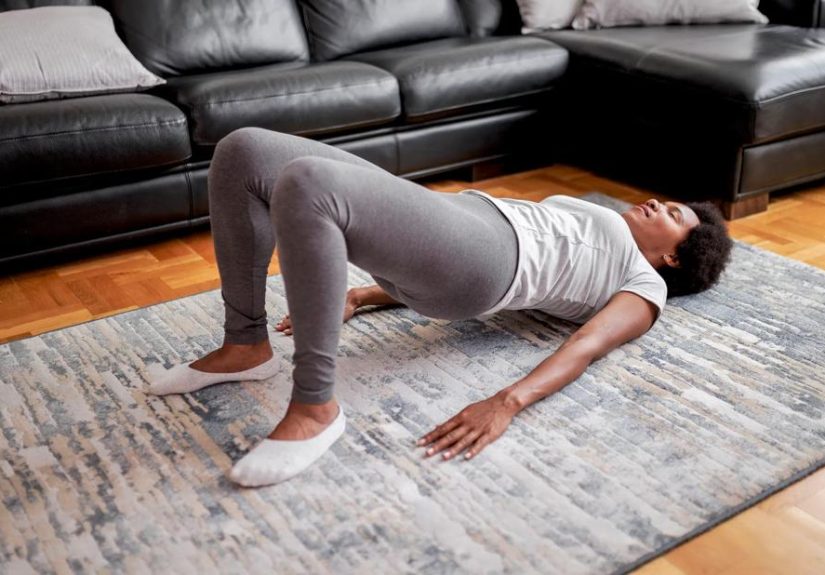
- Bridges: Helps integrate glutes and core with pelvic control (done without breath-holding).
- Squats: Builds whole-body strength; pelvic floor learns to coordinate with pressure changes.
- Pelvic tilts, bird dog, heel slides: Core-control exercises that can support pressure management.
- Breathing + posture work: Teaches the pelvic floor to respond to real-life demands, not just “squeeze on command.”
The goal is not to “clench through your workout.” It’s to coordinate: exhale with effort, avoid straining, and let the pelvic floor relax between contractions.
4-Week Pelvic Floor Routine (Men and Women)
Here’s a simple, realistic plan. If you have pain, significant prolapse symptoms, new or severe incontinence, or you’re recovering from surgery, get individualized
guidance first.
Week 1: Learn the movement (quality first)
- Position: Lying down or reclined
- Slow holds: 8 reps of 3-second hold + 6-second relax (1–2 sets/day)
- Quick flicks: 5 gentle 1-second squeezes + full relax (1 set/day)
- Breathing: 2 minutes diaphragmatic breathing daily
Week 2: Build consistency
- Slow holds: 10 reps of 4–5 seconds hold + 6–8 seconds relax (2 sets/day)
- Quick flicks: 2 sets of 5 (with full relaxation)
- Add: 6–8 bridges, exhaling on the lift (every other day)
Week 3: Add positions (real life happens standing up)
- Do one set sitting, one set standing (if form stays clean)
- Slow holds: 10 reps of 6–8 seconds hold + equal or longer relax
- Quick flicks: 2 sets of 8
- Add: bodyweight squat practice (6–10 reps), exhale on the way up
Week 4: Endurance + integration
- Slow holds: build toward 8–10 seconds hold (only if you can fully relax)
- Quick flicks: 2 sets of 10
- Functional practice: “The Knack” gently contract pelvic floor just before a cough/sneeze/lift, then relax after
- Keep breathing work: 2–3 minutes/day
Most people need several weeks to notice meaningful changes. If you’re consistent and your technique is correct, that’s when you start seeing improvements in control,
confidence, and comfort.
Common Mistakes (and How to Fix Them)
Mistake: Holding your breath
Holding your breath increases pressure downward. Fix it by counting out loud during holds or pairing effort with a gentle exhale.
Mistake: Squeezing everything except the pelvic floor
If your butt cheeks are auditioning for a powerlifting poster, you’re compensating. Keep contractions small and internalno visible movement.
Mistake: Doing Kegels while urinating
Using urine stopping as a frequent exercise can interfere with normal bladder emptying. Identify muscles once, then train with an empty bladder.
Mistake: Too much, too soon
More reps aren’t always betterfatigue leads to sloppy technique. Prioritize clean contractions and full relaxation, then progress slowly.
Mistake: Strengthening a pelvic floor that needs relaxation
If you have pelvic pain, urgency, or constipation, you may need down-training and coordination work before (or instead of) strengthening. A pelvic floor PT can help
tailor the approach.
Special Situations: How Pelvic Floor Exercises Fit In
After prostate surgery (men)
Pelvic floor training is commonly recommended to help with urinary control after prostate surgery. Many programs focus on correct muscle activation, gradual progression,
and functional timingso the pelvic floor can support you during everyday movements, not just in a quiet room.
Pregnancy and postpartum (women)
Many women are introduced to pelvic floor exercises during pregnancy or after delivery. Gentle pelvic floor engagement and breathing-based recovery can often start when
you feel ready, but the right timeline depends on your delivery, symptoms, and healing. If you have heaviness, bulging, persistent leakage, pain, or diastasis concerns,
professional guidance is especially useful.
Pelvic organ prolapse or significant leakage
Pelvic floor muscle training may help symptoms for some people, but prolapse and persistent incontinence can require a broader plan (behavioral strategies, physical therapy,
devices, medications, or procedures depending on severity). Think “team approach,” not “I’ll fix this with 1,000 Kegels a day.”
Pelvic pain, constipation, or “tight pelvic floor” symptoms
If symptoms suggest an overactive pelvic floor, emphasize breathing, relaxation, and mobility first. Strengthening can come later, once muscles can lengthen and coordinate.
When to See a Clinician or Pelvic Floor Physical Therapist
Pelvic floor exercises are generally safe, but you should seek evaluation if you have:
- Pelvic pain, pain with sex, or pain that worsens with exercises
- New, sudden, or severe urinary or bowel incontinence
- Blood in urine, burning with urination, fever, or suspected infection
- A bulge/heaviness suggesting prolapse, especially if it’s worsening
- Difficulty emptying bladder or bowels
- No improvement after 8–12 weeks of consistent, correct training
A pelvic floor PT can assess whether your muscles are weak, tight, or poorly coordinated and can teach biofeedback strategies, functional training, and individualized progressions.
In other words: fewer guesses, more results.
Wrap-Up
Pelvic floor exercises for men and women are less about “doing Kegels forever” and more about building a smart, balanced system: strength, relaxation, and coordination.
Start by finding the right muscles, train with good form, fully relax between contractions, and progress gradually into real-life positions like sitting and standing.
If symptoms are complexor if pain shows upprofessional guidance can be a game-changer.
Your pelvic floor doesn’t need perfection. It needs practice, patience, and a plan that matches your body. (And yes, you can absolutely train it while watching TV
just don’t make it weird by announcing it.)
Real-World Experiences: What People Notice Over Time (and What Surprises Them)
People often start pelvic floor training with one goal“Please, body, stop leaking when I sneeze”and end up noticing a bunch of unexpected changes. Below are common
experience patterns reported in pelvic health settings and everyday life. These aren’t guarantees, and they’re not a substitute for medical advice, but they can help
set realistic expectations (and reduce the “Is this even working?” spiral).
Experience #1: “I thought I was doing Kegels… but I was basically flexing my butt.”
This is incredibly common. Many people begin by squeezing everything in the general zip-code of the pelvisglutes, inner thighs, absbecause those muscles are easier
to feel. Once they learn the “quiet” nature of a real pelvic floor contraction, the exercise suddenly feels smaller…and harder. The breakthrough often comes when people
stop chasing intensity and start chasing precision. They describe it as less “clench” and more “lift.” A practical sign they’re improving is that they can contract
without holding their breath, without tensing their jaw, and without their hips doing a dramatic interpretive dance.
Experience #2: The first win is often timing, not strength
Some people notice changes when they learn a simple technique: gently contracting just before a cough, laugh, or lift (often called “the Knack” in pelvic rehab).
That timing can reduce leaks even before major strength gains show up. People describe it as feeling “more in control” in public spaceslike they can trust their body
again. Over time, as endurance improves, they don’t have to think about timing as much; it becomes automatic, like bracing a seatbelt without looking.
Experience #3: “Relaxing” is the part nobody expects to be difficult
Many assume the pelvic floor is weak, so they squeeze harder. But a surprising number of people realize their pelvic floor is already tenseespecially those with
high stress, chronic constipation, pelvic pain, or urinary urgency. When they start adding diaphragmatic breathing and pelvic “drops,” they notice their urgency calms
down and their bathroom trips become less frantic. Some describe the first week of relaxation work as “weird,” because letting go feels unfamiliar. But once the nervous
system learns that it’s safe to relax, symptoms like pressure and “always on” tightness can ease.
Experience #4: Progress is not linearand that’s normal
People commonly report a good week followed by a “Did I lose all my progress?” week. Travel, constipation, poor sleep, heavy workouts, illness (hello, coughing),
or stress can flare symptoms temporarily. The most helpful mindset is treating pelvic floor training like brushing your teeth: regular maintenance beats occasional
extreme effort. Many people do best with short daily sessions (2–5 minutes) rather than marathon sets that cause fatigue.
Experience #5: Confidence returns before everything is “perfect”
One of the biggest quality-of-life changes people mention is not having to plan their entire day around bathrooms, pads, or “escape routes.” Even partial improvement
can feel huge. For postpartum women, it might mean feeling safer returning to walks or gentle workouts. For men after prostate surgery, it can mean fewer “what if”
moments during errands. For others, it’s simply being able to laugh hard without bracing like a statue. The body might not be flawless, but it becomes predictable
and that predictability is powerful.
If there’s one consistent theme, it’s this: pelvic floor exercises work best when they’re individualized, balanced (strength + relaxation), and practiced long enough
to become a habit. Most “success stories” aren’t about heroic effortthey’re about small, correct actions repeated over time.