Table of Contents >> Show >> Hide
- Why Physical Therapy Matters in Ankylosing Spondylitis
- What AS-Focused Physical Therapy Actually Includes
- How Physical Therapy Can Help: Real Benefits
- The Core Pieces of a Smart PT Plan for AS
- What the Evidence (and Clinicians) Tend to Agree On
- Common Mistakes (and Easy Fixes)
- A Sample Week You Can Actually Follow
- Flare-Ups: How to Keep Moving Without Making Things Worse
- Choosing the Right Physical Therapist
- PT Works Best When Inflammation Is Treated
- Conclusion: YesPhysical Therapy Can Help, If You Stay Consistent
- Experiences Related to Physical Therapy for Ankylosing Spondylitis (What It Feels Like in Real Life)
- The first visit feels like detective work (in a good way)
- Posture training becomes practical, not preachy
- The biggest learning curve is intensity
- Small routines beat heroic routines
- Breathing and cardio are unexpectedly helpful
- Flares still happen, but they stop derailing everything
- Confidence is the quiet payoff
- SEO Tags
Ankylosing spondylitis (AS) is the kind of inflammatory arthritis that can make your lower back and hips feel like they’ve been replaced with a rusty hinge. It commonly targets the sacroiliac joints (where the spine meets the pelvis) and the spine, and it can also affect the hips, shoulders, and the places where tendons attach to bone.
Here’s the good news: while physical therapy can’t “cure” AS, it can be a major symptom-smoother. The better news: it doesn’t require you to become a fitness influencer. Done well, physical therapy helps you move with less pain, keep posture and mobility, build strength, and stay active through the long game.
Why Physical Therapy Matters in Ankylosing Spondylitis
AS often feels worse after rest and better after movement. That’s not just coincidencewhen inflammation stiffens joints, staying still lets stiffness settle in. Then you move less (because it hurts), and the cycle tightens: pain → less movement → more stiffness → more pain.
Physical therapy breaks that loop by targeting what AS threatens most:
- Mobility in the spine and hips (rotation, extension, and “please let me tie my shoes” range)
- Posture and alignment (AS can pull you toward a forward-bent stance over time)
- Strength (core, glutes, and upper backyour anti-slouch support crew)
- Breathing mechanics (rib joints can stiffen, making deep breaths harder)
- Confidence (knowing what’s safe is half the battle)
What AS-Focused Physical Therapy Actually Includes
Assessment: the “why does this hurt” map
A physical therapist typically checks posture, spinal and hip range of motion, strength, balance, and gait. They’ll also ask about morning stiffness, flare patterns, fatigue, sleep, work setup, and what activities you miss most. (Yes, “I miss sitting comfortably” is a valid activity.)
Active care: exercise is the main course
In many U.S. clinical recommendations, active interventionssupervised exercise, education, and a progressive home programare emphasized more than passive treatments. Heat, soft tissue work, and other hands-on options can help you feel looser, but the long-term wins usually come from movement and habit-building.
A home exercise program: because life happens between visits
Most progress comes from what you do on the “regular days.” Your PT should send you home with specific exercises, clear form cues, and simple rules for how to progress (or scale back) when symptoms change.
How Physical Therapy Can Help: Real Benefits
Pain and stiffness that are easier to manage
Gentle mobility work and low-impact aerobic activity can reduce the “stuck” feeling, especially in the morning. Many people also learn pacing strategies that prevent the boom-and-bust cycledoing too much on a good day, then paying for it on a bad one.
Better posture without feeling like you’re posing for a statue
PT often targets tight areas that pull you forward (chest, hip flexors) while strengthening the muscles that help you stay tall (mid-back, glutes, deep core). The goal isn’t perfect postureit’s posture you can maintain without strain.
Mobility and function you can notice
Consistent exercise can help preserve spinal motion and keep daily tasks smoother: driving, looking over your shoulder, reaching overhead, or getting up from a chair without sounding like bubble wrap.
Breathing support
If AS affects the joints around the ribs, chest expansion can decrease. PT may include thoracic mobility plus breathing drills (like diaphragmatic breathing and rib expansion) to support comfort and endurance during activity.
The Core Pieces of a Smart PT Plan for AS
Programs vary, but these “movement categories” show up again and again in good care.
1) Mobility and stretching (usually daily)
- Spine: cat-cow, thoracic rotations, gentle thoracic extension over a rolled towel
- Hips: hip flexor stretch, hamstring stretch (not aggressive), glute mobility
- Chest opening: doorway pec stretch or foam roller chest opener
Rule of thumb: stretch to a strong-but-tolerable sensation. If you’re holding your breath and bargaining with the universe, it’s too much.
2) Posture and movement training (sprinkled throughout the day)
Think “posture snacks” instead of posture marathons:
- Wall angels or wall slides
- Chin tucks
- Scapular retractions/rows (band or cable)
3) Strengthening (2–4 days per week)
Strength supports joints and reduces compensations. Typical staples include:
- Core stability: dead bug, bird dog, pallof press
- Glutes/legs: bridges, sit-to-stands, step-ups
- Upper back: rows, face pulls
4) Aerobic exercise (most weeks, ideally)
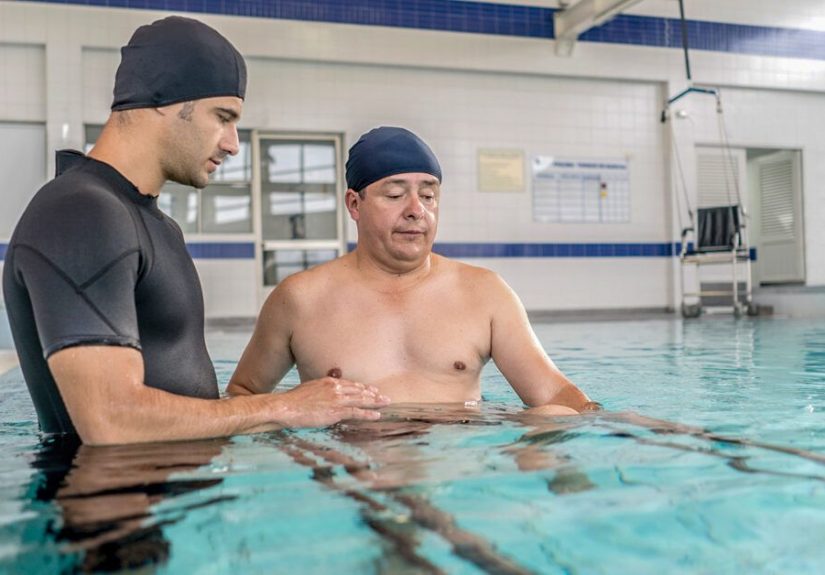
Low-impact cardio is often a sweet spot for AS: walking, cycling, swimming, or aquatic therapy. Water-based exercise can be especially helpful on stiffer days because buoyancy reduces joint load.
5) Breathing and rib mobility (fast, effective, oddly calming)
- Diaphragmatic breathing (hands on lower ribs)
- Slow inhale into the sides/back of ribs (“360-degree breathing”)
- Thoracic extension paired with long exhales
What the Evidence (and Clinicians) Tend to Agree On
Exercise isn’t just a “nice extra” in AS careit’s repeatedly recommended because it improves symptoms and function. Reviews of exercise programs for AS generally find benefits in pain, stiffness, mobility, and overall physical function, especially when people stick with the program and when exercise is supervised or well-structured. In practice, that often means a short period of guided PT to learn form and progression, followed by a home routine you can keep for the long haul.
Another common theme: active beats passive. Heat and hands-on work can help you feel better in the moment, but most guidance prioritizes strengthening, mobility, posture training, aerobic conditioning, and education. Think of passive treatments as the “helpful sidekick” and movement as the main character.
Common Mistakes (and Easy Fixes)
- Only stretching and skipping strength. Fix: add simple core and glute work 2–3 days/week.
- Going hard on good days. Fix: aim for “repeatable” effort, not heroic effort.
- Ignoring posture during the day. Fix: schedule two 60-second posture resets.
- Stopping completely during flares. Fix: downshift to gentle mobility + walking instead of zero movement.
A Sample Week You Can Actually Follow
This example is meant to show structurenot to replace a personalized plan.
Daily (10 minutes)
- Cat-cow + thoracic rotations (4 minutes)
- Hip flexor stretch + hamstring stretch (4 minutes)
- Posture reset (wall angels or band rows) + 3 slow breaths (2 minutes)
3 days/week (20–30 minutes)
- Strength circuit: dead bug, bird dog, bridges, rows (2–3 rounds)
2–4 days/week (20–40 minutes)
- Low-impact cardio: walk, bike, swim, or pool session
Flare-Ups: How to Keep Moving Without Making Things Worse
Flares are part of AS, not proof you “failed.” PT is especially useful because it teaches you how to adjust without quitting.
- Downshift intensity: shorter sessions, more gentle mobility, less load.
- Warm up longer: heat, a warm shower, or easy walking before mobility work.
- Avoid aggressive end-range stretching if it spikes pain.
- Coordinate with your clinician if inflammation is uncontrolled; meds may need adjustment.
Get prompt medical advice for new numbness/weakness, bowel/bladder changes, fever, or sudden severe pain after a minor fall (advanced AS can raise fracture risk).
Choosing the Right Physical Therapist
You want a PT who treats AS like a long-term skill-building project, not a one-time tune-up. Helpful questions:
- Do you treat ankylosing spondylitis or axial spondyloarthritis?
- Do you emphasize active exercise and a progressive home program?
- Will you help me plan for flares and bad days?
- Can you coordinate with my rheumatologist if needed?
PT Works Best When Inflammation Is Treated
Physical therapy is not a substitute for medical management. Many people need medications (often NSAIDs and, for some, biologics) to control inflammation enough to exercise consistently. A good rhythm is: medical care lowers inflammation; PT builds mobility, strength, and habits so you can use that “lower inflammation window” well.
Conclusion: YesPhysical Therapy Can Help, If You Stay Consistent
Physical therapy for ankylosing spondylitis can reduce pain, improve mobility and posture, strengthen key muscles, and help you stay active through flare-ups. The biggest difference-maker isn’t a secret exerciseit’s a sustainable routine you can repeat, adjust, and keep doing even when life gets busy.
Your spine doesn’t need perfection. It needs options. PT helps you build those optionsone smart rep at a time.
Experiences Related to Physical Therapy for Ankylosing Spondylitis (What It Feels Like in Real Life)
People often search “Does PT help ankylosing spondylitis?” because they’re tired of being told to “stay active” with zero instructions. Here’s what many individuals with AS commonly describe once they start a physical therapy programplus the parts nobody puts on a brochure.
The first visit feels like detective work (in a good way)
Many expect a quick stretch session. Instead, a solid PT watches how you stand, walk, breathe, and move. Simple teststurning your head, hinging at the hips, reaching overheadoften reveal where stiffness is coming from. A common reaction is relief: “Oh, there’s a reason this feels hard.” And plenty of people are surprised to learn the hips and upper back can be big drivers of “low back” misery.
Posture training becomes practical, not preachy
“Sit up straight” is useless advice. What tends to help is a tiny toolkit of resets: a wall posture check, a few band rows, a couple chin tucks, and reminders to take posture breaks during computer work. Over time, many notice less forward head and less roundingwithout constantly policing themselves.
The biggest learning curve is intensity
A common early mistake is going too hard on a good day, then triggering a symptom spike. PT reframes the goal from “push” to “dose.” Many learn to tell apart normal muscle fatigue (you worked) from flare signals (deep joint pain, escalating stiffness, sleep getting worse). That skill reduces fear, which often improves consistency.
Small routines beat heroic routines
What sticks for many people is surprisingly simple: a 10-minute morning mobility flow, a couple posture breaks, and two or three strength sessions per week. It feels like maintenancelike brushing teethrather than a second job. People often report mornings feel less rigid and sitting doesn’t “freeze” them as badly.
Breathing and cardio are unexpectedly helpful
Some people roll their eyes when a therapist brings up breathing drills or walking. Then they try it. Slow rib-expansion breathing can make the upper back feel less “armored,” and steady low-impact cardio often reduces that all-day stiffness. A common theme is, “I didn’t realize how much better my body feels when I keep circulation going.” Not glamorousbut very effective.
Flares still happen, but they stop derailing everything
AS flares can show up after stress, travel, illness, or no obvious reason. Over time, many develop a “flare plan”: shorten sessions, keep gentle movement, add heat, emphasize breathing, and pause heavier loading until things settle. The mindset shift is hugedownshift instead of stop.
Confidence is the quiet payoff
With practice, people often return to activities they avoidedlonger walks, swimming, yoga with modifications, or gym work that’s spine-friendly. It’s rarely an overnight transformation. It’s a steady upgrade: more functional days, fewer “locked up” days, and a lot less dread around movement.
In plain English: PT tends to help most when it’s specific, progressive, and realistic. The best experience isn’t “no symptoms ever.” It’s “I know what to do, and I can keep living my life.”
SEO Tags
Medical note: This article is for education only and isn’t a substitute for personalized medical advice. Always work with your clinician and physical therapist, especially if you have severe pain, neurologic symptoms, or advanced spinal changes.