Table of Contents >> Show >> Hide
- What Is a Chemo Port (and Why Do People Get One)?
- Port vs. PICC vs. Regular IV: A Quick Reality Check
- Port Placement: What Actually Happens
- Healing and Home Care: The First 2 Weeks Matter
- How Soon Can You Start Chemo After Port Placement?
- Your First Chemo with a New Port: What It Feels Like
- Port Care 101: Keep It Working and Keep It Safe
- Complications: Rare Doesn’t Mean “Ignore It”
- Questions to Ask Your Care Team (Steal These)
- Putting It All Together
- Experiences After Port Placement and Starting Chemo (Real-World, 500+ Words)
There are two kinds of “first days” in cancer treatment: the kind you circle on a calendar, and the kind that
circles you. Port placement and your first chemo infusion often land in the same chapter, which can feel like
speed-running a medical glossary you never asked to download.
This guide walks you through what an implanted port is, what the placement procedure is usually like, how soon chemo
may start, and how to make your first infusion day less “unknown boss battle” and more “I’ve got a plan.” It’s
written in straightforward American English, with a light touch of humorbecause sometimes the only thing you can
control is whether you pack lip balm.
What Is a Chemo Port (and Why Do People Get One)?
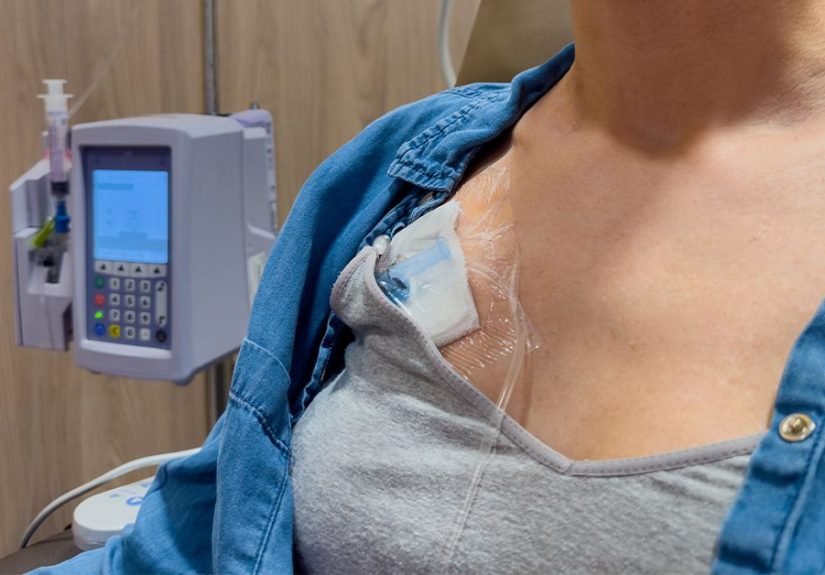
A chemo port (often called an “implanted port,” “port-a-cath,” or “mediport”) is a small device placed under your
skinmost commonly in the upper chest. It connects to a catheter (a thin tube) that threads into a large vein near
your heart. Nurses can access the port with a special non-coring needle to deliver medications, IV fluids, blood
products, or draw blood.
The headline benefit: fewer pokes in your arm veins. Many chemo drugs are tough on smaller veins, and repeated IV
starts can become painful, bruising, and increasingly difficult. A port provides reliable access over weeks, months,
or sometimes yearskind of like installing a front door instead of climbing through a window every time.
Common reasons a port is recommended
- You’ll need frequent infusions, labs, or transfusions over a longer period.
- Your veins are small, fragile, “shy,” or have been used a lot already.
- Your regimen includes medications that can irritate or damage peripheral veins.
- You may benefit from a device that stays entirely under the skin when not in use.
Port vs. PICC vs. Regular IV: A Quick Reality Check
There’s no single “best” linejust the best match for your treatment plan, your veins, and your lifestyle.
Here’s the simplified version:
-
Regular IV (peripheral IV): Great for short-term treatments. Can be harder on veins with repeated
use, and not ideal for certain drugs. -
PICC line (peripherally inserted central catheter): Enters through the arm and threads to a large
vein. Useful for weeks to months, but part of it stays outside the body and needs ongoing dressing care. -
Implanted port: Entirely under the skin when not accessed, typically lower daily maintenance,
and often preferred for longer chemo courses.
Your oncology team’s recommendation is usually based on treatment length, drug type, your medical history, and what
will keep things safest and simplest long-term.
Port Placement: What Actually Happens
Port placement is typically an outpatient procedure. Translation: you come in, get the port placed, and go home the
same day. It’s commonly performed by a surgeon or interventional radiologist using imaging guidance. Many people
receive local anesthesia plus moderate (“twilight”) sedation; some situations use general anesthesia.
Before the procedure
-
Medication review: You’ll be asked about blood thinners, diabetes meds, supplements, and
anything that affects bleeding or sedation. -
Fasting instructions: If you’re getting sedation, you’ll likely have “no food after midnight”
or similar guidance. - Plan a ride home: If sedation is used, you generally can’t drive yourself afterward.
-
Clothing tip: Wear a button-down or a loose top. Your chest (or upper arm) needs easy access, and
nobody wants to wrestle a hoodie while sore.
During the procedure
The team cleans and numbs the area, then makes small incisions to create a pocket under the skin for the port and to
guide the catheter into a large vein (often via the neck or chest area, depending on the approach). Imaging helps
confirm correct catheter position. The port is secured, then the incisions are closed with sutures, adhesive strips,
skin glue, or a combination.
Most people feel pressure or tugging rather than sharp pain during placement. Afterward, it’s common to have
soreness at the incision site for a few dayslike you bumped into the corner of a table, except the table is
medical-grade and very committed to its job.
Right after the procedure
- Expect mild swelling and bruising around the site.
- Follow incision care instructions exactly (they vary depending on closures used).
-
Activity limits are normal: your team may restrict heavy lifting and certain movements while
incisions heal.
Healing and Home Care: The First 2 Weeks Matter
Your care team will give specific instructions, but many patient education guides include common themes: keep initial
dressings dry for a period, avoid soaking the area, and watch for signs of infection. Some centers allow showering
after bandages are removed (often around 48 hours), while avoiding tubs and pools until healing progresses.
If your port is not accessed (no needle in place), daily care can be pretty low-maintenance once
the incision heals. If it is accessed (needle and dressing in place), you may have extra steps to
keep the dressing dry and secure, and you may be asked to use an antiseptic cleanser for showers.
Red flags: call your team right away if you notice
- Fever or chills (especially a new fever during chemo).
- Increasing redness, warmth, swelling, drainage, or worsening pain at the site.
- Swelling of the neck, arm, or face on the port side.
- Shortness of breath, chest pain, or sudden severe discomfort.
- A port that feels flipped, unusually raised, or suddenly hard to access.
Ports are designed to reduce repeated needle sticks and support safer infusions, but they’re still medical devices.
Early reporting of symptoms helps your team treat issues quickly and protect your chemo schedule.
How Soon Can You Start Chemo After Port Placement?
The honest answer: it dependson your healing, the urgency of treatment, and how your care team protocols are set up.
Many patients start chemotherapy within a few days to a couple of weeks after port placement. In certain situations,
chemo can begin the same day or within 24–48 hours if the port is confirmed functional and the clinical need is
urgent.
Why not always start immediately? Because chemo can affect healing and immune function, and your team may want the
incision to settle and the site to look clean and stable before repeated access. That said, modern workflows
sometimes allow earlier starts when timing matters.
What your team is checking before “go time”
- Incision looks healthy (no concerning redness, drainage, or separation).
- Port flushes and draws back as expected (good blood return).
- You can move comfortably enough for positioning during infusion.
- No procedure-related complications that would make access risky.
If you’re worried about delays, bring it up directly. “How soon do you expect me to start, and what would change
that plan?” is a fair questionespecially when your calendar already looks like it belongs to a professional
appointment collector.
Your First Chemo with a New Port: What It Feels Like
The first port access is often the moment people fear most: “A needle… into the thing… in my chest?” Totally
understandable. The good news is that the port is designed for this. The needle used is typically a special
non-coring needle (often called a Huber needle) made to enter the port’s silicone septum without shredding it.
Numbing options (yes, you have options)
Many centers offer a topical anesthetic cream (commonly lidocaine/prilocaine) to numb the skin before port access.
Typical instructions involve applying it about an hour before the port is accessed and covering it with a clear
dressing or plastic wrap so it stays put. If cream timing is tricky, some teams use ice briefly before cleaning and
access.
Even with numbing, you may still feel pressurea pushing sensation rather than sharp pain. Some
people describe it as “weird but quick.” Others feel almost nothing and immediately wonder if they’re allowed to
brag about it (you are).
What happens during an infusion visit
- Vitals and symptom check (and sometimes labs).
- Port access, then flush to confirm patency.
- Pre-meds (anti-nausea meds, steroids, allergy meds, etc., depending on your regimen).
- The chemo infusion (length varies widely by regimen).
- Flush and needle removal, unless you’re on a multi-day regimen that requires leaving it accessed.
Ask your nurse what sensations should trigger an immediate “pause.” Burning, sudden pain, swelling, or a feeling
that something is “off” should be reported right away. Nurses would much rather hear “This feels weird” early than
“I didn’t want to bother anyone” late.
Port Care 101: Keep It Working and Keep It Safe
When your port is not being used, it mostly just lives under your skin like a quiet roommate. When it’s accessed,
infection prevention becomes a bigger deal: hand hygiene, sterile technique, and proper skin cleaning matter.
Flushing and maintenance
Ports are typically flushed before and after infusions. If your port won’t be used for a while, many care plans call
for periodic flushing (often monthly, but your facility’s protocol may differ). Ask your team what schedule they use
and who will perform it (clinic, home health, or infusion center).
Daily life basics
-
Showering: once your team says it’s safe, normal washing is usually fine when the port is not
accessed. -
Swimming and baths: often allowed once incisions heal and when the port is not accessed, but
confirm with your team. - Seatbelts: a small pad or soft towel can reduce rubbing over the port site.
- Clothing: button-downs, zip-ups, or tops with easy necklines make access days simpler.
Complications: Rare Doesn’t Mean “Ignore It”
Most ports work well and make treatment smoother. But like any central access device, potential complications exist.
The most important takeaway isn’t memorizing every riskit’s knowing what changes should prompt a call.
Examples of possible complications
- Infection (at the skin site or in the bloodstream).
- Blood clot related to the catheter.
- Mechanical issues (difficulty flushing, poor blood return, port rotation).
- Procedure-related issues shortly after placement (unusual pain, swelling, breathing trouble).
Your team has protocols for evaluating these problemssometimes with imaging, blood cultures, or medicationand
many issues can be treated without removing the port. The key is reporting symptoms promptly.
Questions to Ask Your Care Team (Steal These)
- How soon after my port placement do you expect me to start chemo?
- What should the incision look like day-by-day, and what’s not normal?
- When can I shower? When can I soak in a bath or swim?
- What lifting or movement restrictions do you recommend, and for how long?
- Should I use numbing cream? If yes, what type, how much, and when do I apply it?
- How often does my port need flushing when not in use, and where will that happen?
- What symptoms mean “call today” versus “go to the ER”?
- Can my port be used for labs every time, or do you prefer arm draws sometimes?
Putting It All Together
Port placement and starting chemo can feel like a lot because it is a lotlogistically, emotionally,
physically. But the port is meant to make repeated treatments safer, more reliable, and often less painful than
constant IV starts. Once the incision heals and you get through the first access or two, many people find the port
fades into the background and simply becomes part of the routine.
Use your care team. Ask questions. Report symptoms early. And if you want one small, practical victory: pack the
charger. Always pack the charger.
Experiences After Port Placement and Starting Chemo (Real-World, 500+ Words)
Every person’s cancer story is different, but certain “port and first-chemo” experiences show up so often that they
might as well be printed on the back of the appointment card. Think of this section as a collection of common
patient-reported momentswhat surprised people, what helped, and what they wish they’d knownshared in a way that
doesn’t pretend one person’s experience will be yours.
1) The soreness is real… and then it’s not. A lot of people describe the first few days after port
placement as “tight,” “bruised,” or “like I did a push-up competition I definitely did not enter.” Sleeping can be
awkward at first, especially if you’re a side sleeper and the port is on that side. Many patients say a small pillow
or folded towel helps support the area, and that the discomfort often improves quicklysometimes faster than their
anxiety expected.
2) The first access feels weird, not necessarily painful. Even people who use numbing cream often
report feeling pressure more than sharp pain. The sensation can be strange because it’s happening in a spot you’re
not used to thinking about. Many say the second and third access are dramatically easier, mostly because the fear of
the unknown is gone. (Brains are dramatic like that.)
3) Timing the numbing cream becomes an art form. Patients who use topical anesthetic often develop
a personal routine: apply about an hour before arrival, cover it so it doesn’t smear on clothing, then wipe it off
before antiseptic prep. Some people keep a “port kit” by the front door: cream, a small piece of plastic wrap, and a
reminder note that says, “This is not lotion.” Others prefer ice at the clinic because they don’t want to do math
about time when they’re already doing math about parking.
4) Clothing choices get oddly strategic. People become surprisingly passionate about button-down
shirts, zip hoodies, and tops with loose necklines. Not because they’re trying to start a fashion trend (though you
could), but because easy access reduces stress on infusion days. Some patients swear by “chemo shirts” with snaps or
shoulder openings. Others keep it simple: a soft cardigan, a tank top, and the moral support of elastic waistbands.
5) The infusion room vibe is its own universe. Many describe chemo day as a mix of routine and
surreal: nurses moving with calm efficiency, beeping pumps, warm blankets offered like currency, and the feeling of
being both cared for and completely out of your normal life. A common tip is to bring comfort items that help you
pass time and feel groundedheadphones, a long charger, ginger candy, a familiar book, a small notebook to track
symptoms, or even a “lucky” object. Some people prefer distraction; others prefer conversation; a lot prefer naps.
All are valid.
6) Emotion can hit in unexpected places. Patients often say they felt “fine” until something small
happened: seeing the chair, hearing the word “pre-meds,” or realizing the port makes treatment feel officially
real. If that happens, you’re not “overreacting.” You’re having a human moment in a hard situation. Many find it
helpful to plan one gentle thing for after the appointmenta favorite meal, a calm TV show, a short walk, a call
with a friendso the day isn’t only medical.
7) The port can become a symbol of control. This sounds paradoxical (because nobody asked for any
of this), but many people report that once the port is in and working well, treatment feels more manageable. The
port becomes the predictable part: access, flush, infusion, flush, done. When so much feels uncertain, a reliable
process can be strangely comforting.
If there’s one consistent theme in these experiences, it’s this: the beginning is usually the hardest part.
Port placement and the first infusion day are big milestones. But they’re also the start of a new routineand
routines, even medical ones, tend to get easier once you’ve lived them a few times.