Table of Contents >> Show >> Hide
- Why “Younger Version” Casting Is Harder Than It Looks
- The “Wait… That’s Who?!” Hall of Fame
- Jennifer Lawrence as a Young Patricia Arquette (TV: Medium)
- Gwyneth Paltrow as Teenage Wendy Darling (Film: Hook)
- Michael Cera as a Young Sam Rockwell (Film: Confessions of a Dangerous Mind)
- Michelle Williams as a Young Natasha Henstridge (Film: Species)
- Timothée Chalamet as Teen Tom, Later Played by Casey Affleck (Film: Interstellar)
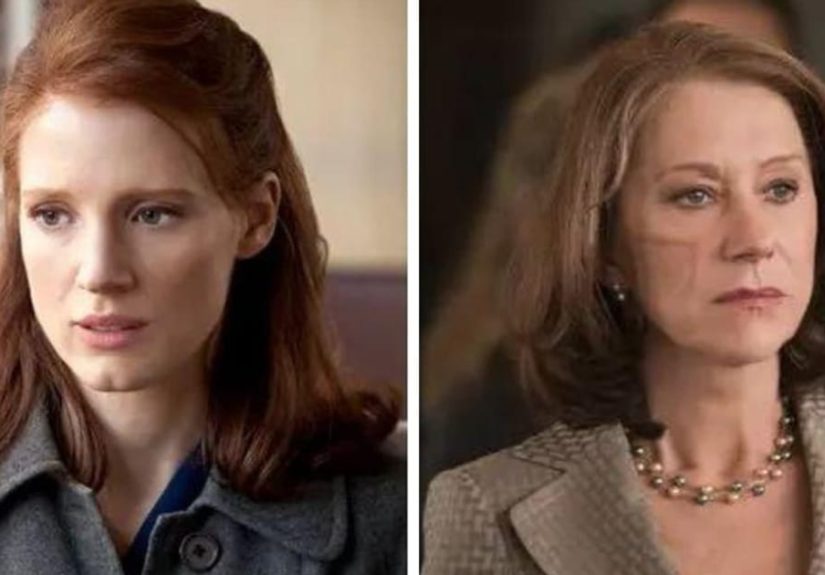
- Jessica Chastain as Young Rachel Singer, Later Played by Helen Mirren (Film: The Debt)
- Aaron Taylor-Johnson as Young Eisenheim, Later Played by Edward Norton (Film: The Illusionist)
- Jenna Ortega as Young Jane, Later Played by Gina Rodriguez (TV: Jane the Virgin)
- Freddie Highmore as Young Max, Later Played by Russell Crowe (Film: A Good Year)
- Shia LaBeouf as Young Dito, Later Played by Robert Downey Jr. (Film: A Guide to Recognizing Your Saints)
- River Phoenix as Young Indiana Jones, Later Played by Harrison Ford (Film: Indiana Jones and the Last Crusade)
- Anthony Ingruber as Young William Jones, Later Played by Harrison Ford (Film: The Age of Adaline)
- Josh Brolin as Young Agent K, Later Played by Tommy Lee Jones (Film: Men in Black 3)
- What These Castings Teach Us About Acting (and Memory)
- De-Aging vs. Casting: Why Younger Actors Still Matter
- Conclusion: The Next Time You Rewatch Something, Stay Alert
- Bonus: Real Viewing Experiences That Make This Topic So Addictive (500+ Words)
There’s a very specific kind of pop-culture whiplash that hits when you rewatch an older movie or TV episode and suddenly blurt, “WAIT… that’s Jennifer Lawrence,” like you just discovered a hidden level in a video game. Casting a younger version of an established character is one of Hollywood’s sneakiest magic tricks: it’s supposed to feel natural, invisible, and inevitableso when it works, your brain files it under “normal” and moves on. Years later, you revisit the scene and realize a now-famous actor was hiding in plain sight, doing the world’s most prestigious impression.
In this deep dive, we’re celebrating those blink-and-you-miss-it performanceswhere a future star (or a surprisingly perfect lookalike) played the younger version of someone else so convincingly that you forgot it ever happened. We’ll also unpack what makes these castings work, why they’re harder than they look, and how younger-version casting has changed in the era of digital de-aging.
Why “Younger Version” Casting Is Harder Than It Looks
On paper, it sounds easy: find a younger actor, put them in a similar haircut, and let time do the rest. In reality, a great younger-version performance is a three-part balancing act:
- Face: The resemblance has to be believable from the couch at 9 p.m. with snacks and zero patience.
- Body language: The best “young versions” don’t just look like the older actorthey move like them: posture, gestures, walk, even how they hold a coffee cup like it owes them money.
- Vibe: The younger actor has to match the older actor’s internal energyconfident, jittery, guarded, charming, haunted, or “this character is definitely lying right now.”
And then there’s the invisible villain: time. The script has to convince you that the younger character plausibly becomes the older one. That means the younger actor can’t play a full-on parody. The performance needs just enough recognizable flavor to click, without turning into a sketch comedy impression.
The “Wait… That’s Who?!” Hall of Fame
Below are some of the most delightful, easy-to-forget examples of actors playing younger versions of other actorsacross movies and TVplus what to watch for if you want to spot the craft.
Jennifer Lawrence as a Young Patricia Arquette (TV: Medium)
Long before The Hunger Games made her a global phenomenon, Jennifer Lawrence popped up on television playing a younger version of Patricia Arquette’s character, Allison Dubois, on Medium. It’s the kind of cameo that hits differently on a rewatch because your brain refuses to believe Oscar-winning, red-carpet Jennifer Lawrence once lived in the “flashback zone” of network TV. But she didand she commits fully to the role instead of winking at the camera like, “Don’t worry, I’ll be famous soon.”
What makes it work: It’s not just the look. Lawrence captures a grounded, lived-in quality that matches Arquette’s tone, so the casting doesn’t feel like stunt casting. It feels like the show found the right person and the universe later handed her an Oscar.
Gwyneth Paltrow as Teenage Wendy Darling (Film: Hook)
Hook is already a “spot the celebrity” carnival: big stars, surprise faces, and a cast list that feels like Hollywood’s group chat showed up in costume. Hidden in that mix is a young Gwyneth Paltrow playing the teenage version of Wendy Darlingwho appears as an elderly Wendy, memorably played by Maggie Smith. It’s one of those castings you don’t notice the first time because you’re distracted by pirates, food fights, and the emotional damage of growing up.
What makes it work: The casting sells Wendy as the same person across decades: warm, steady, and quietly powerful. Also, if you’ve ever watched it as an adult, you know Hook is basically a two-hour reminder to stop ignoring your inner child (and your actual children).
Michael Cera as a Young Sam Rockwell (Film: Confessions of a Dangerous Mind)
Michael Cera and Sam Rockwell don’t usually get grouped togetherone is famously awkward-cute, the other is famously “charisma with a side of chaos.” Yet in Confessions of a Dangerous Mind, Cera plays the younger version of Rockwell’s character (Chuck Barris), and it’s a reminder that “young version” casting isn’t always about identical cheekbones. Sometimes it’s about matching the character’s rhythm at a different age.
What makes it work: Cera’s slightly off-center energy becomes an early-stage version of Rockwell’s unpredictable intensity. It’s like watching a spark before it becomes a full-on flame thrower.
Michelle Williams as a Young Natasha Henstridge (Film: Species)
Before Michelle Williams became one of the most respected dramatic actors of her generation, she appeared in Species as the younger version of Natasha Henstridge’s character, Sil. This is a classic example of “future prestige actor shows up in a genre movie and you do a double take later.”
What makes it work: The performance is physical and controlled. Even if you’re watching for the sci-fi thrills, you can see an early glimpse of Williams’ focusthe kind of actor who’s thinking about what the character wants, not just what the scene needs.
Timothée Chalamet as Teen Tom, Later Played by Casey Affleck (Film: Interstellar)
Interstellar is full of huge emotions and cosmic stakes, so it’s easy to overlook that Timothée Chalamet appears early as the teenage version of Tom Cooper. After the story’s time jumps, the adult version of Tom is played by Casey Affleck. On a first viewing, you’re busy processing wormholes, time dilation, and the fact that your feelings apparently have their own soundtrack. On a rewatch, you notice: “Oh wowChalamet was right there.”
What makes it work: Both actors give Tom a practical, grounded presence. You can believe that this teen grows into an adult shaped by responsibility, grief, and a constant shortage of easy choices.
Jessica Chastain as Young Rachel Singer, Later Played by Helen Mirren (Film: The Debt)
Some younger-version pairings feel like a perfect handoff, and Jessica Chastain to Helen Mirren is one of them. In The Debt, Chastain plays Rachel Singer in the character’s earlier years, while Mirren plays her later in lifecarrying the weight of what happened and what it cost. This is the rare case where both versions get substantial screen time, meaning the casting has to withstand close-up scrutiny instead of surviving on a 30-second flashback.
What makes it work: It’s the intensity. Both actors have that “steel spine under calm skin” energy. You can feel the same person in two different seasons of life: one doing the job, the other living with it.
Aaron Taylor-Johnson as Young Eisenheim, Later Played by Edward Norton (Film: The Illusionist)
In The Illusionist, Edward Norton plays Eisenheim, a magician whose life is wrapped up in mystery, romance, and the kind of dramatic stares that deserve their own lighting crew. Aaron Taylor-Johnson appears as the younger Eisenheim, and the resemblanceespecially in features and intensitymakes the transition feel smooth.
What makes it work: Taylor-Johnson doesn’t overdo it. He hints at Norton’s quiet confidence and focused presence without copying him beat-for-beat. It’s less “impression” and more “character DNA.”
Jenna Ortega as Young Jane, Later Played by Gina Rodriguez (TV: Jane the Virgin)
Before Wednesday turned Jenna Ortega into a household name, she spent years playing young Jane Villanueva in flashbacks on Jane the Virgin, with Gina Rodriguez as adult Jane. It’s one of the best examples of TV using a recurring younger-version actor not as a gimmick, but as part of the storytelling languagelike the show is saying, “This is how memory feels.”
What makes it work: Ortega captures Jane’s sincerity and nervous determinationqualities that remain central as the character grows up. The flashbacks don’t feel like interruptions; they feel like emotional context.
Freddie Highmore as Young Max, Later Played by Russell Crowe (Film: A Good Year)
Freddie Highmore built a reputation early as a gifted child actor, and in A Good Year he plays the younger version of Russell Crowe’s Max Skinner. The movie uses those childhood scenes to explain the adult Max’s complicated relationship with warmth, joy, and slowing down. If you’ve ever watched a stressed-out adult character and thought, “This person needs a nap and a vineyard,” this is that movie.
What makes it work: Highmore brings a softness and curiosity that feels like the seed of Crowe’s character. You can see how a kid who learned beauty early might later become an adult who forgot how to notice it.
Shia LaBeouf as Young Dito, Later Played by Robert Downey Jr. (Film: A Guide to Recognizing Your Saints)
Here’s a pairing that surprises people on rewatch: Shia LaBeouf plays the younger version of Dito, with Robert Downey Jr. playing the older version. The story lives in memoryhow you remember your past, how you survive it, and how adulthood reshapes what you thought you knew. LaBeouf brings volatility and vulnerability, while Downey Jr. carries the character’s reflection and distance.
What makes it work: The emotional through-line. Both performances feel like the same personjust at different points of understanding what happened to them.
River Phoenix as Young Indiana Jones, Later Played by Harrison Ford (Film: Indiana Jones and the Last Crusade)
River Phoenix’s young Indiana Jones is a legendary “younger version” performance: brief, iconic, and weirdly foundational. In the opening sequence of Indiana Jones and the Last Crusade, Phoenix doesn’t just look like a plausible younger Indyhe captures the adventurous spirit and the determined glare. It’s also a masterclass in building character lore quickly: you learn key traits and origins without feeling like you’re watching a checklist.
What makes it work: The mannerisms. Phoenix sells the idea of Indy as a person who’s been stubborn and brave for a very long timehe just got taller later.
Anthony Ingruber as Young William Jones, Later Played by Harrison Ford (Film: The Age of Adaline)
Sometimes younger-version casting is so spot-on it feels like cheating. In The Age of Adaline, Anthony Ingruber plays the younger version of Harrison Ford’s character (William Jones), and audiences immediately clocked the resemblance. It’s one of those castings that makes you want to email the casting director a thank-you note and a fruit basket.
What makes it work: It’s the combination of physical similarity and subtle behavioral cueslike the performance studied Ford’s vibe without turning into a Ford impersonation contest.
Josh Brolin as Young Agent K, Later Played by Tommy Lee Jones (Film: Men in Black 3)
If you’ve ever seen Men in Black 3 and thought, “Josh Brolin is doing Tommy Lee Jones so accurately I’m concerned there’s time travel happening off-screen,” you’re not alone. Brolin plays the younger version of Agent K, and the performance is widely remembered because it doesn’t rely on makeup magicit relies on precision: cadence, facial stillness, the exact level of unimpressed that could peel paint.
What makes it work: Vocal rhythm and posture. Brolin nails the “K-ness” without making it a cartoon. It’s affectionate, not exaggeratedlike a tribute that also advances the story.
What These Castings Teach Us About Acting (and Memory)
When younger-version casting works, it does something sneaky: it makes you believe in a continuous human life. You don’t just see “young person” and “older person.” You see one character aging through timecarrying habits, insecurities, strengths, and unfinished business. That’s why these roles can be so memorable even when they’re short.
They also reveal how acting isn’t only about big speeches. A younger-version performance can succeed with tiny details: a smile that arrives late, a stubborn jaw set, the way someone pauses before telling the truth. Those small choices create continuity across decades of story.
De-Aging vs. Casting: Why Younger Actors Still Matter
Modern filmmaking has a shiny new toy: digital de-aging. Sometimes it’s impressive. Sometimes it’s… a little too smooth, like a human face got filtered through an app called “Baby Nostalgia.” But even in the era of CGI, casting younger actors remains powerful because it brings a human unpredictability to the screennew chemistry, new emotional texture, and a performance that can surprise you.
The best projects increasingly treat younger-version casting as collaboration: younger actors meet the older actors, study their mannerisms, and then build something real instead of copying. When it’s done right, you get the best of both worldscontinuity and a fresh performance that stands on its own.
Conclusion: The Next Time You Rewatch Something, Stay Alert
The funniest part about these “actors you forgot” moments is that they’re inevitable. Hollywood loves flashbacks. TV loves backstory. Movies love origin moments. And casting directors love a good matchespecially one that ages into a surprising career trivia fact.
So the next time you’re watching an older movie at 1 a.m. “just for background noise,” keep your eyes open. You might spot an A-lister before they were an A-listerquietly building a career in the time-honored role of “younger version of someone else,” which is basically the entertainment industry’s version of an apprenticeship… only with better lighting.
Bonus: Real Viewing Experiences That Make This Topic So Addictive (500+ Words)
Let’s talk about the real reason this topic is so fun: it’s one of the rare pop-culture games you can play accidentally. You don’t have to study a franchise timeline, track a cinematic universe, or remember which reboot erased which sequel. You just have to rewatch something you already like and let your brain do that sudden, startled zoom-in: “Hold up. Is that…?”
For a lot of people, the experience starts with comfort viewing. You put on a movie you’ve seen a dozen times. Maybe it’s a childhood favorite like Hook, or a thriller you remember enjoying, or a TV episode from the pre-streaming era when shows had 22 episodes a season and somehow still found time for flashbacks. You’re not watching to analyze acting choices. You’re watching because you want to feel familiar. And then the younger-version cameo pops upjust long enough to slap you out of cozy mode.
What’s wild is how your memory behaves. When you first watched the movie, your brain probably filed the younger actor away as “that kid” or “that teen.” You weren’t thinking about future awards, future franchises, or future internet fame. You were thinking, “Okay, flashback, got it.” Years later, you rewatch with new context, and the cameo turns into a time capsule. Suddenly you’re seeing a future superstar before they had the “superstar glow.” They’re just actingdoing the job, hitting marks, delivering lines, trying to make the character feel real. That contrast is addictive because it feels like you discovered something, even though it was always there.
Another fun experience is the “mannerism hunt.” Once you notice a younger-version casting, you start looking for the details: the posture, the half-smile, the way they hold their shoulders, the rhythm of their speech. It becomes a mini mystery: did the younger actor study the older actor, or did they both arrive at the same character choices from the script? Sometimes you can tell it’s researchespecially when the younger actor nails a signature pause or a specific expression. Other times, it’s more like emotional alignment: they don’t copy the older actor, but they match the character’s internal logic. Both are satisfying in different ways.
And then there’s the social aspect. These moments are made for group chats. Nobody texts “I enjoyed the consistent thematic exploration of identity across the timeline.” They text, “BRO THAT WAS TIMOTHÉE CHALAMET??” That’s the joy: it’s a shared surprise, a trivia nugget that makes rewatches feel fresh. It also turns casual viewing into an interactive experiencelike your streaming service secretly added bonus content without telling you.
Personally (in the universal sensebecause we’ve all done this), the best version of the experience is when you recognize the actor immediately, but your brain refuses to accept it. You rewind. You squint. You check the credits. You go, “No, that can’t be right… that’s a child.” And then it’s right. It’s always right. Hollywood has been hiding future stars in flashbacks forever, and you just happened to catch one in the wild. That tiny shock of recognition is why “actors you forgot played younger versions” will never stop being entertaining. It turns rewatches into treasure huntsand the treasure is your own amazed voice saying, “How did I miss that?”