Table of Contents >> Show >> Hide
- The Alleged Warning That Refuses to Fade Away
- Why Prince Philip's View Carries So Much Weight
- Harry and Meghan's Wedding: A Global Fairy Tale With Fine Print
- Was Harry Really "Bamboozled"?
- The Meghan Factor: Modern Woman Meets Ancient Machine
- Prince William's Reported Concerns Added to the Tension
- Why the Actress Comment Still Stings
- The Wallis Simpson Shadow
- From Royal Wedding to Royal Exit
- Media Pressure Was Always Part of the Story
- What This Claim Reveals About Royal Marriage
- Analysis: Was Philip Right, Wrong, or Just Philip?
- Experiences and Lessons Related to the Prince Philip-Harry-Meghan Story
- Conclusion
Prince Philip was never known for wrapping a sharp opinion in bubble wrap. The late Duke of Edinburgh had a reputation for being blunt, practical, occasionally volcanic, and allergic to nonsense in the way most people are allergic to surprise tax bills. So when a royal biographer claimed that Philip warned Prince Harry before his wedding to Meghan Markle, the story did not exactly land like a plot twist from outer space.
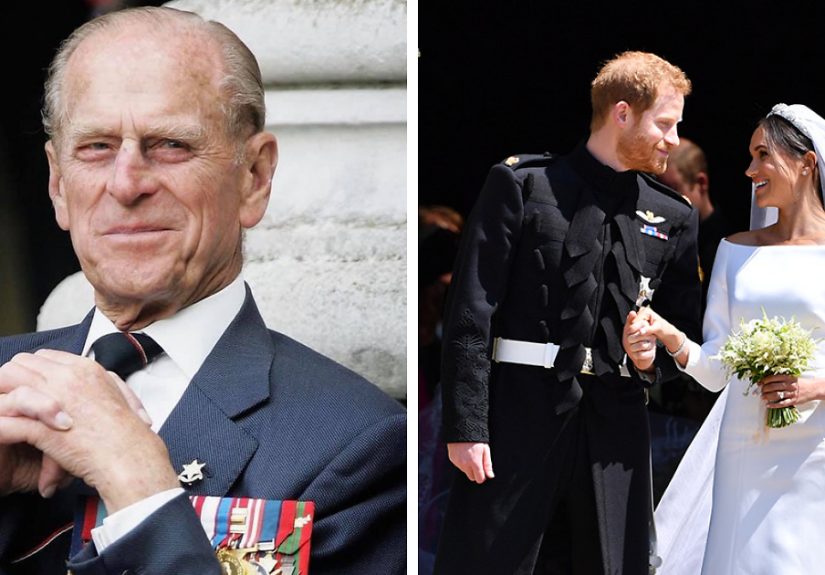
According to reporting around historian Andrew Lownie’s biography Entitled: The Rise and Fall of the House of York, Prince Philip allegedly reacted to Harry’s engagement with a pointed line: “One steps out with actresses, one doesn’t marry them.” The quote has since been widely discussed as another example of the royal family’s early unease about Meghan entering the institution. It has also revived the popular idea that Harry may have been, as some commentators put it, “bamboozled” by romance, celebrity, and a fast-moving relationship that would eventually reshape his life.
That word, bamboozled, is dramatic enough to wear a tiny crown of its own. But the real story is more complicated than a simple tale of a grandfather saying, “Don’t do it,” and a grandson sprinting toward the altar anyway. It is a story about generational values, royal duty, media pressure, family loyalty, celebrity culture, and the impossible task of mixing private love with public monarchy.
The Alleged Warning That Refuses to Fade Away
The reported Prince Philip warning has resurfaced because it fits neatly into a larger royal narrative: senior family members supposedly saw trouble before Harry did. In the version attributed to Lownie’s book, Philip was not merely grumbling about Meghan’s profession as an actress. He was expressing a broader anxiety about whether someone from a Hollywood background could adapt to the rigid, often chilly expectations of royal life.
That distinction matters. Meghan Markle was not just “an actress” in the abstract. She was a successful American television performer best known for Suits, a woman with her own career, public voice, charitable interests, and media profile before she met Harry. For many supporters, that made her modern, independent, and refreshing. For traditionalists inside or near palace circles, those same qualities may have looked like flashing warning lights on the dashboard.
Prince Philip, born into European royalty and shaped by war, exile, duty, and decades of service beside Queen Elizabeth II, came from a world where personal identity was often expected to kneel before institutional responsibility. Meghan came from a world where personal branding, public storytelling, and individual agency were professional tools. Put those two worlds in the same room, and someone was bound to spill the ceremonial tea.
Why Prince Philip’s View Carries So Much Weight
Philip was not a decorative royal spouse who simply waved from balconies and inspected flower arrangements. He spent more than 70 years beside Queen Elizabeth II, watching the monarchy survive scandal, social change, divorce, political turbulence, and the slow transformation of public expectations. He knew the institution from the engine room, not just the postcard.
That is why any alleged advice from Philip about marriage inside the royal family attracts attention. He understood that royal marriage is not just two people choosing a cake flavor and arguing over the seating chart. It is a constitutional performance, a family merger, a media spectacle, and a lifetime contract with the public. Romance may start the car, but duty has to keep paying for the gas.
From that perspective, Philip’s reported comment can be read less as a personal insult and more as an old-school warning: love is one thing, royal life is another. The problem, of course, is that old-school warnings often arrive wearing old-school prejudices. To modern ears, reducing Meghan to her acting career sounds dismissive, especially when actors, entrepreneurs, advocates, and public figures now move comfortably through elite social circles.
Harry and Meghan’s Wedding: A Global Fairy Tale With Fine Print
Prince Harry and Meghan Markle married on May 19, 2018, at St. George’s Chapel, Windsor Castle. The ceremony looked like a royal fairy tale with a fresh American remix: gospel music, Bishop Michael Curry’s passionate sermon, celebrity guests, a Givenchy dress, a long veil embroidered with Commonwealth flowers, and a carriage procession under bright skies. It was elegant, emotional, and highly watchable television.
For millions of viewers, the wedding represented a modernizing moment for the monarchy. Meghan, biracial, American, divorced, and self-made, seemed to symbolize a royal family stepping into the 21st century without checking whether the carpet matched the curtains. Harry, long seen as the charming, wounded, rebellious younger prince, appeared to have found a partner who understood both public pressure and personal reinvention.
But fairy tales are famously bad at showing the invoice. Behind the beauty of the wedding sat unresolved pressures: tabloid scrutiny, family tensions, cultural differences, palace protocol, and the question of how much independence a working royal couple could realistically have. In hindsight, Philip’s alleged warning has become a kind of symbolic thundercloud over those sunny Windsor images.
Was Harry Really “Bamboozled”?
The claim that Harry was “bamboozled” depends on whom you ask. Critics argue that he moved too quickly, underestimated the consequences, and allowed passion to outrun prudence. Supporters argue that he made a grown man’s decision, chose his wife over an institution he believed had failed to protect them, and later took responsibility for building a new life in California.
The truth is likely less cartoonish. Harry was not a helpless prince hypnotized by Hollywood sparkle. He had long expressed discomfort with royal life, especially the media environment that surrounded his mother, Princess Diana, and later followed him. Meghan did not create every tension in his life; she entered a life that already had cracks in the walls.
At the same time, love can make anyone optimistic to the point of comedy. Most couples underestimate something before marriage: in-laws, money, communication styles, home renovation costs, or the shocking number of pillows one adult human can require. Harry and Meghan’s version simply played out under global surveillance, with palace aides, tabloids, streaming platforms, memoirs, and historians all taking notes.
The Meghan Factor: Modern Woman Meets Ancient Machine
Meghan Markle entered royal life with qualities that would be assets in almost any modern career: confidence, media training, public speaking skill, and a clear sense of purpose. Yet the monarchy is not a normal workplace. It rewards patience, silence, hierarchy, and the ability to make a ribbon-cutting feel like a constitutional event.
That mismatch may explain why Meghan inspired such divided reactions. To admirers, she looked energetic and capable, someone who could bring fresh attention to issues like women’s empowerment, racial equality, and mental health. To critics, she appeared too eager to shape her own narrative inside an institution that traditionally expects newcomers to observe, learn, and speak softly for a very long time.
Prince Philip’s alleged concern, then, can be seen as part of a larger institutional anxiety: would Meghan adapt to the monarchy, or would the monarchy be expected to adapt to Meghan? In the end, the answer seemed to be neither. The experiment broke apart, and the Sussexes stepped back from royal duties in 2020.
Prince William’s Reported Concerns Added to the Tension
Prince Philip was not the only senior family figure linked to early reservations. Harry has acknowledged that Prince William raised concerns about the relationship moving quickly, though Harry later said William did not try to stop him from marrying Meghan. That detail is important because it separates caution from opposition.
In many families, an older sibling saying “Are you sure?” before a wedding is not exactly breaking news. It is practically part of the rehearsal dinner package. But in the royal family, every private hesitation becomes historical evidence once the relationship turns controversial. William’s concerns, Philip’s alleged warning, and the wider palace unease now read like early chapters in a family split that became public, painful, and profitable for publishers.
The brothers’ relationship had already carried the weight of childhood grief, different future roles, and constant comparison. Meghan did not invent that dynamic. But her arrival became the spark that exposed how much dry wood had been stacked nearby.
Why the Actress Comment Still Stings
The alleged “actresses” line has endured because it sounds both very Prince Philip and very dated. It reflects an old aristocratic suspicion of performance, publicity, and social mobility. Historically, royals and aristocrats often treated actresses as glamorous companions but not ideal dynastic spouses. That attitude belongs to a world of drawing rooms, private clubs, and rules nobody wrote down because everyone was expected to know them.
In modern culture, however, acting is not a moral defect. It is a profession. Meghan’s supporters see the line as snobbish and unfair, especially because she had already done humanitarian work and built a successful career. Her critics see it as Philip identifying a deeper concern: not acting itself, but the collision between celebrity habits and royal restraint.
Both readings can exist at once. A comment can be old-fashioned and still point toward a real compatibility problem. That is the messy part of royal analysis: sometimes the person saying the uncomfortable thing may be using the wrong language to describe a legitimate concern.
The Wallis Simpson Shadow
Any discussion of an American divorcée marrying into the British royal family inevitably summons the ghost of Wallis Simpson. Simpson’s relationship with King Edward VIII led to his abdication in 1936, one of the defining crises of modern monarchy. Comparisons between Meghan and Wallis have often been overused, sometimes unfairly, and occasionally with the subtlety of a marching band in a library.
Still, the historical echo matters because the monarchy has a long memory. Prince Philip lived through decades in which the consequences of Edward VIII’s choice shaped royal attitudes toward marriage, duty, and public legitimacy. For someone of Philip’s generation, the idea of a charismatic American divorcée entering the family could stir old institutional alarms, whether or not the comparison was fair.
Harry, however, was not Edward VIII. He was not king, and he was not expected to become king. That gave him more freedom, but not complete freedom. As the son of the future king and grandson of the reigning monarch, his choices still carried symbolic weight. The Sussex story proved that even a “spare” can shake the whole shelf.
From Royal Wedding to Royal Exit
Less than two years after the wedding, Harry and Meghan announced their intention to step back as senior working royals and pursue financial independence. The move triggered intense negotiation, public debate, and a new chapter that would eventually include interviews, podcasts, documentaries, memoirs, philanthropic work, and commercial ventures.
Queen Elizabeth II’s official statement in January 2020 was carefully worded, expressing love for Harry, Meghan, and Archie while acknowledging the challenges they had faced under intense scrutiny. It was a diplomatic bridge over a very deep canyon.
For critics, the Sussexes’ departure seemed to confirm early warnings from Philip and others. For supporters, it confirmed that the palace system was too rigid, too exposed to hostile media, and too slow to protect a young family under pressure. Once again, the same facts produced opposite conclusions depending on where the reader stood before the story began.
Media Pressure Was Always Part of the Story
Meghan later said a British friend warned her not to marry Harry because the tabloids would damage her life. That warning turned out to be one of the most haunting parts of the Sussex narrative. The British press did not merely cover Meghan; it dissected her wardrobe, family relationships, body language, spending, friendships, and alleged palace behavior with forensic enthusiasm.
Celebrity coverage can be playful. Royal coverage can be historical. But the coverage of Meghan often became something more combustible: a mix of race, class, nationalism, feminism, family drama, and internet outrage. For a couple already navigating palace protocol and private family tensions, that media storm created pressure that no wedding tiara could neutralize.
This is where Philip’s alleged warning becomes more interesting. Perhaps he did not foresee every detail, but he may have understood the larger truth: royal life magnifies everything. A small disagreement becomes a headline. A private worry becomes a chapter title. A family argument becomes a streaming event. There is no such thing as a quiet wobble when the whole world is holding binoculars.
What This Claim Reveals About Royal Marriage
The Prince Philip warning story is not just gossip with a silver spoon. It reveals how royal marriage functions as a stress test. A partner marrying into the family must handle ceremony, scrutiny, hierarchy, public service, and a schedule that can make spontaneity feel like a security breach.
Royal spouses also have to master the art of being interesting but not too interesting. They must support causes without overshadowing heirs, show personality without creating controversy, and smile through events where every expression is treated like a national referendum. It is not a lifestyle for the thin-skinned, the impatient, or anyone who enjoys replying to criticism with a 14-slide presentation.
Meghan’s challenge was especially intense because she arrived with fame already attached. Unlike someone gradually introduced to public life, she came with a career, a fan base, critics, and a media profile. The palace did not receive a blank page; it received a person who had already written several chapters.
Analysis: Was Philip Right, Wrong, or Just Philip?
So was Prince Philip right? The answer depends on what “right” means. If he predicted that Harry and Meghan’s marriage would cause complications inside the monarchy, history has certainly given that argument plenty of material. The royal exit, the Oprah interview, Harry’s memoir, family estrangement, and ongoing media speculation all point to a marriage that became a turning point.
But if the warning implied that Meghan alone was the problem, that is too simple. Harry had his own grievances. The media had its own incentives. The palace had its own limitations. The family had its own unresolved tensions. Meghan may have been a catalyst, but catalysts do not create every chemical in the beaker.
Philip may have been expressing the instincts of a man who had spent a lifetime protecting the Crown. Harry may have been expressing the instincts of a man determined not to sacrifice his wife to the same pressures he believed harmed his mother. Meghan may have been expressing the instincts of a woman who expected fairness, voice, and agency in an institution built on silence. Everyone may have been acting logically from inside their own story. Unfortunately, when those stories collided, the result was not exactly a group hug.
Experiences and Lessons Related to the Prince Philip-Harry-Meghan Story
The most useful way to read this royal episode is not as a scoreboard where one side wins and the other side is banished to the emotional dungeon. It is better understood as a high-profile version of a common human experience: families often see risk differently than couples in love do.
Anyone who has watched a friend rush into a relationship knows the awkwardness. Do you speak up and risk sounding judgmental? Do you stay quiet and hope love has better eyesight than you do? Do you say, “I support you,” while your face accidentally says, “This has documentary potential”? Families face this dilemma all the time. The royal family simply does it with titles, courtiers, and photographers hiding behind hedges.
One lesson is that timing matters. A warning delivered too late can sound like an attack. A concern expressed too harshly can make the listener defensive, even if the concern has merit. If Philip truly said what has been reported, the line was memorable, but not exactly a masterclass in gentle communication. Telling someone in love that their chosen partner belongs in one category but not another is a fast way to make them stop listening.
Another lesson is that outsiders often underestimate the power of identity. For Harry, marrying Meghan was not just choosing a spouse. It may have felt like choosing emotional safety, personal freedom, and a future outside inherited scripts. For Meghan, marrying Harry was not just entering a famous family. It meant stepping into an institution where every gesture carried meaning and every mistake could be archived forever. Both experiences were bigger than romance.
There is also a workplace lesson hiding inside the palace drama. When someone new joins an old organization, both sides have to adapt. The newcomer cannot expect every rule to vanish overnight. The institution cannot expect a modern professional to become invisible on command. Successful integration requires clear expectations, honest support, and cultural translation. Without that, everyone ends up speaking different languages while insisting they are being perfectly clear.
For readers, the practical takeaway is simple: love matters, but environment matters too. A strong relationship still needs a realistic plan for family boundaries, media pressure, money, work, privacy, and public expectations. Harry and Meghan faced those issues at an extreme level, but ordinary couples face versions of them every day. The in-laws may not live in castles, but they can still have opinions sharp enough to cut wedding cake.
The final lesson is about storytelling. Once a family conflict becomes public, everyone starts editing the movie in their own head. Some cast Philip as the wise elder, Harry as the lovestruck rebel, and Meghan as the disruptive outsider. Others cast Harry and Meghan as a couple escaping a cold institution, while Philip represents an outdated system. Reality is rarely that tidy. People are not headlines. Families are not hashtags. And royal history, despite the crowns, is still made by human beings who misjudge, overreact, love fiercely, and sometimes say the wrong thing at exactly the wrong time.
Conclusion
The claim that Prince Philip warned a supposedly “bamboozled” Prince Harry before his wedding to Meghan Markle continues to fascinate because it sits at the crossroads of romance, duty, celebrity, and family conflict. Whether readers see Philip as prophetic, prejudiced, protective, or simply characteristically blunt, the alleged warning captures the tension that has defined the Sussex story from the beginning.
Harry and Meghan’s marriage did not merely join two people; it exposed a clash between old monarchy and modern self-expression. It raised questions about who gets protected, who gets believed, and whether love can survive when every private moment becomes public property. The answer is still unfolding, but one thing is clear: the story remains irresistible because it is not just about royals. It is about every family that has ever wondered whether to speak up before a wedding, every couple that has felt misunderstood, and every institution that learned too late that tradition is not the same thing as communication.