Table of Contents >> Show >> Hide
- What “The Spirit of Radio” Really Means
- AM Radio, Explained Like It’s 1940 (Because That’s the Fun Part)
- The Hardware Glow-Up: Crystal Sets, Tubes, and the Superheterodyne
- Radio Builds America’s Shared Soundtrack
- FM Radio: Static Gets Fired, Music Gets Promoted
- The Pocket Revolution: Transistors Make Radio Personal Again
- Amateur Radio: The Spirit of Radio as a Two-Way Street
- Radio as a Lifeline: Weather Alerts and Emergency Messaging
- Retrotechtacular Today: Keeping the Magic Without Getting Stuck in the Past
- How to Tap Into the Spirit of Radio (No Time Machine Required)
- of Experiences: Retrotechtacular Moments You Can Actually Have
- Conclusion
Radio is the original “wireless” wonder: an invisible performance that jumps oceans, bounces off the sky, and lands in a speaker like it paid rent. You can dress it up in chrome and Bakelite, hide it inside a tiny plastic pocket set, or stream it through a phone that’s basically a magic slabbut the feeling stays the same: twist a dial, press a button, and suddenly you’re not alone.
“Retrotechtacular” isn’t just nostalgia for old gadgets. It’s a celebration of the clever, practical engineering that made modern communication possibleespecially radio, the tech that taught the world how to broadcast a voice into the void and get a voice back. And yes, it’s also the only technology that can make a 3 a.m. road trip feel like a movie scene without charging you a subscription fee.
What “The Spirit of Radio” Really Means
The spirit of radio isn’t only about old songs, baseball play-by-play, or late-night talk. It’s the combination of: (1) simple physics, (2) clever circuitry, and (3) a uniquely intimate kind of storytelling. Radio doesn’t demand your eyes. It slips into your day while you cook, drive, garden, or stare at the ceiling thinking about that one awkward thing you said in 2016.
Radio also has range in every sense of the word: from a homemade crystal set that needs no external power, to a high-power broadcast tower that blankets a region, to amateur radio operators relaying emergency messages, to NOAA weather radio delivering urgent alerts. The formats evolve, but the heartbeat stays steady: sound, carried by waves, shared with others.
AM Radio, Explained Like It’s 1940 (Because That’s the Fun Part)
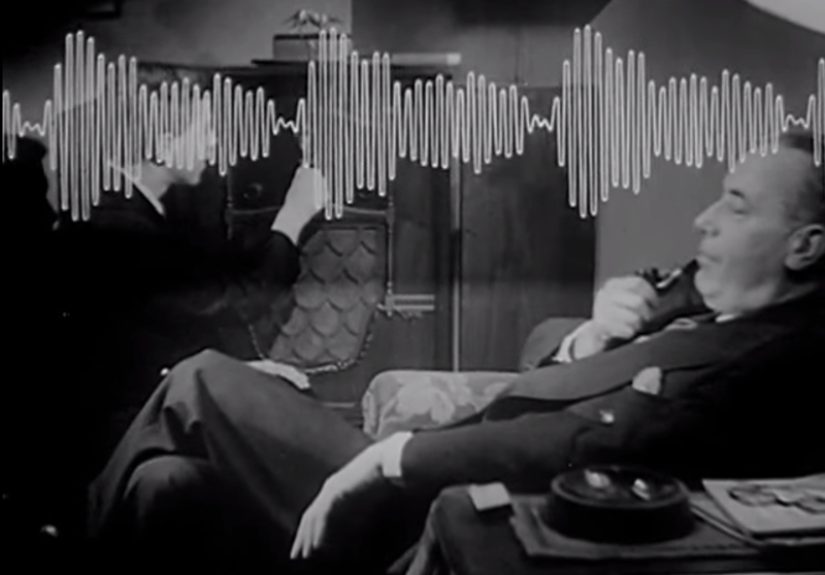
A beloved retro film spotlighted in the “Retrotechtacular: The Spirit Of Radio” tradition frames AM transmission with a cheerful, classroom-style confidence: your voice becomes an electrical signal, that signal rides a carrier wave, and the air does the delivery. It’s the audio equivalent of hitching a wagon to a racehorseyour message is the wagon, and the carrier wave is the horse.
Step 1: From Microphone to Electricity
When you speak into a microphone, the sound waves cause a diaphragm to vibrate. Those vibrations are converted into a changing electrical signal that matches your voiceup and down, loud and soft, fast and slow.
Step 2: The Carrier Wave (The “Delivery Truck”)
A transmitter generates a steady radio-frequency signal called a carrier. On its own, the carrier is boring: it’s basically a single musical note held forever. The magic comes when you “write” your audio onto it.
Step 3: Amplitude Modulation (AM) Painting the Wave
In amplitude modulation, the strength (amplitude) of the carrier changes in step with the audio signal. Louder moments push the carrier “taller,” quieter moments pull it “shorter.” The frequency stays centered where the station lives on the dial; it’s the carrier’s height that carries the information.
Step 4: From Tower to Your Radio
The broadcast antenna launches the modulated carrier into space. Your radio’s antenna captures a tiny portion of that energyoften microscopic compared to what left the towerand feeds it into the receiver. Inside, the receiver selects the station (tuning), pulls out the audio (detection), amplifies it, and drives a speaker so your ears get the final delivery.
Here’s the surprisingly satisfying part: when AM is demodulated, the receiver is essentially extracting the outline (the “envelope”) of the wave’s changing amplitude. That outline is your sound. It’s like reading the shape of a waveform the way you’d read the outline of a mountain range and guessing, correctly, that you’re in for a hike.
The Hardware Glow-Up: Crystal Sets, Tubes, and the Superheterodyne
Early radio wasn’t always about music and drama. Before broadcasting became mainstream, radio was often point-to-point communication (like wireless telegraphy). But once stations began transmitting entertainment and news, listeners needed receiversand the earliest ones could be wonderfully simple.
Crystal Radios: The “No Batteries, No Problem” Era
A basic crystal radio uses a tuned circuit to select a station and a crystal detector to rectify the signal so it becomes audible through high-impedance earphones. No external power requiredbecause the received radio energy itself does the work. The tradeoff is volume: a crystal set won’t rattle your windows, but it will make you feel like a wizard who just stole music from the air.
Vacuum Tubes: Turning Whispers into Voices
Vacuum tubes changed the game by amplifying weak signals. Suddenly radio could be loud, shared, and room-filling. Tubes helped receivers become practical household appliances, not just hobbyist experiments.
Superheterodyne: The Receiver Design That Became the Blueprint
One of the most influential receiver architectures is the superheterodyne, which converts a received signal to an intermediate frequency (IF) for easier filtering and amplification. The result: better selectivity, stability, and sensitivity. This approach became a foundation for countless radiosand it’s part of why many vintage sets feel “serious” when you operate them. They aren’t just listening; they’re doing a carefully choreographed signal-processing routine with the grace of a ballroom dancer.
Radio Builds America’s Shared Soundtrack
In the United States, broadcasting accelerated quickly, turning radio into a mass medium and a daily habit. The FCC notes that Westinghouse station KDKA in Pittsburgh transmitted the first scheduled broadcast on November 2, 1920. That milestone is more than trivia: it marks the moment radio started behaving like a regular, reliable public service rather than a fascinating occasional experiment.
The Fireside Chats: Intimacy at National Scale
Franklin D. Roosevelt’s “Fireside Chats” demonstrated radio’s special power: a voice can feel personal even when millions are listening. People didn’t just receive information; they felt addressed. Radio made government messaging sound like a conversation happening in the living rooman effect that later media have tried (and often failed) to replicate without sounding like a brand pretending to be your friend.
“War of the Worlds”: When Format Became the Story
The 1938 “War of the Worlds” broadcast is remembered because it used radio’s own languagenews bulletins, on-the-scene updates, urgent interruptionsto create realism. Whether you treat it as cultural legend or media case study, the point holds: radio isn’t just content; it’s presentation. The medium’s voice and conventions can shape how a story lands.
FM Radio: Static Gets Fired, Music Gets Promoted
If AM radio is the reliable pickup truck of broadcasting, FM is the smooth highway cruiser. FM (frequency modulation) varies the frequency of the carrier in step with the audio signal rather than the amplitude. One big benefit: improved resistance to certain kinds of noise and interference, which helped FM become the home of music formats where fidelity matters.
The FM story also illustrates a recurring theme in tech history: better technology doesn’t automatically win quickly. Adoption depends on regulation, industry momentum, consumer gear, and timing. Radio’s evolution is a reminder that engineering brilliance is necessarybut rarely sufficientif you want a technology to conquer the world.
The Pocket Revolution: Transistors Make Radio Personal Again
Vacuum tube radios brought radio to the home. Transistor radios brought radio to the person. When the Regency TR-1 arrived in the mid-1950s, it helped define portable consumer electronics. Smithsonian coverage of the TR-1 era highlights how this small device helped turn radio into a carry-everywhere companionmusic “for your pocket,” not just for the parlor.
Why the Transistor Radio Changed Culture, Not Just Hardware
Portability didn’t merely shrink the box; it reshaped behavior. Teens could listen away from the family console. Drivers could keep the soundtrack rolling. Beach trips, backyard hangouts, and late-night drives gained an audio identity. It’s easy to see the transistor radio as the ancestor of the Walkman, the iPod, and the streaming playlistdifferent tech, same human desire: “Let me take my sound with me.”
Amateur Radio: The Spirit of Radio as a Two-Way Street
Broadcasting is one-to-many, but radio’s soul also lives in two-way communication. Amateur radio (ham radio) has long been a playground for experimentation, community service, and sheer nerdy joy. The American Radio Relay League (ARRL) traces its origins to 1914, founded to improve long-distance message reliability using relay stations. That relay spiritpeople helping people through technical skillstill defines the hobby.
DXing, Field Days, and Moonbounce (Yes, Really)
Ham radio isn’t only local chatter. Operators chase distant signals (DXing), build antennas, test emergency readiness, and experiment with propagation. ARRL history also notes milestone achievements like two-way Moon contact (Earth-Moon-Earth communication) by 1960. That’s not just “talking on the radio”that’s bouncing a signal off the Moon and catching it again like the world’s most ambitious game of fetch.
Radio as a Lifeline: Weather Alerts and Emergency Messaging
One reason radio still matters in a smartphone era: it’s resilient. Broadcast signals can be received with simple equipment, and radio can serve wide areas quickly. NOAA Weather Radio, for example, has been positioned as a direct warning system for hazards, and it works precisely because it’s boringly dependableno scrolling required.
Why the Emergency Alert Sound Is Protected
If you’ve ever heard the emergency alert tone used as a joke in entertainment, you’ve also heard why regulators get grumpy about it. The FCC warns against misuse of Emergency Alert System (EAS) and Wireless Emergency Alert (WEA) attention signals because repeated “fake” alerts can cause alert fatiguethe public starts tuning out the sound that’s supposed to trigger immediate attention. In other words, the tone has to stay special, or it stops working when it matters most.
Retrotechtacular Today: Keeping the Magic Without Getting Stuck in the Past
Modern audio is a buffet: broadcast radio, internet streams, podcasts, satellite, on-demand everything. Yet the spirit of radio still shows up in the same places it always did: in local voices, live coverage, community storytelling, and the oddly comforting fact that someone else is awake right now talking into a microphone somewhere.
Retro radio enthusiasm has also become delightfully practical. People restore tube sets as functional décor. Hobbyists build crystal radios for science projects. Collectors hunt for iconic transistor models. And tinkerers revisit AM and shortwave not because they’re “better” than modern tech, but because they’re understandable: you can trace the signal path with your finger and learn something real along the way.
How to Tap Into the Spirit of Radio (No Time Machine Required)
- Try nighttime AM listening: After dark, AM signals can travel farther due to propagation changes. Spin the dial and see what arrives.
- Visit a local station: Many stations still welcome community guests, interns, and curious visitors.
- Build a simple receiver: A basic crystal radio kit is a low-cost gateway to understanding radio from the inside out.
- Explore public archives: Historic recordings and broadcasts are preserved in major U.S. collectionsan audio time capsule of culture.
- Get a weather radio: It’s a small purchase that can pay off during severe weather and power outages.
of Experiences: Retrotechtacular Moments You Can Actually Have
If you want the spirit of radio to feel less like history and more like a living thing, go experience it on purpose. Here are a few “Retrotechtacular” moments that don’t require a museum badge or a secret engineering degreejust curiosity and a willingness to turn a knob like you mean it.
1) The Nighttime AM Treasure Hunt
Pick a quiet evening, lower the lights, and tune AM slowly. At night, signals can reach farther, and the dial becomes a geography lesson told through static and distant voices. You’ll hear stations fade in and out like they’re playing hide-and-seek behind the ionosphere. It’s oddly thrilling when a clear ID pops outproof that your little antenna just caught a ride on physics.
2) The “Grandma’s Console Radio” Glow Test
If you ever get a chance to power up a restored tube radio, take a second to appreciate the ritual. There’s a warm-up pause, a gentle hum, then sound blooms into the room. It feels less like switching on an appliance and more like waking up a friendly machine. Even the smell is part of it: a faint “heated dust and varnish” aroma that screams, “This technology has stories.”
3) The Crystal Radio Flex (Quiet, but Legendary)
A crystal set experience is the opposite of modern audio: no apps, no batteries, no volume slider. You put on earphones and suddenlyif you’re within rangeyou hear a station powered only by energy captured from the air. The first time it works, you will look around like you just performed a minor miracle. It’s the simplest proof that radio waves are real, present, and busy.
4) The Road Trip DJ Who Doesn’t Know You (But Somehow Gets You)
Streamed playlists are great, but live radio still has a human pulse. On a long drive, a local DJ’s weather update, a weird community announcement, or a caller’s random story can make you feel temporarily adopted by a town you’re just passing through. Radio stitches you into a place, even if you’ll never see it again.
5) The “Weather Radio Saved My Schedule” Moment
NOAA weather radio is not glamorous, which is precisely the point. When severe weather is incoming, it doesn’t care if your phone battery is at 4% or if the internet is acting dramatic. It delivers alerts in a clear, repetitive, no-nonsense way. The experience isn’t “fun,” but it’s deeply reassuring like having a dependable neighbor whose hobby is warning you before the sky throws a tantrum.
6) The Ham Radio Community Surprise
Even if you never get licensed, listening in (where legal) or visiting a local amateur radio club can be eye-opening. You’ll meet people who can explain antennas with the enthusiasm of sports commentators, who build equipment for the joy of learning, and who volunteer communication support during events and emergencies. The experience feels like stumbling into a makerspace where the projects can talk backsometimes from hundreds or thousands of miles away.
Stack these experiences together and you’ll see what “Retrotechtacular” is really celebrating: radio isn’t just old tech. It’s a living relationship between people, airwaves, and imaginationone you can still join any day you feel like turning the dial and saying, “Okay, world. Surprise me.”
Conclusion
The spirit of radio lives in its elegant simplicity: sound becomes signal, signal becomes wave, wave becomes shared experience. From early broadcasting milestones and fireside reassurance to portable transistor freedom, from amateur relay networks to weather alerts, radio remains one of the most human technologies we have. It’s not perfect, it’s not always pretty, and it sometimes arrives wrapped in static but it keeps showing up. And that, honestly, is the whole vibe.