Table of Contents >> Show >> Hide
- How Roombas Learned to See Your Stuff
- Christmas Trees, Pine Needles, and Smart Holiday Zones
- Loose Socks, Cables, and the Everyday Mess
- What This Means for Real Homes
- How to Get the Most from a Smart Roomba This Holiday
- Roombas vs. Other Robot Vacuums Around Christmas Trees
- Real-Life Experiences with Roombas, Trees, and Socks
- Conclusion: Tiny Robots, Bigger Holiday Peace
If you still think robot vacuums just bounce around like confused hockey pucks, it’s time for an update. Today’s Roombas don’t just clean your floorsthey recognize Christmas trees, tiptoe around pine needles, dodge loose socks, and sidestep charging cables like tiny, polite houseguests. Thanks to upgraded AI and computer vision, iRobot’s latest models can spot more than 80 common household objects and make smarter decisions about where (and how) to clean.
That might sound like sci-fi marketing, but it’s rooted in very real advances in software. iRobot OS and PrecisionVision Navigation give Roombas the ability to “see” what’s on your floor instead of treating everything as a generic obstacle. That’s how a Roomba can recognize a sock, avoid plowing into your holiday tree stand, and still sweep up the mess of fallen pine needles underneath it.
For anyone who’s ever had a robot vacuum drag a sock halfway across the house or head-butt a Christmas tree until the ornaments rattled, these upgrades are a big deal. Let’s unpack what’s actually happening under the hood, how Roombas learned to spot trees and socks, and how you can get the most out of these smart features this holiday season.
How Roombas Learned to See Your Stuff
From Bump-and-Run to Computer Vision
Older robot vacuums relied heavily on simple bump sensors and basic mapping. They’d roll forward, hit something, turn, and try again. It worked… sort of. But anything smalllike a sock, cord, or pet toywas fair game to be eaten, tangled, or dragged along for the ride.
Newer Roombas in the j-series and j9-series use a front-facing camera plus visual SLAM (Simultaneous Localization and Mapping) to understand your home in much more detail. The camera feeds data into an AI system that’s been trained to recognize common hazards: socks, shoes, cords, cables, towels, toys, and even solid pet waste.
Instead of “something in the way,” the robot can classify what it’s seeing: That’s a sock. That’s a charging cable. That’s the Christmas tree base. It then decides whether to clean near it, avoid it completely, or ask for your help in the app with a snapshot if it’s unsure.
iRobot OS: The Brain Behind the Behaviors
The behavior that feels like “personality” really comes from iRobot OS, the software layer that coordinates mapping, object recognition, and your preferences. Over time, the robot learns which rooms are high-traffic, where your dining table is, and what areas you usually want avoided.
Some key abilities driven by iRobot OS include:
- Recognizing 80+ object types, including socks, shoes, cords, and pet messes.
- Creating Keep Out Zones and Clean Zones automatically and by suggestion in the app.
- Understanding room labels like “living room” or “kid’s room” so you can send it to specific spaces by voice or app.
All of this makes obstacle detection more than a party trick. It directly reduces the amount of “pre-cleaning” you have to do before sending your Roomba out, especially during the chaos of the holidays.
Christmas Trees, Pine Needles, and Smart Holiday Zones
Holiday Tree Zones: Clean the Needles, Skip the Tree
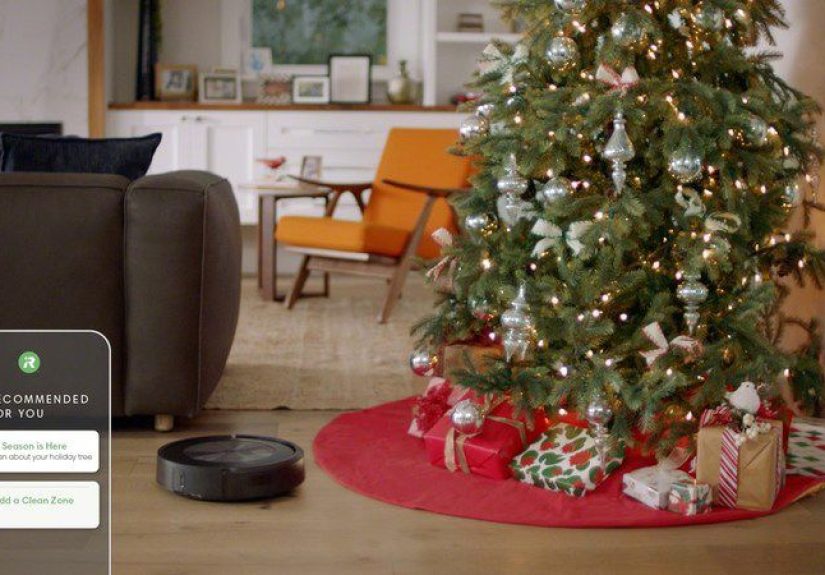
When iRobot announced its holiday update for the Roomba j7 and j7+, it focused on a very specific seasonal pain point: the explosion of pine needles around Christmas trees. The update allows the robot to detect your holiday tree area and automatically create a Clean Zone around the perimeter while placing a Keep Out Zone in the center so it doesn’t ram the stand or trunk.
In practice, that means you can:
- Send the Roomba directly to the “Holiday Tree Zone” from the app.
- Have it circle the base to vacuum up fallen needles daily.
- Relax knowing it won’t body-check the tree and send ornaments flying.
This is especially handy in small living rooms, where a tree might already be squeezed between the sofa and TV stand. Instead of taping off the area or stacking boxes around the stand, you can let software draw the boundaries.
But Are Pine Needles Safe for Vacuums?
Here’s the honest part: pine needles aren’t the easiest debris for any vacuum. They’re dense, sharp, and can build up in hoses and brushes. Cleaning experts warn that needles can cause clogs and act like tiny splinters inside certain vacuum designs if you’re not careful.
Independent testing has shown that some Roomba models can pick up a surprising amount of needlesaround 75–80 out of 100 in one controlled test with a Roomba i7+but performance depends heavily on flooring, needle type, and how long the mess has been sitting there.
To keep things safe and efficient:
- Use the Christmas tree Clean Zone for regular, light shedding, not post-holiday cleanup of an entire forest’s worth of needles.
- Empty the bin and clean the brushes more frequently during December and early January.
- If you see large piles of needles, do a quick manual sweep first, then let the Roomba handle the daily maintenance.
Loose Socks, Cables, and the Everyday Mess
Christmas trees are seasonal, but loose socks and cables are forever. That’s why socks are literally called out in the marketing for the j7 and j9 series. These models use PrecisionVision Navigation to recognize and avoid socks, shoes, cords, and other “temporary obstacles” so the robot doesn’t get stuck or tangled mid-mission.
Real-world owners confirm that difference. Compared with older Roomba lines that would happily inhale shoelaces or drag phone chargers around, the newer models are better at stopping just short of the hazard, steering around it, and continuing the route.
Is it perfect? No. A very crumpled sock or a cable hidden under a rug corner can still confuse the robot. But for everyday “kid dropped a sock next to the couch” scenarios, the new object detection dramatically cuts down on emergency rescue missions.
What This Means for Real Homes
The ability to detect trees, socks, and other objects is not just a cute bullet pointit meaningfully changes how you use a robot vacuum:
- Less pre-cleaning: You don’t have to walk the entire house picking up every sock and cord before pressing “Clean.”
- Fewer disruptions: The Roomba spends more time vacuuming and less time stuck, tangled, or crying for help from under a dining chair.
- Safer for your stuff: No more shredded phone cables or traumatized tree skirts.
- Better coverage: Because the robot isn’t constantly aborting runs, it can complete more full cleaning cycles each week.
For busy householdsespecially during the holidays when guests, decorations, wrapping paper, and toys all explode across the floorthese changes can be the difference between “Ugh, I’ll just use a normal vacuum” and “Sure, let the Roomba handle it.”
How to Get the Most from a Smart Roomba This Holiday
1. Start with a Strong Map
Give your Roomba a few dedicated mapping runs when you first set it up or after major furniture changes. Let it roam without interruption so it can build a solid map of your home layout. That map is the foundation for tree zones, keep-out zones, and room-specific cleaning.
2. Label Rooms and Create Zones
Once the map looks right in the app, label rooms with intuitive names like “Living Room,” “Kids’ Playroom,” or “Office.” Then:
- Create a Clean Zone around your Christmas tree or main seating area.
- Add Keep Out Zones around delicate stands, piles of cords, or tricky thresholds.
- Set up a “Socks Hotspot” if there’s a hallway where laundry mysteriously appears.
3. Use Schedules Strategically
Instead of just pressing “Clean” when things look bad, schedule your Roomba to run:
- Daily or every other day around the living room and tree.
- Right after the busiest timeslike evenings when kids finish playing or after a holiday party.
- During times you’re typically out of the room so the noise and movement bother you less.
4. Maintain the Robot Like a Appliance, Not a Toy
Smart features don’t cancel out maintenance. Empty the bin (or dock bag) as recommended, check brushes for tangles, and wipe the camera area occasionally so it can “see” clearly. During pine-needle season, bump up your maintenance frequency a bityour Roomba is working overtime.
Roombas vs. Other Robot Vacuums Around Christmas Trees
Roomba isn’t the only brand thinking about pine needles and holiday debris. Some competing robot vacuums highlight similar zone-cleaning features for heavy shedding areas around tree bases, and there are general guides explaining how to create dedicated “needle zones” and use virtual barriers to protect vacuums from clogs.
Independent tests of multiple robot brands show a mixed picture: many robots can handle some needles, especially on hard floors, but the combination of sharp, dry needles and plush carpet is still a challenge. In one test, a Roomba i7+ did surprisingly well, picking up a strong majority of needles, while other robots struggled more or left clumps behind.
Where Roombas currently stand out is the targeted “Holiday Tree Zone” feature and the breadth of recognized obstacle typessocks, shoes, cords, and morethanks to iRobot OS. It’s less about brute suction power and more about avoiding the things that can derail a cleaning run in the first place.
Real-Life Experiences with Roombas, Trees, and Socks
Specs and features are great, but what does all of this feel like in real homes? Imagine three very different households during December, all sharing the same upgraded Roomba skills.
1. The “Holiday Maximalist” Living Room
In this house, the Christmas tree is not a gentle accentit’s the centerpiece of the entire season. There are two tree skirts layered together, a train track running around the base, a village of tiny ceramic houses, and enough ornaments to qualify as a fire hazard.
Before a tree-savvy Roomba, vacuuming under this setup meant crawling around on the floor with a hose attachment, moving the train, and inevitably knocking over at least one snowman. With a j-series Roomba and a properly set Holiday Tree Zone, the dynamic changes.
Now, the owner sets a daily schedule for the “Tree Zone” at 9 p.m. The train track stays inside a Keep Out Zone, but the outer ring where needles fall and feet track crumbs is fair game. The robot glides around the base, scooping up needles and glitter without ramming the stand. The owner still does one big deep clean after the tree comes down, but the daily mess no longer builds up into a crunchy carpet of pine.
2. The Sock-Apocalypse Apartment
In a small apartment shared by two roommates, laundry lives everywhere except the hamper. Socks hide under the coffee table, near the couch, in the hallway, and occasionally in the kitchen. A previous, older robot vacuum was retired after repeatedly swallowing socks and timing out with “Error: Help.”
When they upgrade to a Roomba j7+, the first big test is simple: Can it clean without becoming a sock magnet? On the first run, the Roomba spots a lone sock in the hallway, slows down, and steers around it. The roommates find a notification in the app with a snapshot of the sock and a simple question: Is this an obstacle to avoid in the future?
They tap “Yes, avoid it,” amused that their vacuum is now more aware of their laundry habits than they are. Over time, the Roomba gets better at confidently dodging these fabric landmines. The roommates still should pick up their clothesbut on nights when they forget, the robot doesn’t get punished for it.
3. The Family with Pets and a Real Tree
In a suburban home with two kids and a dog, December is controlled chaos. The dog sheds year-round, the kids drop toys everywhere, and the parents love a real tree, which means a steady shower of needles.
They set up their Roomba j9+ with specific Clean Zones: one under the dining table, one in the entryway, and one around the Christmas tree. They add Keep Out Zones near the dog’s water bowl and a tangle of power strips behind the TV.
Here’s what changes:
- The Roomba no longer tries to drink from the dog bowl or wedge itself between cables.
- Pine needles don’t get a chance to pile up into a mess; they’re picked up in daily laps.
- When a stray sock appears in front of the couch, the robot recognizes it as a temporary obstacle and routes around it.
Instead of babysitting the robot, the parents mostly forget it’s thereuntil they notice they haven’t seen tumbleweeds of fur or crunchy needles underfoot in days.
What You Can Take from These Stories
The common thread in all these scenarios is that smart detection doesn’t replace common sense, but it does lower the friction of using a robot vacuum every day. You still get better results if you pick up big tangles of cords and huge piles of needle debris. But the Roomba is no longer a fragile gadget that has to be protected from your life; it’s a tool that adapts to it.
If you’re on the fence about getting a robot vacuum because of decorations, kids, pets, or the infamous “sock problem,” the new generation of Roombas is specifically designed for homes like yours. Christmas trees and loose socks aren’t dealbreakers anymorethey’re just more data points your tiny robot butler has learned to handle.
Conclusion: Tiny Robots, Bigger Holiday Peace
Roombas that can detect Christmas trees and loose socks aren’t a gimmickthey’re the result of serious upgrades in computer vision and intelligent software. With iRobot OS, PrecisionVision Navigation, and features like Holiday Tree Zones, these robots have gotten much better at avoiding the things that used to stop them in their tracks while still tackling the real goal: keeping floors cleaner with less effort from you.
Are they perfect? No. A robot vacuum still won’t replace a deep clean or a well-aimed handheld vacuum for tight corners. But as a daily maintenance toolespecially during the messy, festive, glitter-covered holiday seasonmodern Roombas can give you back real time and help keep your floors in the “good enough to have people over” zone.
And if your biggest worry is whether the robot will attack your Christmas tree or sacrifice itself to a stray sock, it might be reassuring to know: it’s already learning to avoid both.