Table of Contents >> Show >> Hide
- What Exactly Was “Army 2022,” and Why Was It So Awkward That Year?
- When Combat Becomes the Ultimate Product Review
- What the Expo RevealedSometimes Without Meaning To
- The “Export” Problem: Selling Weapons While You’re Trying to Restock
- Propaganda as Entertainment: The Domestic Audience Matters, Too
- Specific Examples That Capture the “Expo vs. Reality” Gap
- So What’s the Big Takeaway?
- Extra: The “Experience” Side of This Story (A 500-Word Add-On)
- Conclusion
Military expos are supposed to be the Olympics of optimism: bright lights, crisp uniforms, glossy brochures, and
“next-generation” everythingpreferably with a cool acronym. Russia’s Army-2022 International Military-Technical
Forum (often shortened to “Army 2022”) tried to deliver exactly that vibe. But there was one tiny, inconvenient
issue: the Ukraine war was running a live, unsponsored product demo at the same time.
And combat, unlike marketing, doesn’t accept returns. It doesn’t care about the color palette of your booth or how
many times you say “unmatched capability.” It’s a brutal scoreboard that turns slogans into statistics and
prototypes into awkward silences. In 2022, the gap between the expo’s staged confidence and the war’s daily
realities became impossible to ignoreby foreign buyers, by analysts, and even by casual onlookers who could see
the contrast without needing a defense budget or a clearance badge.
What Exactly Was “Army 2022,” and Why Was It So Awkward That Year?
A mega-expo built to project power
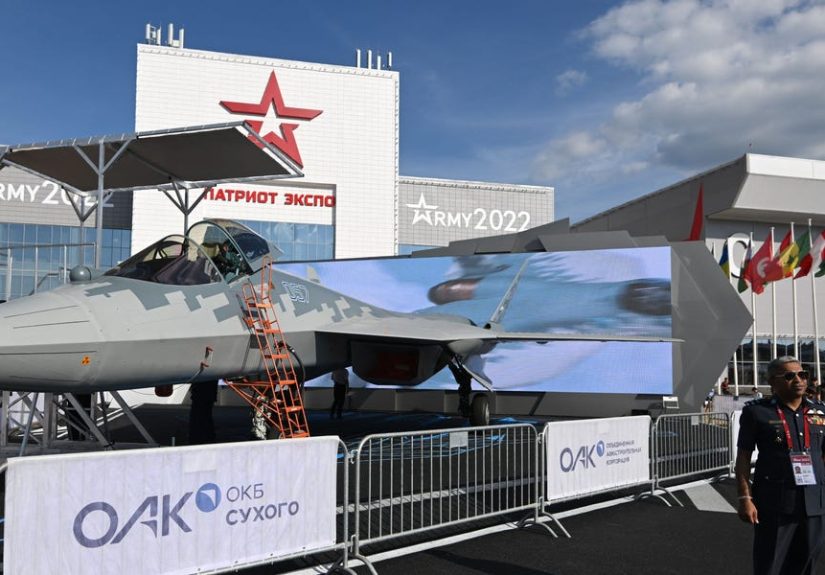
Army-2022 was designed as a showcase for Russian military hardware and ambitionan annual stage near Moscow where
industry and government could display weapons, sign contracts, and encourage foreign delegations to imagine Russia
as both a battlefield heavyweight and a reliable supplier. By Russian accounts, the 2022 forum ran from August 15
to 21, drew delegations from dozens of countries, and featured a huge number of exhibitors and systems on display.
In other words: big show, big numbers, big claims.
But the war made the “message” collide with the “evidence”
A defense expo is basically a brand campaign with armored vehicles. The goal is to create confidence: “Buy from us;
we’re modern, tested, and totally not sweating behind this podium.” Yet 2022 wasn’t a normal year. As the expo
opened, the Ukraine war had already revealed painful problemslogistics failures, equipment losses, and a mismatch
between Russia’s reputation for modernization and what was actually showing up in the field.
That’s the core reason the event struggled: the expo was competing against a constant stream of real-world footage,
battlefield analysis, and international reporting. In marketing terms, Army-2022 was trying to sell a luxury car
while the same model was being reviewedvery loudlyby millions of angry drivers on live TV.
When Combat Becomes the Ultimate Product Review
The showroom promises; the battlefield verifies
Weapon systems are sold on three big ideas: capability, reliability, and support. A brochure can claim all three.
A war tests all three. In Ukraine, the war highlighted how modern conflict punishes weak logistics, brittle
maintenance systems, and poor integration between units. Those problems don’t show up on the expo floor. They show
up when vehicles can’t be sustained, when communications fail, or when crews aren’t trained to use “advanced”
systems effectively under pressure.
Even when a system performs well in a narrow sense, it still has to fit into the larger machine of warfare:
targeting, coordination, resupply, repair, and replacement. A tank can be impressive; a tank without fuel, spare
parts, or a coherent operational plan becomes expensive yard art.
“Next-gen” hardware looks different when you need it tomorrow
One of the quiet truths about big defense expos is that they love the future tense: will field, will
deliver, will scale production. Wars force a different grammar: need now, replace fast,
fix today. During Army-2022, reporting and analysis suggested the event leaned less on flashy,
far-off platforms and more on systems that were in immediate demandespecially drones and upgraded, practical
equipment.
That shift tells you a lot. When a country’s military is under stress, it prioritizes what can be produced quickly,
used widely, and replaced cheaply. That is not an insult; it’s a reality of industrial-scale war. But it also
undercuts the expo’s main selling point: the image of effortless technological superiority.
What the Expo RevealedSometimes Without Meaning To
A “modernization” story that leaned heavily on upgrades
In 2022, Army-2022 featured plenty of military hardware, but much of the emphasis appeared to land on upgraded
systems and battlefield-relevant tools rather than a parade of breathtaking, never-before-seen breakthroughs.
Analysts noted the forum highlighted modernized platforms and systems that were in demandespecially unmanned
aircraft and reconnaissance tools. In plain English: the expo’s “wow” factor competed with the urgent need for
“works and ships.”
That’s why drones became such a prominent theme. Drones are comparatively fast to produce, adaptable, and useful
across many missionsreconnaissance, observation, and targeting support. They also fit modern war’s logic: if you
can see the battlefield better, you can make faster decisions. Army-2022 reportedly included contracts and
announcements related to drones already being used in the conflict, reinforcing that this wasn’t just a sales fair;
it was also a wartime procurement moment.
When your “partners” show up, it sends a message
Another signal came from who was visibly present. Defense expos are networking events as much as technology
showcases. When major Western buyers are absent (because of sanctions, politics, or reputational concerns), the
expo’s international posture changes. Coverage of Army-2022 highlighted how Chinese and Iranian vendors pitched
technology and displayed systemsan attention-grabbing detail because it hinted at a shifting ecosystem: Russia
traditionally sells and influences; now it also needs relationships that can help fill gaps and keep supply chains
moving.
Even if no one says it out loud, the optics matter. A country that once marketed itself as an independent
great-power arms supplier looked increasingly like a state navigating constraintsseeking workarounds, showcasing
resilience, and reminding the world that it still has friends (or at least business acquaintances willing to shake
hands near the camera).
The “Export” Problem: Selling Weapons While You’re Trying to Restock
Two customers, one factory: the front line wins
Arms exports depend on surplus capacity: you have enough production and enough inventory to supply yourself and
still ship abroad. A large war changes the math. Factories and repair depots shift toward domestic needs. Stockpiles
get prioritized for national use. Delivery timelines stretch. And foreign customerswho are not buying vibes, but
delivery schedulesnotice.
U.S.-based research on the arms market has described how the war strained Russia’s ability to supply exports and
reshaped buyer behavior. As Russia’s defense industry focused on meeting wartime demand and reconstituting losses,
the export side faced natural limits. In business terms, it’s hard to be the world’s store when you’re also
rebuilding your own warehouse after a storm.
Sanctions don’t just block money; they complicate parts and maintenance
Modern weapons rely on complex supply chainsespecially electronics, optics, and precision components. Sanctions
and export controls make it harder to import certain high-tech parts, pushing manufacturers toward substitution,
gray-market sourcing, or design compromises. Analysts in U.S. policy circles have long emphasized that sanctions can
degrade military capability over time by restricting access to key technologies, and the war made that dynamic more
visible.
For foreign buyers, this raises a practical question: even if a platform is solid, can the supplier support it for
years? Can they provide upgrades? Spare parts? Training? Maintenance? If a customer fears that servicing a system
will become politically risky or logistically difficult, the “deal” becomes less attractiveno matter how many
flags are printed on the brochure.
Reputation travels faster than a cargo ship
Arms buyers don’t just look at spec sheets. They look at reputation: battlefield performance, sustainment, and the
supplier’s geopolitical stability. The Ukraine war created reputational risk for Russian armsboth because the war
spotlighted operational shortcomings and because sanctions made transactions complicated. U.S. analysis has argued
this could reshape the global arms market and open opportunities for other exporters, especially China, to capture
share where Russian deliveries slow or confidence drops.
This does not mean every Russian system is “bad,” or that every customer will abandon Russia overnight. Defense
procurement is stickycountries buy ecosystems, not just equipment. But perception matters, and Army-2022 struggled
with a perception problem that a trade show cannot fix with better lighting.
Propaganda as Entertainment: The Domestic Audience Matters, Too
Army-2022 wasn’t only for foreign buyers. It also played to a domestic audience: families, students, patriotic
visitors, and citizens looking for a narrative of strength. Photo reporting from the event showed exhibits framed
as “trophies,” interactive displays, and an atmosphere designed to make military power feel accessible and
celebratory. That’s a familiar strategy: turn national security into a cultural product. Make it feel normal. Make
it feel proud.
But the Ukraine war made the contrast sharper. A carefully designed expo can create the image of control; war is
full of uncertainty and setbacks. When those two realities sit side by side, the messaging becomes strainedlike a
pep rally held next door to a very loud, very public exam.
Specific Examples That Capture the “Expo vs. Reality” Gap
1) The rise of drones as “the practical headline”
Army-2022 reportedly featured contracts for drones already being used in Ukraine, such as reconnaissance and
surveillance systems. That’s not surprising in a modern warbut it is revealing. Drones are the kind of tool that
war rapidly selects for: scalable, relatively affordable, and adaptable. The expo’s focus on these systems suggested
a shift from “look at our future” to “we need more of what works right now.”
2) The “buyer’s question”: can you deliver on time?
Export customers care about delivery schedules and long-term support. U.S. research and commentary have emphasized
that Russia’s war effort strains production and can reduce export availabilitycreating space for competitors. In a
market where contracts run for years, a supplier’s wartime priorities can become a deal-breaker.
3) The geopolitics of who’s in the room
Reporting on Army-2022 noted Chinese and Iranian vendors showcasing military technology. Whether you interpret that
as “multipolar networking” or “sanctions-era reality,” it signaled a change in the expo’s tone. The event looked
less like a global bazaar led by Russia and more like a gathering shaped by political constraints and new
dependencies.
So What’s the Big Takeaway?
Army-2022 was a textbook example of a hard truth: in wartime, reality is the loudest marketing campaign. A defense
expo can still sign contracts, entertain crowds, and project confidence. But it cannot outshine a conflict that
publicly tests the very equipment being promoted. In 2022, the war didn’t just compete with the expoit rewrote the
meaning of the expo.
If you want a simple way to remember the lesson, try this: trade shows sell potential. Wars reveal performance.
And performance, once revealed, is very difficult to photoshop.
Extra: The “Experience” Side of This Story (A 500-Word Add-On)
Imagine you’re walking into a massive military expo. The first thing you notice isn’t even the hardwareit’s the
choreography. There are banners, slogans, carefully chosen music, and that particular trade-show lighting that
makes everything look like it just got detailed. A tank isn’t just a tank; it’s a statement. A missile
isn’t just a missile; it’s a promise. People pose for photos. Kids point at vehicles the way they point at
dinosaurs in museumscurious, thrilled, and blissfully unaware that the “exhibit” has consequences outside the
fence.
In a normal year, you might leave thinking, “Wow, that country sure wants to look strong.” But in 2022, you didn’t
need to imagine the outside world. It was already on your phone. The war’s images and updates were everywhere:
analyses of tactics, discussions of production constraints, debates about sanctions, and the steady drumbeat of
reports describing what was happening in Ukraine. The effect is surreallike attending a product launch where the
product is simultaneously being stress-tested in public.
That’s the psychological collision Army-2022 couldn’t escape. Expos try to create a controlled environment. They
frame the narrative. They highlight the angles that flatter. They hide the awkward questions behind velvet ropes
and polite applause. War does the opposite. War is messy, fast, and unfiltered. It doesn’t care what the marketing
team planned for the keynote.
Now picture the conversations that might happen in the quieter corners of the expothe ones not meant for the
cameras. A potential buyer isn’t just asking about range or payload. They’re thinking about delivery times, spare
parts, and what happens if sanctions tighten. A procurement official isn’t only watching the demo; they’re
mentally calculating risk: “If I buy this, can I maintain it for a decade? Will the supplier still pick up the
phone? Will my own banking system even allow the payment?”
Meanwhile, the domestic audience is having a different “experience.” For visitors, the expo can function like a
national-security theme parkpatriotic, impressive, and packaged. But the war creates a shadow that’s hard to
ignore. When daily reality contradicts the staged story, people start reading the details differently. A shiny
display becomes less “future tech” and more “why do we need so many replacements?” A confident speech sounds less
like reassurance and more like insistence.
The lasting experience of Army-2022, then, isn’t just about what was displayed. It’s about what couldn’t be
contained: the awareness that the most influential “exhibit” wasn’t inside Patriot Park at all. It was the war
itselfan ongoing, brutally honest evaluation that no expo could outcompete.
Conclusion
Russia’s Army-2022 expo tried to project strength, modernity, and market confidence at a moment when the Ukraine war
was undermining all three in real time. The forum still matteredcontracts were discussed, alliances were signaled,
and domestic messaging was amplified. But it also exposed a deeper truth: the world’s most persuasive demonstration
of military equipment is not a trade show. It’s performance under pressure. And in 2022, that pressure was on full
display.