Table of Contents >> Show >> Hide
- Why House Numbers Matter So Much in Sausalito
- The Sausalito Setting: Hills, Water, History, and Design Personality
- What Makes a Good House Number?
- Sausalito House Number Styles That Fit the City
- Placement: Where Sausalito House Numbers Should Go
- House Numbers and Historic Design in Sausalito
- Safety Considerations: Fire, Evacuation, and Emergency Response
- Common Mistakes to Avoid
- Best Materials for Sausalito House Numbers
- How to Choose the Right Size and Finish
- DIY Installation Tips
- Maintenance: Keep the Numbers Working
- Experience Notes: What Living With Sausalito House Numbers Teaches You
- Conclusion
Sausalito house numbers may sound like a tiny design detail, the kind of thing you notice only when a delivery driver wanders past your gate for the third time. But in a hillside city where streets curl like ribbons, homes peek through greenery, stairways double as shortcuts, and waterfront addresses can feel like a scavenger hunt, house numbers matter more than most homeowners realize.
A good address number does three jobs at once. It helps guests find the right door, gives first responders a clear target in an emergency, and adds a polished finishing touch to a home’s curb appeal. In Sausalito, where architecture ranges from historic cottages and Mediterranean-style hillside homes to sleek modern residences and floating homes, the right number style can quietly say, “Yes, this home has personality,” without shouting from the fence like a neon tourist T-shirt.
This guide explores how to choose, place, and maintain Sausalito house numbers that are beautiful, readable, code-conscious, and appropriate for the city’s unusual mix of terrain, history, and waterfront charm.
Why House Numbers Matter So Much in Sausalito
Sausalito is not a flat suburban grid where every house sits politely in a straight line with a mailbox out front. It is a compact Marin County city shaped by San Francisco Bay, steep hillsides, narrow lanes, historic streets, stairways, docks, and lush plantings. That beauty is exactly what makes the city special, but it also makes address visibility more important.
When house numbers are too small, hidden by shrubs, painted in low-contrast colors, or placed where nobody expects them, the result is more than a minor inconvenience. A package may be delayed. A dinner guest may call from the wrong driveway. More seriously, fire, police, or medical responders may lose valuable time trying to identify the correct home.
National fire-safety guidance consistently emphasizes that address numbers should be plainly visible from the street or road. The practical idea is simple: emergency crews should not have to play “Where’s Waldo?” with your address while responding to a medical call or fire alarm.
The Sausalito Setting: Hills, Water, History, and Design Personality
Sausalito’s identity is strongly tied to its waterfront, scenic views, arts culture, and small-town character. Visitors often come for the views, restaurants, galleries, boating, walking paths, and easy access to nearby Marin destinations. Residents, meanwhile, live with the daily realities behind the postcard: tight streets, limited parking, salt air, fog, bright sun, and hillside properties where the front door may sit above, below, or sideways from the street.
That context shapes how house numbers should work. A number mounted next to a front door may look elegant up close, but if the door is forty steps above the road and partly hidden by bougainvillea, it may not help anyone arriving from the street. A floating home or waterfront unit may need identification that makes sense from a dock approach rather than a typical curb. A historic commercial or residential property may require a more restrained style so the number supports the building’s character instead of competing with it.
In other words, the best Sausalito house numbers are not just decorative. They are site-specific.
What Makes a Good House Number?
A strong house number design balances readability, durability, placement, and personality. The goal is not to choose the biggest digits on the internet and bolt them to the wall like a scoreboard. The goal is to make the address easy to find without making the home look like a municipal parking garage.
1. Visibility From the Street
The number should be readable from the main approach. In most cases, that means the street fronting the property. For homes set back from the road, on private lanes, or behind gates, a secondary sign at the driveway entrance or mailbox may be necessary. If the house cannot be seen clearly from the road, the address number should meet people where they arrive.
2. Strong Contrast
Contrast is the secret sauce. Dark bronze numbers on dark cedar siding may look sophisticated in a design magazine, but at dusk they can disappear faster than a parking spot on Bridgeway. Choose finishes and backgrounds that stand apart: black on light stucco, brushed stainless on dark wood, white ceramic on charcoal, or warm brass on deep green.
3. Adequate Size
Many fire-code references use four inches as a common minimum height for residential address numbers, with enough stroke width to make the digits readable. Larger may be better for properties with long setbacks, shadowed entries, or fast-moving street traffic. For hillside homes, a number that looks large in your hand may look tiny from the road.
4. Nighttime Readability
Sausalito can be foggy, shadowed, and dim in the evening. Numbers should either be placed under existing exterior lighting or paired with low-glare illumination. The best lighting is helpful without turning the entry into an airport runway. Warm, downward-facing light often works well for residential settings.
5. Weather Resistance
Bay air is beautiful, but it is not always gentle. Salt, fog, moisture, and sun exposure can dull finishes, loosen adhesives, and stain low-quality metals. Durable materials such as stainless steel, powder-coated aluminum, bronze, brass, ceramic tile, stone, or high-quality exterior-grade composites usually perform better than thin painted plastic.
Sausalito House Number Styles That Fit the City
Sausalito does not have one architectural language. That is part of the fun. A single walk can take you past cottage details, modern glass, wood-shingled homes, hillside decks, garden gates, and waterfront structures. The best number style should feel like it belongs to the building.
Modern Minimalist Numbers
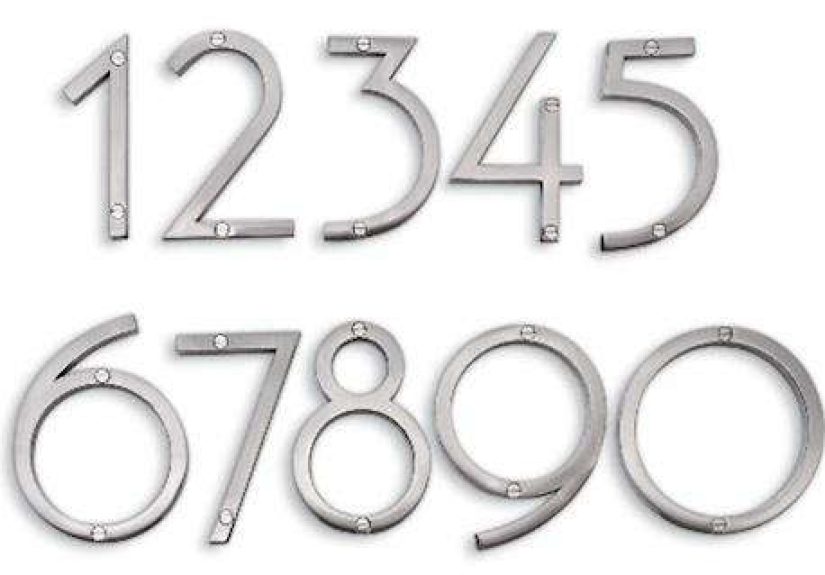
Modern house numbers work beautifully on contemporary Sausalito homes with clean lines, glass, steel railings, and simple exterior palettes. Floating metal numbers mounted slightly off the wall can create a subtle shadow effect. Sans-serif fonts are especially readable, which makes them a practical choice for steep streets and evening visibility.
For a modern home, consider matte black, brushed aluminum, stainless steel, or satin brass. Keep spacing generous. Avoid overly thin digits unless they are large enough and strongly contrasted.
Coastal and Nautical Numbers
A waterfront town can handle a little nautical charm, but restraint is your friend. A tasteful bronze plaque, marine-grade stainless numbers, or ceramic tiles in blue-and-white tones can nod to the bay without making the entry look like a seafood restaurant menu.
For floating homes, dockside cottages, and properties near the marina, weather-resistant materials are especially important. Numbers should be placed where visitors and emergency responders actually approach: dock gate, gangway, entry rail, or clearly visible exterior wall.
Historic and Traditional Numbers
Older properties often look best with classic address plaques, individual metal numerals, transom numbers, or tilework that respects the building’s period. Sausalito’s historic-design resources emphasize preserving architectural character and integrity, so homeowners with historic properties should think carefully before installing bold, oversized, ultra-modern numbers.
Traditional does not have to mean boring. A small bronze plaque, hand-painted ceramic tile, or clean serif numerals can be elegant and highly readable when properly placed and lit.
Artistic Custom Numbers
Sausalito has a strong creative streak, so custom house numbers can feel right at home. Local-style designs might include handmade tile, sculptural metalwork, carved wood, or numbers integrated into a garden wall. The trick is to keep the digits legible. Art is wonderful. Art that causes a paramedic to squint at midnight is less wonderful.
Placement: Where Sausalito House Numbers Should Go
Placement is often more important than style. Even the most expensive numbers fail if they are hidden behind a climbing rose, tucked under an eave, or mounted on a side wall visible only to raccoons and extremely determined delivery people.
Near the Main Entrance
For many homes, the classic location near the front door works well. Numbers can be mounted beside the door, above the door, on a transom, or on a wall surface adjacent to the entry. This is especially appropriate for homes where the door is clearly visible from the street or walkway.
At the Street or Driveway
If the home is uphill, downhill, behind a gate, or set back from the public way, add address identification at the street. This might be on a post, mailbox, retaining wall, gate column, or low monument sign. A street-level number is often the most useful number on a Sausalito hillside property.
On the Mailbox
USPS guidance recommends putting the house or apartment number on the mailbox and keeping the path to the mailbox clear. For curbside boxes, the number should be easy for carriers to see. If the mailbox is on a different street from the residence, the full street address may be needed on the box.
For Multi-Unit Buildings
Multi-unit properties should make both the building number and individual unit numbers easy to understand. A directory or clear suite numbering can prevent confusion. This is especially helpful for older buildings, hillside apartments, mixed-use properties, and homes with accessory dwelling units.
House Numbers and Historic Design in Sausalito
Sausalito’s planning resources identify historic design guidelines for preserving the architectural heritage and integrity of historic resources. In historic contexts, address signs may be treated as part of the building’s overall visual character. This matters for homeowners and business owners who want to improve visibility without creating a design-review headache.
In historic areas, address signs should generally be prominent from the street while remaining simple and appropriate. Placement near doors, transoms, or wall surfaces adjacent to entries is often the most natural solution. Script lettering may be charming on a wedding invitation, but it can be hard to read on a building, especially from a distance. Clear individual numbers are usually better.
When in doubt, choose a number style that looks permanent, modest, and compatible with the property. If the building has official historic status or sits in a historic overlay district, check with the city before making major exterior changes. A small number upgrade may be simple, but assumptions are where home projects go to grow extra paperwork.
Safety Considerations: Fire, Evacuation, and Emergency Response
Sausalito residents are served by emergency systems that rely on accurate locations, addresses, and evacuation zones. Southern Marin Fire provides evacuation-zone resources and encourages residents to understand their zone and routes. In emergencies, clear address identification supports faster decision-making and response.
Visible house numbers are especially important where streets are narrow, vegetation is dense, homes are stacked along slopes, or access requires stairs and paths. Emergency responders need to find the right property quickly, sometimes in smoke, darkness, rain, or heavy traffic. A readable address number is one of the simplest safety upgrades a homeowner can make.
For best results, view your house number the way a responder would. Stand in the street. Look from both directions. Check it at night. Then ask the honest question: “Could someone who has never been here find this address quickly?” If the answer is “maybe,” improve it.
Common Mistakes to Avoid
One common mistake is choosing numbers that are beautiful but too small. Another is mounting them in a stylish but invisible location. Low contrast is also a frequent problem, especially on dark wood, stone, brick, or painted gates.
Overgrown landscaping is another classic culprit. A number that was perfectly visible in January may vanish behind enthusiastic spring greenery by May. Sausalito gardens have ambition. Trim plants regularly so they do not block the address.
Finally, avoid overly decorative fonts. If a number seven looks like a dancing ribbon and a number three looks like an ampersand wearing a hat, delivery drivers will suffer. Choose character, not confusion.
Best Materials for Sausalito House Numbers
Because Sausalito sits near the bay, materials should be chosen for both appearance and endurance. Stainless steel is clean, modern, and corrosion-resistant. Bronze and brass develop character over time and suit many traditional homes. Powder-coated aluminum is lightweight and durable. Ceramic tile offers color and handmade charm. Stone plaques can look substantial and timeless, especially near garden walls or gates.
Wood can be beautiful, but it needs proper sealing and maintenance. Painted numbers can work well, too, particularly on curbs, gates, or walls, but paint fades and should be refreshed. Reflective numbers may be useful for properties with low nighttime visibility, though they should be selected carefully so they do not clash with the home’s design.
How to Choose the Right Size and Finish
Start with distance. If the number must be read from ten feet away, modest digits may work. If it must be read from across the street, up a slope, or from a vehicle, go larger. A good rule of thumb: choose the smallest size that is comfortably readable from the real approach, not from two feet away while holding a latte and admiring your paint color.
Next, consider the wall surface. Smooth stucco, shingle, stone, concrete, painted wood, and glass all affect readability. Glossy finishes can glare in direct sun. Thin metal can vanish on textured walls. Dark numbers need light backgrounds; light numbers need dark backgrounds.
Finally, match the mood of the house. Modern home? Clean metal. Historic cottage? Classic plaque or tile. Waterfront property? Marine-grade finish. Garden entry? Stone, bronze, or ceramic can work beautifully.
DIY Installation Tips
Before drilling, tape paper templates to the wall and step back. View the numbers from the street, sidewalk, driveway, and nighttime approach. Check alignment with a level, but also trust your eyes. On older homes, walls and trim may not be perfectly square, so visual balance matters.
Use exterior-rated screws, anchors, adhesives, and spacers. If mounting into stucco, masonry, or tile, use proper bits and seal penetrations to prevent moisture problems. For metal numbers near the bay, choose corrosion-resistant hardware. For gate-mounted numbers, make sure the digits stay visible whether the gate is open or closed.
If installation affects a historic surface, expensive cladding, glass, or electrical lighting, consider hiring a professional. A small project can become surprisingly dramatic when a drill meets the wrong material.
Maintenance: Keep the Numbers Working
House numbers are not a “set it and forget it” detail. Check them at least once a year. Clean off salt residue, pollen, dust, and spider webs. Tighten loose screws. Refresh paint. Replace faded mailbox numbers. Trim plants. Confirm that lighting still works.
After exterior painting, landscaping, or remodeling, check visibility again. Many address problems happen accidentally when a new fence, shrub, light fixture, or paint color changes the background. Your address number should survive every design update with its dignity and readability intact.
Experience Notes: What Living With Sausalito House Numbers Teaches You
The funny thing about Sausalito house numbers is that you often notice them only after they fail. A friend arrives late because the GPS insists your home is “on the left,” except the left is a retaining wall, a stairway, and possibly a raccoon with opinions. A food delivery driver calls from two streets away. A contractor circles the block, then hikes up the wrong steps carrying a toolbox and the expression of a man reconsidering his career.
That is when the humble house number becomes a local hero. In a place like Sausalito, the path from street to front door is not always obvious. Some homes sit above the road with stairs tucked between gardens. Others sit below street level, where the roof is easier to spot than the entry. Waterfront and floating-home addresses may follow dock logic rather than suburban logic. Even a perfectly accurate address can feel mysterious if the number is not placed where real humans naturally look.
A practical experience-based approach is to test your numbers like a visitor. Start from the direction most cars approach. Can you see the number before passing the property? Now approach from the opposite direction. Does a tree, parked car, mailbox cluster, or shadow block the view? Try it in the evening, when glare fades and porch lights take over. If your number disappears after sunset, it is not doing its full job.
Another lesson: style should support confidence. Many homeowners choose numbers that match their design taste but forget the stress of arrival. A guest should not have to wonder whether a curled metal shape is a six, a nine, or an abstract tribute to fog. A delivery driver should not need binoculars. The best house numbers feel natural, but they also remove doubt.
For Sausalito homes with gardens, maintenance is part of the design. Plants grow quickly in the mild coastal climate, and what begins as a tasteful fern can become a green curtain. Trim around address signs regularly. If you have a gate, consider placing numbers on both the gate and the house, especially if the entry is not visible from the street. If your mailbox is the most visible element at the curb, make it part of the address system instead of treating it as an afterthought.
Homeowners who renovate often learn one final lesson: address numbers are easiest to plan early. When choosing exterior lighting, gate hardware, wall colors, landscape walls, or mailbox locations, include the house number in the design plan. That way, it looks intentional instead of being squeezed into the only remaining empty spot beside the doorbell.
In the end, Sausalito house numbers are a small detail with oversized influence. They guide people, support safety, respect architecture, and add that final “finished” note to a home. Done well, they do not scream for attention. They simply say, clearly and confidently, “You found the place.” Around here, with the hills, fog, views, docks, and winding streets, that is no small accomplishment.
Conclusion
Sausalito house numbers are more than exterior decoration. They are part curb appeal, part wayfinding tool, part safety feature, and part architectural detail. The best numbers are easy to read from the street, durable enough for coastal weather, compatible with the home’s style, and thoughtfully placed for the way people actually approach the property.
Whether you own a hillside cottage, a modern view home, a historic property, or a waterfront residence, treat your house number as a design decision with a practical mission. Make it visible. Make it tasteful. Keep it maintained. Your guests, delivery drivers, postal carrier, and emergency responders will thank youeven if they never say it out loud.