Table of Contents >> Show >> Hide
- The Photo That Launched a Thousand Group Chats
- What Was Actually Going On in the Room
- The Dress Was the Headline… Until the Background Became the Headline
- The Internet’s Two-Speed Reaction: Awe and “WaitWho’s That?”
- The Human Side of the Photobomb
- Why Celebrity Bridal Content Goes Viral So Easily
- What This Moment Reveals About Luxury, Labor, and the Frame
- Practical Lessons (Yes, Even for Non-Billionaire Brides)
- Conclusion: A Dress, A Meme, and a Reminder to Look Up From the Lace
- Experiences Related to the “Elves” Moment (and Why It Feels So Familiar)
There are two kinds of people on the internet: the ones who see a celebrity bridal photo and think, “Aww, love,”
and the ones who immediately zoom in like they’re analyzing the Zapruder film. In the case of Lauren Sánchez’s
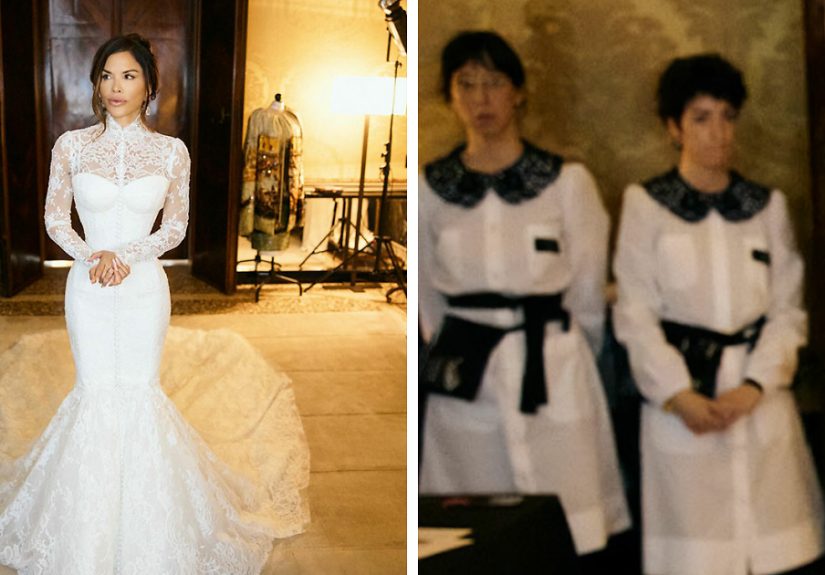
bridal pictures, the zoomers won the daybecause the most talked-about “accessories” in the frame weren’t diamonds,
lace, or a couture veil. They were two uniformed staffers in the background, standing with the kind of solemn
stillness usually reserved for museum guards and people who just realized their phone is at 1%.
The screenshots spread. The jokes wrote themselves. “She has a set of elves,” some commenters crackedbecause in
one viral image, the staffers’ crisp, pinafore-like work smocks and serious expressions created an oddly storybook
vibe: like the bridal shoot accidentally wandered into the workshop scene of a holiday movie. Other onlookers
reached for darker pop-culture shorthand (“Shining twins” was one comparison making the rounds), while still
others turned the moment into a broader critique about wealth, labor, and the optics of luxury.
If you’re wondering how a bridal photo becomes a social commentary speed-run, you’re in the right place. Let’s
unpack what likely happened in the room, why the “elves” moment hit a nerve, and what this viral photobomb says
about celebrity weddings in the age of the screenshot.
The Photo That Launched a Thousand Group Chats
The viral moment centers on behind-the-scenes bridal images tied to Lauren Sánchez and Jeff Bezos’s highly
publicized wedding festivities. The imageswidely recirculated across entertainment news and social platformsshow
Sánchez in a high-fashion bridal look. What viewers fixated on wasn’t the gown (though yes, it was a
headline-maker). It was the background: two uniformed women positioned off to the side, unsmiling, hands folded or
at rest, giving off a vibe best described as “professionally present.”
And because the internet has never met a background detail it couldn’t turn into a headline, the staffers became
the story. Commenters speculated about who they were. Were they atelier tailors? Bridal assistants? House staff?
(The internet, famously, loves certainty the way cats love knocking cups off counters: with no reason and maximum
commitment.)
Why the “Elves” Line Landed
Humor travels fast online, and the “set of elves” quip had everything a viral joke needs: a crisp visual contrast,
a punchy metaphor, and a slightly absurd image you can’t unsee once someone points it out. The staffers’ uniforms
read “workroom” to some people and “storybook servant” to othersespecially when paired with a glamorous bride
posing in couture.
The joke also functioned like a pressure valve. When people feel uneasy about extreme wealth on display, comedy is
often the quickest way to say, “This feels weird,” without writing a thesis. The meme doesn’t just roastit
telegraphs discomfort.
What Was Actually Going On in the Room
The most grounded explanation is also the least dramatic: those staffers were likely doing their jobs in a couture
setting. Multiple U.S. outlets reported that Sánchez wore a custom Dolce & Gabbana wedding dressa
high-neck, hand-appliquéd Italian lace gown with a corseted silhouette and a long line of tiny buttons.
Fashion coverage emphasized the craftsmanship involved, noting that the gown required extensive atelier work and
featured a very deliberate, old-Hollywood inspiration.
That matters because couture is not made in a vacuum (or a magical cloud of celebrity glow). It’s made by people.
Real people. With pins. And measuring tapes. And the kind of concentration that does not photograph as
“sparkly-and-fun,” because they’re trying not to stab the bride.
The Couture Context: Why Staffers Wear Uniforms in Ateliers
If you’ve ever seen behind-the-scenes footage from a fashion house, you’ve probably noticed the “atelier uniform”
look: smocks, aprons, or coordinated workwear. It’s practical. It protects delicate fabrics from oils, snags, and
stray makeup transfer. It offers pockets for tools (pins, chalk, thread, clips). It also signals professional
rolesespecially in high-pressure environments where multiple teams are moving around a garment that can take
hundreds of hours to construct.
In other words: the staffers weren’t “photobombing” in the sense of trying to steal attention. They were simply
present in a working environment that happened to be photographed for public consumption. The camera framed
couture labor and couture glamour in the same shotthen the internet reacted to the contrast like it was a pop quiz
it didn’t study for.
The Dress Was the Headline… Until the Background Became the Headline
Let’s be clear: the bridal fashion itself was engineered to dominate fashion news. Coverage described Sánchez’s
wedding look as a departure from the “sexy modern” aesthetic she’s often associated with on red carpets, leaning instead
into a more classic, high-neck silhouette inspired by 1950s glamour. Reports credited the dress inspiration to
Sophia Loren’s wedding look from the 1958 film Houseboat. That reference alone is a full-on fashion press
catnip buffet: cinematic nostalgia, old-Hollywood elegance, and a designer house known for dramatic craftsmanship.
In other words: the gown had everything. High-fashion pedigree. Old-school romance. A storyline about personal
evolution. Enough buttons to make your thumb sore just thinking about fastening them. And yet, the internet still
latched onto the two quiet figures behind the bridebecause background people are often where the “truth vibe”
lives in a posed photo.
The Internet’s Two-Speed Reaction: Awe and “WaitWho’s That?”
Viral bridal photos tend to split public reaction into two lanes:
- Lane 1: Fashion delight. “Wow, the lace! The veil! The craftsmanship!”
- Lane 2: Cultural commentary. “Hold up. Why does this feel like a scene about class?”
The “elves” moment lived in Lane 2. Not because the staffers did anything wrong, but because the image triggered a
familiar cultural discomfort: extreme luxury shown alongside visible labor. When people talk about “optics,” this
is what they meanhow an image feels, not just what it shows.
Some commenters went further, using loaded language (“peasants,” “handmaids”) to describe the staffers. That kind
of phrasing is inflammatory and unfair to workers who didn’t ask to become a meme. But it also reveals why the
photo traveled: it became a canvas for broader anxieties about wealth, inequality, and who gets to be centered in
glamorous narratives.
The Human Side of the Photobomb
Here’s the part that gets lost when we meme someone into a punchline: those staffers are people at work.
They’re not props. They’re not characters. They’re not there to communicate a messageyet the internet treated
their expressions like subtitles.
And expressions are tricky. A neutral face in a formal setting can be read as “miserable,” “judgmental,” “tired,”
or “focused,” depending on what story a viewer already wants to tell. Add a uniform, add a billionaire wedding
context, add a culture primed for eat-the-rich discourse, and suddenly a perfectly normal work posture becomes a
viral Rorschach test.
The funniest version of this story is “elves photobomb a bridal shoot.” The most accurate version is “a couture
workroom got photographed, and the internet noticed the workers.”
Why Celebrity Bridal Content Goes Viral So Easily
1) Weddings are built for emotionand the internet loves emotion
Weddings combine fantasy, tradition, money, romance, and symbolism. Even people who claim they “don’t care about
celebrity weddings” somehow find themselves knowing the venue, the designer, and what the afterparty dress code
was. (It’s not hypocrisy; it’s the algorithm.)
2) Behind-the-scenes photos feel “real,” even when they’re curated
A polished bridal portrait is beautiful. A behind-the-scenes shot feels like you’re getting access. And “access”
is social media currency. The more “insider” the moment looks, the faster it spreadsespecially if there’s a
surprising detail in the background.
3) Contrast creates clickability
A single image that contains both extreme glamour and visible labor is instantly discussable. It invites
interpretation, debate, andmost importantlycomments. And comments are the gasoline that fuels virality.
What This Moment Reveals About Luxury, Labor, and the Frame
Fashion houses rely on skilled artisans and atelier staff to create couture. That’s not controversialit’s the
point. Craftsmanship is the value proposition. But modern audiences are increasingly sensitive to how labor appears
in lifestyle content, especially when the vibe reads “servants in the background of a celebration.”
It’s not that workers shouldn’t be visible; it’s that visibility without context can feel dehumanizing. If the
image highlights opulence while the workers appear anonymous and solemn, people fill the gaps with assumptions.
That’s how the “elves” joke turns into a conversation about class in under 30 minutes.
The viral backlash also taps into a broader trend: audiences want luxury stories to acknowledge the humans behind
the productwithout turning those humans into scenery. It’s a delicate line, and the internet will absolutely
sprint across it in cleats.
Practical Lessons (Yes, Even for Non-Billionaire Brides)
You don’t need a couture gownor a Venice weddingto learn something from this.
If you’re posting bridal content, influencer shoots, or even a family event photo, here are a few genuinely useful
takeaways:
- Do a background scan before you post. The internet will see what you missed. Always.
- Think about consent. If workers, staff, or strangers are clearly visible, consider cropping or blurring.
- Add context when context matters. A simple caption acknowledging the team can humanize the moment.
- Remember: “behind the scenes” is still a stage. If it’s public, it’s part of the narrative.
Conclusion: A Dress, A Meme, and a Reminder to Look Up From the Lace
Lauren Sánchez’s bridal photos were always going to make headlinesbecause celebrity weddings, couture gowns,
and high-profile relationships are basically the internet’s comfort food. But the viral “elves” photobomb is a
reminder that the most powerful part of an image isn’t always the subject. It’s the story people think they see.
In one frame, the internet found glamour, craft, discomfort, comedy, and criticismthen turned it into a viral
moment that said as much about us as it did about the photo. Because if there’s one thing we can count on in 2026,
it’s this: the comments section will always be more dramatic than the wedding.
Experiences Related to the “Elves” Moment (and Why It Feels So Familiar)
Even if you’ve never had your bridal photos dissected by millions of strangers (lucky you), the underlying
experience is surprisingly relatable: you post something you think is the main character, and the internetor your
friendsdecide the background is the plot twist.
You’ve probably seen a version of this at regular-people weddings. Someone shares a gorgeous first-look photo, and
the group chat zooms in on Uncle Mike in the mirror taking a blurry iPad picture like he’s documenting Bigfoot.
Or a bride posts a dreamy dance-floor shot, and everybody fixates on the exit sign glowing like it’s auditioning
for a leading role. The point isn’t that people are mean (though… sometimes, yes). The point is that humans are
pattern-spotters. We love the “hidden detail.” And social media turns hidden details into public events.
The “staffers in the background” angle also mirrors what happens in travel and lifestyle content. Think of the
influencer who posts a serene “morning coffee” balcony photoonly for viewers to notice a construction worker two
buildings over, staring into the void like he’s contemplating the concept of rent. Or the gym selfie where someone
in the background is making a face that becomes a meme. Most of the time, the background person isn’t trying to be
funny. They’re just living their life in the same physical space as someone else’s highlight reel.
What makes the Lauren Sánchez moment more charged is the setting: couture + celebrity + billionaire wedding
coverage. The internet doesn’t just read the image as “a fitting.” It reads it as a symbol. And when images become
symbols, people bring their own experiences to the interpretation. If you’ve ever worked an eventbanquets,
weddings, brand activationsyou know the feeling of being “visible but not seen.” You’re present, professional,
focused. You’re not trying to look delighted. You’re trying to get the job done without spilling anything,
snagging anything, breaking anything, or becoming a problem. That neutral work-face can look “grim” in a glamorous
photo, even when it’s just concentration.
On the flip side, lots of people also know what it’s like to post something celebratory and get blindsided by
commentary you didn’t anticipate. You thought the dress was the story; suddenly the internet is debating the
lighting, the caption, the vibe, the brand, and the socioeconomic implications of the chair in the corner. That
disconnectbetween what you meant to share and what people choose to discussis the core social media experience.
Celebrity or not, the feeling is the same: “Wait… that’s what you noticed?”
If there’s a healthier takeaway from all this, it’s empathy with sharper boundaries. Empathy for the workers who
get pulled into someone else’s spotlight. Empathy for the reality that behind every “perfect” luxury image there
are teams of people making it happen. And boundaries in the form of better choices about what gets postedbecause
once the internet decides you have “a set of elves,” it’s not asking permission to run with it.