Table of Contents >> Show >> Hide
- Why Spock Is So Easy To Rank (And Hard To Agree On)
- Ranking The Major On-Screen Spocks
- Best Spock Episodes: A Fan-Favorite Ranking
- 1. “Amok Time” – Tradition vs. Choice
- 2. “Journey to Babel” – Family Drama at Warp Speed
- 3. “The Galileo Seven” – Spock in Command
- 4. “The Menagerie” – Loyalty Above Regulations
- 5. “This Side of Paradise” – Spock Under the Influence
- 6. “Mirror, Mirror” – The Dark Spock
- 7. “The Devil in the Dark” – Logic With Compassion
- 8. “Charades” and Other Modern Highlights
- Spock vs. Other “Logical” Characters: A Favorite Fandom Debate
- Is Modern Spock Too Emotional? Opinions Are Divided
- How To Build Your Own Spock Rankings (Without Starting a Flame War)
- Experiences From Living With Spock Rankings in Your Head
- Conclusion
In a universe full of starship captains, rogue traders, and omnipotent space beings,
it’s a half-Vulcan science officer who quietly steals the show. Mr. Spock has been
part of pop culture for nearly six decades, played across timelines, reboots, and
animated styles. Naturally, that means Star Trek fans love one thing almost as much
as they love warp cores and tribbles: ranking Spock. Which actor nailed the role?
Which episodes showcase him best? And how do fans really feel about a more emotional,
modern Spock?
This guide breaks down Spock rankings and opinions from across the fandom, blends
them with on-screen evidence, and adds some friendly analysis so you can decide
where your own logical (or not-so-logical) allegiances lie.
Why Spock Is So Easy To Rank (And Hard To Agree On)
Spock is unusual even by Star Trek standards. He’s a hybrid of Vulcan logic and
human emotion, constantly wrestling with his identity, family expectations, and
the very idea of what it means to be “rational.” That inner tug-of-war is what makes
him endlessly watchable. He’s not just the calm voice on the bridge; he’s a character
who explodes in rare, powerful emotional moments that feel earned precisely because
he spends so much time trying to suppress them.
Across TV series, films, and reboots, the writers have used Spock to explore big
questions: duty versus friendship, logic versus compassion, and whether a person
has to be only one thing. Because each version of Spock leans into slightly
different aspects of that struggle, fans tend to rank them based on what they
value most: stoic restraint, emotional growth, dry humor, or philosophical depth.
Ranking The Major On-Screen Spocks
Before diving into episode lists and character debates, it helps to look at the
big portrayals of Spock that show up in rankings and fan discussions. Most
conversations revolve around three core live-action actors, with animated and
alternate versions showing up as wild cards.
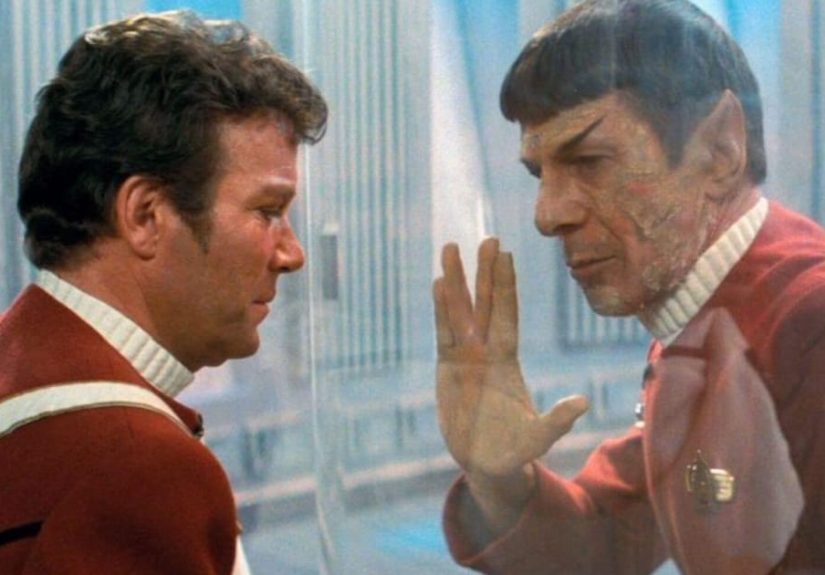
1. Leonard Nimoy’s Original Spock
Leonard Nimoy is almost always ranked as the definitive Spock, and it’s not hard
to see why. He originated the role in Star Trek: The Original Series,
carried it into multiple films, lent his voice to the animated series, and even
bridged timelines in the Kelvin movies. His performance blends sharp intellect,
subtle humor, and a deep sense of inner conflict.
Nimoy’s Spock gave us the eyebrow raise, the Vulcan salute, and lines like “Live
long and prosper” and “The needs of the many outweigh the needs of the few.” He
moves from detached officer to someone who is both fiercely loyal and quietly
emotional, often showing that compassion can be expressed through action rather
than speeches.
2. Ethan Peck’s Pre-TOS Spock
On Star Trek: Discovery and Star Trek: Strange New Worlds,
Ethan Peck plays a younger Spock still figuring out who he wants to be. This
version leans more openly into emotional struggle: he’s engaged, navigating family
expectations, and dealing with the fact that repressing his human side doesn’t
make it disappear.
Many fans and critics see Peck as a worthy successor to Nimoy’s legacy because he
respects the character’s core traitslogic, precision, and loyaltywhile allowing
more vulnerability and humor to show through. You can feel the path from this
younger, conflicted Spock to the more restrained officer we know later.
3. Zachary Quinto’s Kelvin-Timeline Spock
Zachary Quinto’s Spock from the J.J. Abrams films lives in a more heightened,
blockbuster-ready world. The explosions are bigger, the timelines are messier, and
this Spock reacts more emotionally to catastrophic loss and trauma. That’s by
design: the Kelvin Spock experiences the destruction of Vulcan and the deaths of
people he cares about in a compressed, intense arc.
Some fans rank Quinto’s Spock higher because he shows what happens when the
logical façade cracks under unbearable pressure. Others feel the performance is
slightly too emotive for their preferred take on the character. Either way, his
Spock helps explore how logic can coexist with grief and anger without turning
the character into a stranger.
4. Animated and Alternate Spocks
Beyond the big three, there are alternate and animated versions: the animated
series Spock, mirror-universe Spock with his famous beard, and even brief
appearances in other media. These incarnations tend to amplify one trait at a
timemore sinister, more comedic, or more philosophicalso they’re often ranked
as fun but secondary. They rarely displace any of the main live-action portrayals,
but they do show how flexible the character really is.
Best Spock Episodes: A Fan-Favorite Ranking
When outlets and fans publish “best Spock episodes” lists, certain stories show up
again and again. The exact order changes, but these episodes are frequently ranked
near the top because they spotlight Spock’s morality, identity, and leadership.
1. “Amok Time” – Tradition vs. Choice
Spock is pulled back to Vulcan by biology and tradition, and the episode turns
into a clash between duty to one’s culture and loyalty to one’s friends.
“Amok Time” is often ranked as the single best Spock episode because it reveals
his deepest vulnerabilities while putting his relationships with Kirk and McCoy
under a microscope.
2. “Journey to Babel” – Family Drama at Warp Speed
This episode gives us Spock’s complicated relationship with his father Sarek and
his human mother Amanda. Spock refuses a command to stay with his dying father
because his duty to Starfleet comes first. It’s pure Spock: painfully logical,
deeply conflicted, and quietly heartbreaking.
3. “The Galileo Seven” – Spock in Command
Stranded on a hostile planet with a small crew, Spock has to command entirely by
logic. It doesn’t go smoothly. His choices are rational but not always humane,
and crew morale plummets. This episode ranks highly because it shows that logic
alone doesn’t automatically translate into effective leadership.
4. “The Menagerie” – Loyalty Above Regulations
Technically a two-part story, “The Menagerie” puts Spock on trial for mutiny after
he hijacks the Enterprise to help his former captain Pike. The twist: his actions
are compassionate and morally justified, even if they’re not regulation-friendly.
It’s one of the clearest demonstrations that Spock’s logic is tightly bound to
loyalty and empathy, not cold calculation.
5. “This Side of Paradise” – Spock Under the Influence
Alien spores lower Spock’s emotional defenses and we see him laughing, relaxed,
and openly in love. Fans rank this episode highly because it asks a tough
question: if you could remove the burden of restraint and pain from Spock, would
he be happier? He ultimately returns to duty, but not without acknowledging the
genuine joy he felt.
6. “Mirror, Mirror” – The Dark Spock
The mirror-universe Spockwith his neatly villainous goateeshows up frequently
on fan-favorite lists. He’s ruthless yet pragmatic, proving that even in a more
brutal universe, Spock’s logic can be turned to survival instead of morality. The
episode plays like a thought experiment: what if Spock’s loyalty were to an empire
instead of a Federation?
7. “The Devil in the Dark” – Logic With Compassion
Spock mind-melds with a silicon-based lifeform that everyone else wants to
destroy. This story ranks high in many lists because it shows Spock’s willingness
to question assumptions and advocate for understanding a so-called “monster.”
It’s logic in service of empathy, which is when Spock is at his best.
8. “Charades” and Other Modern Highlights
In more recent rankings, episodes like “Charades” from Strange New Worlds
have started climbing the lists. In that story, Spock temporarily becomes fully
human, and the result is both comedic and revealing. It leans into awkward family
dinner energy, cultural expectations, and the uncomfortable realization that being
human is messy no matter how logical you try to be.
Whether you prefer classic episodes or modern ones, the common thread is this:
the best Spock stories are the ones where his identity, ethics, and relationships
are placed under enormous pressure and he still, somehow, finds a path that feels
both logical and humane.
Spock vs. Other “Logical” Characters: A Favorite Fandom Debate
Anytime rankings come up, Spock gets compared to other “logical” characters like
Data from The Next Generation. While both characters are often described
as rational outsiders, they represent very different journeys.
Spock has emotions but works hard to control and sometimes purge them. His arc is
about managing intensity and reconciling two halves of his identity. Data, on the
other hand, starts with no emotions and actively pursues them. Fans often describe
Data as the outsider who wants to join the party, while Spock is the outsider who
accepts his distance and uses it as a vantage point.
When fans rank these characters, the choice usually isn’t about who is “more
logical” so much as which story resonates more: the person trying to be less
emotional in a chaotic universe, or the being trying to become more human in one.
Spock rankings frequently put him at the top because he feels like the prototypea
template for many later “logic vs. humanity” characters across science fiction.
Is Modern Spock Too Emotional? Opinions Are Divided
A big fault line in Spock opinions is how emotional the character should be. Many
modern stories allow Spock more space to cry, raise his voice, or express romantic
feelings on screen. For some long-time fans, this feels like a departure from the
cool restraint of the original performance. For others, it’s a logical evolution
that reflects contemporary storytelling, where characters are expected to display
more visible emotion.
Rankings of the newer Spocks tend to track with how comfortable fans are with this
shift. If you love subtle performances and tight emotional control, Nimoy’s and
certain Peck portrayals often sit at the top. If you’re drawn to cathartic, big
feelings under impossible circumstances, Quinto’s Spock and more emotionally
forward episodes in Strange New Worlds may climb higher in your personal
list.
How To Build Your Own Spock Rankings (Without Starting a Flame War)
Fandom loves a good list, but not every ranking has to turn into a debate worthy
of a Starfleet hearing. If you’re putting together your own Spock rankingswhether
it’s actors, episodes, quotes, or “best eyebrow moments”these criteria can help.
1. Decide What You Value Most
Are you ranking based on philosophical depth, emotional impact, humor, character
development, or pure nostalgia? An episode like “Amok Time” might rank first for
emotional stakes, while “The Galileo Seven” might win for leadership lessons. Be
honest about the lens you’re using.
2. Separate “Best” From “Favorite”
Critically, you might agree that certain episodes are objectively stronger in
writing and structure, but still prefer a slightly chaotic or campy story because
it hits your personal comfort nostalgia. It’s okay to have a list of “best Spock
episodes” and a separate list of “comfort Spock episodes” that you rewatch when
you just need to hear the word “fascinating.”
3. Include Multiple Eras
Spock exists across classic series, feature films, prequel shows, and reboots.
Ranking only one era gives an incomplete picture of how the character has evolved.
Try to include at least one story from each major phase: original series, classic
films, Kelvin timeline, and modern streaming shows.
4. Embrace Nuance
It’s perfectly logical to say that Nimoy is your number one Spock while also
appreciating what Peck or Quinto bring to the role. Nuanced rankings make for
better conversation than aggressive “this one is correct and all others are
invalid” takes. Spock himself would probably advocate for a more measured,
evidence-based approach.
Experiences From Living With Spock Rankings in Your Head
Spend enough time watching Star Trek, and Spock quietly sets up shop in your
brain. Before long, you’re not just watching episodes; you’re mentally scoring
every eyebrow lift, every “captain,” and every moment he softens around the
edges. Living with an internal Spock ranking is a strangely specific, deeply
relatable fan experience.
For many viewers, the journey starts with a single standout episode. Maybe it’s
seeing “Amok Time” for the first time and realizing that this calm, reserved
officer is willing to risk everything because of forces he can barely control.
You watch him fight his own captain and then crumble when he realizes his friend
is still alive. That’s the moment Spock stops being a side character and becomes
the emotional core of the show.
As you sample different series, you start noticing patterns. Nimoy’s Spock carries
a quiet sadness, like someone who has already decided that he will always be
slightly out of place. Peck’s Spock feels like someone still testing the edges of
his identity, sometimes stumbling and sometimes laughing at how absurd the
universe can be. Quinto’s Spock is rawer and more reactive, a person who never had
time to process his grief before the next crisis hits. Each version adds a new
layer to that internal ranking.
Rewatching with “Spock only” goggles on is its own kind of adventure. You notice
how often he quietly saves the day with one observation, how many times he’s the
one asking, “What if we’re wrong about this alien, this planet, this threat?”
Reruns turn into a highlight reel of logic-based empathy. You start to understand
why so many fans who felt “different” or out of step with their peers saw
themselves in himsomeone who doesn’t fit neatly into one category but still
finds a way to belong.
The more you watch, the more your rankings shift. An episode you once wrote off
as slow suddenly hits harder because you now recognize the way Spock avoids eye
contact in a painful conversation. A modern episode you thought was too comedic
might move up in the list when you realize how rare it is to see him smile
without irony. Your opinions evolve as you do, which feels appropriate for a
character who is constantly balancing two worlds.
Perhaps the most interesting part of living with Spock rankings in your head is
how they spill into real life. People jokingly say they’re “thinking like Spock”
when they step back from a heated argument to examine the facts. Others adopt his
ability to question assumptions, especially when dealing with situations that
everyone else insists are simple. Some even use his “needs of the many” line as a
mental check-in before making hard decisions.
In the end, it doesn’t really matter whose list is “right.” What matters is that
ranking Spock, debating his best episodes, and arguing over which actor captured
him best is a way of staying in conversation with the character. It keeps his
questions alive: How do you balance reason with feeling? Where do loyalty and duty
collide? And how do you live authentically when you never quite feel like you
fully belong in one world?
If there’s a logical conclusion, it might be this: any ranking that inspires you
to rewatch, reconsider, and re-appreciate Spock is already doing its job. The rest
is just detailsfascinating details, of course.
Conclusion
Spock rankings and opinions are less about placing one actor or episode on a
permanent pedestal and more about exploring how a single character can evolve over
time without losing his core. Whether you gravitate toward Nimoy’s iconic
restraint, Peck’s vulnerable young officer, or Quinto’s emotionally intense
version, each incarnation shines a different light on the same questions about
identity, duty, and belonging.
As you build your own lists, remember that it’s okay for them to change. New
episodes will be released, old scenes will hit differently, and your own life
experiences will shift what you notice in Spock’s journey. Ranking him isn’t an
attempt to freeze him in placeit’s a way to keep engaging with one of science
fiction’s most enduring, quietly revolutionary characters.