Table of Contents >> Show >> Hide
- Why This Topic Keeps Popping Up
- Psoriasis in 90 Seconds (The Useful Version)
- What “Stem Cells for Psoriasis” Usually Means
- Why Researchers Think Stem Cells Could Help
- What the Research Actually Says (So Far)
- Safety, Regulation, and the Reality Check You Deserve
- How to Spot the Difference Between Real Research and a Very Expensive Wish
- Where Stem Cell Research Might Go Next
- Frequently Asked Questions
- Conclusion: Hope, But With Seatbelts On
- Real-World Experiences: What People Report When They Explore Stem Cells for Psoriasis (A 500-Word Add-On)
Disclaimer: This article is for education, not medical advice. Psoriasis is complex, and “stem cell therapy” is a broad term that includes legitimate research and… let’s call it “wildly optimistic marketing.” Always discuss treatment decisions with a board-certified dermatologist.
Why This Topic Keeps Popping Up
If you have psoriasis (or love someone who does), you’ve probably seen a headline that sounds like: “Stem Cells May Cure Psoriasis!” It’s tempting. Psoriasis is chronic, visible, itchy, painful, and emotionally exhausting. And while modern treatments can be life-changing, they’re not perfect for everyone.
Stem cells, meanwhile, have a reputation as the Swiss Army knife of medicine. The reality is more like a prototype multitool: promising, sometimes helpful in specific scenarios, and absolutely not guaranteed to fix your broken patio chair (or immune system) by Tuesday.
Psoriasis in 90 Seconds (The Useful Version)
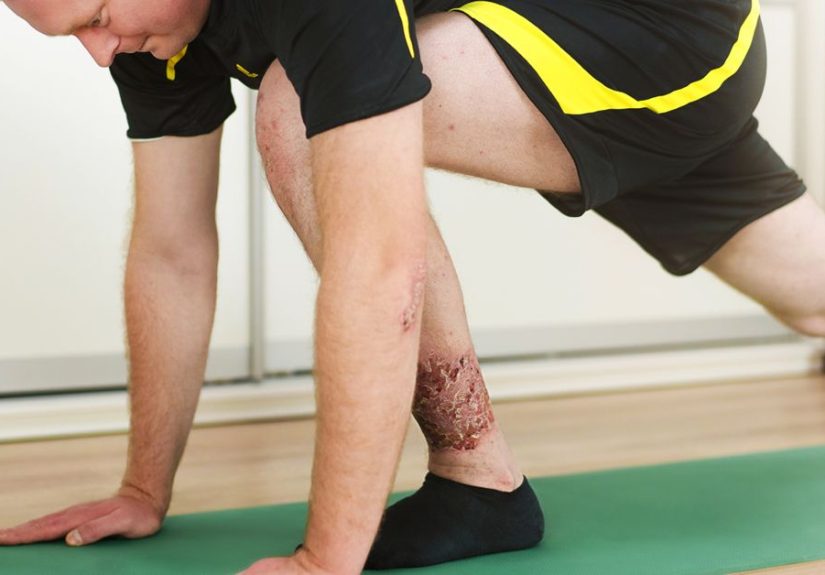
Psoriasis is an immune-mediated inflammatory disease that speeds up skin cell turnover and fuels inflammation. The “classic” version is plaque psoriasisraised, scaly patches that can show up on elbows, knees, scalp, and pretty much anywhere your body wants to audition for a sandpaper commercial.
It’s common: estimates place U.S. prevalence at roughly 3% of adults (more than 7.5 million people). It can also involve joints (psoriatic arthritis), nails, and broader health risks tied to systemic inflammation.
Today’s standard treatments (the proven stuff)
- Topicals: steroids, vitamin D analogs, retinoids, and friends.
- Phototherapy: medically supervised UV light.
- Systemic medications: methotrexate, cyclosporine, acitretin, and others.
- Biologics and targeted therapies: medications that block key immune signals (like IL-17 or IL-23) that drive inflammation.
Stem cells enter the chat because they may be able to modulate immune activity in a different wayespecially in research settings focused on mesenchymal stem/stromal cells (MSCs).
What “Stem Cells for Psoriasis” Usually Means
When people say “stem cells for psoriasis,” they might mean one of several very different approaches:
1) Mesenchymal stem/stromal cells (MSCs)
These are cells often obtained from bone marrow, fat (adipose tissue), or umbilical cord tissue. In research, MSCs are studied because they can release signals that influence immune cellssometimes nudging inflammation downward.
2) Hematopoietic stem cell transplant (HSCT)
These are “blood-forming” stem cells (like those used in bone marrow/cord blood transplants). HSCT is not a standard psoriasis treatment. However, psoriasis remission has been observed in some patients who received HSCT for other serious diseases (like blood cancers). This is medically intense and risky, so it’s more of a clue about immune biology than a practical therapy for typical psoriasis.
3) “Exosomes” or cell-free products
Exosomes are tiny vesicles released by cells, including MSCs. Some clinical research explores topical or injected exosome-based products. But the term is also heavily used in marketingsometimes in ways that run ahead of evidence and regulation.
Why Researchers Think Stem Cells Could Help
Psoriasis is driven by immune pathways that involve T cells and inflammatory cytokines (notably the IL-23/IL-17 axis). Modern biologics work precisely because they target these pathways. MSCs are interesting because:
- They can secrete anti-inflammatory factors (think “immune calming signals,” not magic dust).
- They may encourage regulatory immune responses (like boosting T-reg activity).
- They may reduce the activity of immune cells involved in chronic inflammation.
The dream scenario is a therapy that “rebalances” immune function in a durable waypossibly with fewer long-term meds. The reality is that biology rarely gives us a dream scenario without charging interest.
What the Research Actually Says (So Far)
Here’s the honest state of play as of the most recent public information: stem cell-based approaches for psoriasis are still investigational. The strongest support comes from early-stage studies, case reports, and mechanistic researchnot large, definitive Phase 3 trials that change clinical guidelines overnight.
Preclinical research (lab and animal studies)
In experimental models, MSCs have shown anti-inflammatory effects that could plausibly reduce psoriasis-like skin inflammation. Researchers also explore whether MSC-derived products (like exosomes) can influence skin immune signaling and tissue repair.
Important caveat: psoriasis in humans is a complicated immune-and-genetics soap opera. Animal models are more like a short film inspired by true events.
Human studies of MSCs (early clinical research)
Clinical trial registries list studies evaluating MSCs for moderate-to-severe psoriasis, including MSCs derived from umbilical cord tissue or adipose tissue. These studies often focus on:
- Safety: Are infusions/injections tolerated? What adverse events occur?
- Signals of benefit: Do PASI scores (Psoriasis Area and Severity Index) improve? How durable is response?
- Dosing and protocols: Dose levels, frequency, and delivery methods.
What’s encouraging is that the scientific community is testing these ideas in structured ways. What’s missing (so far) is the kind of large, replicated evidence that would support routine clinical use.
HSCT observations (high-risk therapy, interesting science)
Some people who underwent hematopoietic stem cell transplantation for other conditions experienced psoriasis improvement or remissionespecially in allogeneic transplants (cells from a donor). Reviews of reported cases suggest durable remission can occur in a subset of these patients.
But here’s the “do not try this at home” part: HSCT carries significant risks (serious infections, organ toxicity, graft-versus-host disease in allogeneic transplants, and more). So while HSCT-related remissions provide clues about the immune roots of psoriasis, HSCT is not an appropriate psoriasis treatment for the vast majority of patients.
Exosome-based research (a “maybe,” with a side of hype)
Some registered studies examine MSC exosome productssometimes topical formulationsprimarily to assess safety. Scientifically, cell-free approaches are intriguing because they might reduce some risks associated with live-cell infusions.
Regulatorily, this area is also a magnet for misleading marketing. “Exosome facial” is not the same thing as a controlled clinical trial, even if both involve a syringe and a confident Instagram caption.
Safety, Regulation, and the Reality Check You Deserve
If you remember only one section, make it this one.
Are stem cell therapies FDA-approved for psoriasis?
No. As of current FDA consumer guidance, stem cell products generally require FDA approval, and the only FDA-approved stem cell products referenced for broad consumer understanding are blood-forming stem cells (hematopoietic progenitor cells) derived from umbilical cord blood for specific blood-related disordersnot for psoriasis.
Why that matters
- Effectiveness is unproven: Early signals are not the same as established benefit.
- Safety can vary wildly: Cell source, handling, contamination risk, dosing, and patient selection all matter.
- Marketing often outpaces evidence: Some clinics sell expensive, unapproved “stem cell” or “exosome” products with claims that aren’t backed by rigorous trials.
Known risks (not hypothetical)
Public safety communications describe serious adverse events linked to unapproved “regenerative medicine” products, including infections and other harms. The FDA has also issued actions and statements related to enforcement against clinics marketing unapproved products.
How to Spot the Difference Between Real Research and a Very Expensive Wish
Here are practical filters that can save you money, stress, and potentially your health:
Green flags
- The therapy is offered as part of a registered clinical trial with transparent inclusion criteria and oversight.
- The team clearly explains risks, alternatives, and what is unknown.
- They discuss realistic endpoints (e.g., PASI improvement) rather than “cure.”
- Costs are handled ethically (many trials cover the investigational product; you’re not paying luxury-car prices for hope).
Red flags
- Claims of a guaranteed cure for psoriasis (or for “everything from arthritis to zebra anxiety”).
- No clear protocol, no published data, no trial registration, but plenty of testimonials.
- Bundled “stem cells + exosomes + secret sauce” packages with vague sourcing.
- Pressure tactics: “limited-time pricing” for something that’s supposedly cutting-edge medicine.
Where Stem Cell Research Might Go Next
The most realistic near-term future is not a one-time “psoriasis reset button,” but incremental progress:
- Better-defined MSC products: standardized manufacturing, dosing, and quality controls.
- Smarter targeting: selecting patient subgroups based on immune profiles.
- Combination strategies: using MSC-derived products alongside existing therapies in carefully tested protocols.
- Cell-free therapeutics: exosome or secretome-based approaches that aim to capture benefits while reducing risk.
And importantly, mainstream psoriasis care continues to evolve rapidlyespecially with biologics and other targeted therapies that already have large bodies of evidence behind them.
Frequently Asked Questions
Is stem cell therapy a cure for psoriasis?
No. There is no proven cure for psoriasis, and stem cell approaches remain investigational for this condition. Some case reports and early studies suggest potential benefits, but that’s not the same as a cureor a guarantee.
Why do some people say stem cells “worked” for them?
Several reasons: placebo effect, natural waxing and waning of psoriasis, concurrent treatments, short-term anti-inflammatory effects, or individual immune differences. Also, some testimonials may omit important context (like ongoing biologic use or incomplete follow-up).
If I’m curious, what’s the safest way to explore this?
Talk with a dermatologist, especially one familiar with clinical trials. If you pursue anything stem-cell-related, prioritize legitimate research settings with transparency and oversight.
Conclusion: Hope, But With Seatbelts On
Stem cells for psoriasis sit in that fascinating zone where science is genuinely exploring new optionsbut the consumer marketplace is often louder than the data. MSCs have plausible immunomodulatory mechanisms, early trials are underway, and HSCT-related remissions teach us important lessons about immune drivers. Still, stem cell therapy is not an established psoriasis treatment, and safety + regulatory concerns are not side notesthey’re the headline.
If you’re living with psoriasis, the good news is you already have multiple evidence-based options, and research is expanding them every year. Stem cell approaches may someday join that toolkit, but for now, the smartest move is to treat “miracle” claims like you’d treat a suspiciously cheap sushi buffet: with caution, questions, and preferably a professional nearby.
Real-World Experiences: What People Report When They Explore Stem Cells for Psoriasis (A 500-Word Add-On)
Note: The experiences below are common themes people describe in patient communities and clinical conversations. They are not proof of effectiveness and shouldn’t replace medical guidance.
The “I’ve Tried Everything” moment
Many people start looking into stem cells after a long run of trial-and-error: topicals that help for two weeks, phototherapy that works until schedules implode, systemic meds that cause side effects, and biologics that are either amazingor not quite amazing enough. The emotional arc is familiar: hope, disappointment, regroup, repeat. By the time stem cells enter the picture, it’s often less “I want futuristic medicine” and more “I want my skin to stop dictating my calendar.”
The consultation whiplash
People often describe a sharp contrast between two types of consults:
- Evidence-based consults (usually at academic centers or trial sites) tend to be cautious. The clinician explains what’s known, what’s unknown, eligibility rules, and why the therapy is considered investigational.
- Commercial clinic consults can feel like a sales pitch: big promises, shiny brochures, and a price tag that looks like it includes a free vacation (it usually doesn’t).
That contrast alone becomes a red-flag detector for many patients. If the conversation sounds like a late-night infomercial, people often walk awayor at least start asking sharper questions.
What trial participation can feel like
For those who enroll in legitimate trials, the experience is often surprisingly structured: multiple screening visits, lab work, standardized scoring (like PASI), photo documentation, follow-ups, and lots of paperwork. Some participants find the monitoring reassuringfinally, someone is measuring the disease carefully instead of eyeballing it in a rushed appointment.
Others find the process slow and inconvenient. Psoriasis flares don’t always respect appointment windows, and trial protocols are designed for science, not comfort. That said, people frequently report that being in a trial reduces anxiety because expectations are clearer: no promises, just observation and careful reporting.
The outcomes people describe (the honest range)
Reports range from “no change” to “some improvement” to “wow, my plaques calmed down for a while.” A common pattern is short-term optimism followed by the hard question: Will it last? Durability is the big unknown for investigational approaches. People also mention confusion when symptoms improve but then returnespecially if they expected a permanent reset.
The most practical “experience-based” takeaway
Across stories, the most grounded advice is consistent: treat stem cells for psoriasis as research unless and until high-quality evidence says otherwise. If someone is asking you to pay thousands upfront for certainty, you’re not being invited into a breakthroughyou’re being invited into a business model.