Table of Contents >> Show >> Hide
- The Egg That Wasn’t an Egg
- Why Photoshop Battles Are Basically the Internet’s Improv Night
- The Suspicious Egg Battle: What Made It So Perfect
- Why Your Brain Falls for It (and Why You Laugh)
- The Craft Behind the Chaos
- Etiquette, Credit, and the “Don’t Be Weird About It” Rule
- How to Host Your Own “Suspicious Egg” Battle
- Conclusion: The Internet Will Always Choose the Silliest Explanation
- Experiences: What It Feels Like to Join a Ridiculous “Egg” Photoshop Battle
The internet has a special talent: it can look at a perfectly normal photo and collectively decide it’s evidence of a breakfast conspiracy.
Not aliens. Not Bigfoot. Breakfast.
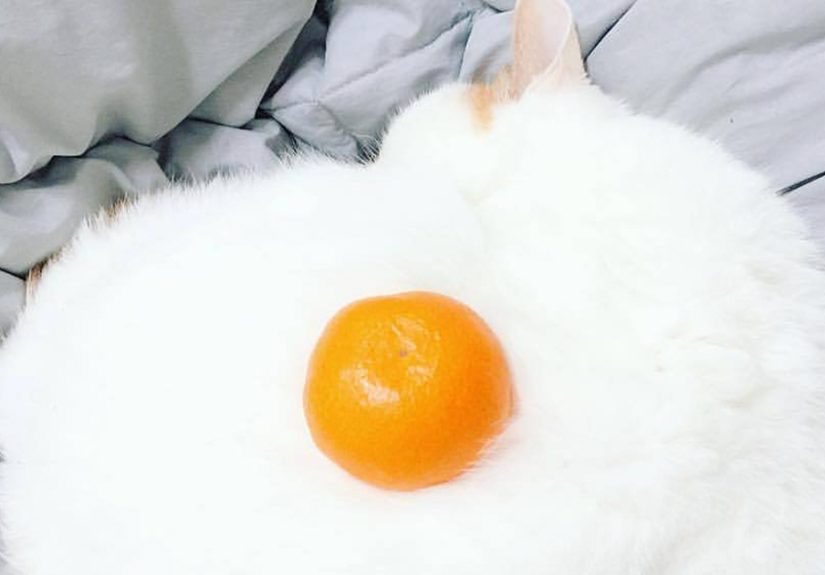
That’s exactly what happened when a photo started making the rounds of what appeared to be a sunny-side-up egg… except it had fur, a tail,
and the unmistakable aura of “I’m judging you for eating at 11 a.m.”
The “egg” was suspicious. The internet was delighted. And the Photoshop crowd did what it does best: turned a tiny visual oddity into a full-blown comedy festival.
The Egg That Wasn’t an Egg
If you’ve never seen the original, here’s the setup: an orange tabby cat is curled up like a warm little loaf, and a small citrus fruit
(many commenters argued it looked more like a mandarin than a full-size orange) is positioned so perfectly that, at a glance, your brain
reads the whole scene as “fried egg on a plate.” The cat becomes the white. The citrus becomes the yolk. Reality becomes optional.
That instant misread is a classic example of pareidoliaour brain’s habit of snapping random or ambiguous visuals into familiar patterns.
It’s the same mental shortcut that makes people see faces in wood grain, animals in clouds, or a “smiley” in a wall outlet.
Scientists describe it as a normal, common feature of human perception: we’re wired to detect meaningful shapes quickly because, historically,
it was useful to notice faces and threats fast. These days, the “threat” is mostly just your friend texting, “WHY IS THAT EGG HAIRY.”
Add one more ingredientsocial media sharingand the suspicious egg becomes a perfect prompt: instantly readable, weirdly cute, and just uncanny enough
to invite the question, “Okay, but what if it were more ridiculous?”
Why Photoshop Battles Are Basically the Internet’s Improv Night
Photoshop battles are a long-running online tradition where one image becomes the stage and thousands of people show up with visual punchlines.
On Reddit, the r/photoshopbattles community has grown into a massive creative playground where users post an image and others compete by editing it into
something clever, absurd, or unexpectedly beautiful.
The culture runs on two ideas:
1) the original photo is the “prompt,” and
2) the best edits are the ones that look like they could’ve been realuntil you notice the cat is now piloting a spaceship made of breakfast.
That mix of technical skill and comedy is why these threads can go viral far beyond Reddit.
How the “battle” usually works
- One image drops. The original poster shares a photo that has comedic potential: odd pose, perfect expression, confusing perspective, etc.
- Edits compete at the top. Most battle threads encourage top-level comments to be actual edits, keeping the feed clean and scrollable.
- Non-edits go in replies. If you want to joke without editing, you typically reply under a designated comment so the gallery stays focused.
- Bonus points for cutouts. Many posters include a subject cutout (like the cat) so editors can jump straight into the fun.
In other words: it’s part art contest, part stand-up show, part “how did you do that?” workshopjust with fewer drink minimums.
The Suspicious Egg Battle: What Made It So Perfect
Great Photoshop prompts share a few traits: a clear subject, a visual twist, and enough open space for imagination. This “egg” photo had all three.
It also had something even better: instant misunderstanding.
You don’t need context. You don’t need a caption. Your brain does the joke setup for you.
The best prompts are like doors that are already cracked open.
The editor just has to kick them off the hinges.
Three classic directions editors took
1) Literal breakfast chaos
Some edits leaned hard into the “it’s an egg” illusion: frying pans, breakfast plates, brunch menus, and “chef’s kiss” food photography lighting.
These are the edits that make you double-take because the shadows and textures are convincing enough that your brain briefly accepts,
“Yes, my eggs do sometimes have whiskers.”
2) Wordplay and pop culture riffs
The comment section practically begged for puns. Cat + orange invites references to famous orange titles, classic movie posters, and album covers.
And once you’ve got a pun, the edit almost makes itself: typography, dramatic lighting, maybe a cinematic crop.
This is where battles start feeling like a shared languagethousands of strangers building on the same joke pattern in different styles.
3) Surrealism and “art-school breakfast”
Then there are the editors who treat the prompt like a gateway to weird: the “egg” becomes a planet, a portal, a floating symbol of existential dread,
or a Renaissance painting detail you can’t unsee.
These edits aren’t just funnythey’re oddly beautiful. They’re the reason Photoshop battles can feel like a gallery show that forgot to take itself seriously.
Why Your Brain Falls for It (and Why You Laugh)
Humor thrives on surprise: we expect one thing and get another. The suspicious egg photo sets up a neat mental shortcut“breakfast!”then immediately betrays it:
“Actually, cat.” That rapid flip triggers the kind of delighted confusion that makes people share the post with captions like,
“I can’t explain this but I can’t stop looking at it.”
Psychologists note that pareidolia is common and not a disorder; it’s part of how we find meaning fast. Once you see the “egg,” it’s hard to unsee it.
And when hundreds of edits reinforce the illusionby placing the “egg” into even more egg-like contextsthe joke gets stronger, not weaker.
You’re basically being trained into breakfast hallucinations by committee.
There’s also a social element. Memes and remix culture compete for attention, and the winners are usually the ones that are easy to copy, tweak, and evolve.
A Photoshop battle is meme evolution in real time: one prompt, thousands of mutations, and a comment section acting like a natural-selection lab for comedy.
The Craft Behind the Chaos
The funniest edit isn’t always the sloppiest. In fact, the edits that land hardest often look the most believablebecause realism makes the absurdity feel
like it broke into our world instead of being pasted on top of it.
What skilled editors pay attention to
- Lighting direction: matching highlights and shadows so the subject sits naturally in the new scene.
- Edge detail: fur is notoriously tricky; clean cutouts with natural hair edges make a huge difference.
- Color temperature: warm indoor light vs. cool daylight can make an edit look instantly “off” if not corrected.
- Perspective: the cat-egg has a specific camera angle; the new background needs to agree with it.
- Texture realism: if you turn the “egg” into food, fabric, or a planet, surface texture sells the illusion.
You can feel the difference between an edit that’s “a funny idea” and an edit that’s “a funny idea that could be a movie poster.”
That’s why Photoshop battles double as informal education: people learn by studying what wins.
Etiquette, Credit, and the “Don’t Be Weird About It” Rule
Most battle communities try to keep things playful and respectful. The original photographer deserves credit, the subject deserves basic decency,
and nobody needs to use a goofy cat photo as an excuse to be cruel.
There’s also a practical side: edited images can escape their original context. In a battle thread, everyone understands it’s parody and play.
Outside that context, edits can confuse people fastespecially when they look realistic.
A good community encourages transparency, keeps the original accessible, and treats viral sharing like a responsibility, not just a victory lap.
A quick, non-lawyer note on “can I post this?”
In the U.S., fair use is a context-based doctrine that can allow limited use of copyrighted material for purposes like commentary, criticism, and parody.
Many Photoshop battle edits are transformative in spiritturning an image into a new joke or messageyet the details matter and there are no
one-size-fits-all guarantees. If you’re publishing beyond a casual community post (especially commercially), it’s smart to be cautious:
credit sources, avoid using protected brands in misleading ways, and consider getting permission when possible.
How to Host Your Own “Suspicious Egg” Battle
Want to recreate the magic without waiting for the next viral oddity to fall out of the sky? You can host a mini battle with friends, a classroom,
or a creative community. Here’s a simple approach that keeps it fun and organized.
Step-by-step
- Pick a strong prompt. Look for a clear subject and an obvious “twist” (weird perspective, expressive pet, optical illusion).
- Share the best-quality version. Higher resolution means better edits and fewer jagged edges.
- Include a cutout if you can. Even a rough selection helps beginners participate.
- Set a time window. 24–72 hours is long enough for great work, short enough to keep momentum.
- Create categories. “Funniest,” “Most realistic,” “Best pun,” “Most cursed,” “Unexpectedly beautiful.”
- Encourage friendly feedback. The best battles feel like a party, not a grading session.
The goal isn’t perfection. The goal is to give people a reason to make somethingand laugh at somethingtogether.
If your prompt produces at least one edit that makes someone snort-laugh in public, congratulations: you have successfully hosted internet culture.
Conclusion: The Internet Will Always Choose the Silliest Explanation
A “suspicious looking egg” isn’t important news. It won’t change your taxes or fix your inbox or teach your dog to stop barking at leaves.
But it does something quietly valuable: it turns a tiny moment of visual confusion into a shared creative event.
The original image is funny because your brain makes a mistake. The Photoshop battle is funnier because thousands of people choose to build on that mistake
with skill, imagination, and just enough chaos to keep it from becoming boring.
And honestly? If the internet is going to collaborate on anything, a cat-egg is an excellent use of our collective powers.
Experiences: What It Feels Like to Join a Ridiculous “Egg” Photoshop Battle
If you’ve never participated in a Photoshop battle, the first experience is usually a mix of excitement and mild paniclike showing up to a potluck and
realizing everyone else brought something that looks professionally catered. You scroll through early submissions and think,
“Oh no, these people know what they’re doing.” Then you remember: the point isn’t to be the best editor alive; it’s to play.
The “suspicious egg” prompt is especially beginner-friendly because it hands you a joke on a silver platter (or a ceramic breakfast plate, if you’re fancy).
Your brain already sees the egg. So your first instinct is to lean into it: put the cat-egg in a frying pan, add a sprinkle of “salt,” maybe toss in
a dramatic restaurant spotlight. That’s when you learn Lesson One of battle culture: the simplest idea can still win if it’s executed cleanly.
A believable shadow can be funnier than a complicated concept with messy edges.
Then comes the second wave: puns. Everyone wants the best caption without actually writing captionsso the edit becomes the punchline.
You start noticing how quickly people iterate on each other’s humor. One person drops a clever pop-culture reference, and suddenly the thread fills with
variations: different posters, different fonts, different eras, different levels of “I spent way too long matching film grain.”
Even if your edit doesn’t rise to the top, you feel part of a group project that isn’t homework.
If you stick around long enough, you also start picking up techniques by osmosis. You’ll see a seamless fur cutout and realize,
“Oh, that’s why my edges look like a cardboard silhouette.” You’ll see someone match warm indoor light perfectly and think,
“So that’s what color temperature is doing.” You’ll notice that the funniest edits often have the best realism, because the more your eyes believe it,
the more your brain laughs at the absurdity.
And the commentswhen they’re kindcan feel surprisingly encouraging. People ask how an effect was done. Someone compliments a tiny detail you thought
nobody would notice. You learn that “good job” from a stranger hits different when you spent 40 minutes trying to make a yolk reflection look right.
Photoshop battles can be chaotic, but at their best, they’re also a low-stakes way to practice creativity in public.
The weirdest part is what happens afterward: you start seeing “prompts” everywhere. A dog mid-yawn becomes a movie monster. A badly shaped snowman becomes
a celebrity cameo. A cat next to fruit becomes breakfast. You don’t just enjoy the battleyou start living in a world where everything is one good edit away
from becoming a joke. Which sounds unhinged, but in the most harmless, delightful way possible.