Table of Contents >> Show >> Hide
- What Are SyuRo Japanese Metal Boxes?
- Why These Boxes Stand Out in a Crowded Storage World
- The Most Popular Types of SyuRo Metal Storage
- How to Use SyuRo Japanese Metal Boxes at Home
- What to Know Before You Buy
- Care, Patina, and the Beauty of Not Staying New
- Why SyuRo Japanese Metal Boxes Appeal to Modern American Homes
- Experiences Related to SyuRo Japanese Metal Boxes
- Final Thoughts
If you have ever looked at a plastic storage bin and thought, “Well, that certainly holds things,” then SyuRo Japanese metal boxes may feel like a tiny domestic revolution. These are storage pieces, yes, but they are also the kind of objects that make you want to stand a little straighter in your kitchen, desk nook, or bookshelf corner. Instead of hiding clutter in something forgettable, SyuRo asks a more interesting question: what if the container deserved attention too?
SyuRo’s Japanese metal boxes have become favorites among design lovers, tea drinkers, stationery collectors, and anyone whose brain lights up at the phrase beautiful everyday object. They are simple, but not plain. Practical, but never boring. And unlike most storage products, they tend to age in a way that makes them more charming rather than more tragic.
This is what makes them special: the boxes and canisters are rooted in Japanese craftsmanship, shaped by hand, finished with restraint, and made from metals that develop character over time. In a world full of loud organizers and aggressively cheerful containers, SyuRo goes in the opposite direction. The pieces are calm. Quiet. Understated. The kind of quiet that says, “I know exactly what I’m doing.”
What Are SyuRo Japanese Metal Boxes?
SyuRo is a Tokyo design brand associated with designer Masuko Unayama and the historic Torigoe area of Taito Ward, a neighborhood long connected with small-scale manufacturing and skilled workshops. That local context matters, because SyuRo’s metal boxes do not feel like mass-market “minimalist” products. They feel like objects shaped by a place where craft traditions still matter.
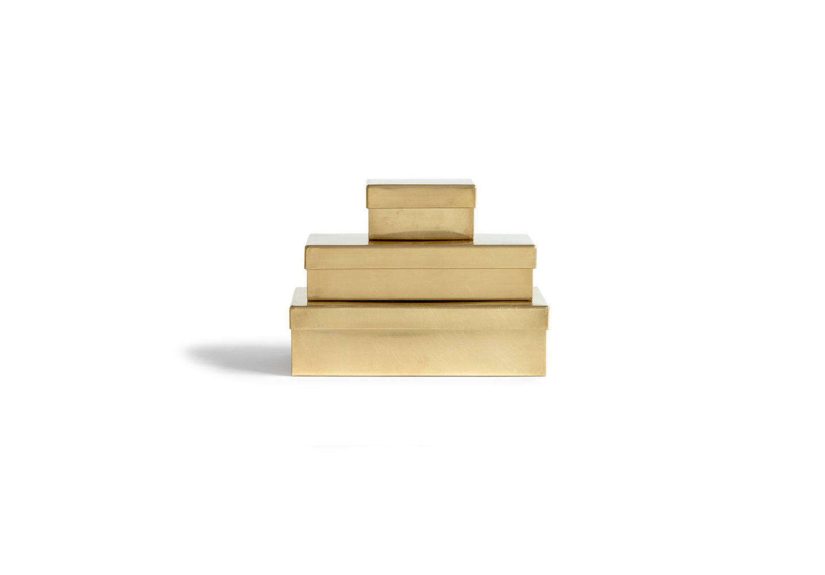
When people talk about SyuRo Japanese metal boxes, they are usually referring to a family of storage pieces that includes rectangular boxes, square desk tins, and cylindrical canisters. Some are better for tea, coffee, or spices. Others are ideal for stationery, jewelry, travel mementos, postcards, cables, letters, business cards, and those miscellaneous little objects that multiply when no one is looking.
The common thread is material honesty. Tinplate, brass, and copper are used not as decoration, but as the whole point. The shape stays simple, the lines stay clean, and the surface is allowed to do what metal does best: reflect use, soften with time, and gradually become part of your daily environment.
Why These Boxes Stand Out in a Crowded Storage World
1. They are handmade in a way you can actually feel
Many storage products claim to be artisanal, which often means they were made somewhere by someone, eventually. SyuRo’s boxes are more convincing. Descriptions from both the brand and retail/design coverage point to hand shaping, hand sanding, and careful finishing. Some rectangular boxes are folded from flat sheets of metal in an almost origami-like manner, with tucked corners rather than obvious, clunky joins. The result is crisp, precise, and subtly human at the same time.
That balance is important. A SyuRo box does not look rustic, and it does not look machine-cold either. It sits in the sweet spot where craftsmanship becomes visible through restraint. There is no giant logo screaming for attention. No decorative flourish trying too hard. Just proportion, surface, and a satisfying sense that somebody knew when to stop.
2. The materials get better with age
Here is where SyuRo really charms the socks off design people. Tinplate, brass, and copper all change over time. Tin develops a calmer, softer look. Brass and copper deepen into richer, darker tones with a more antique feel. Instead of fighting wear, SyuRo builds a product philosophy around it.
That makes these boxes different from most modern storage items, which are designed to look identical forever and then suddenly look awful on a Tuesday. SyuRo pieces are meant to mature. The patina is not damage; it is the visual record of living with the object. Every open, close, move, wipe, and coffee scoop becomes part of the finish.
3. They make storage visible without making it ugly
This may be the real superpower. SyuRo Japanese metal boxes are useful because they do not need to be hidden. On a kitchen shelf, a bedside table, or a home office desk, they look intentional. Apartment dwellers and small-space organizers appreciate this because attractive storage is often the only storage that gets to exist out in the open.
That is part of why U.S. design and home publications have highlighted them alongside more stylish alternatives to standard plastic bins. SyuRo pieces solve a practical problem while also making the room look more collected and considered.
The Most Popular Types of SyuRo Metal Storage
Rectangular metal boxes
The rectangular boxes are probably the most versatile. They work beautifully for stationery, tea sachets, cables, photographs, cards, jewelry, desk tools, receipts, or keepsakes you swear you will sort later. Some smaller versions are sized well for business cards, while larger versions can hold postcards, letters, or assorted tech odds and ends.
These boxes are the ones most often praised for their crisp folded construction and minimalist geometry. They look especially good on desks, entry consoles, or open shelves where a leather tray might feel too soft and a plastic bin would feel like a surrender.
Round tea and coffee canisters
If your interest leans more kitchen than desk, SyuRo’s cylindrical canisters are excellent. They are often designed with an outer lid and an inner lid, which makes them especially practical for tea leaves, coffee beans, spices, and other dry pantry ingredients. They are functional enough for everyday use, but elegant enough that you may suddenly start arranging your counter like a magazine editor with a caffeine budget.
These canisters are a smart choice for people who like the ritual side of food and drink. There is something deeply satisfying about reaching for a matte tin or copper canister in the morning instead of a loud bag with a resealable zipper that never actually reseals.
Desk tins and postcard-size containers
SyuRo also offers smaller tin containers that shine in workspaces. They are great for postcards, photographs, clips, stamps, fountain pen supplies, note cards, charging cables, or those tiny important things that would otherwise vanish into a drawer dimension known only to dust bunnies.
For creatives, writers, and stationery fans, these are especially appealing. They have a retro-meets-modern character that works equally well in minimalist interiors and more layered, collected rooms.
How to Use SyuRo Japanese Metal Boxes at Home
One reason these pieces are so popular is that they do not boss you around. They can move from room to room and still make sense. Here are a few smart ways to use them:
- Kitchen: Store tea, coffee beans, sea salt, dried chilies, sugar packets, or recipe cards.
- Home office: Organize paper clips, business cards, cords, stamps, sticky notes, memory cards, or backup batteries.
- Bedroom: Keep jewelry, watches, letters, keepsakes, or small accessories in one calm-looking place.
- Entryway: Corral keys, coins, transit cards, and all the tiny objects that otherwise stage a jailbreak across the console.
- Travel memory box: Use a rectangular box for tickets, postcards, foreign currency, and other souvenirs that deserve better than a random envelope.
If you are deciding between a canister and a box, think about the contents first. Round canisters are usually best for pantry goods and anything scoopable. Flat or rectangular boxes are better for papers, tools, accessories, and keepsakes. This is not groundbreaking science, but it is useful science.
What to Know Before You Buy
Choose the metal that suits your personality
Tinplate is often the easiest entry point. It has a clean, soft, matte presence and works beautifully in kitchens and workspaces.
Brass feels warmer and more decorative, though still restrained. It can bring a little glow to shelves and desks without becoming flashy.
Copper is the most dramatic over time. If you enjoy materials that visibly evolve and deepen, copper is the extrovert of the group, though still a very tasteful extrovert.
Expect small variations
Because these boxes are handmade and material-driven, tiny scratches, marks, or tonal variations are part of the experience. This is not the kind of product you buy if you want a laboratory-perfect, never-touched surface. It is the kind you buy because that slight individuality is part of the charm.
Think of them as long-term objects
SyuRo Japanese metal boxes are not bargain-bin organizers. They sit in that thoughtful gift, lasting design, buy-it-once-and-use-it-for-years category. If your goal is merely “contain object,” there are cheaper options. If your goal is “contain object while making daily life look more composed,” SyuRo starts making a lot more sense.
Care, Patina, and the Beauty of Not Staying New
The nicest thing about SyuRo pieces is that they do not ask you to obsess over perfection. In fact, trying to keep them looking permanently untouched would miss the point. They are designed to accompany use, not escape it.
That said, a little care helps. Keep them dry, wipe them gently, and avoid treating them like they are indestructible metal tanks prepared for hand-to-hand combat. Tinplate, brass, and copper all react differently over time, and that changing surface is part of their appeal. Some people love the mellowed patina; others occasionally polish them to brighten the finish again. Either approach works.
The real value is that SyuRo boxes stay interesting. They are not disposable storage. They are the kind of objects you may start using “for now” and then realize, years later, that they have quietly become permanent residents of your routine.
Why SyuRo Japanese Metal Boxes Appeal to Modern American Homes
American homes today are doing a lot. Kitchens double as offices, bedrooms become reading corners, and living rooms collect more cables, chargers, notebooks, and hobby gear than anyone politely admits. That means storage has to work harder than ever, especially in smaller spaces.
SyuRo fits this reality beautifully. The pieces are compact, flexible, and visually calm. They work with contemporary interiors, Japandi spaces, old apartments, warm minimalism, and even more eclectic homes that mix natural wood, vintage finds, and collected objects. Because the design is so stripped back, these boxes rarely clash. They just settle in and make everything around them look slightly more intentional.
In other words, SyuRo Japanese metal boxes are not only about storage. They are about atmosphere. They help a shelf look edited, a pantry look civilized, and a desk look like the person using it probably knows where their favorite pen is. Even if that person is you, and you absolutely do not.
Experiences Related to SyuRo Japanese Metal Boxes
Living with SyuRo Japanese metal boxes feels different from living with ordinary storage, and that difference shows up in small, everyday moments. The first experience most people notice is visual. You place one on a shelf, counter, or desk and suddenly the area looks less like a holding zone and more like part of the room’s design. It is not loud. It does not beg for compliments. It just quietly improves the scene.
Then there is the tactile side. Picking up a SyuRo box feels reassuring in a way that plastic rarely does. The metal has a certain coolness at first touch, followed by a subtle warmth as you handle it. The lid action matters too. A good container should feel satisfying to open and close, and SyuRo understands that. There is a smoothness to the movement that makes simple tasks feel a little more deliberate. Scooping tea, putting away earrings, or tucking in postcards becomes less like housekeeping and more like a small ritual.
There is also the experience of noticing change. At first, the finish may look crisp and fresh. Weeks later, you begin to see tiny shifts in tone. Months later, the surface softens into something more personal. Instead of looking worn out, the box looks lived with. That can be surprisingly emotional. Most household items degrade in depressing ways. SyuRo pieces age like they know they are being watched by design nerds and intend to perform accordingly.
Another experience is flexibility. A box that starts out holding tea may later become a stationery container. A rectangular tin that once stored letters may end up organizing cables, chargers, and camera cards. Because the design is so neutral and so thoughtful, the boxes move between uses without seeming misplaced. They adapt to life instead of forcing life to adapt to them.
Guests notice them too, though often indirectly. Someone may ask where you got your tea canister, or pick up the desk box and comment on how nice it feels. The appeal is subtle but immediate. People recognize quality, even when they cannot explain exactly why they are drawn to it. That is one of the best experiences SyuRo offers: it reminds you that practical objects can still carry personality.
Perhaps the most meaningful experience, though, is long-term attachment. A SyuRo box does not feel temporary. You do not buy it with the expectation of replacing it next season. Over time, it becomes part of your routines and the visual memory of your home. It sits there through changing furniture, new apartments, different jobs, and evolving habits. At some point, it stops being “a nice storage box” and becomes your box, with its own surface marks, patina, and history. That is rare. And honestly, in a world full of disposable stuff, it is kind of wonderful.
Final Thoughts
SyuRo Japanese metal boxes are proof that storage can be practical, beautiful, and emotionally durable at the same time. They combine handcraft, thoughtful material choices, and everyday usefulness in a way that feels increasingly rare. Whether you want a tea canister that makes your morning feel more grounded, a desk tin that upgrades your workspace, or a rectangular metal box that turns odds and ends into a curated arrangement, SyuRo offers a solution with lasting appeal.
They are minimalist without being sterile, elegant without being fragile, and functional without becoming visually boring. Most of all, they reward use. The more they become part of your routine, the more sense they make. That is the magic of SyuRo: these boxes do not just store your things. They quietly become part of the story of how you live.