Table of Contents >> Show >> Hide
- What Are Talking Heads Coat Hooks?
- Why Talking Heads Coat Hooks Stand Out
- How to Style Talking Heads Coat Hooks
- Design Lessons Hidden Inside a Small Hook
- Are Talking Heads Coat Hooks Good for Modern Interiors?
- What to Consider Before Buying or Styling Similar Hooks
- Common Mistakes to Avoid
- Why People Still Search for Talking Heads Coat Hooks
- The Everyday Experience of Living With Talking Heads Coat Hooks
- Conclusion
Some home accessories are content to be background players. A lamp lights the room. A basket catches the shoes. A hook holds a coat and quietly minds its business. Then there are Talking Heads Coat Hooksthe kind of object that refuses to stay in the background. These hooks do the practical job, sure, but they also wink at you from the wall like a tiny cast of wooden characters waiting for their next scene.
That is exactly why this design keeps showing up in conversations about playful modern interiors, smart small-space storage, and decor that does not take itself too seriously. In a world of bland hardware and forgettable utility pieces, Talking Heads Coat Hooks offer something rarer: function with a pulse. They organize your entryway, hallway, bedroom, or kid’s room while looking more like wall art than home hardware.
If you have ever wanted your storage to be a little less “builder-grade blah” and a little more “whoa, where did you find that?”, this is the kind of design worth knowing. Let’s take a closer look at what makes Talking Heads Coat Hooks memorable, how they fit into modern homes, and why a small wooden hook can carry more design personality than some entire foyers.
What Are Talking Heads Coat Hooks?
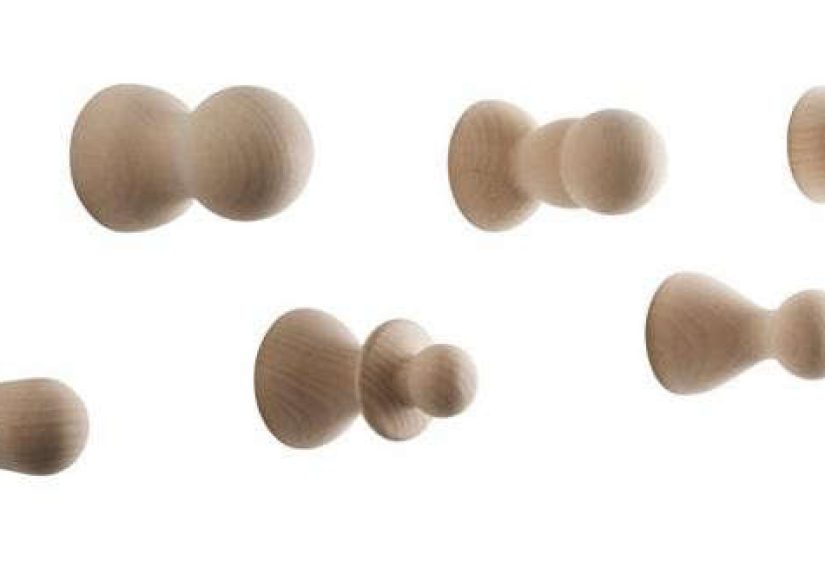
Talking Heads Coat Hooks are decorative wooden wall hooks associated with designer Sebastian Bergne. Rather than using standard pegs or plain metal arms, the design turns each hook into a stylized head shape. The result feels somewhere between sculpture, toy, and storage toolwhich is a pretty fun place to live, design-wise.
The appeal starts with the silhouette. These are not invisible hooks. They are rounded, chunky, expressive forms that look intentional even when nothing is hanging on them. That matters. A lot of wall hardware looks fine only when hidden under coats, scarves, and bags. Talking Heads hooks do the opposite: they still look good when completely empty, which makes them more like decor than backup utility.
That design trick is a big deal in smaller homes. When every square foot has to work harder, objects that are both useful and visually pleasing win the game. A wall hook that doubles as art is not just cleverit is efficient. It saves floor space, reduces clutter, and gives the room personality without demanding another shelf, console, or cabinet.
Why Talking Heads Coat Hooks Stand Out
They turn storage into wall art
Plenty of coat hooks are practical. Far fewer are memorable. Talking Heads Coat Hooks stand out because they make storage look curated. Line them up in a row, stagger them in a zigzag, or scatter them across a wall, and suddenly your entryway feels designed instead of merely furnished.
This is one of the strongest reasons the hooks have stayed interesting to design lovers: they create a composition, not just a storage zone. That gives homeowners more freedom to play. Instead of hiding utility, you highlight it. Instead of apologizing for storage, you turn it into a feature.
They add humor without becoming cheesy
That balance is harder to achieve than it sounds. Plenty of whimsical decor crosses the line into novelty-shop territory. Talking Heads hooks avoid that trap because the humor is subtle. They are playful, but not clownish. Bright, but not loud. Characterful, but still clean-lined enough for modern interiors.
In other words, they have personality without screaming for attention like a caffeinated mascot. That makes them easier to live with over time.
They work in more rooms than you would expect
The obvious home for these hooks is the entryway, where coats, bags, hats, and scarves need a landing spot. But the design works just as well in a bedroom for robes and tote bags, in a kid’s room for backpacks, in a hallway for dog leashes, or even in a home office for light bags and headphones.
Because the shape is soft and the material feels warmer than metal, they can shift easily from one room to another without looking cold or institutional. That flexibility makes them more than a one-trick piece.
How to Style Talking Heads Coat Hooks
In an entryway
This is where the hooks shine brightest. A good entryway needs three things: a place to hang outerwear, a place to drop small essentials, and a way to avoid visual chaos. Talking Heads Coat Hooks handle the first job beautifully, and they pair especially well with a narrow shelf, small bench, or mirror.
If your entry is tiny, mount the hooks above a compact bench and let the wall do the heavy lifting. Add a shallow ledge for keys and sunglasses, then tuck a basket below for shoes or umbrellas. Suddenly the area feels like an intentional drop zone instead of a pileup by the door.
In a child’s room or family mudroom
These hooks make sense anywhere you want organization to feel friendly rather than bossy. In a kid’s room, they can hold small jackets, dress-up items, mini backpacks, or tomorrow’s outfit. In a family entry, they can be installed at varied heights so adults and children both have easy access.
That layout does more than look nice. It encourages independence. When kids can actually reach their own hooks, they are more likely to use them. Miracles do happen.
In a hallway or bedroom corner
Not every home has a formal foyer, and that is fine. Talking Heads Coat Hooks are especially useful in transitional spaces that need a little purpose. An otherwise empty hallway can become a compact storage wall. A bedroom corner can gain a landing spot for tomorrow’s jacket, favorite cap, or weekend tote.
The key is restraint. These hooks look best when they are given a little breathing room. Do not overcrowd the wall with too many competing objects. Let the forms read clearly.
Design Lessons Hidden Inside a Small Hook
One reason this product remains so compelling is that it teaches a bigger lesson about interiors: the best design often happens when utility and delight meet in the middle. A hook is not glamorous. It is not a statement sofa, an oversized pendant, or a slab of imported marble. Yet a well-designed hook changes daily life in a very real way.
It reduces the coat-on-chair habit. It keeps bags off the floor. It helps guests know where to put their things. It makes a small home function better. That may sound humble, but humble improvements are often the ones you feel most every day.
Talking Heads Coat Hooks also show how material changes the mood of a room. Wood feels warmer than plastic and more approachable than cold industrial metal. Rounded shapes feel more welcoming than sharp, aggressive forms. Even bright color, when used thoughtfully, can make an organizational tool feel less like a command and more like an invitation.
Are Talking Heads Coat Hooks Good for Modern Interiors?
Absolutelybut not only for modern interiors. Their clean lines, sculptural shape, and playful attitude make them a natural fit for modern, mid-century-inspired, Scandinavian-leaning, eclectic, and even family-friendly spaces that need a little spark.
They work especially well when the room already mixes simplicity with one or two unexpected gestures. Think pale wood, clean walls, a patterned runner, maybe a bold paint color on the front door or a single fun art print nearby. In that setting, the hooks feel like part of the composition, not an afterthought.
They can also soften stricter rooms. If your entryway is a little too seriouslots of straight lines, neutral tones, and practical piecesthese hooks can provide the visual wink that keeps the space from feeling like a stylish tax office.
What to Consider Before Buying or Styling Similar Hooks
Think about routine first
The prettiest hook in the world is still useless if it is mounted in the wrong place. Before choosing a sculptural hook system, ask what really lands there every day. Coats? Dog leashes? Backpacks? Tote bags? Light scarves? Daily-use items should be the first priority, not aspirational perfection.
Mind the spacing
Decorative hooks need room to breathe, visually and practically. If they are too close together, coats overlap and the wall starts to look crowded. If they are spaced thoughtfully, each hook reads as part of the design.
Pair them with support pieces
Hooks do not have to solve everything alone. They work best as part of a system. Add a bench for putting on shoes, a tray for keys, a mirror for last-minute checks, or a basket for loose accessories. The hook gets the glory, but the supporting cast matters.
Respect the wall
Even beautiful hooks need solid installation. Decorative does not mean delicate. A hook that is meant to hold bags or outerwear should be mounted securely and matched to the wall type. Nobody wants their artful little heads performing an accidental swan dive.
Common Mistakes to Avoid
- Using too many hooks: More hooks do not always equal more function. Too many can make the wall feel busy and turn every coat into visual clutter.
- Hanging everything there year-round: Rotate seasonal items. Your entryway does not need to host every scarf you have ever loved.
- Ignoring nearby storage: Hooks are excellent for quick-access items, but baskets, ledges, and benches help keep the rest of the mess from creeping in.
- Treating decorative hooks like invisible hardware: If a hook looks like a mini sculpture, give it room to be seen.
Why People Still Search for Talking Heads Coat Hooks
People keep searching for Talking Heads Coat Hooks because the design solves a classic problem in a smarter way. Everyone needs storage. Very few people get excited about buying it. These hooks close that gap by making a practical purchase feel like a creative choice.
They also tap into a lasting desire in home design: the wish for objects that are useful but not boring. That is the sweet spot. Not flashy for the sake of flash. Not minimal to the point of numbness. Just enough wit, color, and shape to make everyday life feel a little less repetitive.
And honestly, that may be the real magic here. Talking Heads Coat Hooks do not try to transform your whole house. They simply improve one repeated momentwalking in, hanging up, moving onwith a little more style and a little more joy. Good design often works exactly like that.
The Everyday Experience of Living With Talking Heads Coat Hooks
Living with Talking Heads Coat Hooks is less about owning a famous design object and more about noticing how a tiny daily ritual becomes nicer. You come home, your hands are full, your brain is still halfway in the parking lot, and there they are on the wallready, visible, easy to use, and somehow still amusing. That matters more than people think. The best home products are not always the ones that dazzle in a showroom. They are the ones that quietly improve your routine dozens of times a week.
What makes these hooks memorable in real life is the way they soften a practical gesture. Hanging up a coat is not glamorous. Dropping a tote bag after a long day is not cinematic. But when the storage spot has shape, warmth, and a little character, the action feels less mechanical. The wall does not just store your stuff; it greets you. That sounds dramatic for a coat hook, but good design is often just emotional intelligence in object form.
There is also a subtle satisfaction in seeing them when nothing is hanging there. Most storage products look slightly abandoned when empty, like they are waiting for instructions. Talking Heads hooks still read as intentional. They hold the wall visually. They create rhythm. They give the room a small spark of personality, even at nine in the morning when the house is quiet and nobody is admiring the foyer like it is a museum exhibit.
For families, the experience is even more practical. A child can remember “my red hook” faster than “please hang your backpack on the third peg from the left.” Guests instantly understand what the hooks are for. Bags stop migrating to dining chairs. Scarves stop becoming sofa wildlife. Little systems like that reduce friction, and reducing friction is one of the least glamorous but most valuable jobs in home design.
In smaller spaces, the effect can feel surprisingly big. A studio, apartment, or narrow hallway rarely has room for dramatic furniture, so every wall-mounted piece carries extra responsibility. Talking Heads Coat Hooks earn their keep because they store essentials without eating floor space. They also help define a zone. Suddenly the stretch of wall near the door feels like an entryway, even if your front door opens straight into the living room and your “foyer” is mostly optimism.
Emotionally, they strike a nice middle ground between grown-up and playful. They do not feel childish, but they also do not act like they graduated from an overly serious design academy where smiling is forbidden. That makes them easy to live with for years. Trends come and go, but warmth, usefulness, and a sense of humor tend to age well.
Maybe that is the strongest experience people have with this kind of object: it keeps proving itself. Day after day, it holds the ordinary things of lifecoats, hats, bags, routines, small messesand somehow makes the whole exchange feel tidier, lighter, and a little more human. Not bad for a set of wooden faces on a wall.
Conclusion
Talking Heads Coat Hooks remain compelling because they do two jobs at once: they organize clutter and create character. They show that even the smallest design choices can shape how a home feels. Instead of treating storage like a purely practical chore, they invite a more imaginative approachone where your entryway works harder, looks better, and welcomes people with a bit of personality.
If your space needs a smarter drop zone, a playful modern accent, or simply an excuse to stop throwing jackets over the nearest chair, this design still offers a useful lesson. Storage does not have to disappear into the background. Sometimes it can be the part that makes the room speak.